How can you grow a Telegram channel when standard posting schedules, mutual promotion, and boring creative content no longer deliver the results you need? In 2026, Telegram channel promotion increasingly relies not only on content but also on the ability to quickly grab attention, test offers, use short videos, search traffic, automation, and proper monetization.
To put it simply, promoting a Telegram channel today is no longer about a single magic tool, but a system. You need to understand how to gain subscribers on Telegram, how to keep them engaged within the channel, how to convert views into leads, and how to ensure that every traffic source pays off.
An important point right off the bat: we’re not talking about outright fraud. We’ll break down legal, borderline, and controversial tactics for grabbing attention and driving traffic. They aren’t always ethical, but they clearly reveal how Telegram channels actually grow today. If you understand these methods, you can not only apply individual elements carefully but also defend against them when competitors use them.
Below, we’ll examine 5 approaches: from short viral videos and request bots to SEO, reactions to competitors’ posts, and monetization. We’ll also look separately at how to promote a Telegram channel more safely, what mistakes hinder growth, and why simply building an audience on Telegram doesn’t guarantee profit.
1. Viral videos: the easiest way to get cheap attention
The first method that most often kicks off aggressive growth is short viral videos with a strong offer. Essentially, this isn’t always about selling a product, but about selling curiosity. People are shown an offer that’s too good to be true or too unusual; they click through to Telegram, and from there, they’re funneled into the right conversion path.
That’s exactly why short videos remain one of the fastest ways to increase Telegram subscribers without having to warm up your audience for a long time. TikTok, Reels, and Shorts can generate initial views even for new accounts if the video grabs attention in the first few seconds.

Usually, such creatives fall into several categories:
- Working abroad with minimal hours and a high salary, for example, 10–12 thousand euros.
- A suspiciously cheap vacation in or near your hometown, where a house, a hot tub, and all amenities cost next to nothing.
- Expensive goods at very low prices, such as laptops for $50–70.
- A quick way to make money or an unusual opportunity that makes you want to check the details.
Why does this work? Because freebies, scarcity, and offers that seem too good to be true almost always generate high view counts in short videos. Especially on TikTok, Reels, and Shorts. The user sees a strong hook, wonders, “What if this is true?”, and clicks through to Telegram.
But here it’s important to understand the fine line: the more aggressive the offer, the higher the risk of attracting the wrong audience, negative reactions, complaints, and low retention. Therefore, for long-term promotion of a Telegram channel, it’s better to use not deception, but strong packaging of a real offer: a checklist, a curated selection, exclusive content, a useful bot, a case study, instructions, or a bonus.
How to create such content
The mechanics are simple:
- Find a relevant video on the topic: unboxing a product, factory work, a service review, a demonstration of results, a customer story, or a visually engaging clip.
- Post the video to your timeline.
- Add a caption with a strong call to action at the top: for example, “breakdown in Telegram,” “channel list in the description,” “details in TG,” “checklist in the pinned post.”
- The video is uploaded to a new Instagram public page, TikTok account, or Shorts channel.
- Traffic is redirected to a Telegram channel, post, bot, or mini-funnel.

The strength of this approach lies in the fact that the platforms themselves provide initial reach even to new accounts. You can post fewer than 10 videos and already get your first views and first inquiries, even if you have almost no subscribers.
In one experiment across three accounts, the results were very telling:
- One account didn’t get any views at all,
- the second yielded moderate results,
- the third one got 57,000 views starting with the seventh video and generated over 120 applications in a few days.
That is the essence of the mechanism. We don’t try to convince the algorithms through a long and complicated process. We drop a cheap, highly clickable offer and test it in batches.
If you’re looking for a way to promote a Telegram channel quickly, this method is particularly effective because of its scalability. A single video can be adapted for multiple platforms, multiple offers, and different niches. For example, the same approach can be used for channels about business, cryptocurrency, work, travel, education, real estate, marketing, or local services.
Why do large channels love this method?
Because the audience is monetized through ads, leads, or sales. The channel doesn’t have to sell the exact product featured in the video. Its goal is often simply to build a following, keep viewers engaged, and then sell ad space or its own products.
At scale, this becomes a stable model. But for long-term success, it’s crucial that viewers don’t feel deceived after clicking through. If the video promised one thing but the channel offers something entirely different, the audience will quickly unsubscribe, and algorithms and reputation will start working against you.
2. Application bot: how a useful tool helps attract an audience
The second method is more interesting. The idea here isn’t just to drive traffic from short videos, but to integrate into other admins’ infrastructure or create a useful tool that the audience interacts with.
Here’s how it works: you create a Telegram bot to accept channel membership requests. Admins add it to their projects to automate user onboarding, welcome messages, segmentation, and follow-up messages. Meanwhile, the tool’s owner gets the chance to develop their own product and understand how the audience moves through the Telegram funnel.
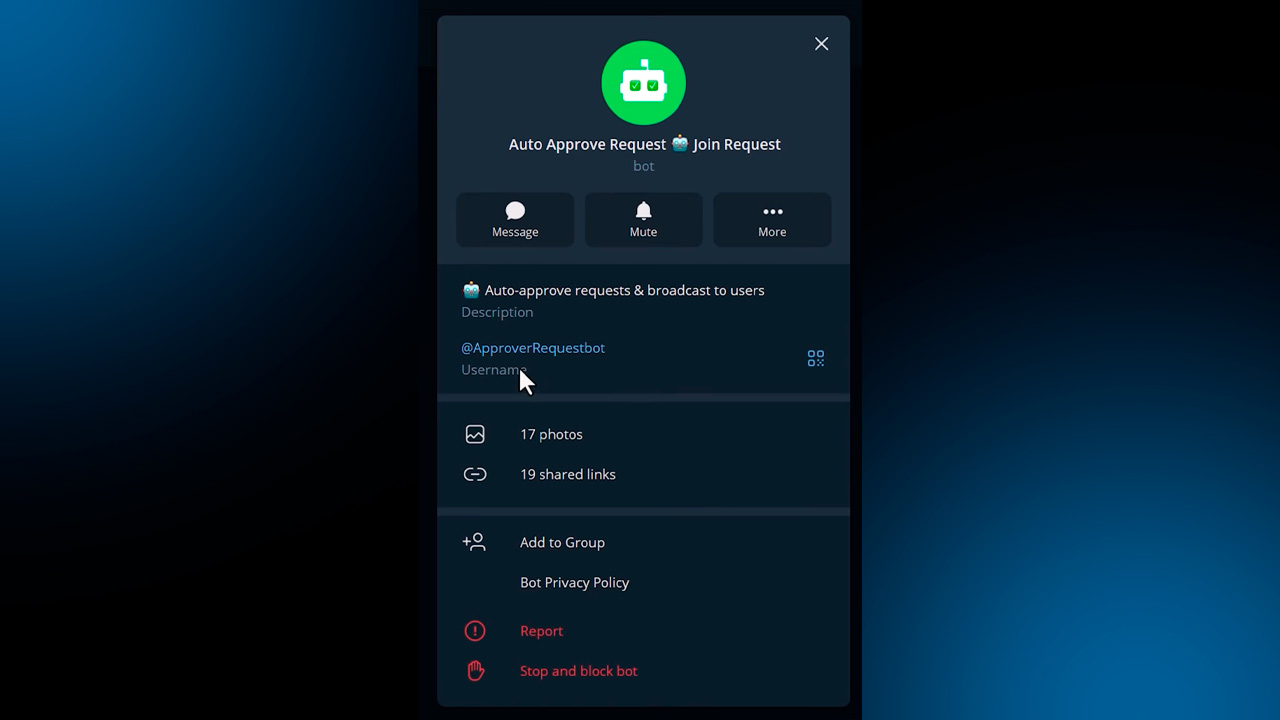
Technically, the logic looks like this:
- A bot is created to accept requests to join the channel.
- The admin connects this bot to their channel.
- When a user submits a request, the bot accepts it and can send a predefined message.
- Through the admin panel, you can send out mailings to the database of users who have interacted with the bot.
- You can then segment the audience, nurture them, and guide them toward the desired action.
In other words, the result is a tool through which a stream of users flows. In an ethical model, such a bot must be transparent: the user must understand who is interacting with them, what messages they are receiving, and why.
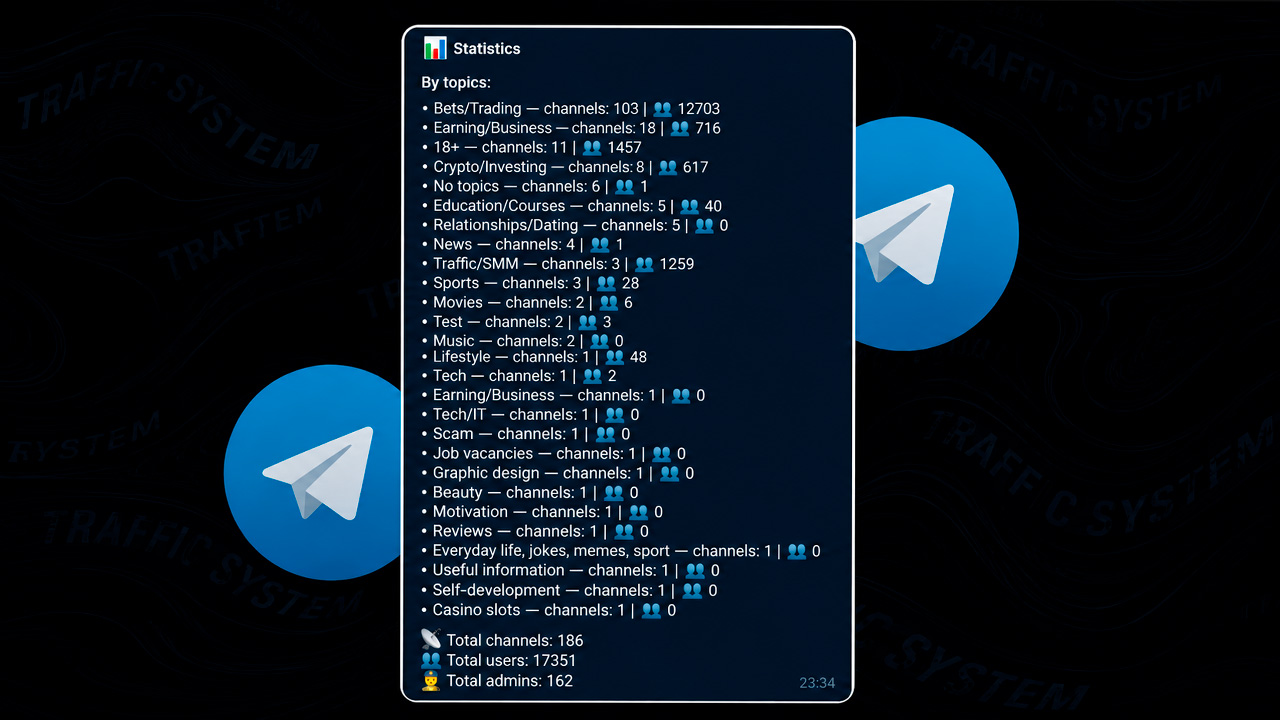
To promote this bot, it was enough to post an ad in a few Telegram channels. After that, the bot began to be integrated into various niches:
- 103 channels on betting and casinos,
- 18 channels on making money and business,
- and dozens of other projects.
The result of the experiment: first 12,500 subscribers, and then about 17,000 subscribers and 185 connected channels.
From a growth mechanics perspective, this is a very powerful story. Essentially, we don’t buy traffic anew every time, but rather build a useful bridge between the audience and channel owners.
Why the method works
Because admins love ready-made tools. If you give them a useful bot—especially one that’s quick to set up, easy to use, and affordable—they’ll happily start using it. And that’s when the real fun begins: the product itself becomes a traffic acquisition channel.
If the question is how to promote a Telegram channel in a non-standard way, this is one of the strongest examples of how a tool can be not just a service, but a full-fledged source of traffic.
But here it’s important not to slip into covert audience gathering. If the bot operates opaquely, it can damage your reputation, trigger complaints, and erode trust in the brand. Therefore, it’s safer to build such a mechanism as an honest product: with clear rules, a transparent communication policy, and real value for admins.
3. Parasitic SEO Traffic for Promoting Telegram Channels
The third method isn’t about social media, but about search engine results. And it’s especially important if you want to get not just quick, but also long-term traffic. We’re talking about SEO pages that capture demand around Telegram niches, channels, authors, reviews, roundups, and comparisons.
SEO is often underestimated by those who focus solely on seeding and advertising. But if someone searches Google for “best Telegram channels about investing,” “reviews of a Telegram channel,” “how to gain subscribers on Telegram,” or “promoting a Telegram community,” they’re already in an active phase of interest. It’s easier to get such a user to subscribe.
A gray-area version of this tactic is so-called parasitic SEO. The idea is that pages with boilerplate articles are created for a large number of search queries, along the lines of:
- "project name reviews",
- "channel name scam",
- “author name scammer,”
- “exposing so-and-so,”
- “alternatives to such-and-such channel.”
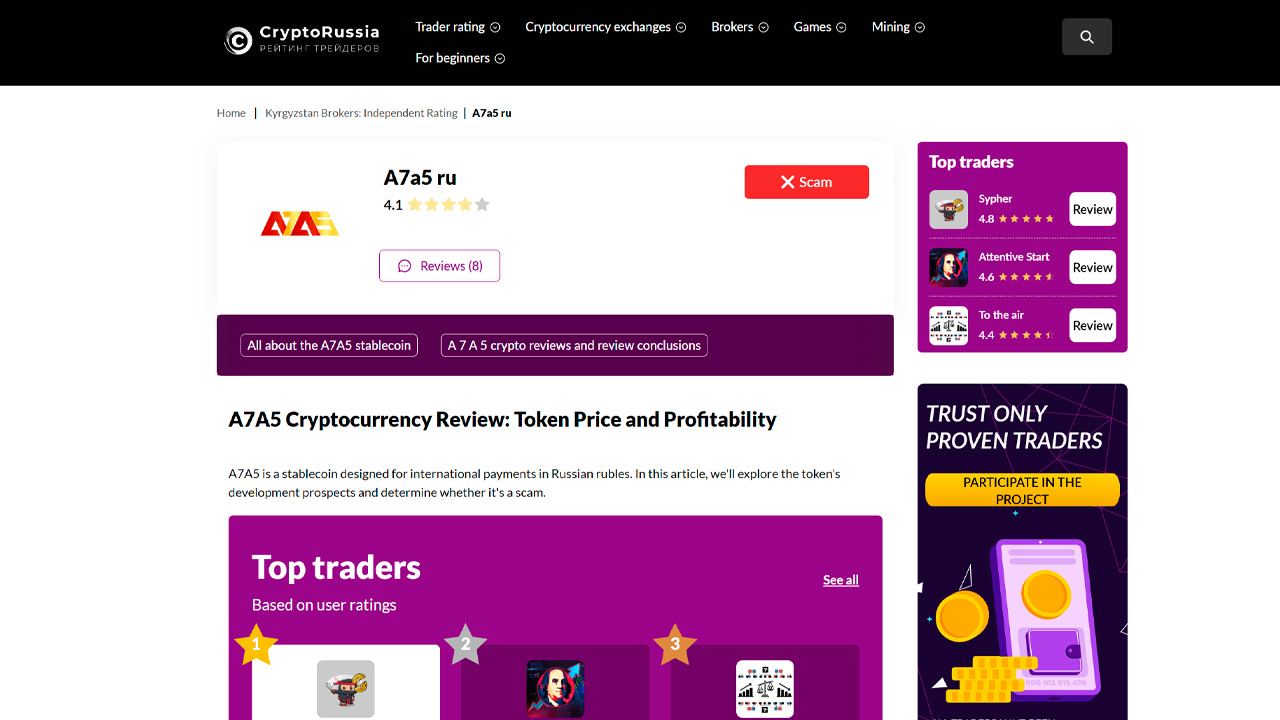
Further down in such articles, negative text about a specific project is written, and “the best alternatives” are advertised alongside it, which lead directly to the desired Telegram channels.
One such site had over 2,158 pages. If each page attracts even just 10 people, that’s already tens of thousands of impressions from search traffic. Moreover, they primarily target brand-related and brand-adjacent keywords: reviews, exposés, scams, comparisons, alternatives, and so on.
One telltale sign that often gives these projects away is auto-generated comments. You can’t leave a real comment on the site, you can’t upload an avatar, yet at the bottom there’s still a bunch of supposedly real discussions with avatars and boilerplate replies.
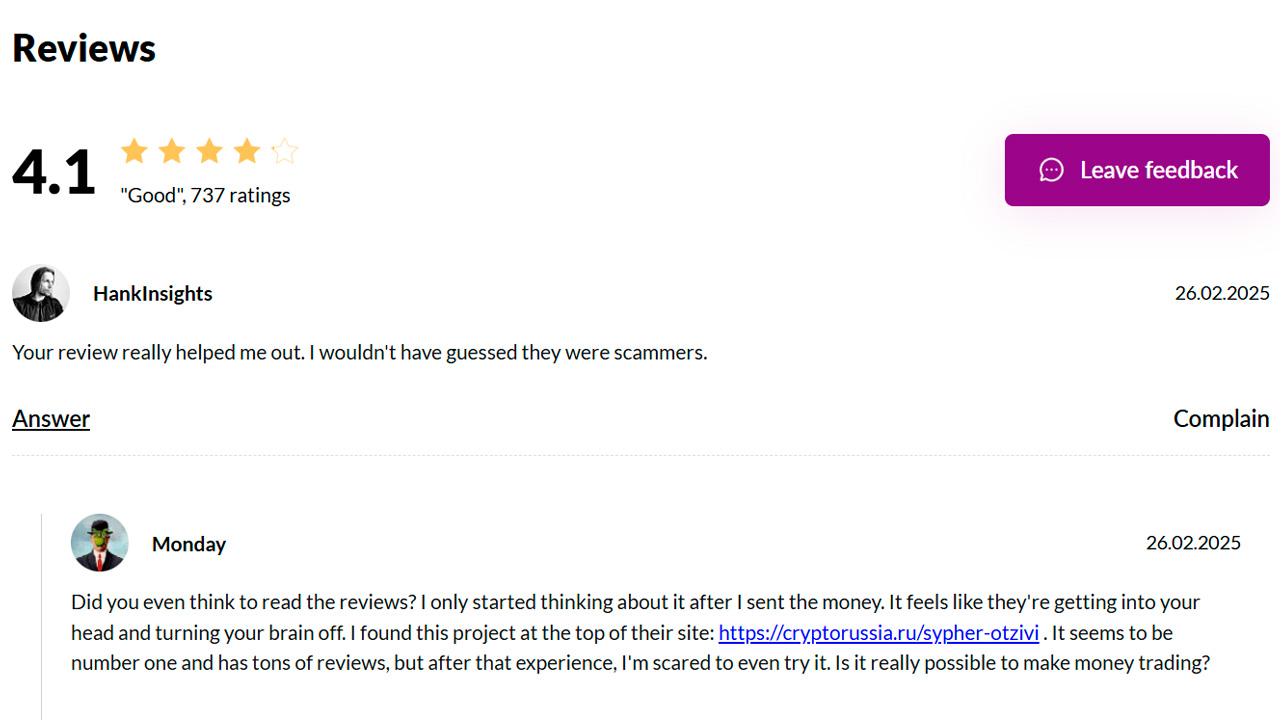
Sometimes the absurdity reaches ridiculous levels. For example, a person might be called a crypto trader even though they don’t trade at all. But the goal of such pages isn’t truth—it’s to hijack the user’s intent.
What’s important to understand here
If we’re looking at how to promote a Telegram channel through search, SEO reveals two things:
- Search demand in the Telegram niche is huge: people are looking for reviews, compilations, instructions, comparisons, and promotion strategies.
- Users looking for reviews and alternatives are often already highly engaged and likely to switch to another channel.
The method is more complex than videos or bots, but the traffic from it is more stable and long-lasting. If a page has secured a spot in the search results, it can attract an audience without constant intervention.
How to use SEO more safely
Instead of shady pages with fake accusations, it’s better to create expert content:
- reviews of Telegram channels in a specific niche,
- comparisons of tools for admins,
- case studies on promoting a Telegram channel,
- instructions on how to attract an audience on Telegram,
- analyses of common mistakes when launching a channel,
- articles on queries like “how to increase Telegram subscribers” and “how to gain subscribers on Telegram.”
This approach looks more reliable to Google, builds trust more effectively, and can attract a higher-quality audience. Especially if the article includes real data, screenshots, case studies, the author’s experience, and clear internal linking.
4. Reactions and activity on Telegram: how competitors capture attention
If SEO seems like a complicated process, there’s a more direct approach: placing a “parasite” directly into someone else’s Telegram channel. To do this, some use mass reactions under comments.
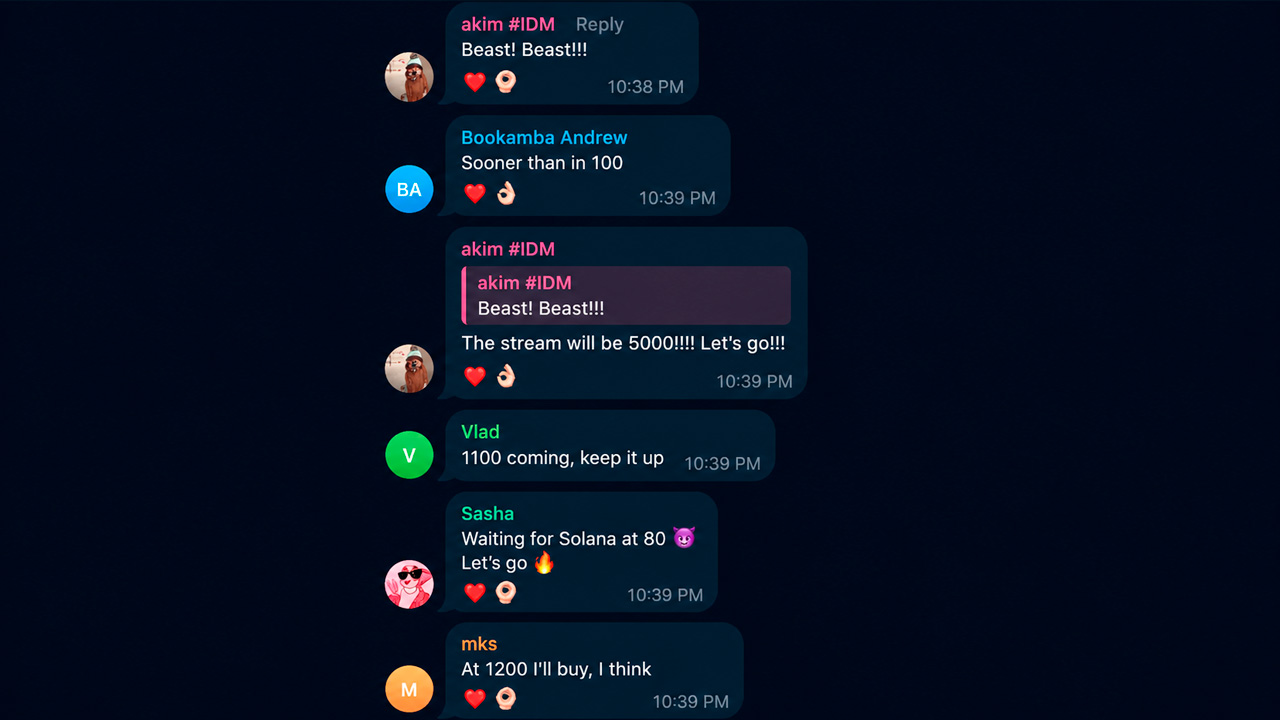
This is one of the most interesting tactics because competition here is still relatively low, and many admins don’t fully understand how to combat it.
The logic is simple:
- There are comments under the posts on the competitor’s channel.
- A separate account is regularly active: it reacts to posts, replies, and participates in discussions.
- This catches people's attention. They click to see who reacted or left a comment.
- The profile for this account already includes a link to the relevant Telegram channel and a catchy caption.
- Some people go there.
Thanks to ordinary human curiosity, you get a constant micro-flow of traffic. In some niches, this generates dozens, and sometimes even hundreds, of leads per day.
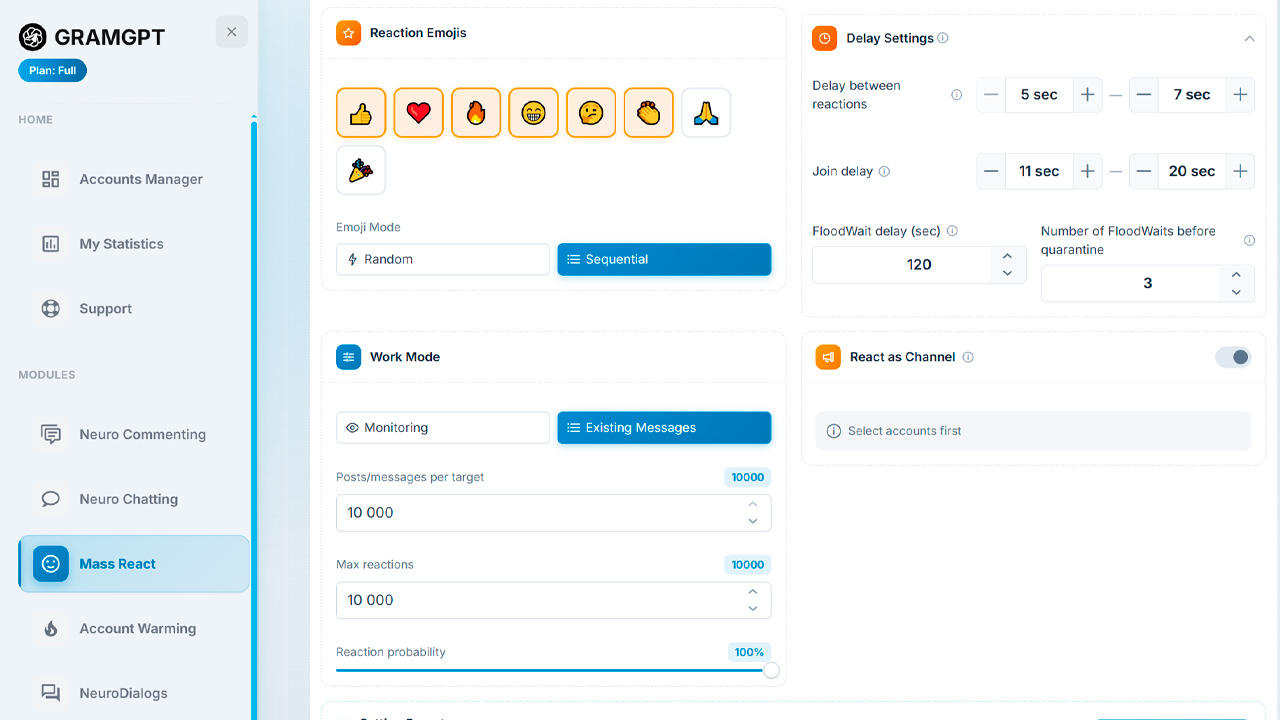
But it’s important to understand: aggressive automation, spam, and mass activity simulation can damage your reputation, annoy your audience, and violate platform rules. Therefore, it’s safer to take not the gray-hat shell of this scheme, but the principle itself: be visible where your target audience is already present.
If you want to drive traffic through mass reactions on Telegram, you can do it in just a few clicks using our Telegram tool GramGpt.io
How the principle of presence in other channels works
If you remove the controversial automation, what remains is standard marketing logic:
- We find channels where the target audience hangs out.
- We study the comments, pain points, questions, and common objections.
- We participate carefully in discussions: we provide helpful responses without direct spam.
- We design the profile so that people immediately understand who you are and why they should follow you.
- We direct users to a channel that offers clear value: a checklist, case study, analysis, compilation, guide, or exclusive content.
The advantage of this approach is that it scales easily:
- You can work with multiple competitor channels at once,
- you can test different profile descriptions,
- you can track which topics generate more clicks,
- you can turn replies into full-fledged content for your channel.