NSFW creative content for traffic arbitrage on betting and gambling offers is becoming a distinct area of focus when working with AI bloggers and AI OFM. Modern neural networks for video generation allow you to create realistic UGC content, mimic mobile filming, use images as references, and compile dynamic video creatives without a full-scale production process.
We recently came across an interesting series of provocative and aggressive creatives. The main focus is on strong visual hooks and explicit imagery. This approach can quickly grab the audience’s attention, but at the same time increases the risk of moderation and ad blocks.
We decided to investigate how well modern AI video models handle this format and to test the generation of NSFW creatives ourselves.
Why NSFW creatives attract attention
The main goal of any advertising creative is to capture the user’s attention within the first few seconds. In the case of NSFW content, this function is fulfilled by provocative visuals and unconventional scenarios.
At the same time, the quality of AI-generated content has improved significantly in recent times. In successful examples, you can see realistic mobile footage, natural digital zooms, dynamic camera movements, and a relatively clean rendering of interfaces on a smartphone screen.
Progress is particularly noticeable in AI-generated UGC. Videos are looking less and less like sterile neural network clips and more and more like they were actually shot on a regular phone.
However, aggressive NSFW content has an obvious drawback: an increased risk of being blocked. The more provocative the material, the higher the likelihood of issues with ad platform or account moderation. Therefore, when creating such content, it is essential to follow the specific platform’s rules.
Which neural networks are suitable for creating NSFW creatives
In the past, generating NSFW content using AI often required additional tools and complex technical setup. Now, video models have become much more accessible, and the possibilities for generation are broader.
In our test, we used Seedance 2.0—an AI model for video generation that allows users to work with text prompts and visual references.
The model itself is not completely uncensored. The ability to generate adult content depends on the specific service through which access to the model is provided and its rules. In general, this primarily refers to provocative and erotic content, rather than graphic sexual scenes.
Seedance 2.0’s capabilities for AI creatives
Depending on the platform used, various generation settings are available: resolutions ranging from 480p to 1080p and higher, vertical and horizontal formats, the ability to add reference images, text-to-video and image-to-video generation, audio processing, and editing of existing video footage.
The image-to-video mode is particularly interesting for AI OFM. It allows you to use a pre-prepared image of an AI blogger as a visual foundation and create new video scenes while maintaining the character’s overall appearance.
How to Create NSFW Creatives Using a Neural Network
The first experiment involves generating dynamic UGC creatives based on several references. As source material, you can use a frame with the desired composition and additional images of interfaces that should appear within the scene.
Example 1: Realistic UGC creative featuring a smartphone
For the first test, we used a scene with handheld footage, a smartphone in the frame, and a sudden camera pan to a soccer field. In the prompt, we described the camera behavior in detail: handheld shooting, digital zoom, slight graininess, and an attempt to focus on a distant object.
The girl is excited and says, "Guys, hurry up and bet on Brazil! Look how much I've earned!" — and she holds her phone up to the screen, showing her bank account (I've attached a picture). The entire scene is being filmed on a regular iPhone, handheld, with a natural, shaky, home-video style. The group is sitting far away from the field, up in the stands. When the camera quickly pans from the girl’s phone over to the soccer field, the person filming frantically pinches to digitally zoom in on the goal area. The zoom is jerky and at maximum magnification, causing the image to become slightly grainy and shaky as it struggles to focus on the distant players. Then the camera finally captures a goal being scored in the far-off net.The result demonstrated just how well modern video-generation neural networks have learned to mimic amateur footage. The lighting looks natural, the camera movements don’t appear perfectly stabilized, and the image on the smartphone screen remains reasonably clear.
Example 2: Generating AI-powered UGC content from scratch
The next experiment involved creating a video entirely based on a text description. Here, the main goal was to achieve the look of old mobile footage: low lighting, digital noise, a shaky camera, and a lack of professional staging.
Handheld iPhone footage, inside a living room in Brazil, dim yellow light from a single bulb, grainy, blurry, noisy, shaky, amateur look.

SCENE 1: In the center of the frame stands a beautiful, slender Brazilian girl, surrounded by a group of guys; everyone is yelling and screaming “GO GO GO” at her, and at that moment she pulls her shirt over her head—she’s wearing nothing underneath—and the crowd goes wild, with everyone jumping and cheering.

SCENE 2: The camera swivels sharply to the other side, and there a Brazilian guy walks straight up to the lens, holds his phone screen—displaying a screenshot—directly in front of the camera, and says: “Amigos, place your bets on this app; I’ve already made a lot of money.”

Everything looks like a friend is filming with an old iPhone—no stabilization, poor lighting, realistic, and no professional production at all
The result once again closely resembles user-generated content. It is precisely these intentional visual imperfections—poor lighting, noise, and a shaky camera—that help the AI-generated video look more natural.
How to Use References for AI Bloggers
A specific use case for neural networks in AI OFM is creating content based on a pre-defined character. Instead of generating an appearance from scratch, you can provide the model with a source image and use it as a visual reference.
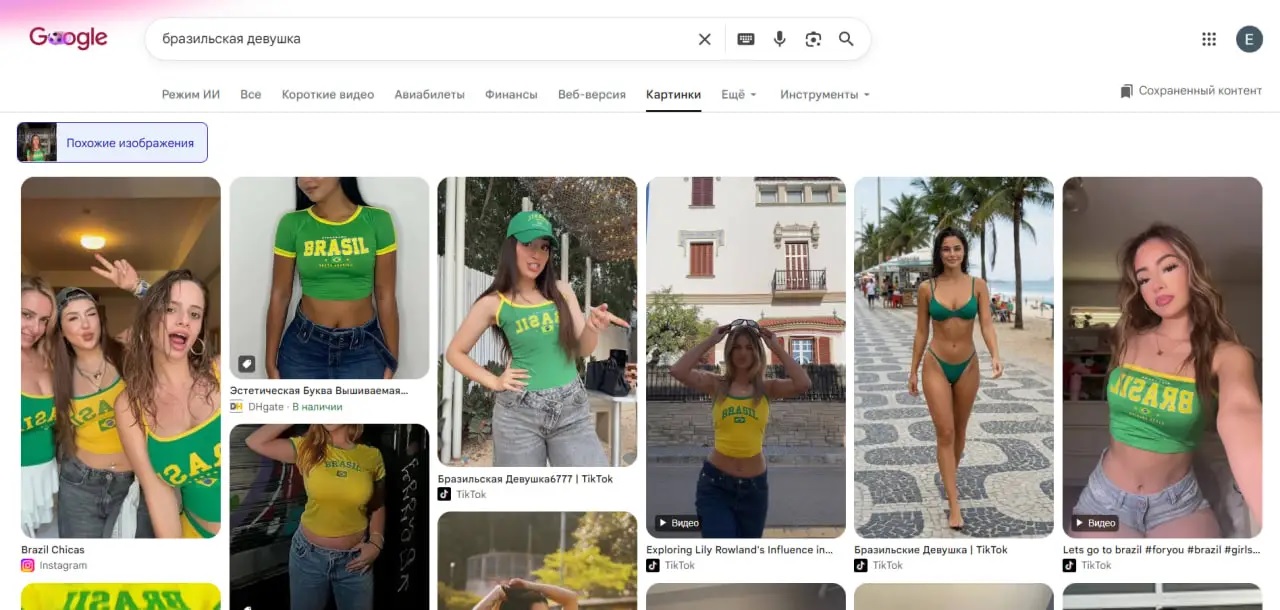
A life hack for more realistic UGC generation
If the goal is to achieve the look of a regular smartphone video, you don’t necessarily need to use a perfectly edited studio image. Sometimes source images that already look like clips from TikTok, Reels, or other vertical UGC content work better.
The neural network partially bases its output on the visual characteristics of the reference. Over-exposure, digital noise, everyday lighting, and typical mobile composition can help produce a more natural result.
Example 3: Image-to-video with a predefined character
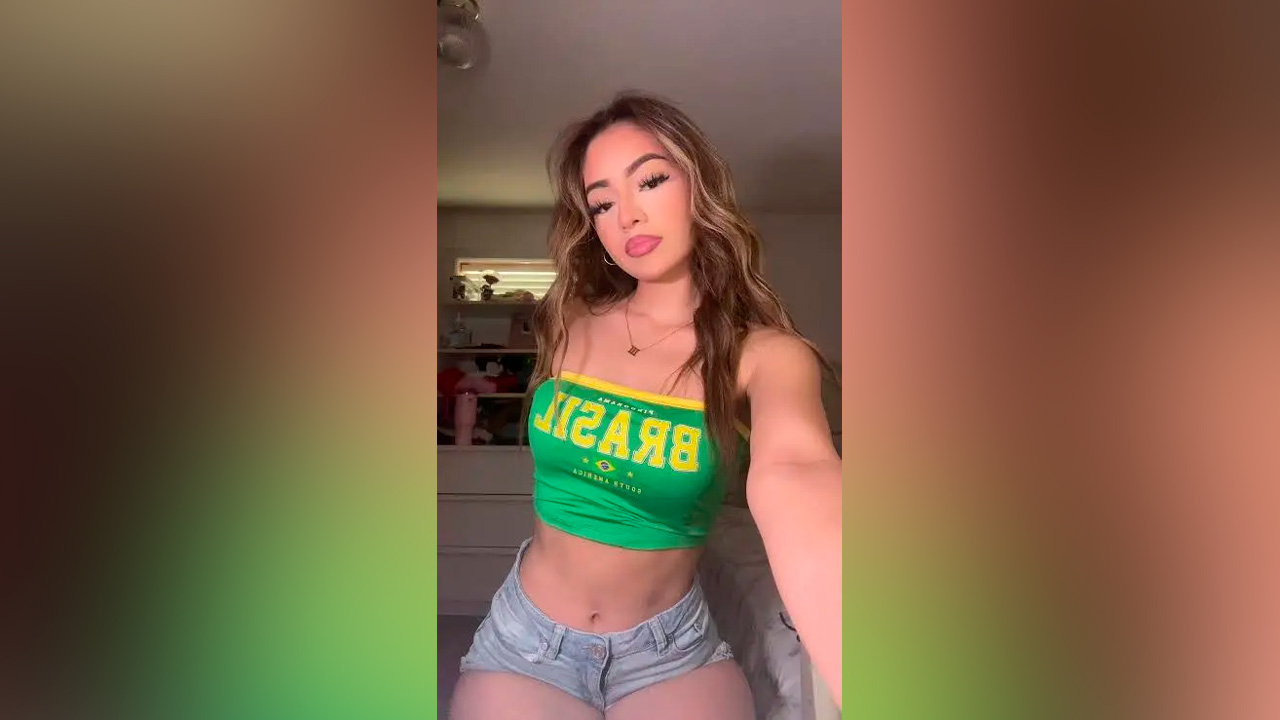
In the next test, we used a photograph of a character and additional interface images. The goal was to preserve the character’s appearance while achieving the feel of a casual, at-home mobile video.
Handheld phone footage, shot on an iPhone—casual, DIY style, not cinematic. Evening setting: a young woman of Mexican appearance sits at home in her apartment, on the bed. She’s wearing a Mexico flag T-shirt. She holds her phone up to the camera, showing a screenshot on the screen (I will provide the screenshot image). She says: “Les amis, this Chicken Road app has made me so rich that I’m getting hot flashes.” Then she pulls off her T-shirt (she’s topless underneath—wearing nothing). After that, she turns her phone back toward the camera, now showing a new screenshot (which I will also provide), and says: “Here’s how much I’ve earned so far.”Due to the imperfect source image, the generated video has a distinctive home-video look. At the same time, the model has preserved the character’s main features from the reference image quite well.
This is especially useful for AI bloggers: the same virtual character can be used as the basis for a series of AI-generated content and UGC videos.
Provocative NSFW creatives and working with complex scenes
Another test was designed to check how well the video model can combine several sequential actions within a single generation and preserve additional interface elements.
We used a character reference and an image of the app, and in the text prompt, we specified a sequence of actions within the scene.
Everything looks like a friend is filming with an old iPhone—no stabilization, poor lighting, realistic, and no professional production at all. A woman stands nude, holding a printed sheet of paper in front of her chest to cover her breasts. The sheet features a logo (see the subject in @Image2 e1 to view the attached image). She looks directly into the camera and says: "Hey, Chicken Road doesn’t work anymore. No one can make money off it. But I know how to do it." As soon as she finishes speaking, she tears the sheet in half and lets the pieces fall, revealing her bare chest. She then pulls out a phone, turns it toward the camera to show a screenshot (see @Image3 e1 to generate; attached), and says: “Download the app via the link. Sign up and get a bonus.”
It’s interesting that the neural network was able to independently create transitions between individual actions and integrate the interface image into the final video with relative precision. This is a significant step forward for modern AI-generated creatives: in the past, it was precisely the splices, text, and smartphone screens that often gave away a video’s neural network origins.
And here’s another example of creative content for the Ice Fishing gambling offer:
How to Make AI-Generated Creatives More Realistic
Based on the test results, we can identify several principles that help generate realistic UGC creatives using AI.
-
Describe the camera in detail. Specify whether it’s handheld footage, whether stabilization is used, whether digital zoom is used, and the nature of the cameraman’s movement.
-
Don’t strive for a perfect image. For UGC content, moderate noise, overexposure, everyday lighting, and slight out-of-focus areas are helpful.
-
Use appropriate references. The source footage should match the visual style of the final video.
-
Break down a complex script into scenes. A sequential structure—SCENE 1, SCENE 2, and so on—helps describe the video’s progression more accurately.
-
Check interfaces and text. Even modern video models can distort small text and app elements.
GenTrend.ai: trending NSFW creatives and video analysis
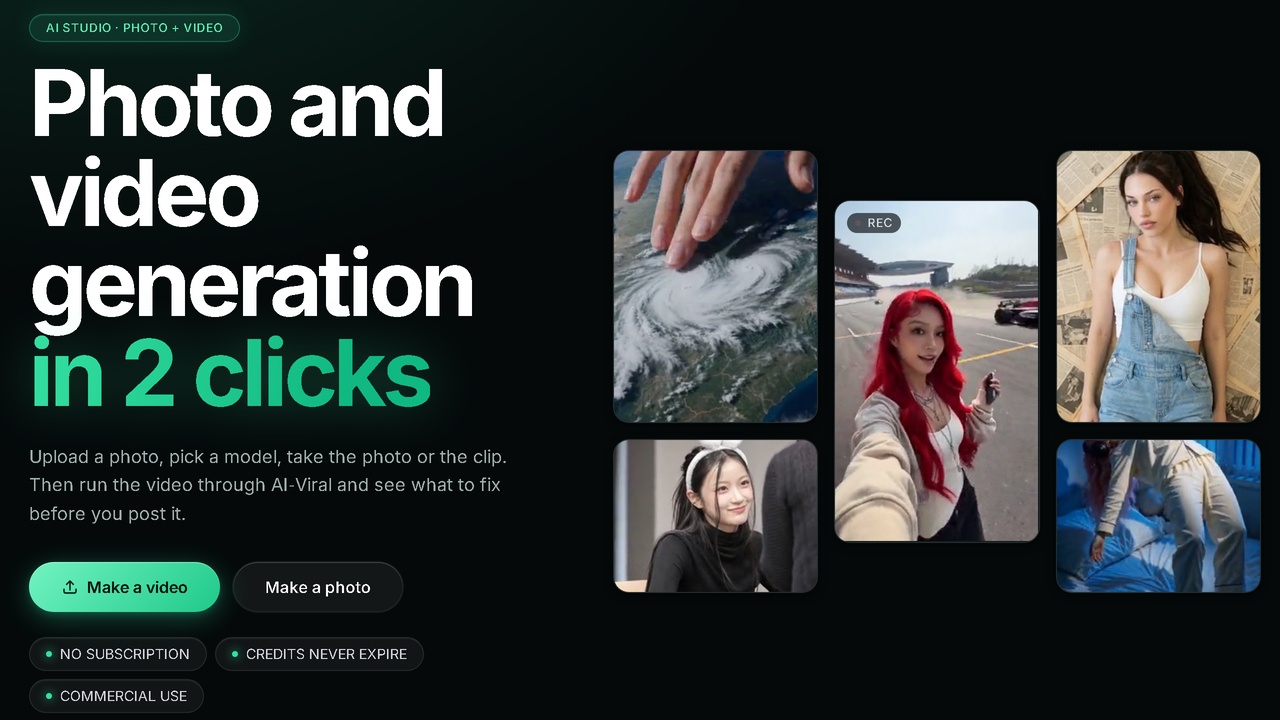
A pretty video is not enough: it has to win over the Reels, TikTok and Shorts algorithms. That is why we built GenTrend.ai, a service that generates trending content in 2 clicks and tells you in advance whether a clip will spread.
-
AI-Viral analysis. The service scores a clip before you post it on the metrics algorithms care about: hook, pacing, loopability. Then it gives you a concrete list of fixes.
-
Copying competitor videos. Motion from someone else's clip is transferred onto your character. In addition, "Prompt from video" turns the camera work, light and motion into a ready prompt.
-
Unique mechanics. Your persona's face stays the same from clip to clip, and Wan 3.0, Seedance 2.0 and 2.5 all run on one balance.
For AI OFM, there is 18+ content too. For example, a dedicated Seedream 5 Pro 18+ model handles explicit photos, while adult video is partially available through Wan 3.0. NSFW creatives like these help promote the model. However, they are allowed only on a fictional AI persona or your own face.
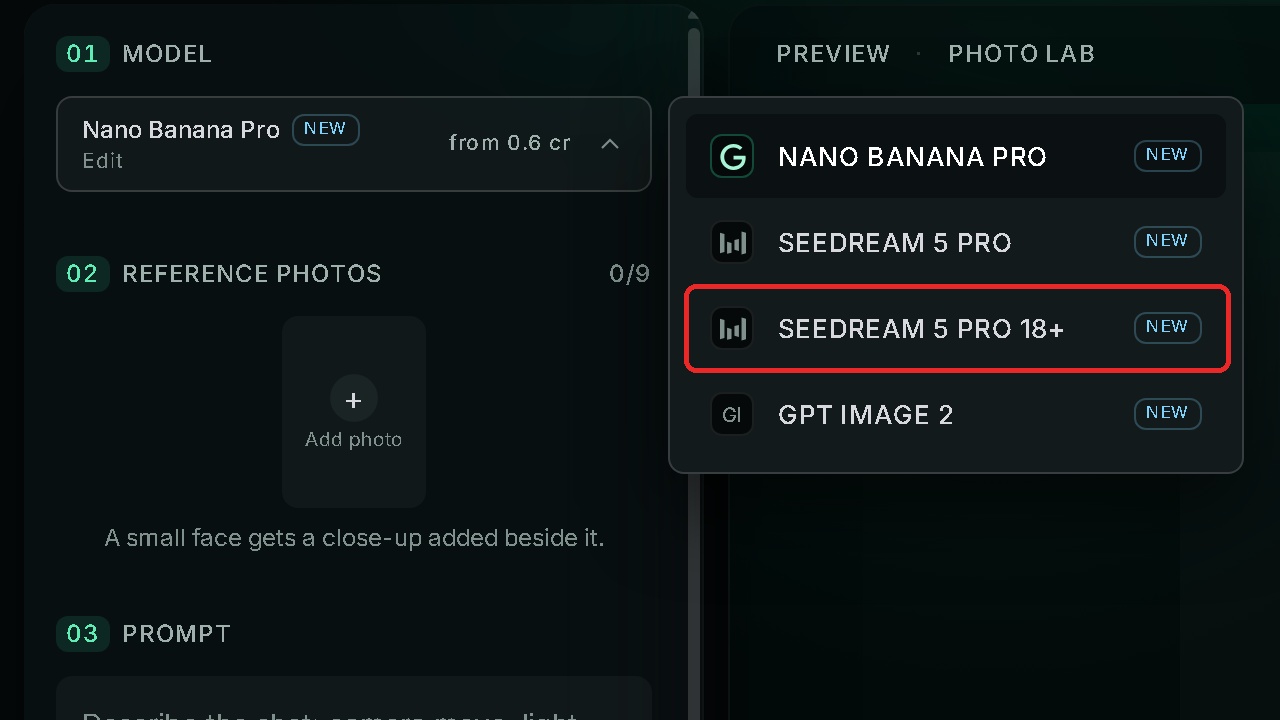
Pricing has no subscription: one credit costs $0.10 and never expires. Moreover, finished clips can be used in ads.
NSFW creatives for AI OFMs and AI bloggers: the bottom line
Generating NSFW creatives using neural networks has become significantly more accessible. What required complex production or technical expertise just a few years ago can now, in many cases, be put together much faster using AI video models.
The most notable progress has been in image realism. Modern models can mimic UGC footage shot on a smartphone: hand shake, glare, overexposure, digital noise, sudden camera movements, and other details typical of amateur video.
Handling of complex elements—such as transitions between scenes, images on screens, and visual references—has also improved. Although artifacts still occur, the resulting AI content in successful generations looks significantly more natural.
This opens up new possibilities for AI OFM and projects featuring AI bloggers: you can test different concepts faster, create AI UGC, experiment with image-to-video, and generate a series of creatives centered around a single virtual character.
The cost of generation depends on the chosen platform, model, resolution, and video length. Therefore, before scaling up, it’s important to evaluate not only the visual quality but also the cost per successful generation.
At the same time, AI video technology continues to evolve. New generations of models are improving their handling of motion, faces, references, text, and interfaces. As a result, creating realistic NSFW creatives and content for AI bloggers will likely become even easier and more accessible. This makes it easier to figure out how to start making money with AI OFM without expensive tests and generations.
How to Use NSFW Creatives on Telegram for Betting and Gambling
As a rule, AI OFM niches focus on monetization through selling private 18+ content and receiving donations. However, one of the easiest additional monetization methods is redirecting traffic to offers in niches such as betting, gambling, and binary options.
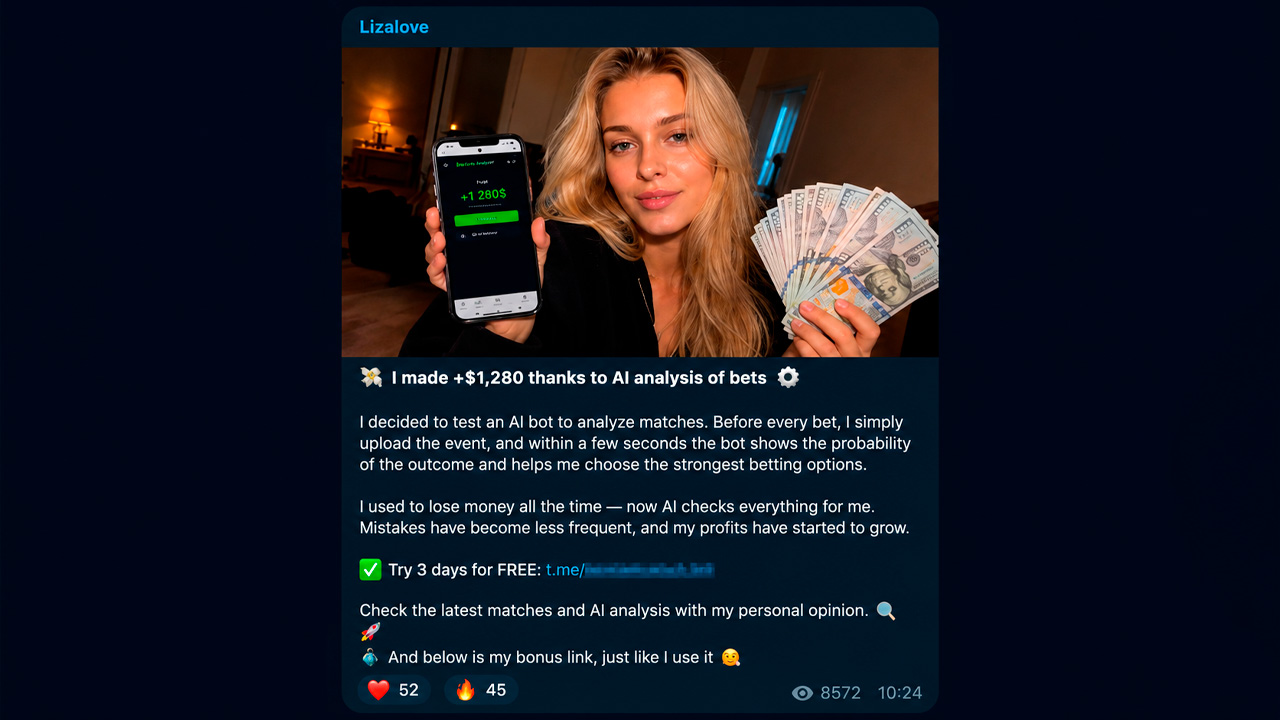
You can start publishing posts related to sports betting in your model's Telegram channel, for example, during the FIFA World Cup or when new games are released in the iGaming industry. This can encourage your audience to follow your referral links.
However, attracting traffic to AI OFM channels remains one of the main challenges for affiliate marketers. We covered the available options for how to promote an 18+ Telegram channel in a separate article.