Half your gym slots sit empty, referrals trickle in once a month, and paid ads burn cash without a single booking. Sound familiar? Then landing new personal trainer clients is about rent money, not a marketing hobby.
Most coaches wait for members to approach them on the floor or leave flyers at the front desk. But that flow is capped by club traffic: once the regulars run out, so do the sessions. Online it gets worse, because a coach without a personal brand looks like one more fitness account among thousands.
Below we cover how to package yourself and a Telegram channel, the path a stranger takes before paying, and seven ways to win clients in 2026, from AI commenting to SEO articles and free challenges.
Personal Brand First: What Personal Trainer Clients Check
Traffic is wasted if people land on an empty profile. So build what a future client will see before you promote anything.
Pick a Niche and a Promise
"Fitness coach" sounds like everyone else. However, "fat loss for men over 35 who refuse to skip dinner" filters out the wrong people and pulls in the right ones. Choose a single audience, a single pain and a measurable outcome.
- Weight loss: busy women aged 30–45, promise of 10 lb down in two months with three workouts a week.
- Muscle gain: skinny guys aged 18–25, about 9 lb of lean mass per season plus a simple meal plan.
- Back health: office workers, a pain-free back in six weeks.
- Postpartum: moms with kids under two, 30-minute home sessions.
A narrow niche also makes everything else easier, because you know what to post, where your audience hangs out and what to put in an ad.
Set Up Your Telegram Profile
Use a name like "Alex | Fat Loss Coach". Pick a real photo from the gym with no logos or collages. In the bio, state a client result and a call to action. Then attach your channel under "Personal Channel" so everyone who opens the profile sees it.
What to Post on a Coach's Channel
This feed acts as a storefront and as proof that you know your stuff. So keep four or five regular rubrics and publish three or four posts a week:
- Form breakdowns prove expertise, for example "3 squat mistakes that wreck your knees".
- Meal of the day gets saves and shares, for instance "What I eat while cutting".
- Client stories remove doubt, for example "15 lb down in 10 weeks without starving".
- Q&A posts spark comments, like "Is eating after 6 pm really bad?"
- Behind the scenes builds trust in you as a person, not just in your knowledge.
- A free challenge gets its own rubric and the pinned slot, since newcomers request to join for it.
Here is how coach Alexey Mironov's feed looks: a squat technique breakdown and a client case with before-and-after photos. Even three or four posts like these show a visitor what you offer.
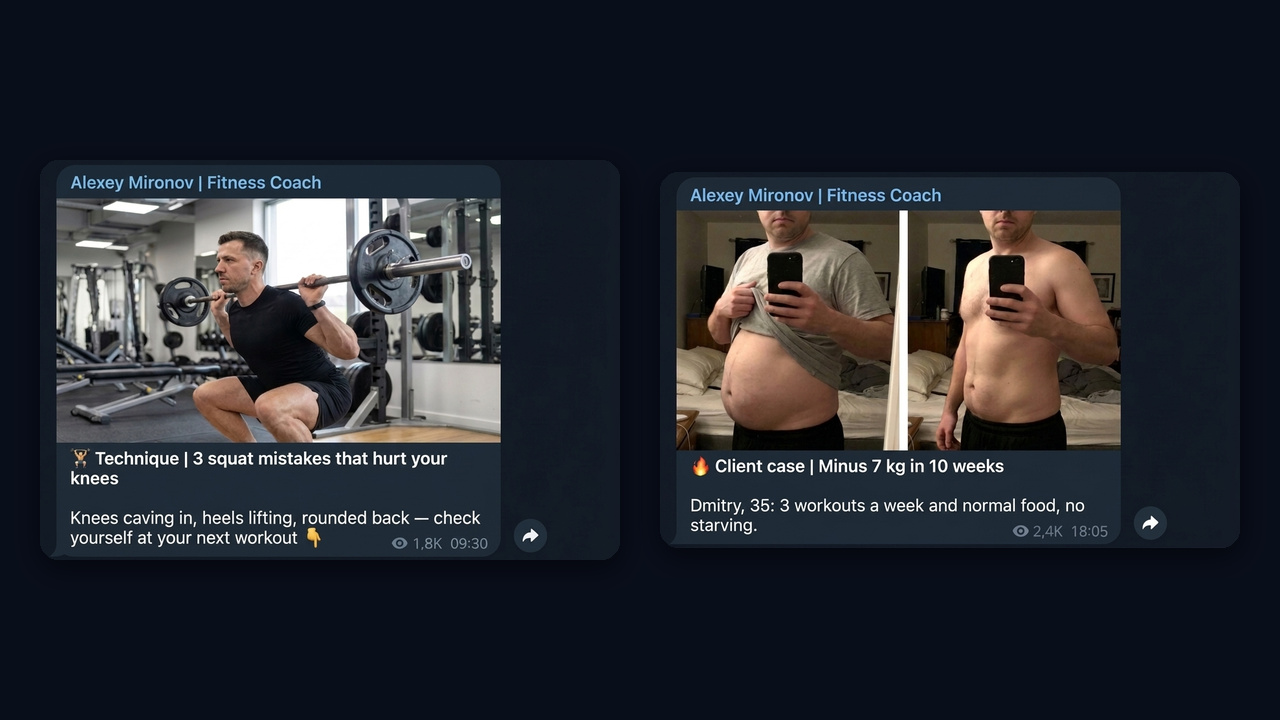
Pin a short post that says who you are, whom you help, what coaching costs and how to book. No channel yet? Start with our guide on how to create a Telegram channel.
How Personal Trainer Clients Move From Post to Payment
People rarely buy on first contact. First they notice you, then they check your profile and channel, try something free and only after that send a message.
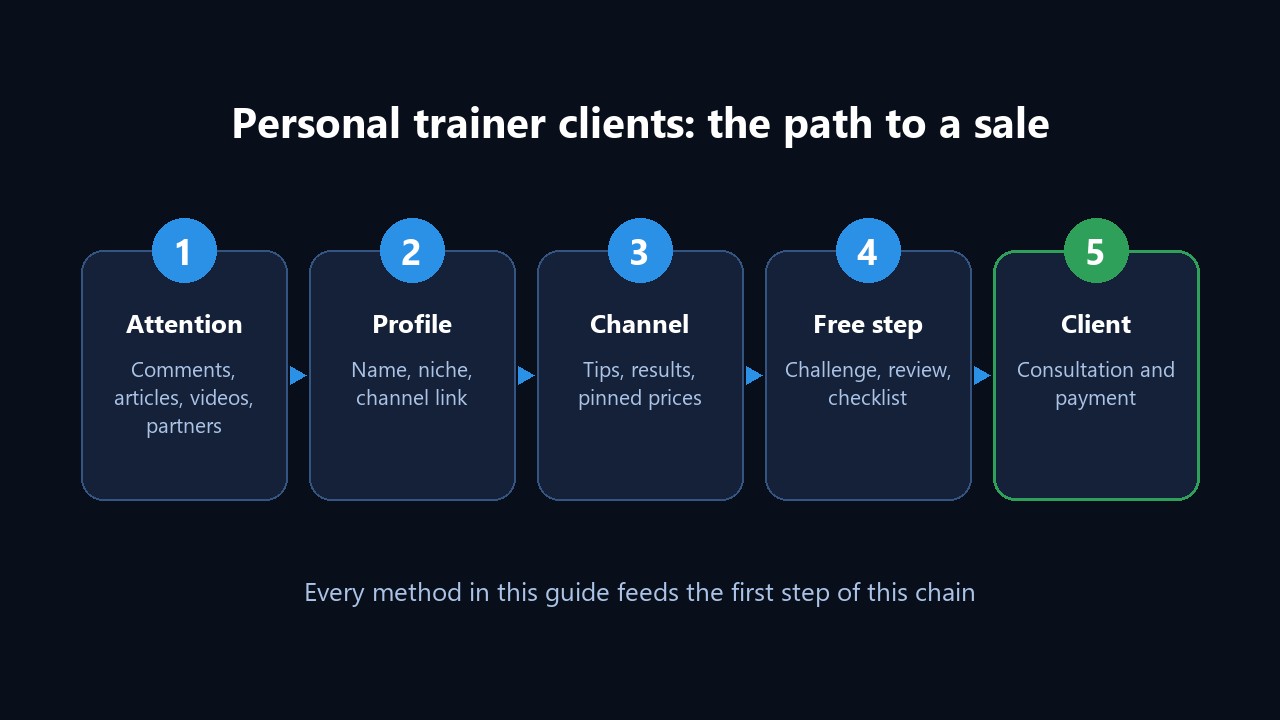
That gives a simple rule: the methods below handle step one, while your packaging handles the rest. As a result, weak spots show up in the numbers. For example, profile visits without subscribers point to a weak channel. If subscribers never message you, check the pinned post and the free offer instead.
7 Ways to Get Personal Trainer Clients
1. Neurocommenting Plus Mass Reactions
Your future trainees already hang out in the discussions under fitness channels, weight-loss groups and recipe pages. There they argue about diets, complain about plateaus and ask for advice. So the goal is to show up in those threads early with something useful to say. Doing it by hand eats hours every day, which is why a pair of GramGPT modules can carry the load.
The setup runs in four steps:
- Comment. The coach account posts a helpful reply under a post.
- Coach profile. A reader opens it and finds the channel with the challenge.
- Athlete profile. A second account leads through a bridge channel with a free guide.
- Reactions. Mass Reactions pull in the people who ask questions.
Step 1. An Expert Comment
The neurocommenting module reads new posts in the channels you choose and posts a relevant, sensible reply on the topic. Under a crash-diet post, for instance, it might write: "Workouts like this only earn you knee problems, and living on plain rice won't get you real results. Balanced meals plus smart training work: one of my trainees got really lean."
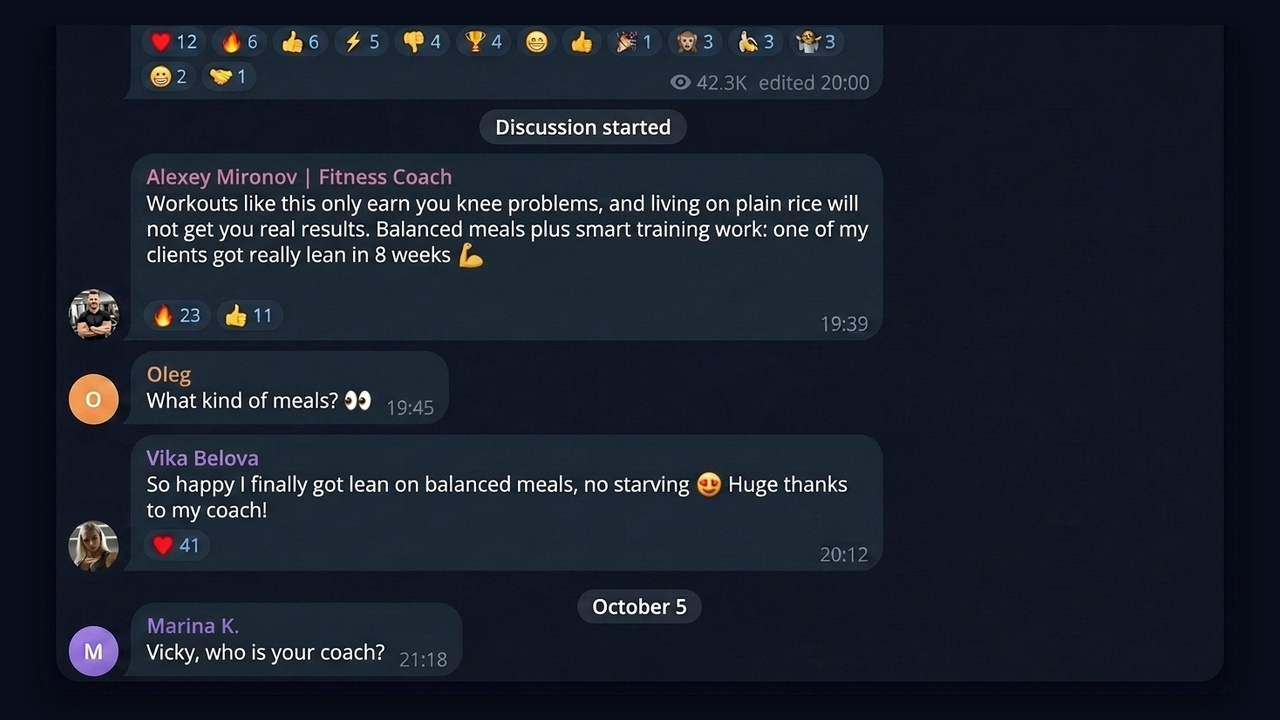
A reply like that doesn't sell outright. Instead, it shows experience, triggers replies like "what kind of meals?" and sends readers your way. Collect target channels in advance: the parser for channels with open comments finds fitness, clean-eating and weight-loss pages by keyword.
Step 2. The Coach Profile With a Channel
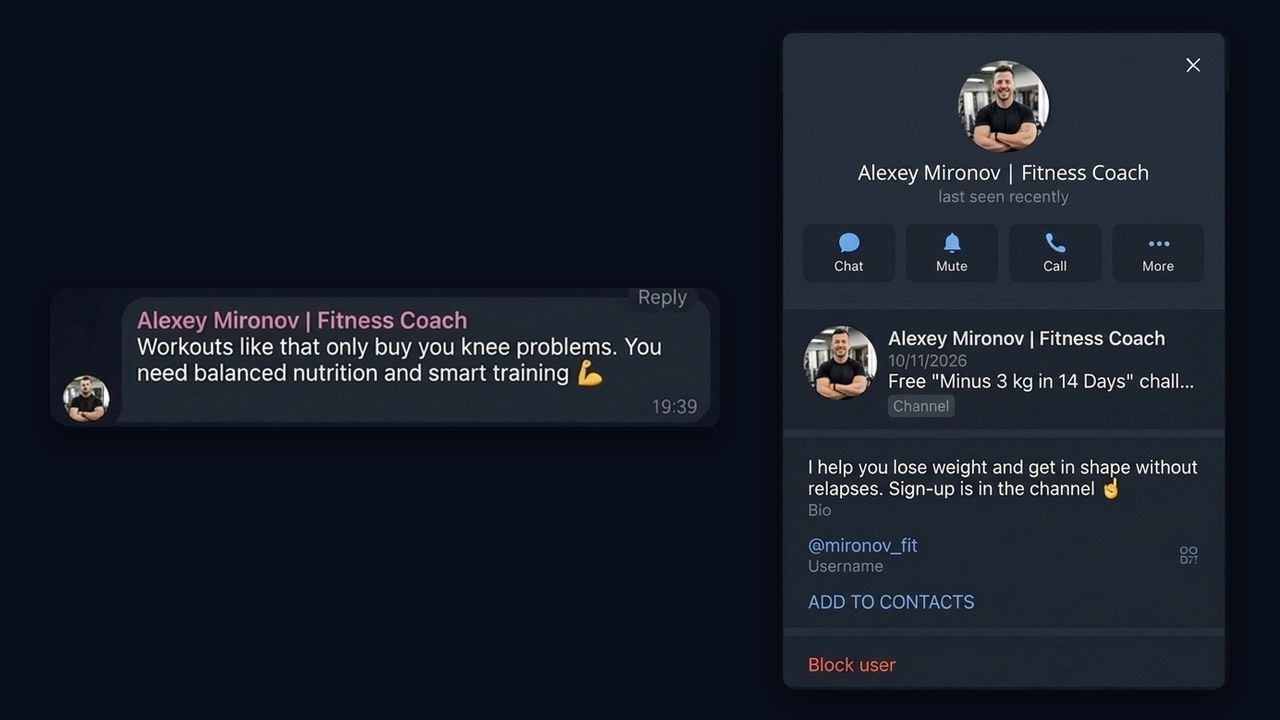
Name "Alexey Mironov | Fitness Coach", a gym photo and expert notes on common mistakes. Whoever taps the name sees a personal channel with the free challenge right away, so this version attracts people already shopping for a coach.
Step 3. The Athlete Profile and a Bridge Channel
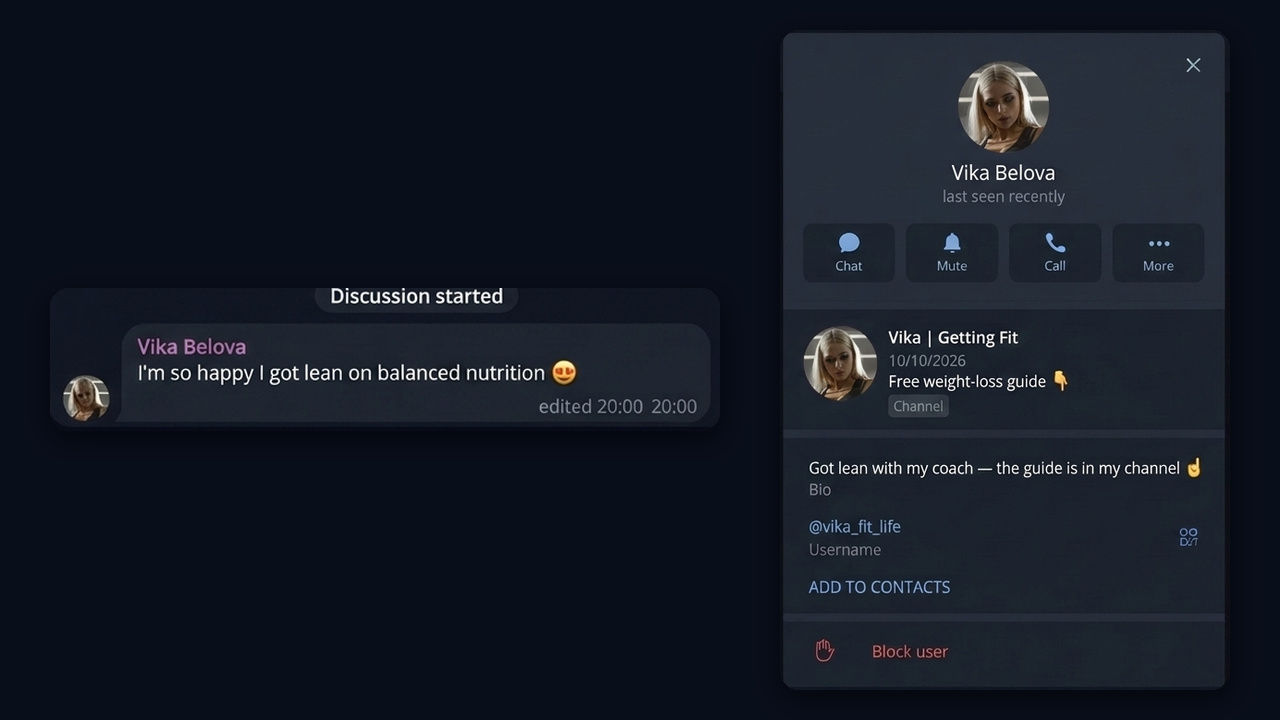
The second account is Vika Belova, who shares her result in the thread. Her profile, however, pins a bridge channel called "Vika | Getting Fit" with a free guide rather than the coach's channel itself.
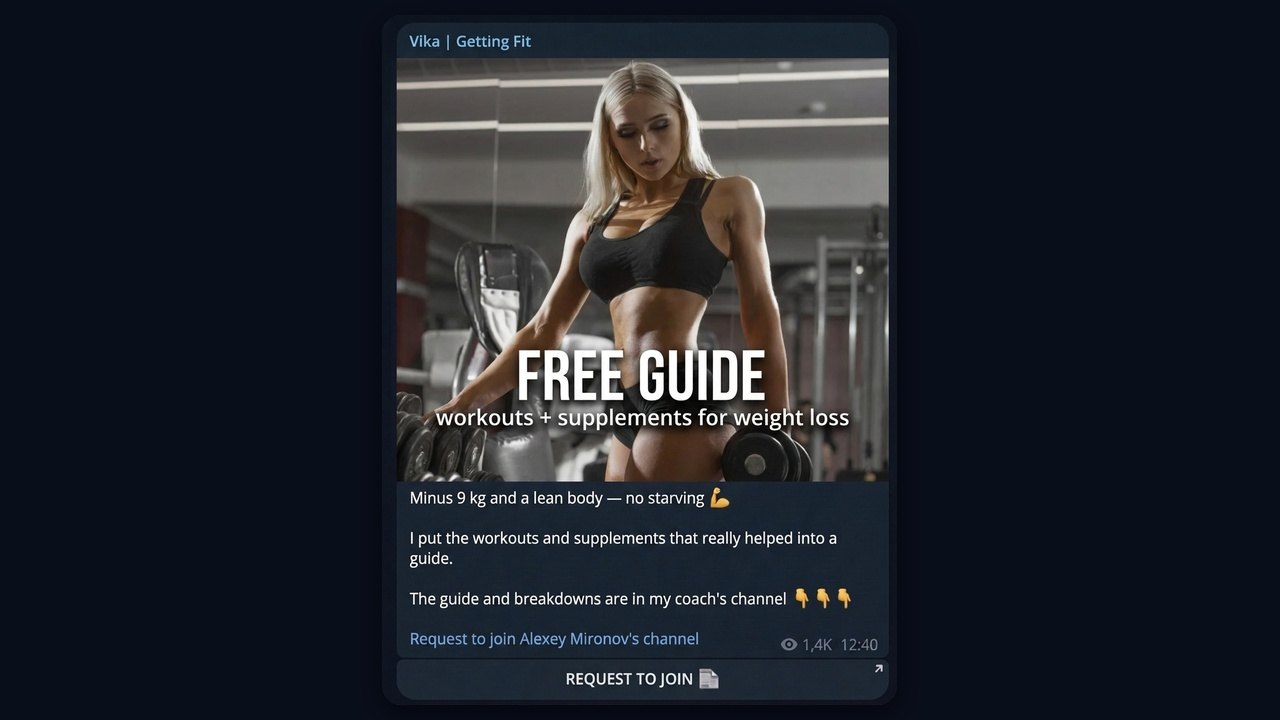
The bridge channel holds one engaging post: Vika's gym photo, a guide to workouts and weight-loss supplements, and a Request to Join button that leads to the coach. That is how curiosity about a great figure turns into a subscription, and how personal trainer clients find you without ads.
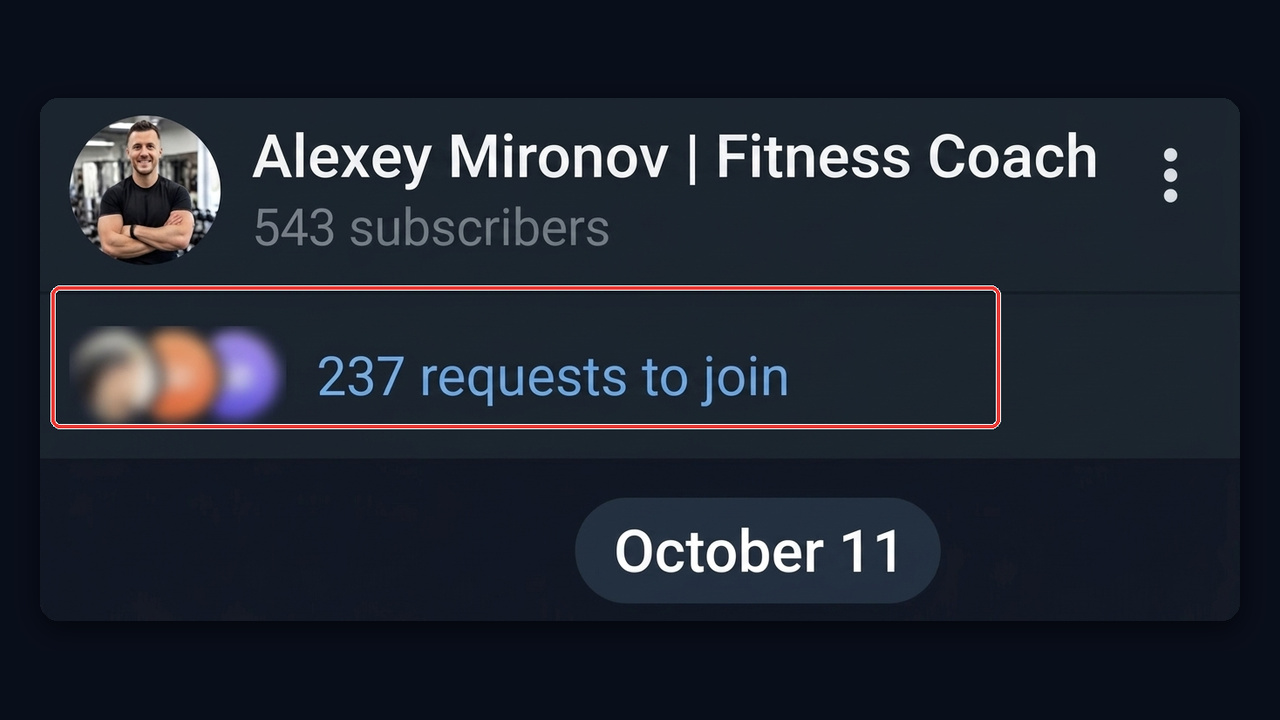
The payoff shows up in the coach's own channel: 543 subscribers plus 237 pending join requests. Requests are handy, because you can approve each candidate when the challenge starts and message them right away.
Step 4. Mass Reactions Bring In the People Who Ask
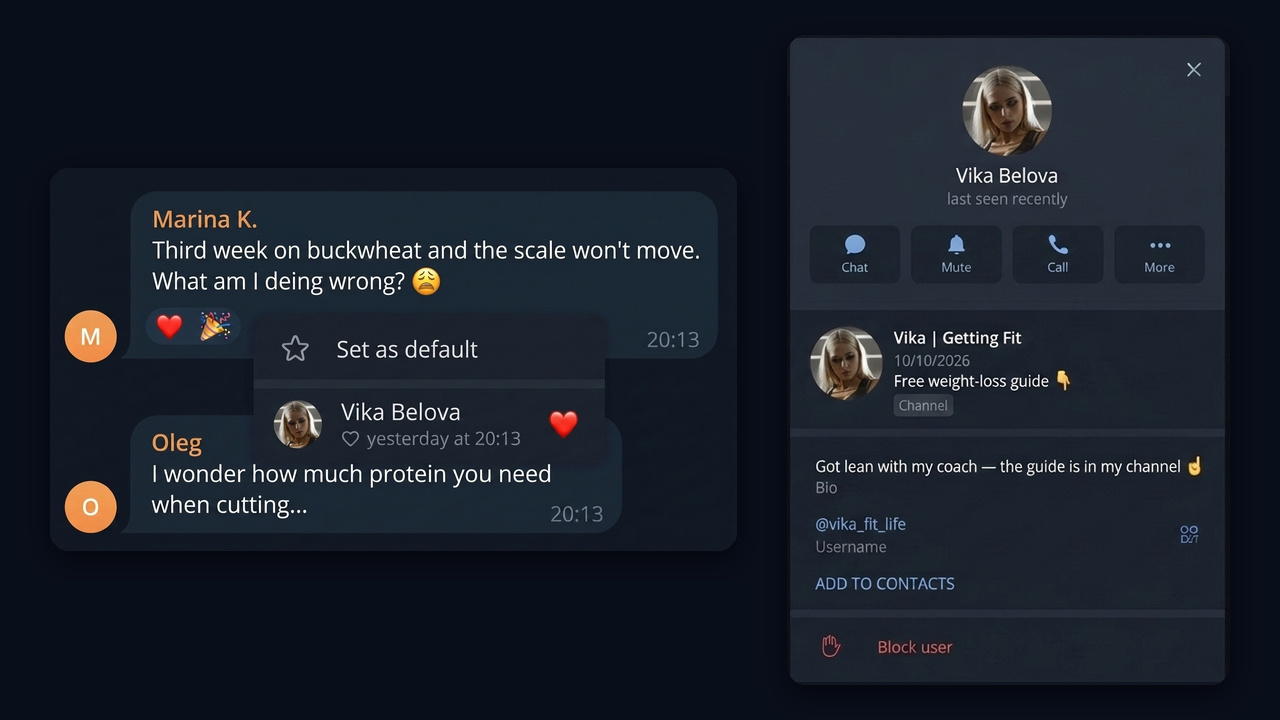
The Mass Reactions module reacts to what users write in discussions, not to the posts themselves. Vika's account drops a ❤️ on audience questions in the same fitness channels. Each person gets a notification, opens her profile and lands on the same guide channel. On the left you see the reaction as the user does, on the right the profile they open.
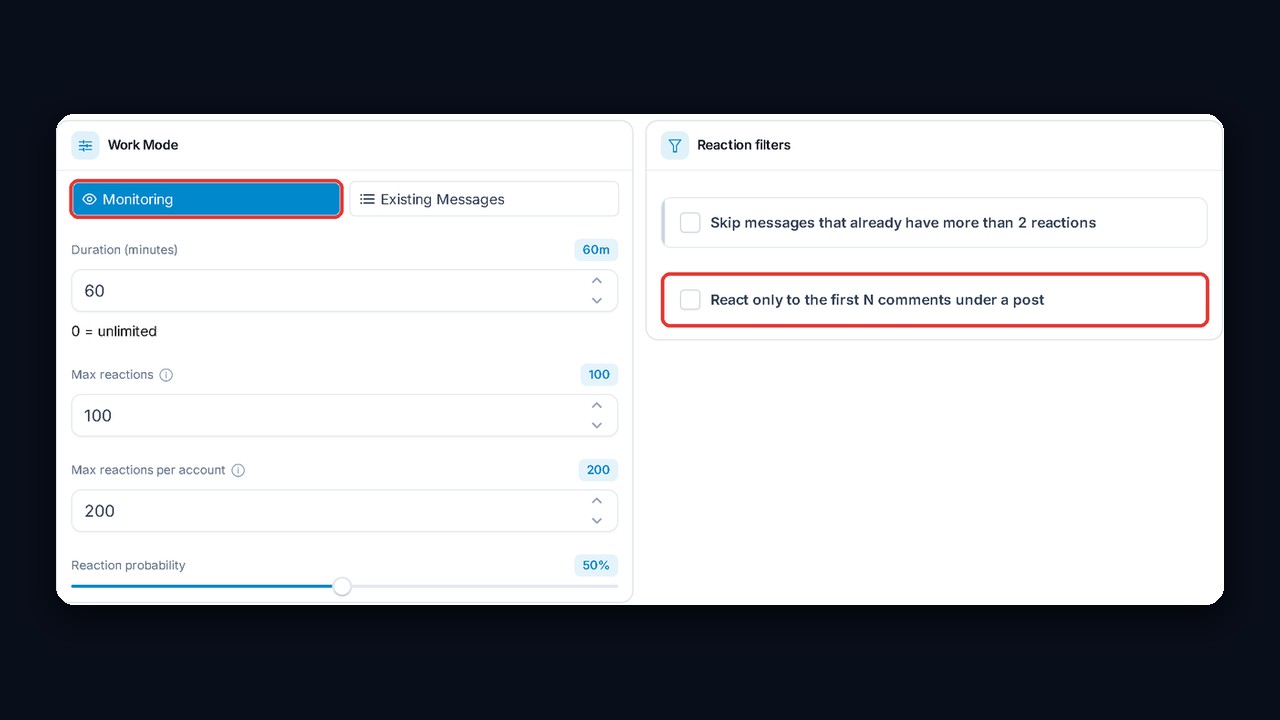
In the settings, choose Monitoring mode and set a per-account cap. Also turn on "React only to the first N comments under a post", because early commenters are the most active readers and click through most often.
In other words, both modules work as one funnel: neurocommenting answers questions with expertise, while Mass Reactions pull in the people who ask them. Just keep every reply helpful rather than salesy, with no links and no "DM me". Admins then leave them alone, and readers come to the profile on their own. That's how personal trainer clients arrive without an ad budget or hours of manual work.
Want to see the setup in action? Watch the video:
2. An SEO Site With Helpful Articles
Every day people google how much protein they need to bulk or why the scale won't move. If your page answers that question, the reader already sees you as the expert.
So publish articles about nutrition, fat loss and muscle gain on your own site. A few ideas:
- "How many calories to eat to lose weight without binges";
- "Why your weight is stuck: 7 causes of a plateau";
- "Bulking for skinny guys: a weekly menu";
- "Cutting for women: food and training".
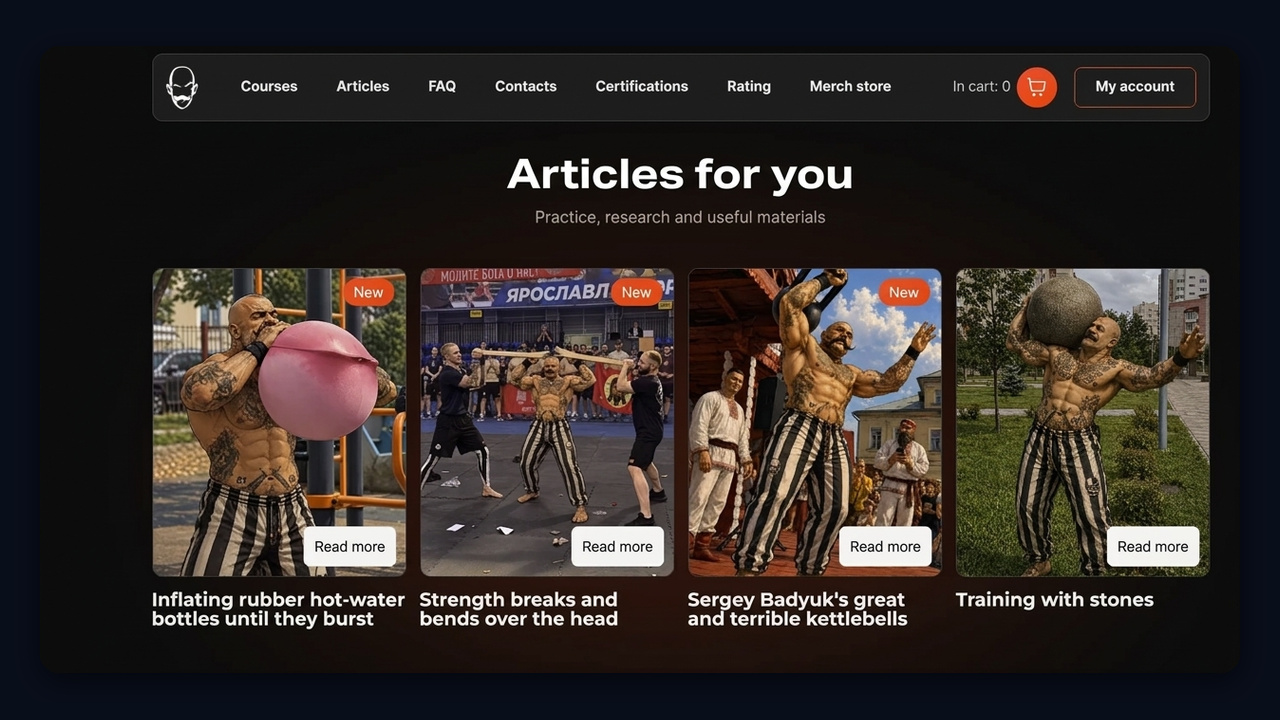
Think of an athlete's personal site with a blog about strength stunts, workouts and breakdowns. Those posts climb in search, bring visitors to the site, and from there people move to a paid course or to social media, for example a Telegram channel with a free challenge.
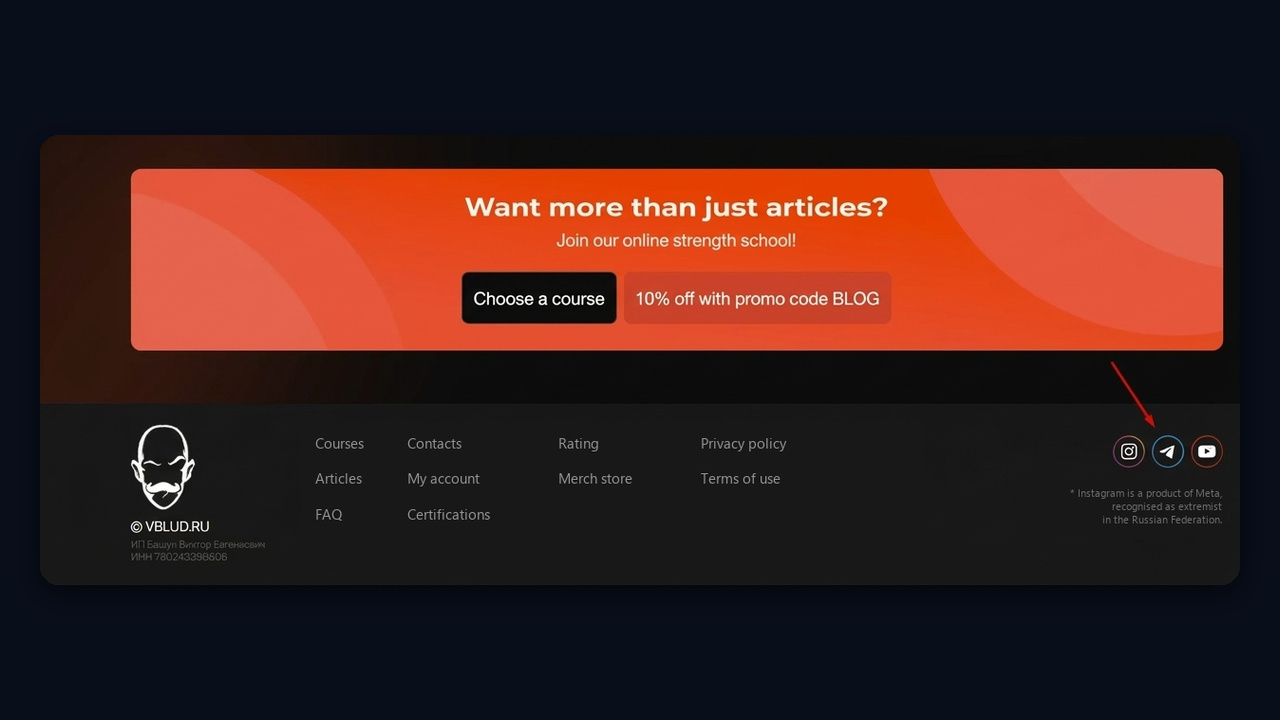
End every article with a block like "Want a custom plan? Join the channel". But expect a slow start: a site needs three to six months to rank. After that, though, it brings readers for years at no cost, and the blog doubles as your portfolio.
Also add a services page with prices, reviews and a booking form. That way a reader who found an article useful sees the next step right away, and personal trainer clients arrive already asking the right questions.
3. Short-Form Video
For instance, Reels, Shorts and TikTok give reach with zero ad spend. Film 20–40 seconds: a form mistake, a nutrition myth or a home exercise. Then mention on screen and in the caption that the full breakdown and the program live in Telegram.
Client transformations (with permission) and reactions to advice from big fitness influencers perform best. But argue with facts, never with personal attacks.
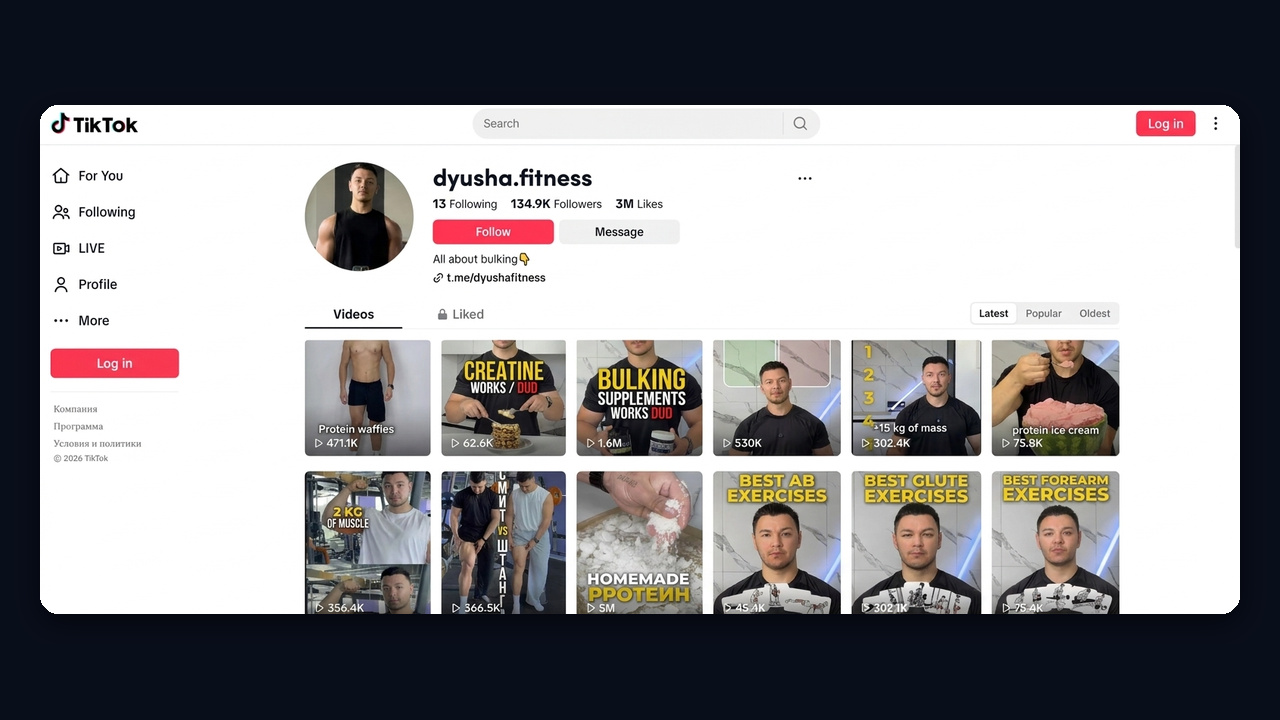
For example, a bulking coach gathered more than 130,000 TikTok followers with short breakdowns of supplements and exercises. His bio holds a single link, and it leads to a Telegram channel.
4. A Free Challenge
A 7–14-day fitness challenge removes the beginner's biggest fear: "what if it doesn't work for me". People test your approach for free, see a first result and are then far more willing to pay for coaching.
- Pick a theme such as "14 days without sugar" or "Abs in two weeks".
- Gather participants in a private group.
- Post a daily task and review check-ins.
- At the finish, offer participants a discount on one-on-one coaching.
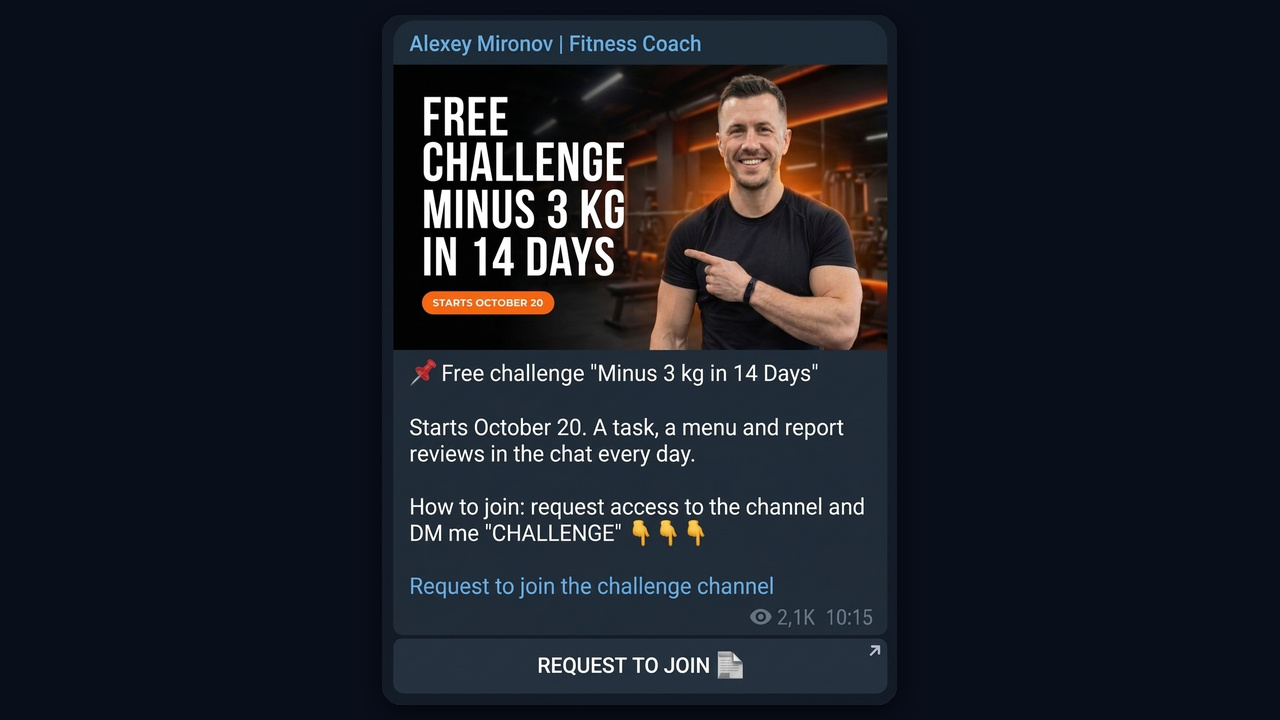
Finishers are the warmest personal trainer clients you can get, since they already trust your method. Besides, weight-loss challenges draw steady search demand, so the announcement is easy to push with the same comments and articles. Pin an announcement with the start date and a join button in your channel.
5. Collaborations and Cross-Promotion
Your audience also follows your neighbors in the market: dietitians, massage therapists, supplement stores, yoga studios. Offer a swap where you host a live session on their page and they host one on yours. Alternatively, run a joint challenge where each partner covers their part.
Paid shoutouts in niche channels work as well. A client case sells hardest: a before-and-after photo, a time frame and a clear next step. For instance, in a health channel the coach shows a client's four-month result and invites readers to the free challenge.
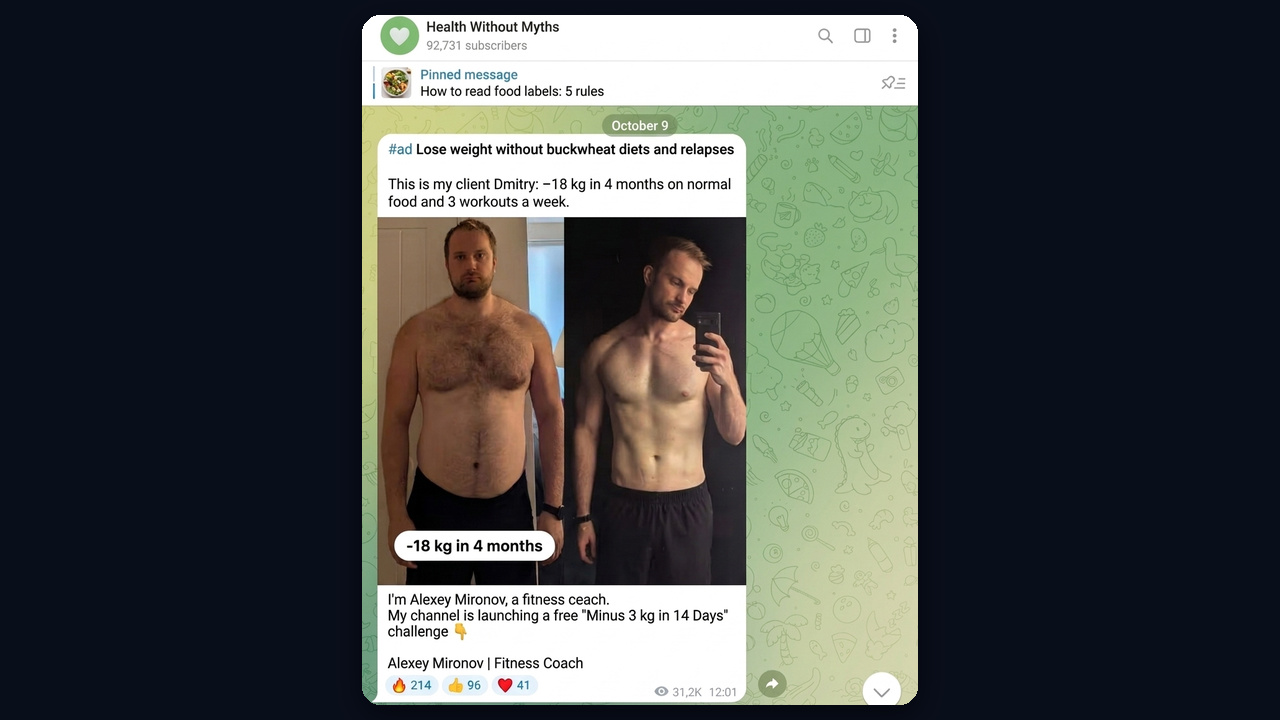
Before buying, however, check reach, real comments and cost per subscriber. Small local or niche ones usually pay off better than huge "about everything" ones.
6. Local Personal Trainer Clients: Platforms and Maps
For in-person training, use sites where people actively search for a coach, such as Thumbtack or Bark. Photos, reviews and reply speed decide everything there. Next, create a Google Business Profile with your gym address. This kind of personal trainer marketing is cheap, and leads come from people who live nearby.
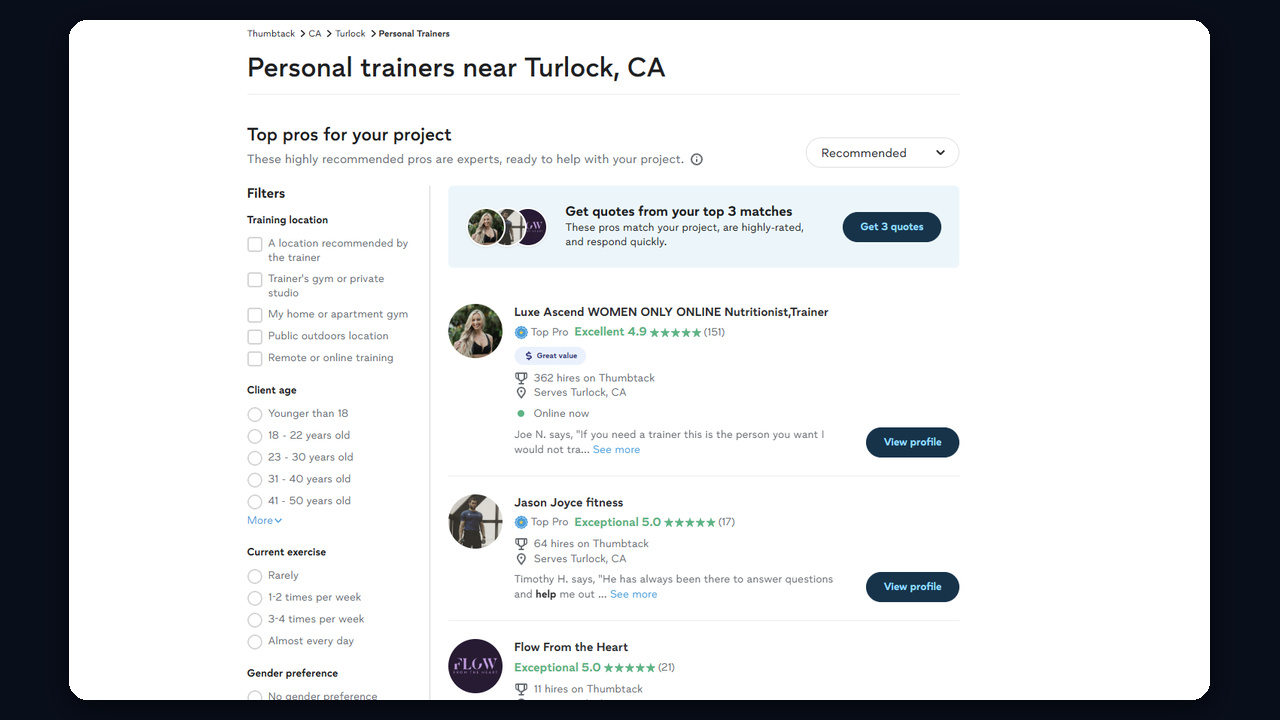
On Thumbtack, for example, the top profiles show a rating, the number of hires and a quote from a client. Your club can help too. Agree on one free intro session for new members, so newcomers get value and you get a chance to sell coaching packages.
7. Client Results and Referrals
A happy trainee sells better than any ad. Ask for a review with before-and-after photos, turn it into a post and pin it under client stories. Then add a referral bonus, for example a free session or a week of coaching for every friend they bring. Referred personal trainer clients also tend to stay longer, because someone they know vouched for you.
Which Method to Choose: Comparison
| Method |
First leads |
Budget |
Format |
| AI commenting + Mass Reactions |
1–2 weeks |
Medium |
Online and offline |
| SEO site |
3–6 months |
Low |
Online |
| Short video |
2–4 weeks |
Zero |
Online |
| Free challenge |
2–3 weeks |
Low |
Online |
| Collabs, shoutouts |
1–2 weeks |
Medium |
Both |
| Thumbtack, maps |
A few days |
Low |
Offline |
| Results, referrals |
Ongoing |
Zero |
Both |
If you're new, pair a fast channel (comments or a local platform) with a slow channel (SEO or video). So money arrives early while the long-term flow keeps growing.
Turning a Message Into a Paying Client
Someone messaged you, so don't scare them off with a price in the first reply. First ask three or four questions about goals, experience and health limits. Next, offer a free consultation or a 20-minute trial session.
After that, name your rate and give options: a single session, a pack of eight or a month of online coaching. Three choices beat one because people decide "which one", not "whether to buy at all".
When requests pile up, hand the first conversation to Neuro Dialogs. The AI follows your script in DMs: it clarifies goals and limits, offers the free consultation and books a time.
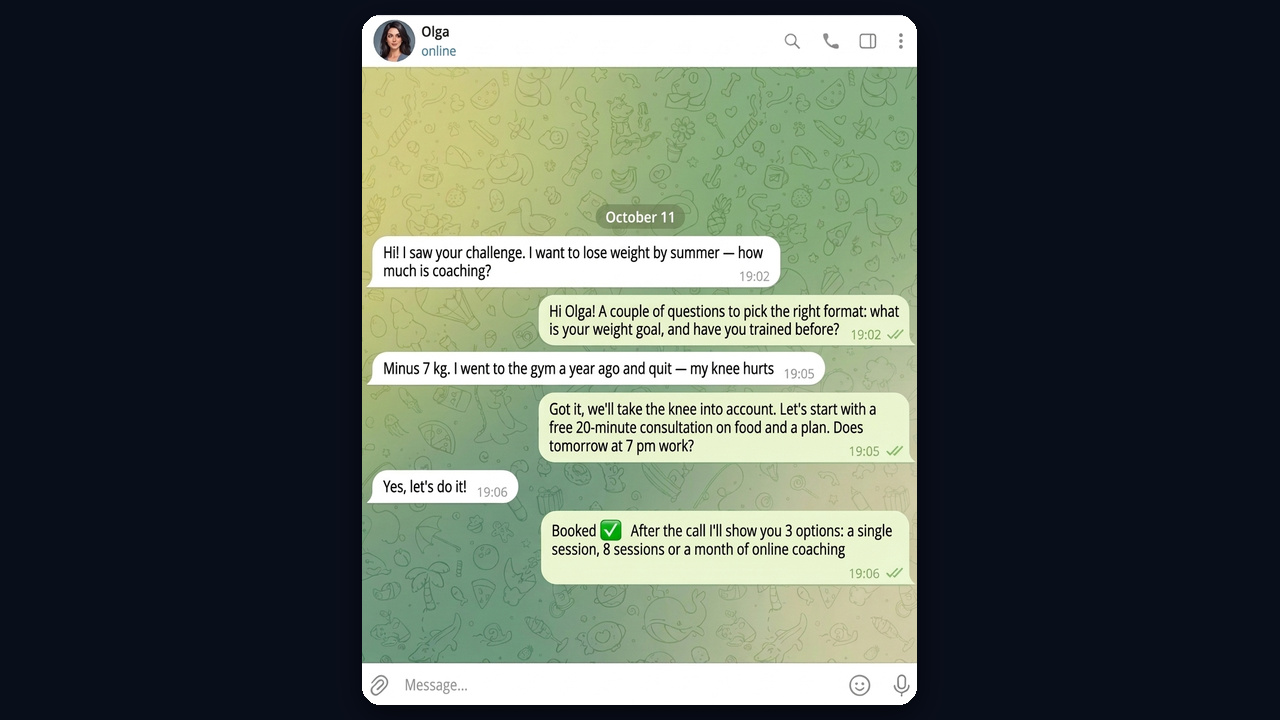
All that's left for you is the call itself and closing the sale.
Mistakes That Keep Personal Trainer Clients Away
| Mistake |
Do this instead |
| "I train everyone" |
One niche and a concrete result |
| Empty profile, no channel |
Photo, niche in the name, pinned prices |
| Links in every comment |
Value in the text, but the link only in the profile |
| Price before conversation |
First questions and a trial, then the rate |
| No reviews |
Collect results from your very first client |
Conclusion: Winning Personal Trainer Clients in 2026
The formula is simple: niche and packaging, then a stream of attention, then a free step and a private consultation. Of the seven methods, AI commenting with Mass Reactions and local platforms bring the fastest results. SEO articles and video, meanwhile, build a steady long-term flow.
So pick two methods, track every lead and after a month keep the one that brings more clients. In the end, your schedule stops depending on how busy the gym is.