You post fresh deals every day, the codes work, and yet your Telegram discount channel is still stuck at a few hundred subscribers. Everyone loves a bargain, so why does nobody join?
However, the problem is rarely the content itself. Most deal channels copy each other, share the same codes and rely on "please share with friends" as their only promotion. As a result, a new reader sees no reason to pick you, and paid ads barely pay off.
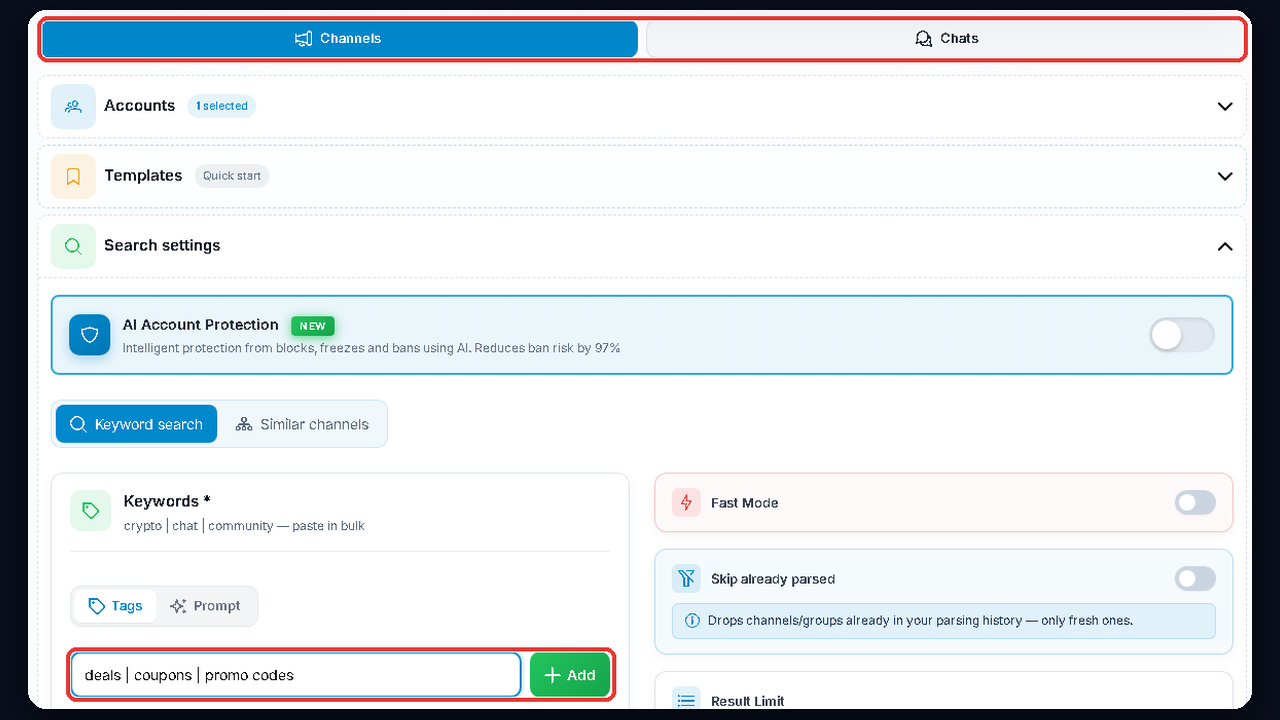
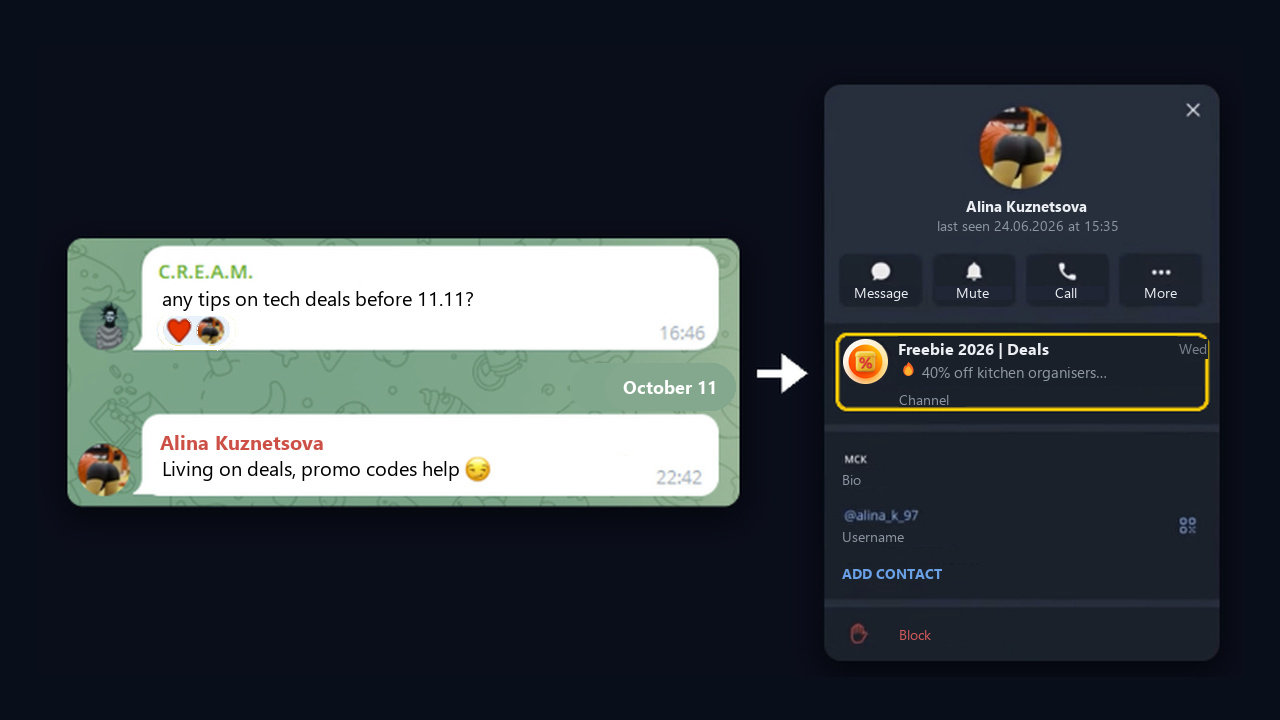
Below you will find what to prepare before promotion and the top 10 ways to grow a deals channel, from paid shoutouts and mass tagging to shared folders and Telegram search. For each method we cover how it works and where people usually go wrong.
Why a Telegram Discount Channel Stops Growing
There are usually three reasons. First, the "deals on everything" theme: readers cannot tell you apart from a hundred similar feeds. Second, single codes instead of curated sets, so each post offers little value and nobody forwards it. Finally, there is no outside traffic, which means people simply never come across the channel.
In other words, promotion starts before advertising: the channel must be clear and useful from the very first screen.
What to Prepare Before Promoting a Telegram Discount Channel
First, narrow the niche. For example, marketplace finds for the home, tech deals, or food delivery codes for one city. A focused theme grows faster, because visitors instantly see why they should join.
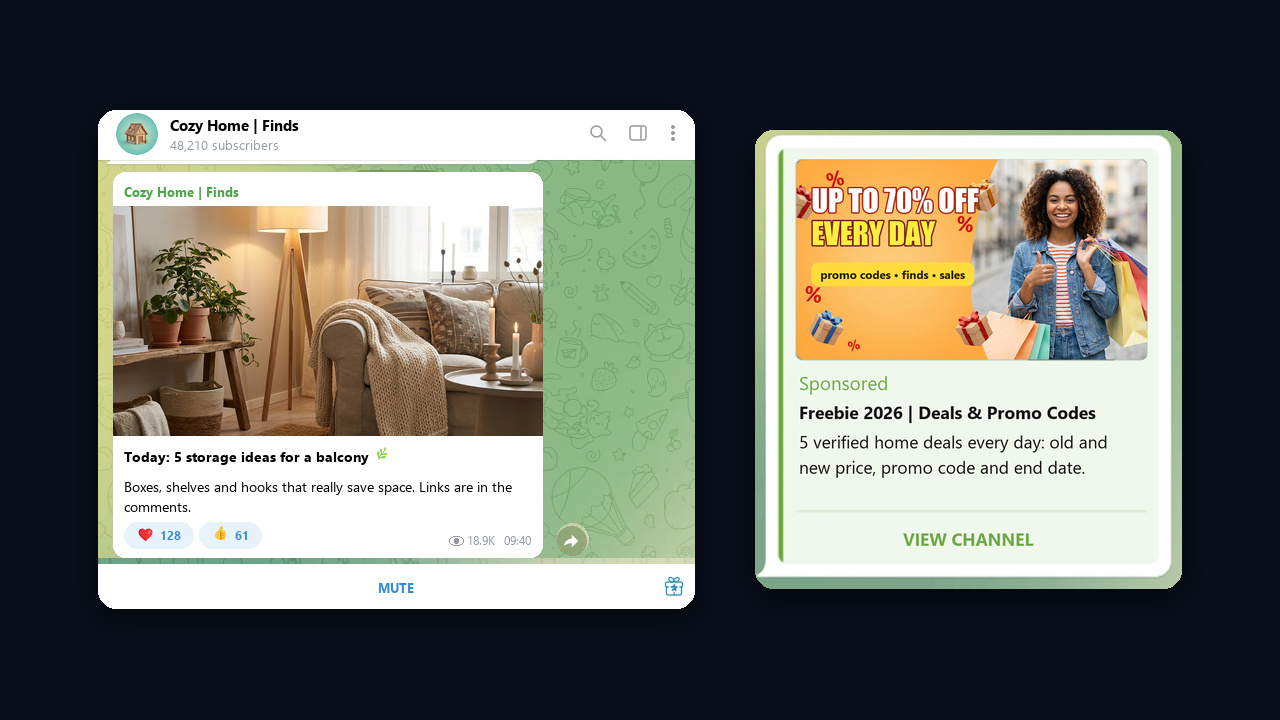
Next, set up the profile: a name that shows the niche, a description with a clear benefit ("5 verified kitchen deals every day") and a pinned post with categories. In addition, publish 15–20 curated posts in advance, since traffic sent to an empty feed is wasted. Exclusive codes give one more reason to join: ask a store for a personal promo code that only your audience gets.
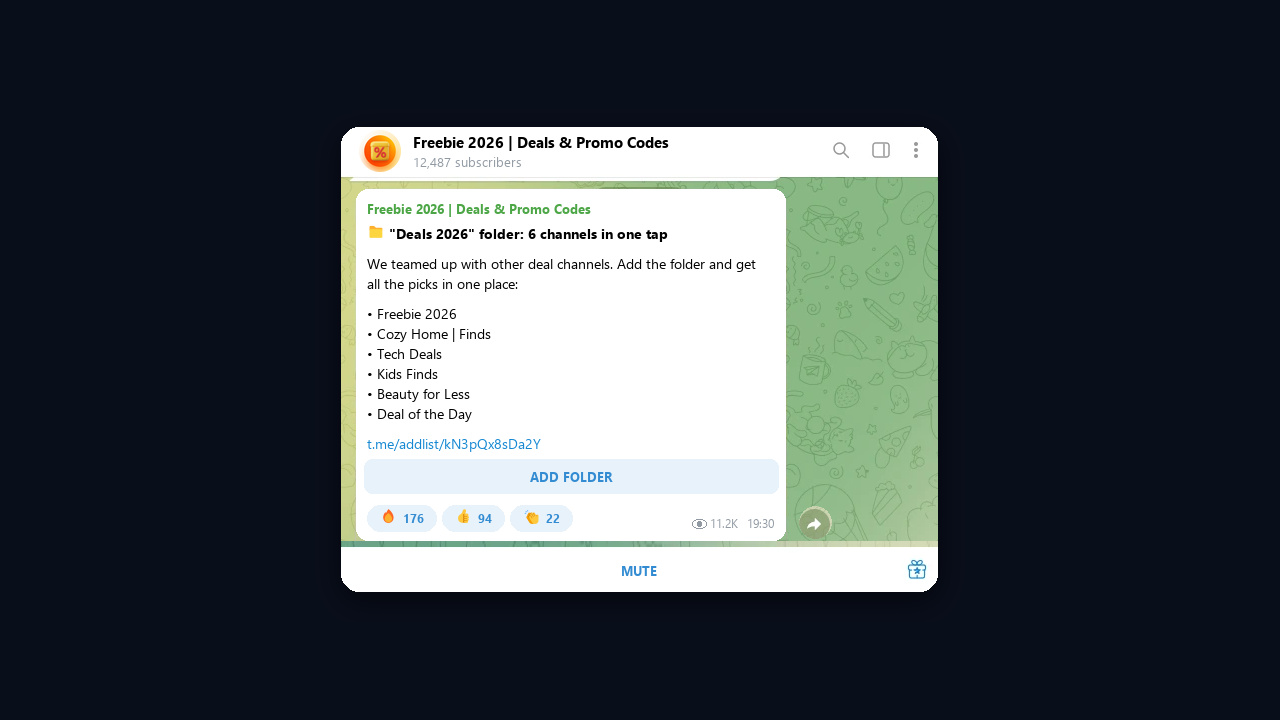
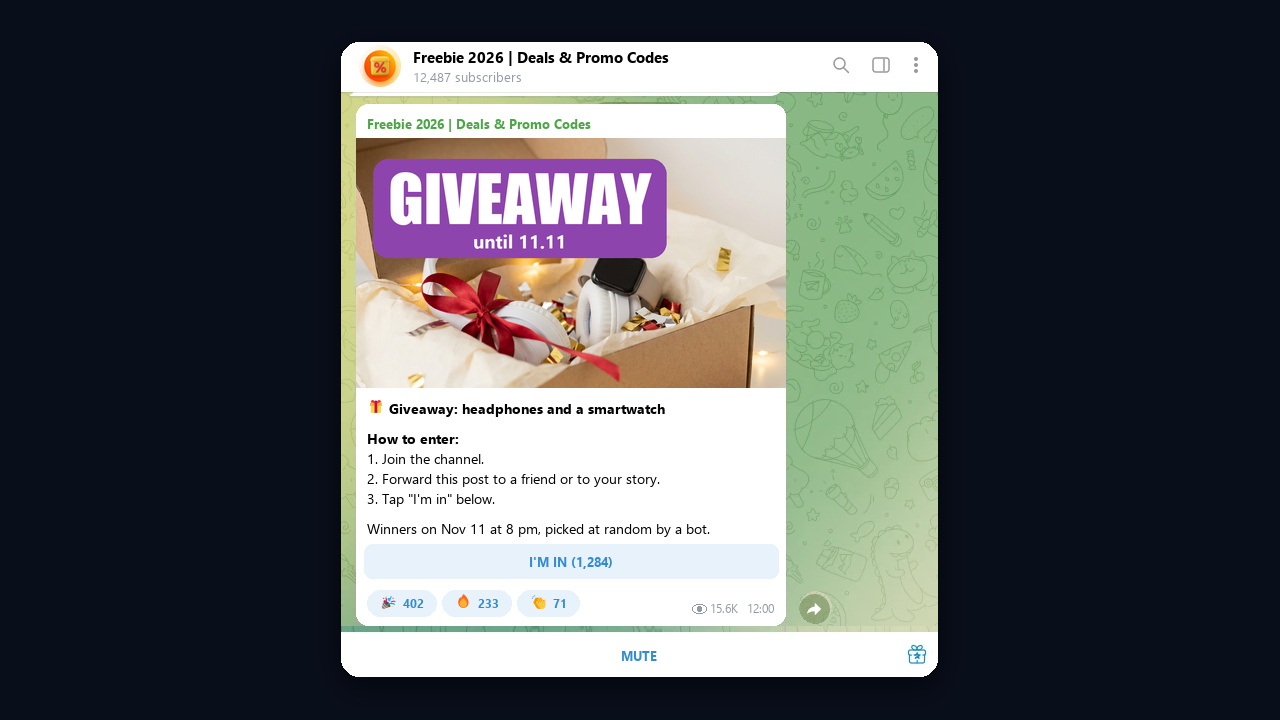
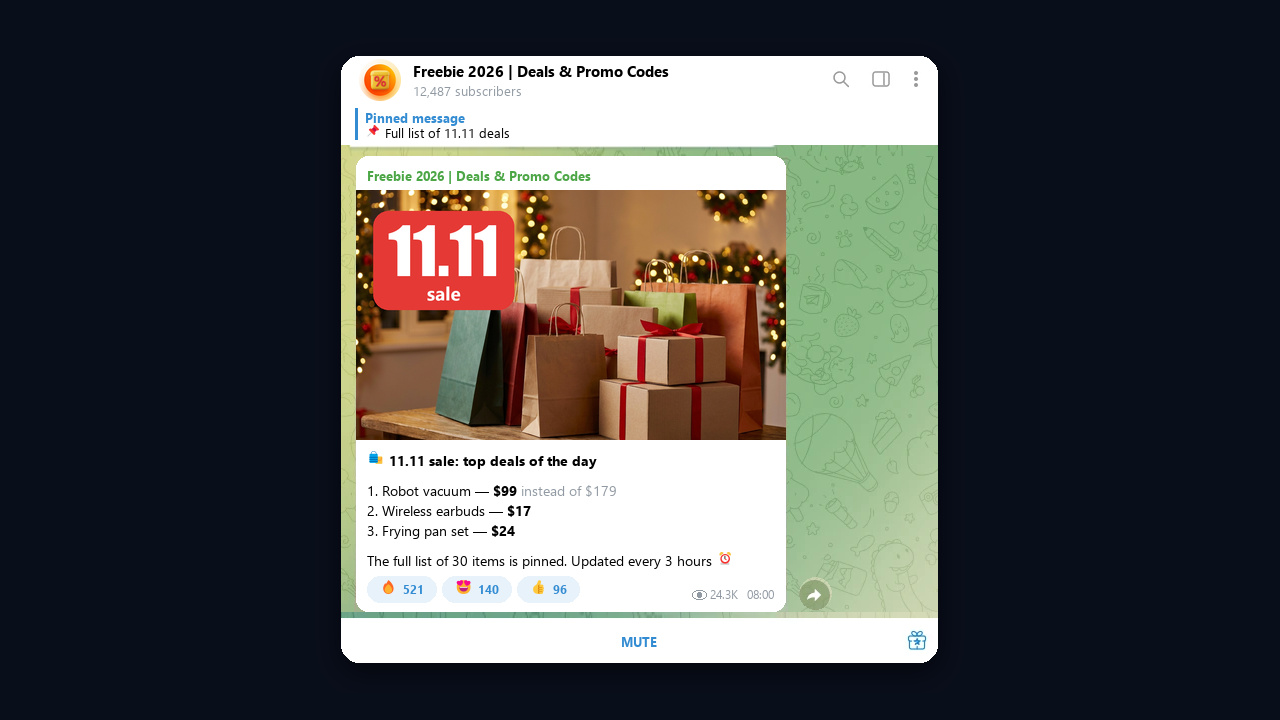
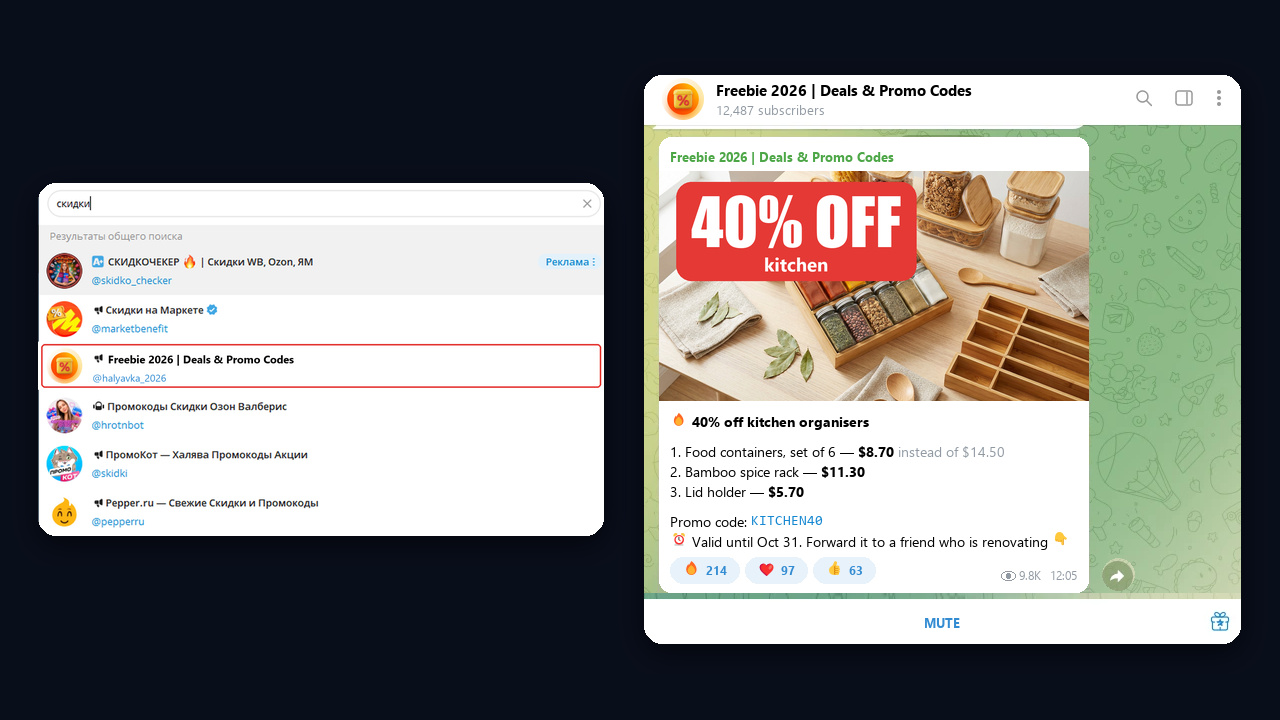
As an example, we set up a channel called "Freebie 2026": an avatar with a gift and a percent sign, a name that shows the niche, and curated posts with prices, a promo code and reactions.
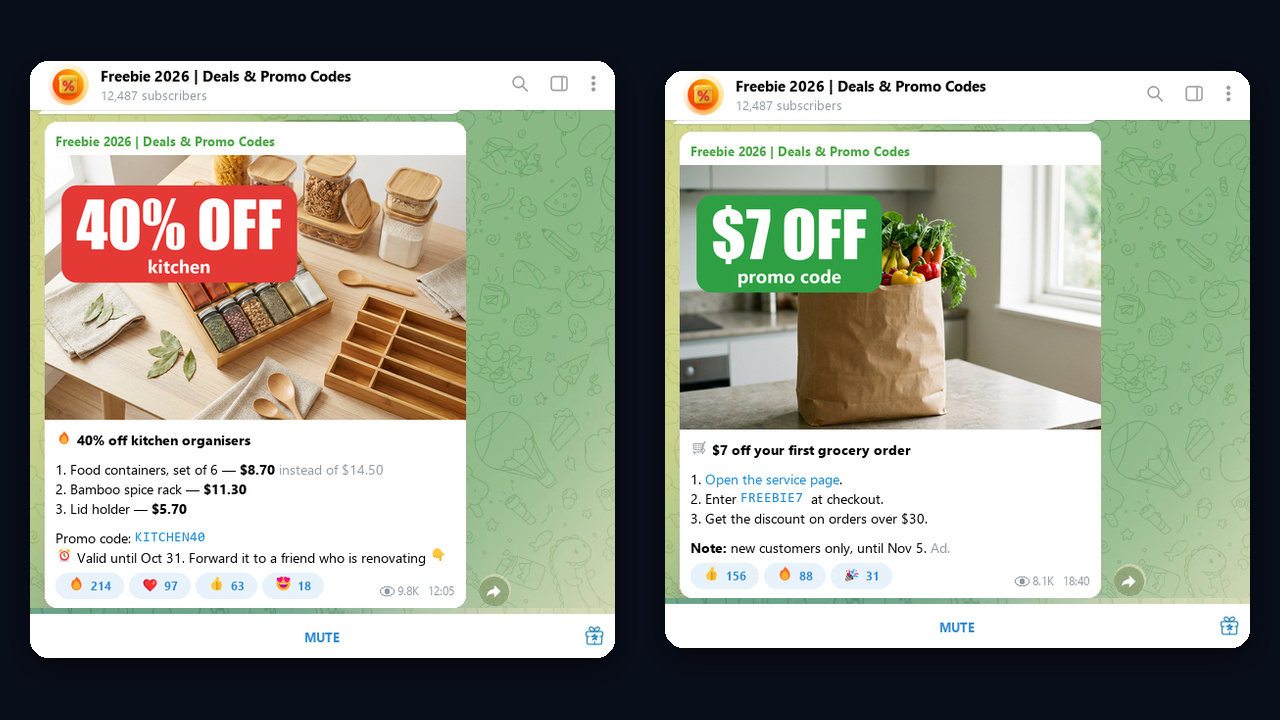
The post format is simple: a benefit headline, 3–5 items on one theme, old and new price, the code on its own line, an end date and a nudge to forward. These are exactly the posts that make every method below work.
Where to Get Deals and Promo Codes for Posts
Curated posts live on fresh offers, so connect your sources in advance. Besides, this is where the channel earns: an affiliate link or a promo code pays a commission on every purchase.
- Marketplace affiliate programs. For example, Amazon Associates and similar programs of large stores pay for purchases made through your links.
- CPA networks. Admitad, Awin, CJ and similar networks collect offers from stores, delivery services and subscriptions, with promo codes and coupons right in the dashboard. Many programs accept a channel from roughly 500 subscribers, and a deeplink generator plus a link shortener keep affiliate links tidy.
- Sellers and brands. Sellers gladly share an exclusive code or pay for a spot in your picks, especially once you can show click statistics.
- Store newsletters and apps. They are a handy source of sales, but test every code yourself before posting.
Paid and affiliate posts often need an ad label under local law, so check the rules of your country.
Top 10 Ways to Grow a Telegram Discount Channel
The methods are ranked by how well they suit the deals niche. That said, they work best in combination: two or three sources give a steady flow instead of one-off spikes.
1. Paid Shoutouts in Deal Channels
The most straightforward option is buying a post in related channels about deals, shopping, home or parenting. Their readers already hunt for bargains, so they click more willingly than audiences of general channels.
- Check the channel: look at post views rather than subscriber count, and at real comments.
- Show deals, not "subscribe": 2–3 items with prices and a link to the channel for the rest.
- Track the cost per subscriber for each placement and scale only the profitable ones.
2. Mass Tagging: Mentioning Buyers in Stories
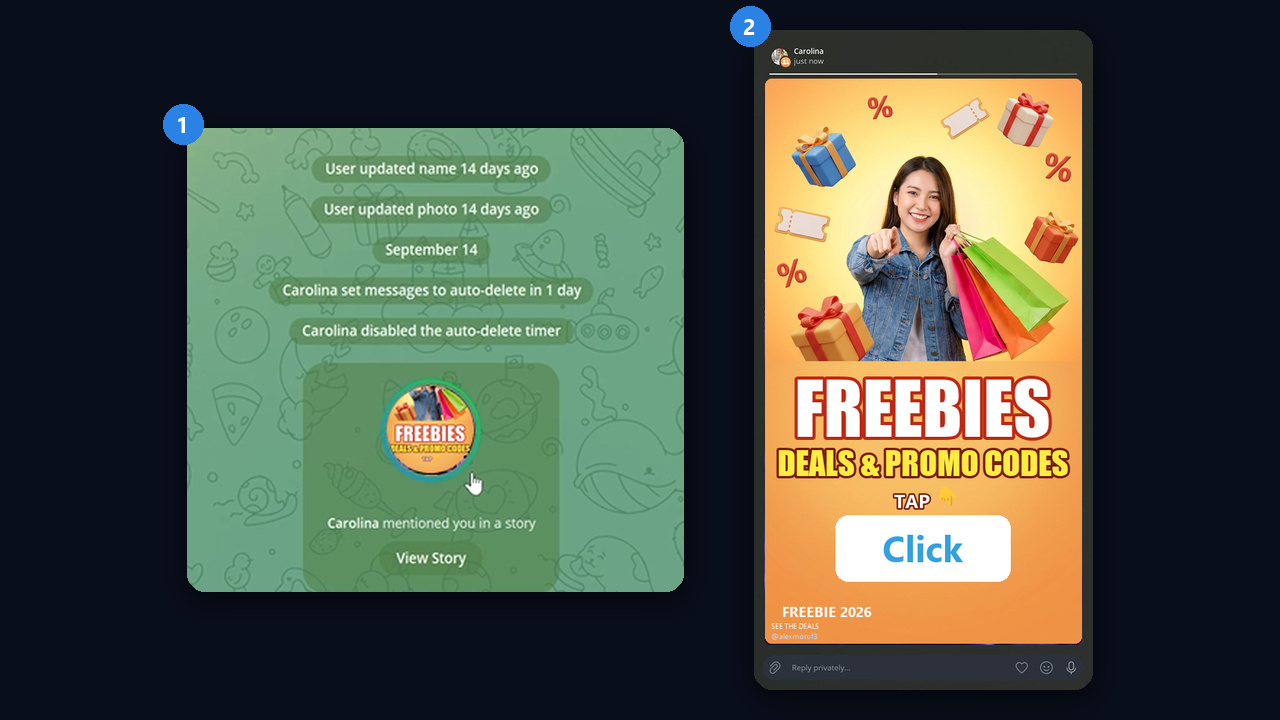
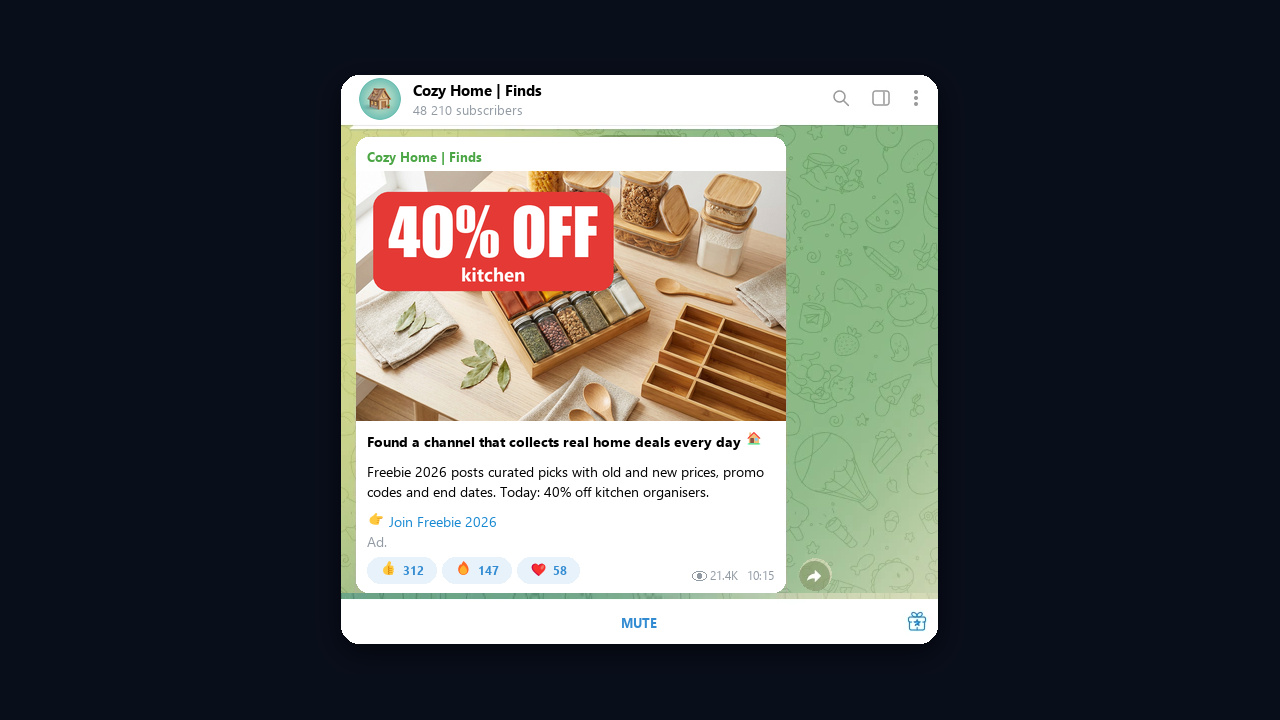
Mass tagging reaches people who have never heard of your channel. Accounts post stories with your picks and mention members of shopping chats. As a result, each person gets a "mentioned you in a story" notification, opens it and follows the link to the channel.
For deals this is especially natural: a story looks like a personal tip rather than an ad. Therefore, take targets from chats where people discuss marketplace purchases, reviews and sales. See the mass tagging overview for details, and enable the Story Mentions module in your dashboard.