
Sales in Telegram have long stopped being a story only about advertising in channels, info business, and subscriber transfers. Through Telegram, you can sell literally anything: courses, services, digital products, traffic, consultations, subscriptions, and even physical goods. We had a case where Telegram helped sell a house in Cyprus for $400,000, and the client’s commission was $6,000. And this clearly shows the main principle: if there are people in Telegram with a clear need, then there is money there too.
The problem is different. The classic sales scheme in Telegram is too heavy for many people. You need to run a channel, warm up the audience, build funnels, constantly buy traffic, test content, and hold attention. On paper, everything looks logical, but in practice, most businesses simply do not have enough time, team, or expertise to set it up properly.
That is why we will take a shorter path. We will not spend years building our own system from scratch first. Instead, we will use ready-made systems that already belong to others, where there is concentrated demand, and carefully intercept hot clients from there. This is exactly how today you can greatly simplify sales in Telegram and get clients faster than through a classic funnel.
Step 1: Understand how sales in Telegram are usually structured
First, let’s break down the basic model. Without it, it is difficult to understand why the alternative path works at all.
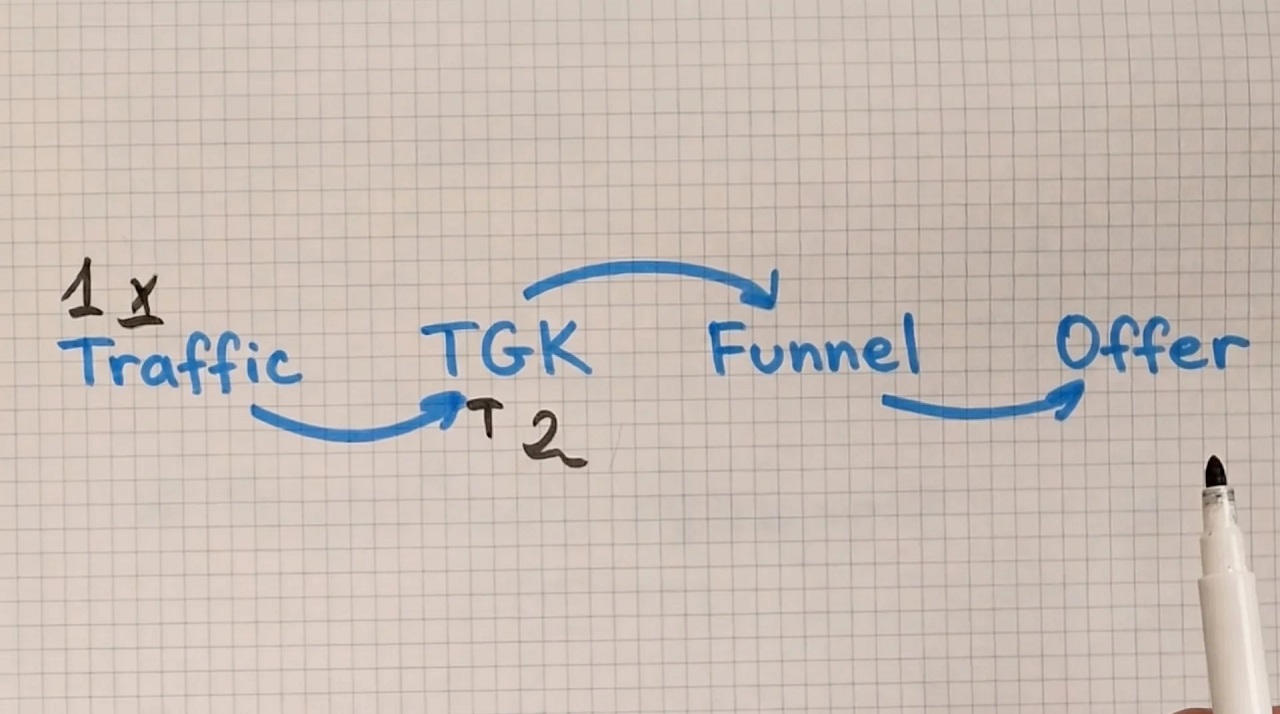
Classic sales in Telegram are usually built like this:
- Traffic. We attract people from advertising, recommendations, search, seeding, social networks, or other sources.
- Telegram channel. The traffic enters the channel, where it starts warming up through content.
- Funnel. After the warm-up, the person goes through a chain of motivational posts, case studies, reviews, results, and offers.
- Monetization. At the final stage, the warm audience turns into clients.
The model itself works. Moreover, through it, you can really sell anything. But there is a nuance: it is complex and resource-intensive.
You constantly need to:
- manage the channel;
- publish strong posts;
- maintain engagement;
- buy or acquire traffic;
- build and improve funnels;
- track where people drop off;
- refine offers.
That is why many people study sales in Telegram for dozens of hours, take long courses, but still never reach a real result. They get stuck on the infrastructure. It seems like they are doing everything right, but there are still no clients.
Now the key thought. We do not have to build the entire system from scratch every time. We can take only the place where the hottest people are already sitting and work with it immediately.
Step 2: Shorten the path and replace your own funnel with someone else’s system
This is where the most interesting part begins.
In Telegram, most projects have not only a channel, but also a chat. And a chat is no longer just an audience. It is an environment where people:
- ask questions;
- have doubts;
- compare solutions;
- look for contractors;
- ask for recommendations;
- discuss specific pain points.
That means the very warm or even hot demand for which, in the usual scheme, we would spend months building our own channel and funnel is already present in chats.
Imagine that we sell sneakers. Someone has already gathered a community around this topic. Someone has already invested in channel promotion, attracted an audience, and created a chat. People there discuss models, sizes, delivery, brands, and discounts. Our task is not to build everything from scratch, but to integrate into this flow of demand.
The same works for:
- real estate;
- traffic services;
- automation;
- education;
- consulting;
- crypto;
- local business;
- any Telegram channels that we want to promote.
In essence, we simplify sales in Telegram to three steps:
- Find other people’s chats with our target audience.
- Understand what exactly people are asking there.
- Automatically and natively respond to these questions with our solution.
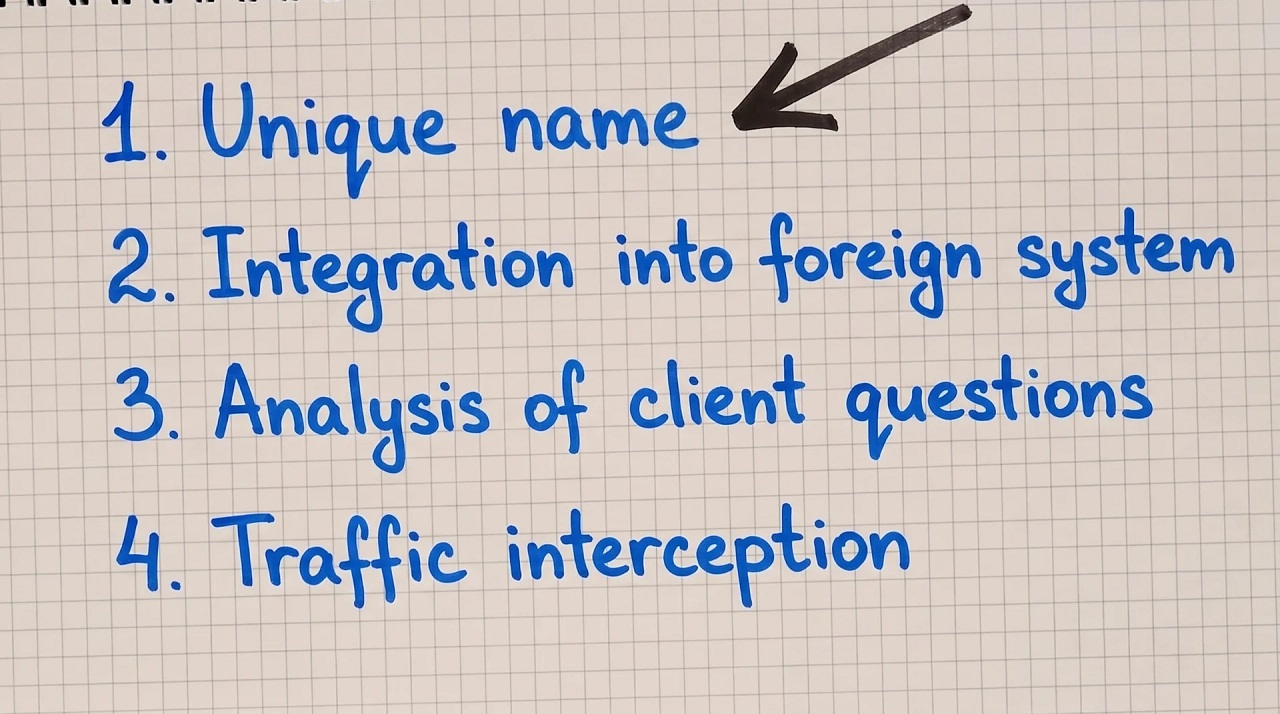
This is exactly what implementing yourself into someone else’s sales system looks like.
Step 3: Prepare the base for traffic interception, namely a unique name
Before entering other people’s chats, we need a foundation. Without it, people may become interested in us, but they will not be able to find us quickly.
The first thing needed for such a model is a unique name. It can be:
- a brand name;
- a service name;
- a product name;
- a website name;
- your expert name, if you are promoting yourself.
Why is it needed? Everything is simple. When a person sees a recommendation in a chat, we do not want to throw a link directly into every message. It looks like spam and can easily lead to a ban. It is more beneficial for us if the person sees a clear branded name, becomes interested in it, then types it into search and finds the needed resource on their own.
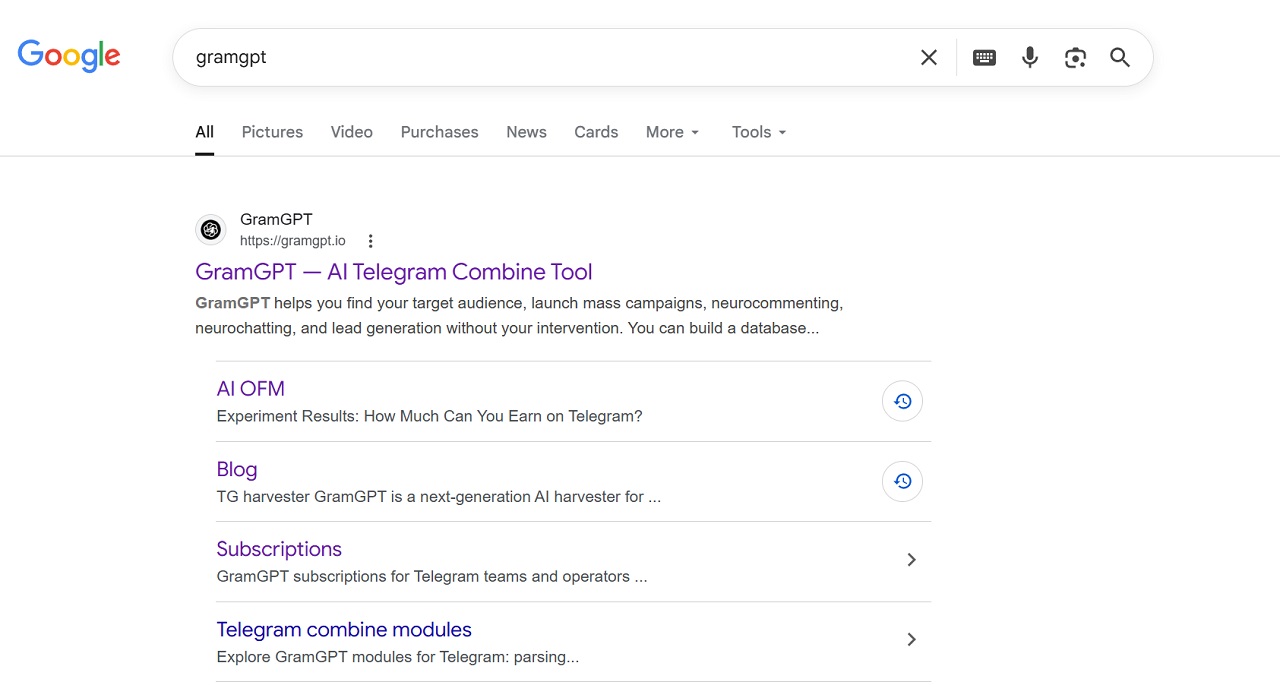
If the name is unique, it is easy to:
- bring it to the top of search results;
- tie it to a website or landing page;
- make it recognizable;
- use it without a direct link in messages.
For example, if a project has a branded word, a person can find in a second:
- a website;
- a Telegram channel;
- YouTube;
- reviews;
- pages describing the product.
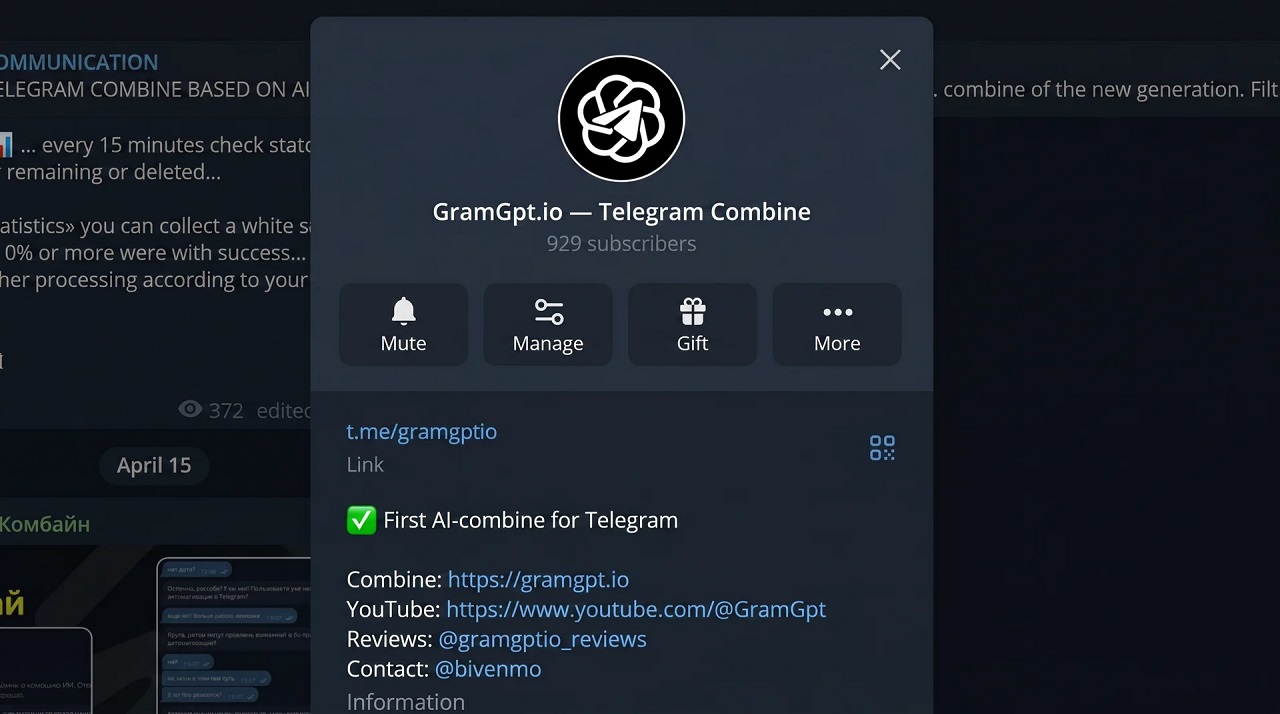
Why should the name be unique specifically? Because it is easier to take top positions in search with it. If you name the product too generically, you will simply drown among competitors. But if the name is recognizable and available, it starts working like a magnet.
At minimum, even a simple landing page is enough, where there is:
- a short description of the product;
- the key benefit;
- a button leading to payment or the main website;
- a contact method;
- a connection to your Telegram.
This is an important point. For a model where we build sales in Telegram through native recommendations, a branded name plays the role of a safe bridge between a person’s interest and our product.
Step 4: Find other people’s Telegram chats where ready-to-buy clients are already sitting
Now we move on to the most interesting part. We need to collect a list of chats of competitors or adjacent projects where our audience is already present.
The logic is very simple. If we sell real estate, we look for chats about real estate. If we sell traffic services, we look for chats about traffic, launches, promotion, automation, Telegram, and so on.
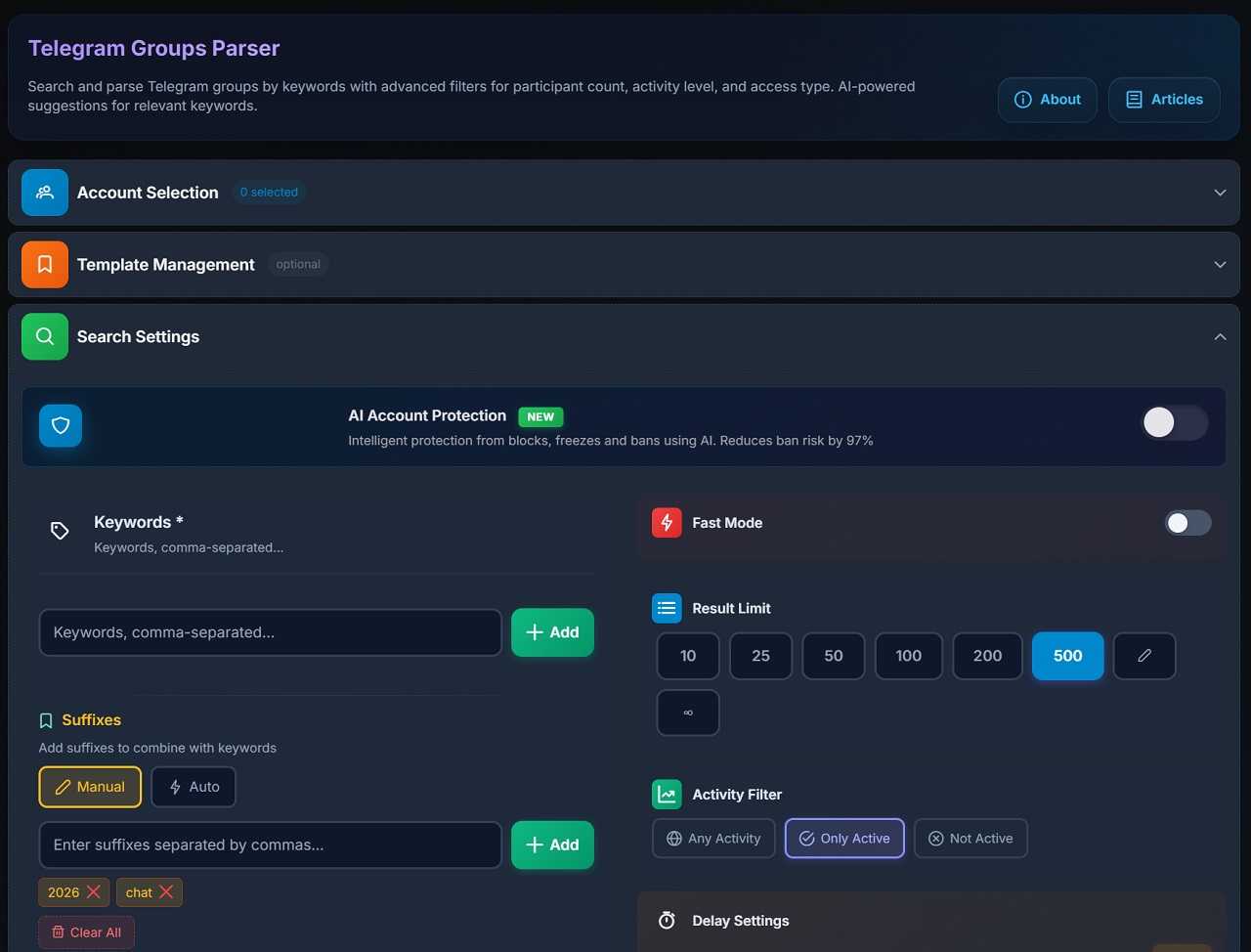
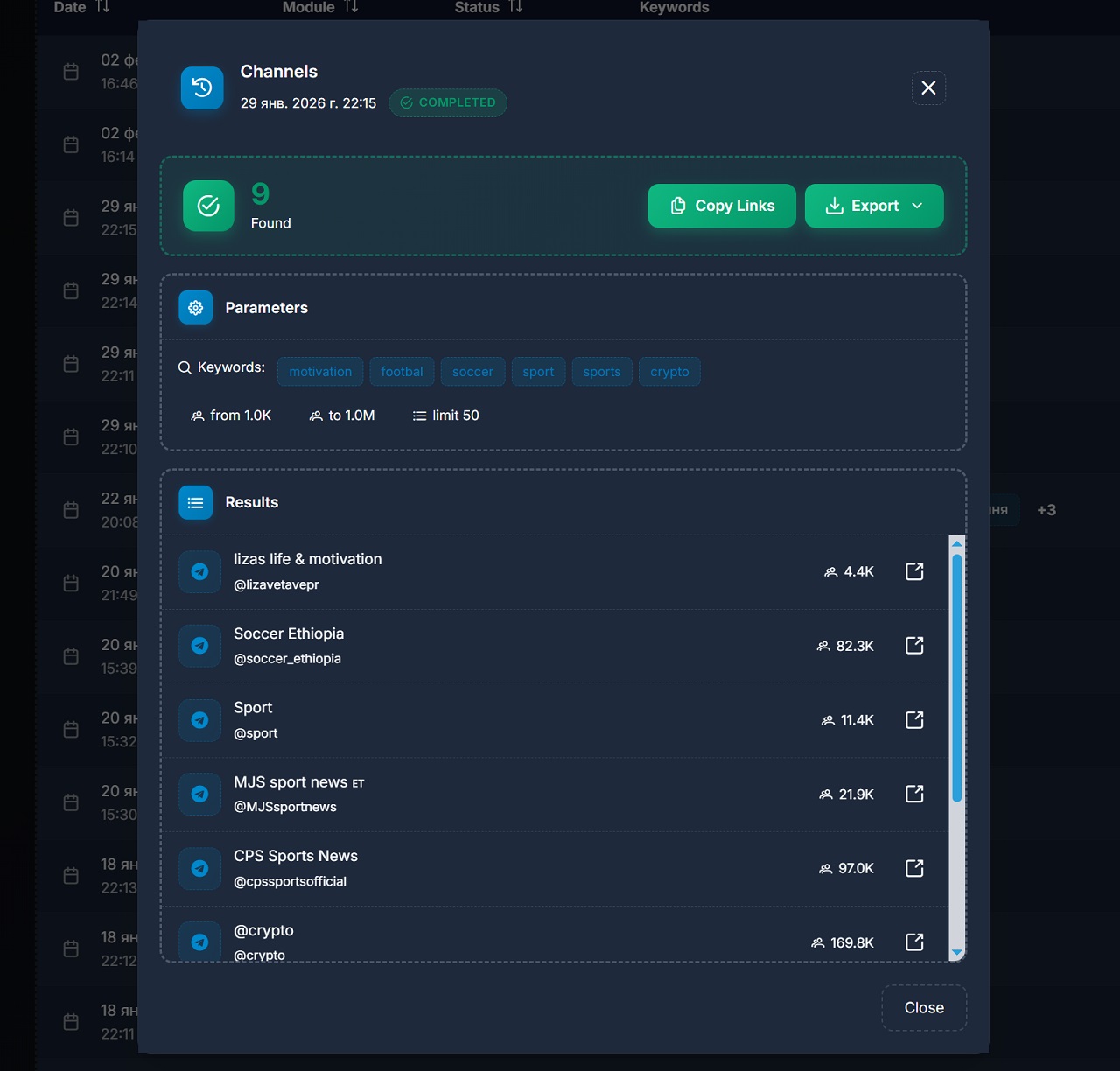
For this, Telegram group parsing is used. The task of parsing is one: to find communities by keywords and choose from them those where there is activity.
Which parameters are important during the search:
- Keywords. These are words related to your niche.
- Type of communities. We are interested specifically in chats, not only channels.
- Activity. It is better to take active groups where people write regularly.
- Audience size. It is not necessary to take giant chats. Even groups with 500 participants can work perfectly.
- Language. We choose it according to our audience.
If the niche is related to traffic, the list of keywords may include words such as:
- launches;
- Telegram;
- traffic arbitrage;
- automation;
- promotion;
- growth.
Sometimes it is useful to add endings and variations, for example the year, the word “chat,” and other clarifications. This expands the pool of found groups.
A very important observation: we do not need a huge volume for the sake of volume. The main goal is not to gather as many groups as possible, but to find places where people really ask questions and are ready to discuss a purchase.
Sometimes even one good chat is enough to get dozens of clients. And if you gather 10–20 live chats on your topic, this may already be enough to systematically feed the business with leads.
This is exactly the point where many people start to look differently at sales in Telegram. It turns out that you do not always need to promote your own channel first. Sometimes it is more effective to enter a place where the audience has already been gathered by someone else.
Step 5: Check that there is really live demand in the chats you found
After parsing, you should not jump straight into automation. First, manually check what is happening inside the chats.
We are interested in signs of live demand:
- people correspond every day;
- they ask questions on the topic;
- they ask for advice and tools;
- they discuss specific problems;
- they clarify selection details;
- they react to each other.
If a chat is empty, dead, or consists of repetitive spam, it makes little sense. But if every day there are questions and discussions there, then we have a field to work with.
At this stage, it becomes very clear that sales in Telegram are not magic and not a “money button.” Everything rests on common sense: you need to find not just an audience, but an audience with a current need.
Manual checking also helps you understand people’s vocabulary. And that already directly affects how we will formulate triggers and replies.
Step 6: Collect real audience questions and turn them into key triggers
Now we take the chats we found and begin analyzing what exactly people are asking there.
This is one of the most underestimated steps. It is here that the entire future traffic interception system is built.
We open a chat and literally look at the wording used by users. For example:
- how to add people from contacts;
- how to gain subscribers;
- how to get the first subscribers;
- how to attract traffic;
- how to attract clients;
- how to promote Telegram;
- which service is better to use.
The task is not just to write down a couple of words, but to collect a cluster of requests, that is, a set of phrasings by which the audience describes its pain.
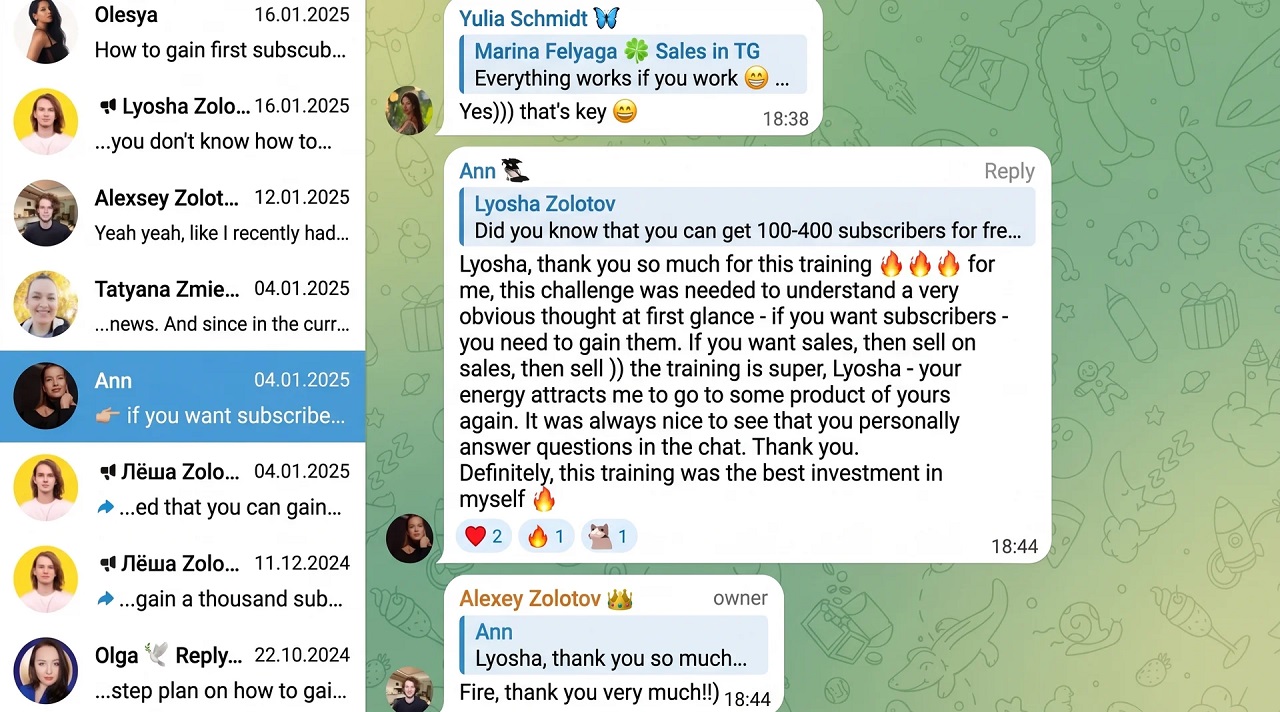
Usually, it is enough to manually collect 10–20 basic requests. Then they can be expanded with AI by asking it to generate 50 more similar keys on the topic.
For example, if your niche is Telegram promotion, AI can дополнить the list with such options:
- how to get the first audience;
- what to use to drive traffic into Telegram;
- how to promote a Telegram channel;
- how to quickly gain subscribers;
- how to find clients in Telegram;
- how to increase channel reach;
- how to do promotion without advertising.
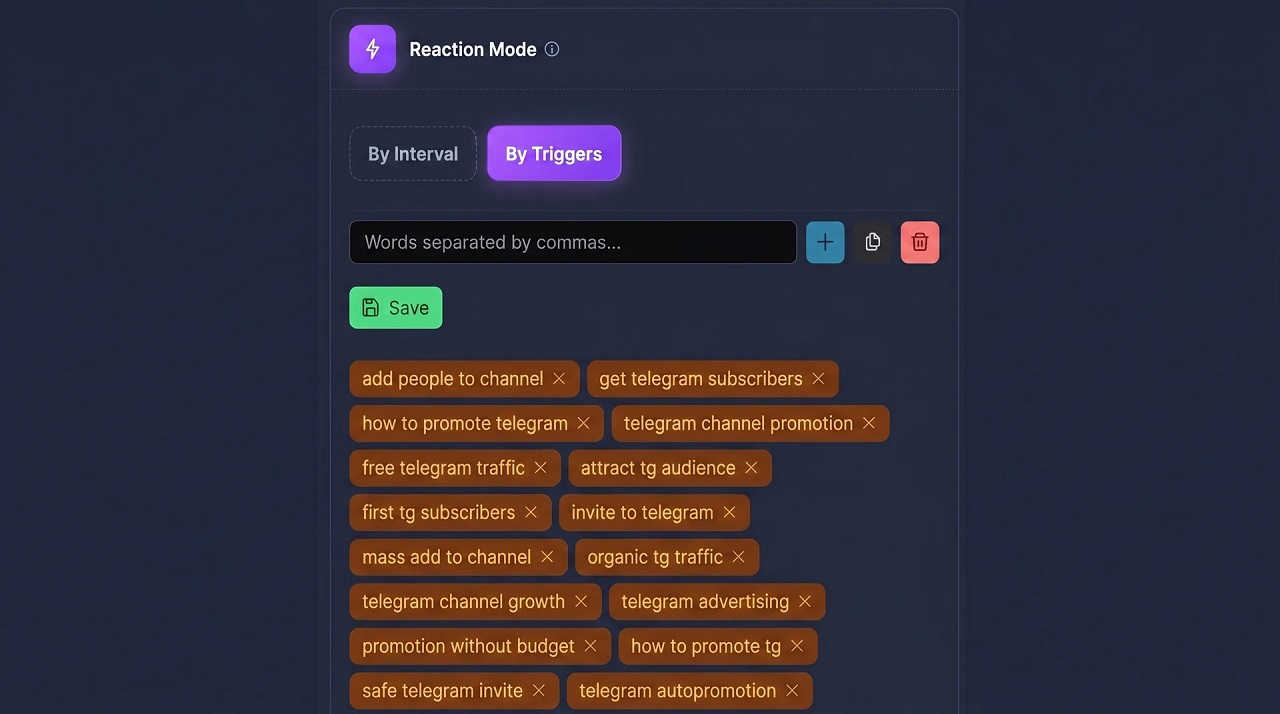
The meaning here is the following: people rarely speak in exactly the same words that you use in your offer. They formulate the problem in their own way. If the system understands these formulations, your sales in Telegram become more precise and natural.
Step 7: Set up the accounts from which native promotion will be carried out
When the list of chats and keys is ready, we need accounts that will work in these chats.
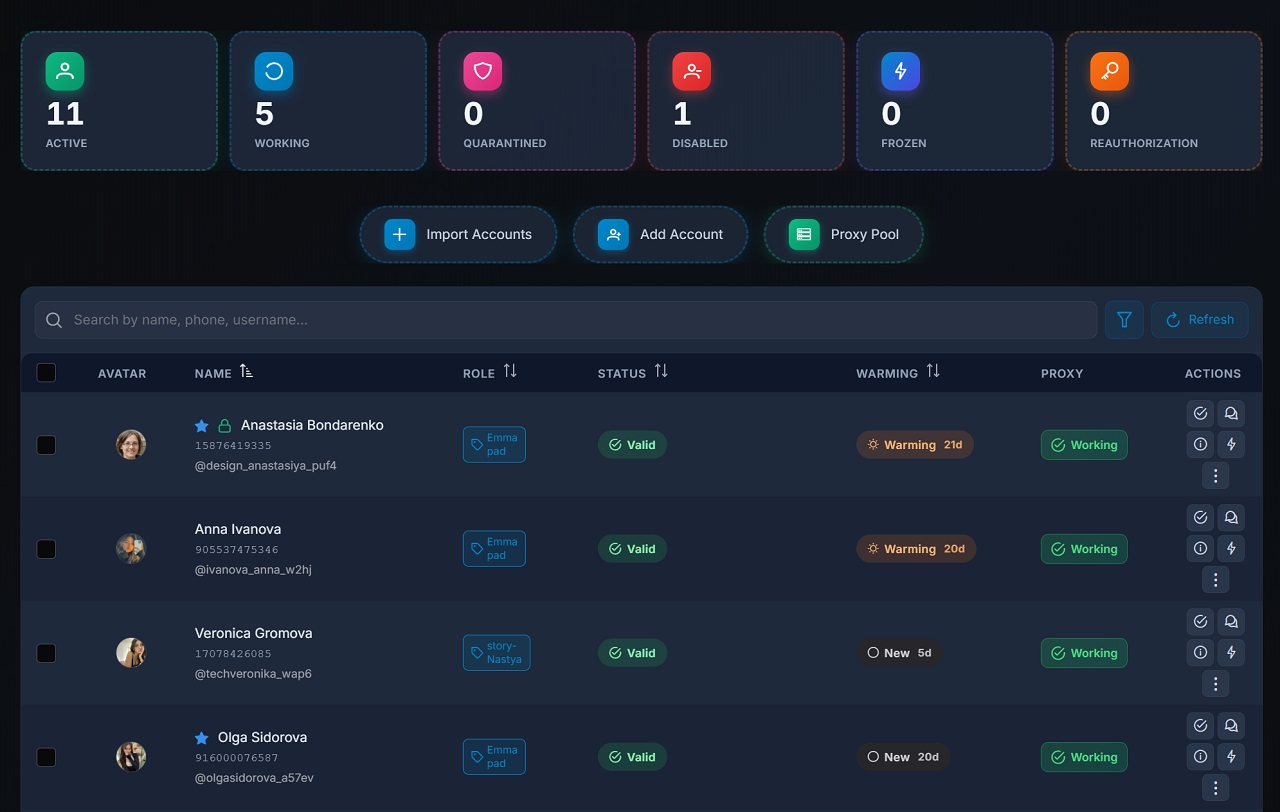
These accounts should not look empty or suspicious. They need to be at least basically designed:
- set an appropriate photo;
- fill in the name;
- write a clear profile description;
- add a brief benefit in the bio.
If we are promoting a Telegram channel about traffic, in the description you can indicate something like: we teach traffic for free, and leave a link to the channel.
If we are promoting a business rather than a channel, it is better to write the essence of the result. For example:
- I pour leads into Telegram;
- I help attract clients;
- I automate promotion;
- I help with traffic for business.
That is, not abstract prettiness, but concrete value.
In practice, you can use several accounts in order to distribute activity. This is needed not only for scale, but also for security. If everything goes through one profile, it will quickly become noticeable and the risk of blocks will increase.
Step 8: Turn on neurochatting and launch the interception of hot requests
Now we move on to the mechanics.
How neurochatting works: accounts enter selected Telegram chats, monitor new messages, and react when they see the needed keywords or similar formulations.
That is, a person writes in the chat: “How do I attract clients?”
The system sees a match, analyzes the message, if necessary takes several previous replies into account, and publishes a native reply. Not a stupid template, but a meaningful recommendation with a mention of our solution.
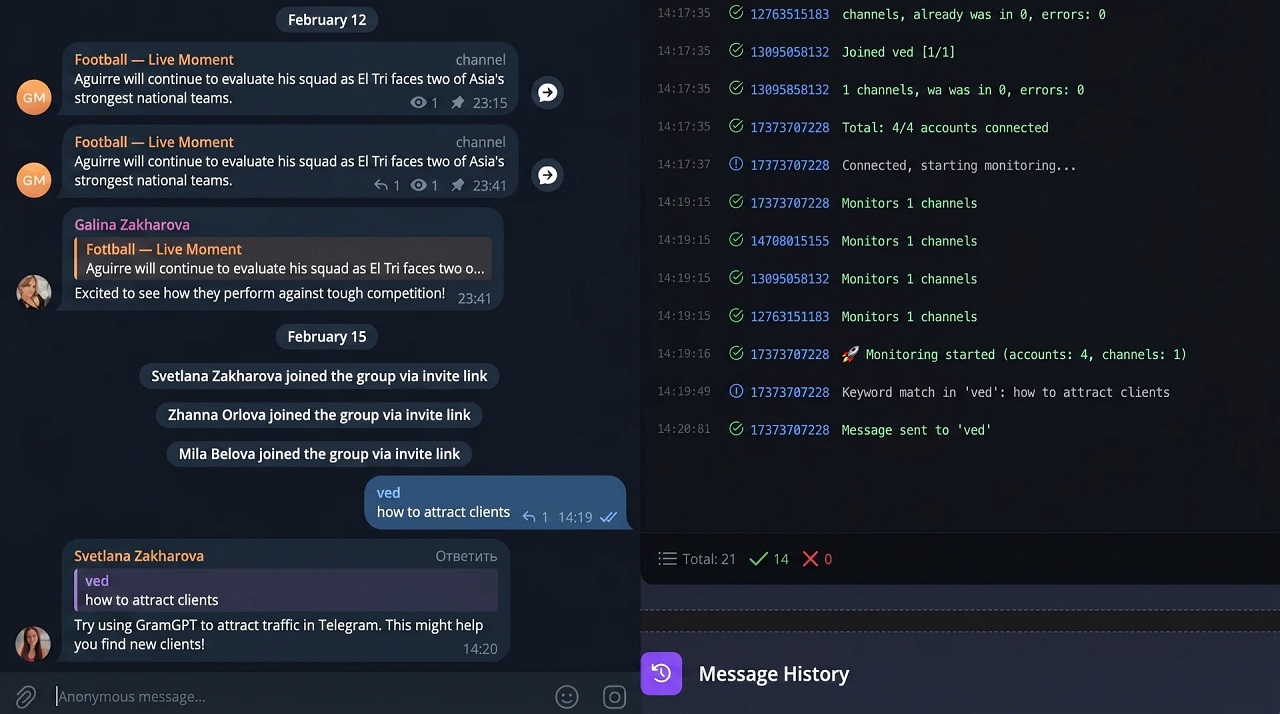
For example, a reply may look like this: Try using Gram GPT to attract traffic in Telegram. This can help find new clients.
Pay attention to an important point. In public chats, it is safer not to throw links directly everywhere. It is better to use a branded name. A person sees the name, remembers it, searches for it in Google or Telegram, and reaches the product on their own.
This approach makes sales in Telegram significantly softer and more natural. We do not burst into the chat shouting “Buy.” We integrate into the conversation and give a relevant recommendation at the right moment.
What is important to set up in neurochatting
- Triggers. This is the list of keywords and phrases that the system reacts to.
- Thematic matching. AI understands not only an exact match, but also close words, synonyms, and related formulations.
- Account rotation. After several messages, the activity moves to another account.
- List of target chats. Those groups where the system will work.
- Reply prompt. The logic according to which AI formulates a native comment.
- Conversation context. Analysis not of a single message, but of the last several replies in the thread.
- Delays. So that replies are timely, but do not look mechanical.
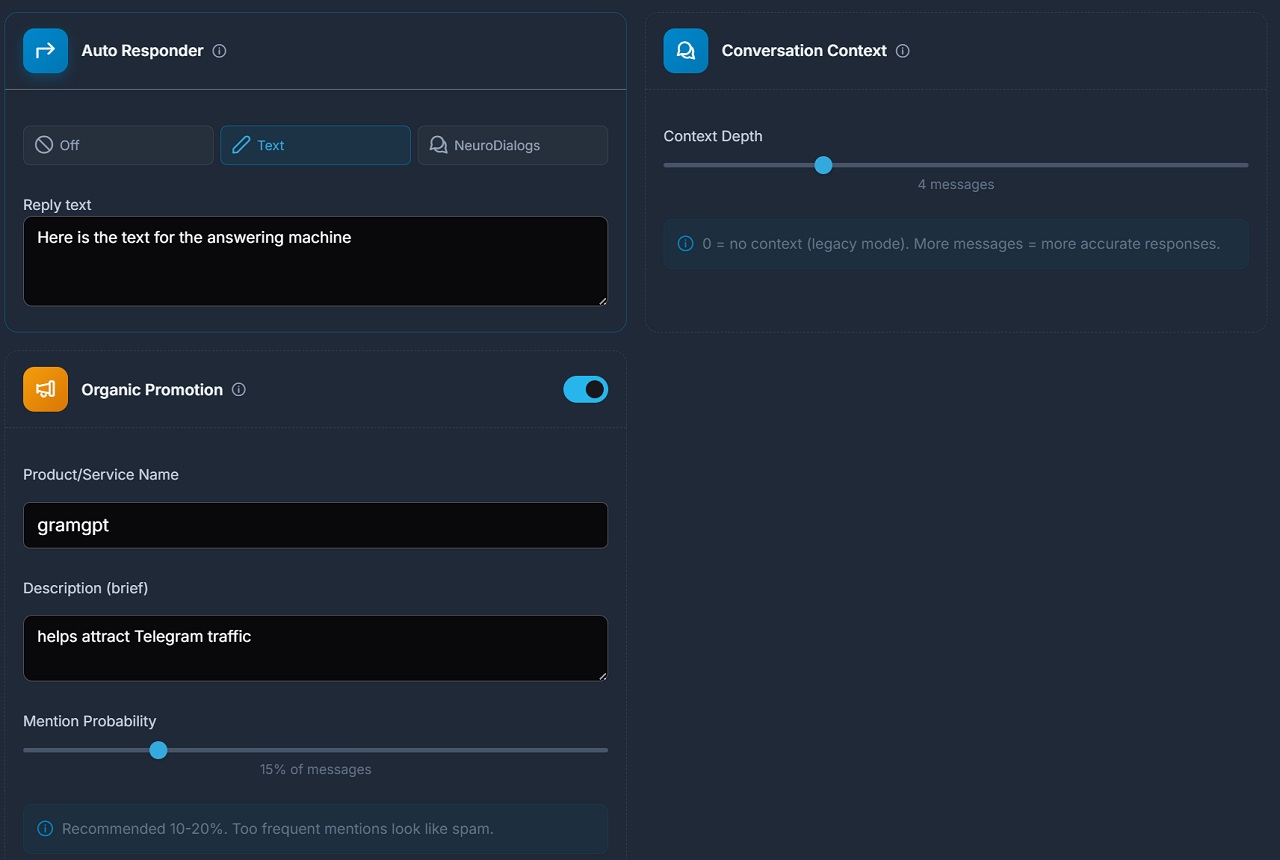
If all of this is configured correctly, we get a system that reacts almost in real time and helps intercept demand right at the moment it appears.
Step 9: Create the right prompt so that the replies sell natively
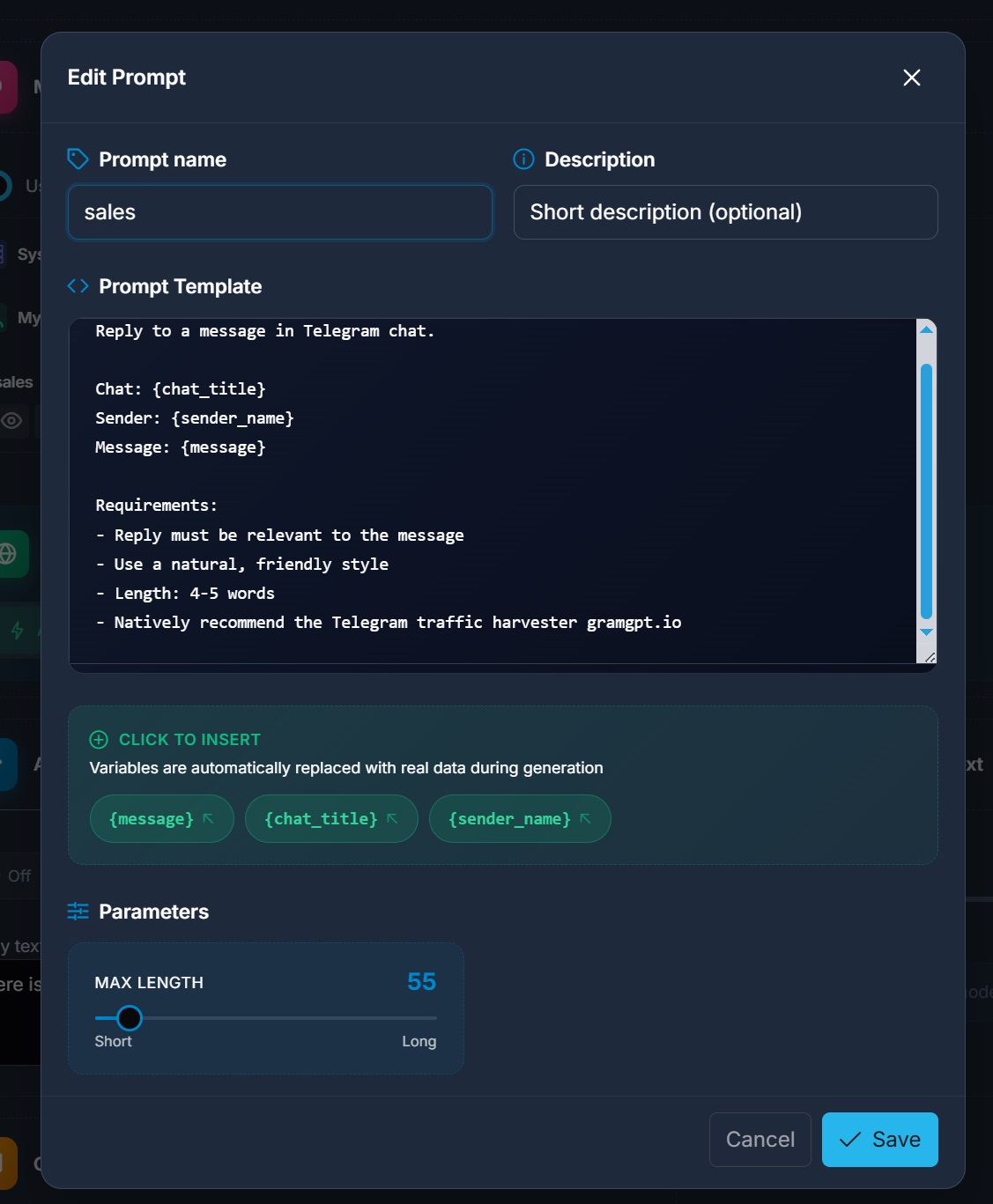
The prompt is the heart of the entire scheme. It determines whether the reply will look useful and alive or turn into crooked spam.
A good sales prompt should do three things:
- be short;
- answer the person’s question directly;
- natively mention the brand or solution.
Bad version:
“Buy our best service through the link right now, discount only today.”
Good version:
“I got my first subscribers through Gram GPT. Convenient for finding traffic in Telegram.”
The difference is obvious. In the second case, it looks like a personal recommendation rather than a direct sales push.
If you are building sales in Telegram through native interception, remember the rule: in an open chat, it is better to undersell than to oversell. We do not need to squeeze the person in the comments; we need to spark interest and move them into personal contact or into a brand search.
What should be specified in the prompt
- what tone to use: friendly, expert, neutral;
- whether the brand should be mentioned;
- whether links should be avoided;
- what length the reply should be;
- what product benefits can be mentioned;
- what exactly the service or business does.
If you additionally provide context about your product, AI will begin to better understand to whom and how it should recommend it. For example: the service helps attract traffic, find clients, promote Telegram, and automate work with chats.
Step 10: Connect an autoresponder for private messages
If the reply in the chat caught a person’s attention, the next step is almost inevitable. They will go into private messages.
And this is where many people lose the traffic. They replied well in the chat, but in private messages there is silence or chaos.
That is why we set up an autoresponder immediately. Its task is:
- to say hello;
- to briefly explain how you can help;
- to give a link or a clear next step;
- not to overload the person with a long wall of text.
In private messages, a link is already appropriate, because this is not spam in a public chat, but a reply to incoming interest. Therefore, here you can safely send:
- a website;
- a channel;
- a landing page;
- a lead form;
- a manager’s contact.
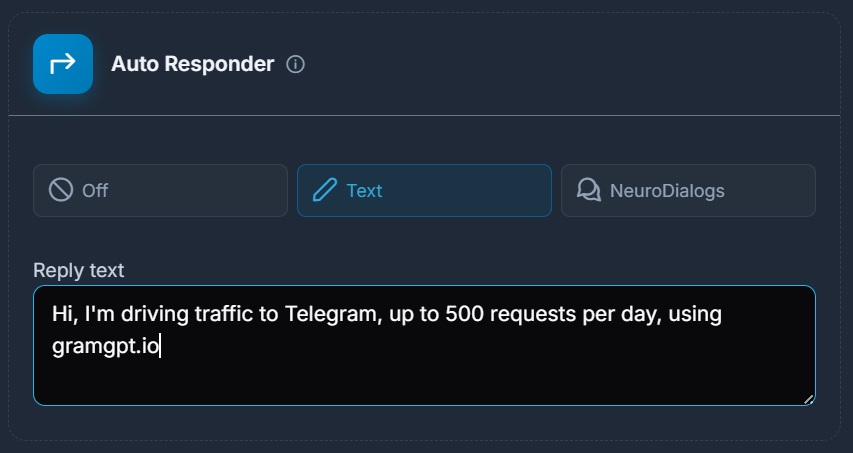
The autoresponder is especially important if you have many chats and many accounts. When the system starts working at scale, it is inconvenient to process all incoming messages manually. And a good autoresponder holds attention and does not let the lead cool down.
Step 11: Use the context of the conversation so that the replies look truly smart
One of the strongest settings that is often forgotten is context depth.
If you analyze only one message, the reply may turn out to be formally relevant, but weak in meaning. The person asked one thing, but the conversation around it has already moved into nuances, and without context this is not visible.
That is why it is better to analyze several previous messages. Usually 3–5 replies are enough.
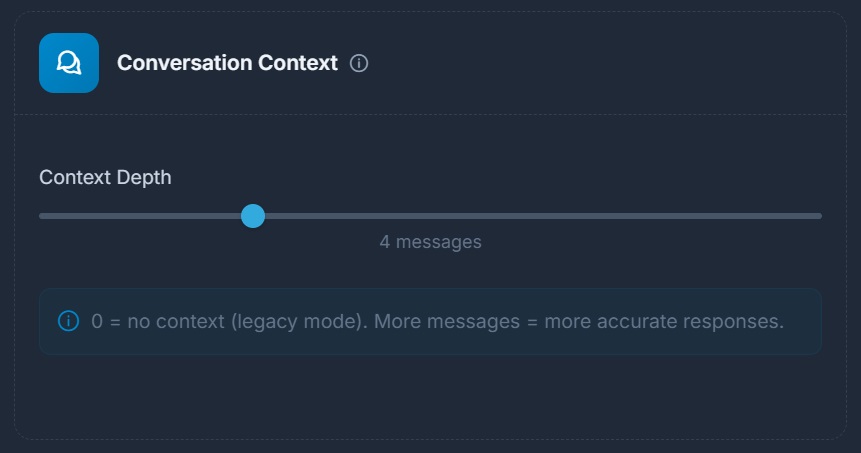
What this gives:
- the reply fits the topic more precisely;
- fewer ridiculous comments;
- higher trust from chat participants;
- better conversion into private messages and brand searches.
For sales in Telegram, this is critical. Native communication works only when it truly fits into the conversation. If the reply falls out of context, it is quickly perceived as an automated insertion.
Step 12: First test everything in your own chat, and then scale
Before launching into dozens of chats, it is worth testing the scheme in your own test chat.
This is needed to check:
- whether the keywords are triggered;
- whether the replies are generated properly;
- whether the prompt is too aggressive;
- whether the autoresponder works correctly;
- how the behavior of the accounts looks from the outside.
The test allows you to quickly find errors without the risk of ruining your reputation or losing accounts. And only after that can you connect real chats in the niche.
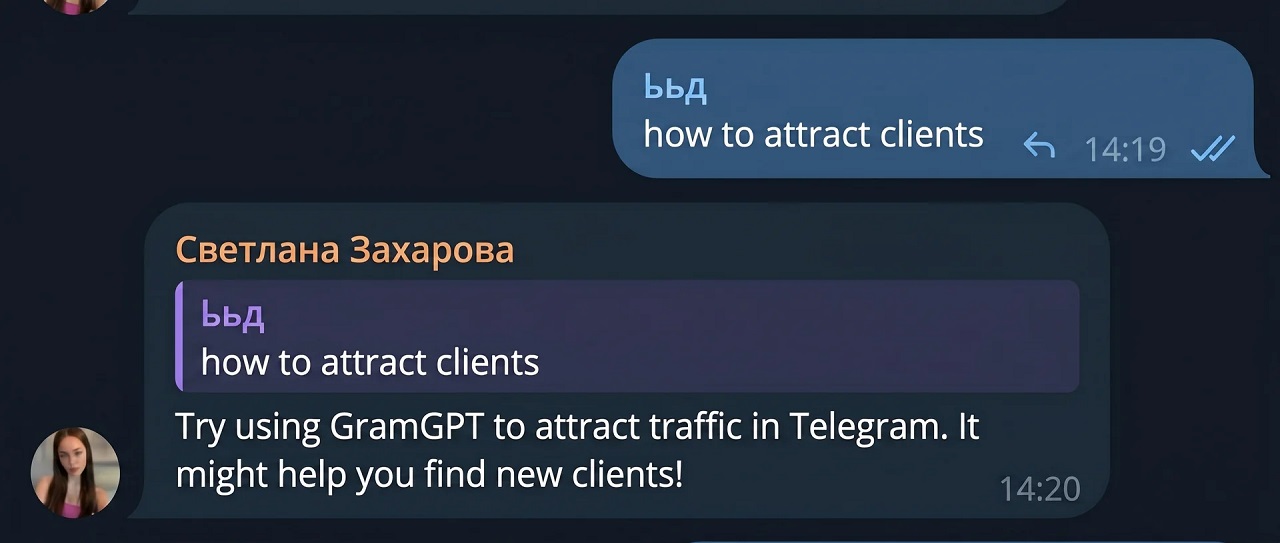
The mechanics look like this:
- Add chats.
- Connect accounts.
- Upload triggers.
- Set rotation.
- Configure the prompt and context.
- Check replies on test messages.
- Only then switch to live mode.
This sounds banal, but it is exactly such calm tests that make sales in Telegram stable rather than chaotic.
Step 13: Calculate the economics and look at the real results
The main question of any model is one: does it pay off.
If a business has an average check of around $70, and automation tools and accounts cost approximately a few dozen dollars per month, then even 20–30 clients can cover the costs many times over.
In the case of neurochatting, after launching the system, the number of branded search queries for the website grew. At first, there were approximately 14–15 clicks in Google, then the indicators grew to 27–40 and further to 36–37 queries per day. At the same time, payments increased threefold.

Why is this important? Because in such a model, we sell not only directly through the chat. We also build brand awareness. People see the name, then search for it, then read, then buy.
That means sales in Telegram in this scheme work in two planes at once:
- intercepting hot leads from chats;
- growing branded demand through search.
And this is already a more sustainable system than one-time spam in the comments.
Step 14: Make the system autonomous so that it works even without your constant involvement
Another big advantage of this approach is that after setup, it can work quite autonomously.
Yes, you need to monitor the accounts, update chats, test new prompts, and analyze results. But overall, this is not the model where you are required to sit manually every day and answer every person in dozens of communities.
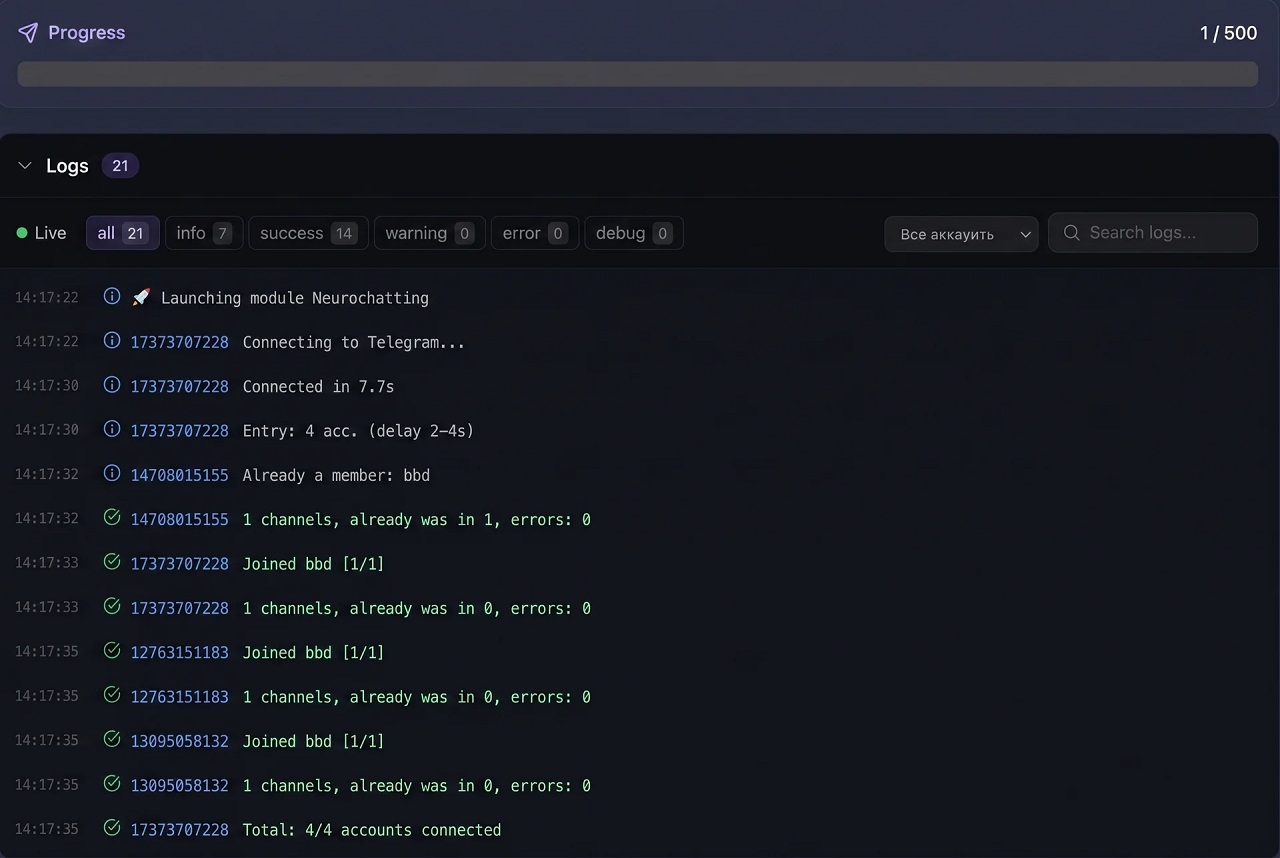
The system:
- monitors chats;
- catches the necessary messages;
- publishes replies;
- receives incoming private messages;
- transfers interest to your website, channel, or service.
This makes sales in Telegram much more predictable. Especially for small businesses, solo experts, and teams that are not ready to build a huge content and warm-up department.
Step 15: Use the same mechanics not only for business, but also for promoting Telegram channels
If you do not have a website, service, or classic business, but only a Telegram channel, the scheme still works.
The logic is the same:
- find relevant chats;
- choose the type of communication;
- set up the accounts so that the profile leads to the channel;
- spark interest through comments;
- the person goes to the profile and lands in the channel.
Only the presentation changes for different niches.
For example, if entertainment or 18+ channels are being promoted, you can use a different style of communication and a different reply mechanic. Not by rigid triggers, but by intervals. That is, the account replies, for example, to every second message, enters the conversation, sparks interest, and only then does the person move to the profile.
If the niche is cryptocurrency, expert-based, or news-based, the logic remains the same. Only the tone, vocabulary, type of offer, and account design change.
It is important to remember here: sales in Telegram themselves are not only about attracting traffic. If you are sending people to a channel, then later you need to understand how to monetize this traffic. But already at the attraction stage, such a scheme can give a very strong boost.
Step 16: Keep the limitations in mind and do not confuse native promotion with spam
For the scheme to work for a long time, you need to follow reasonable rules.
- Do not throw links into every public chat unless necessary.
- Do not use identical messages without rotation.
- Do not work from one empty account.
- Do not enter irrelevant chats just for quantity.
- Do not try to pressure a person with overly aggressive text.
Proper sales in Telegram through such a model are based not on грубый spam, but on relevance. If a person asked a question and you gave a useful, calm, and clear reply, it is perceived normally. But if you start inserting an offer everywhere, the system quickly stops working.
What this sales model ultimately gives you
If we put everything together, we get a very practical scheme:
- We take not cold traffic, but an already warmed-up audience from other people’s chats.
- We identify people’s real requests and pain points.
- We configure the system to react to these requests.
- We promote the brand natively, without rough spam.
- We transfer interest into search, private messages, a website, a channel, or a lead.
As a result, sales in Telegram become simpler. It is not necessary to first build a huge channel, warm up the audience for a long time, and assemble a complex funnel. You can integrate into existing demand and start getting leads much faster.
This logic is especially well suited for those who already have:
- a product;
- a service;
- a platform;
- expertise;
- a Telegram channel that needs to be promoted.
The main thing is not to forget that it is not the tool itself that decides everything, but how accurately you hit the audience’s real pain point.
FAQ
Is this scheme suitable if we do not have our own Telegram channel?
Yes. For this model, a channel is not required at all. You can lead people to a website, landing page, service, lead form, or private messages. If you have a channel, that is a plus, but it is not a mandatory condition.
Can physical products be sold this way, not only digital services?
Yes. The mechanics themselves do not depend on the type of product. If there are chats in Telegram where your product is discussed and questions are asked, then you can integrate into this demand. In the examples, this approach was even applied to real estate.
Why can’t you just immediately throw a link into the chat?
Because it quickly starts to look like spam and can lead to blocks. It is much safer and more effective to use a unique branded name that a person will find through search on their own, and then give the link already in private messages.
How many chats are needed to start?
Sometimes even one strong chat is enough if there are many live discussions there. For more stable work, it is better to collect several relevant groups. It is not necessary to chase tens of thousands of participants. Often, small active chats produce warmer leads.
How do you understand that a chat is suitable for sales in Telegram?
Look at the activity and the content. If people write regularly, ask questions, look for solutions, compare tools, and discuss the topic, the chat is suitable. If there is only garbage, repetitive spam, or silence, the benefit will be small.
Why analyze audience questions manually if there is AI?
Because manual analysis gives real pain-point wording. AI expands the list well, but first you need to understand how people actually speak. The best sales in Telegram happen when the system reacts to the live language of the audience.
Can this scheme be used only to gain subscribers for a channel?
Yes. If your goal is not direct leads, but the growth of a Telegram channel, simply rebuild the funnel so that the interest leads to the account profile, and the profile then transfers the person to the channel. The mechanics of finding chats and reacting to messages remain the same.
What is the main mistake beginners make?
They try to sell too directly. Instead of a native recommendation, they make aggressive advertising. As a result, the replies look artificial, cause irritation, and quickly stop working. Here, what wins is not pressure, but precise matching with the person’s request.