Promotion in Telegram through neurocommenting can generate thousands of leads, or it can just as quickly burn budgets, accounts, and motivation. The tool is the same for everyone, but the results are radically different. The reason is not magic and not luck. The reason is that most people ignore Telegram's basic limitations, jump into overheated approaches, and try to scale too early.

If we take promotion in Telegram seriously, we need to understand one simple thing: the winners here are not those who found the money button, but those who know how to get around systemic problems and avoid repeating typical mistakes. Below, we will break down the main pitfalls that cause everything to fly into bans for some people, while for others Telegram automation brings a stable flow of leads, helps gain an audience in Telegram, and gradually develop a Telegram channel.
Is automation in Telegram stable
No, automation in Telegram is not a stable process in the sense of a guarantee. There is no strategy that will protect accounts from bans, freezes, or deleted comments by 100 percent.
And here it is important not to go to extremes. Instability does not mean that the tool is dead. It means that entering the market is harder. And a difficult entry almost always means lower competition.
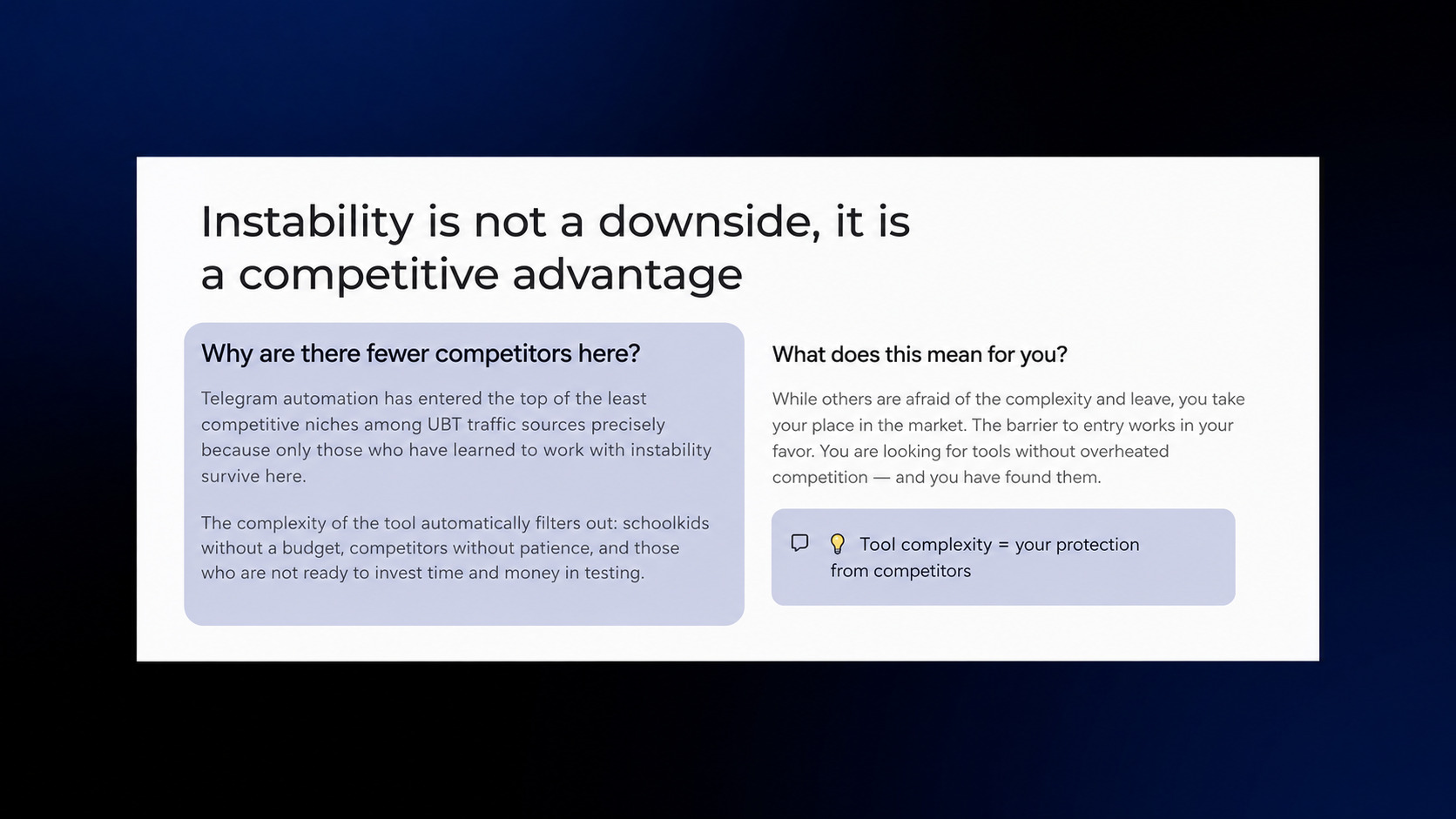
Many people, after facing their first bans, move to more obvious traffic channels: TikTok, Reels, Shorts, or other sources where competition is already insane. But that is exactly why promotion in Telegram through automation tools remains an underrated source for many. Yes, there are restrictions here. Yes, you have to think here. But this is exactly what creates the opportunity to promote Telegram and get traffic to a Telegram channel cheaper than in some classic sources.
The right question is not whether automation is stable in general. The right question is whether we know how to work in a way that gets the maximum result with minimal risks.
Neurocommenting: the main pitfalls
The main mistake beginners make is that they see neurocommenting as a primitive mechanic. They bought accounts, launched AI comments in Telegram, and got subscribers. In practice, this is a separate profession inside the traffic topic.
It is not enough here to simply turn on Telegram software or a combine. You need to understand:
- how Telegram reacts to repetitive actions,
- how channels protect themselves from bots,
- which niches can actually handle this source,
- how to collect a database of channels where everyone is not already running around,
- how to scale without committing account suicide.
And here is the paradox. It is precisely the complexity and instability that make this direction interesting. Most competitors drop out not because promotion in Telegram does not work, but because people are not ready to learn, test, and endure the first mistakes.
When everyone is looking for the perfect risk-free scheme, the market goes to those who know how to work in reality, not in fantasies.
Pitfall 1: Comment deletion
The first major problem of neurocommenting is the deletion of comments by protective bots in channels. As soon as neurocommenting in Telegram became widespread, solutions started appearing that cut off such comments automatically. As a rule, such Telegram protection bots include fovbot, tguard bot, and other tools for protecting channels from suspicious comments.
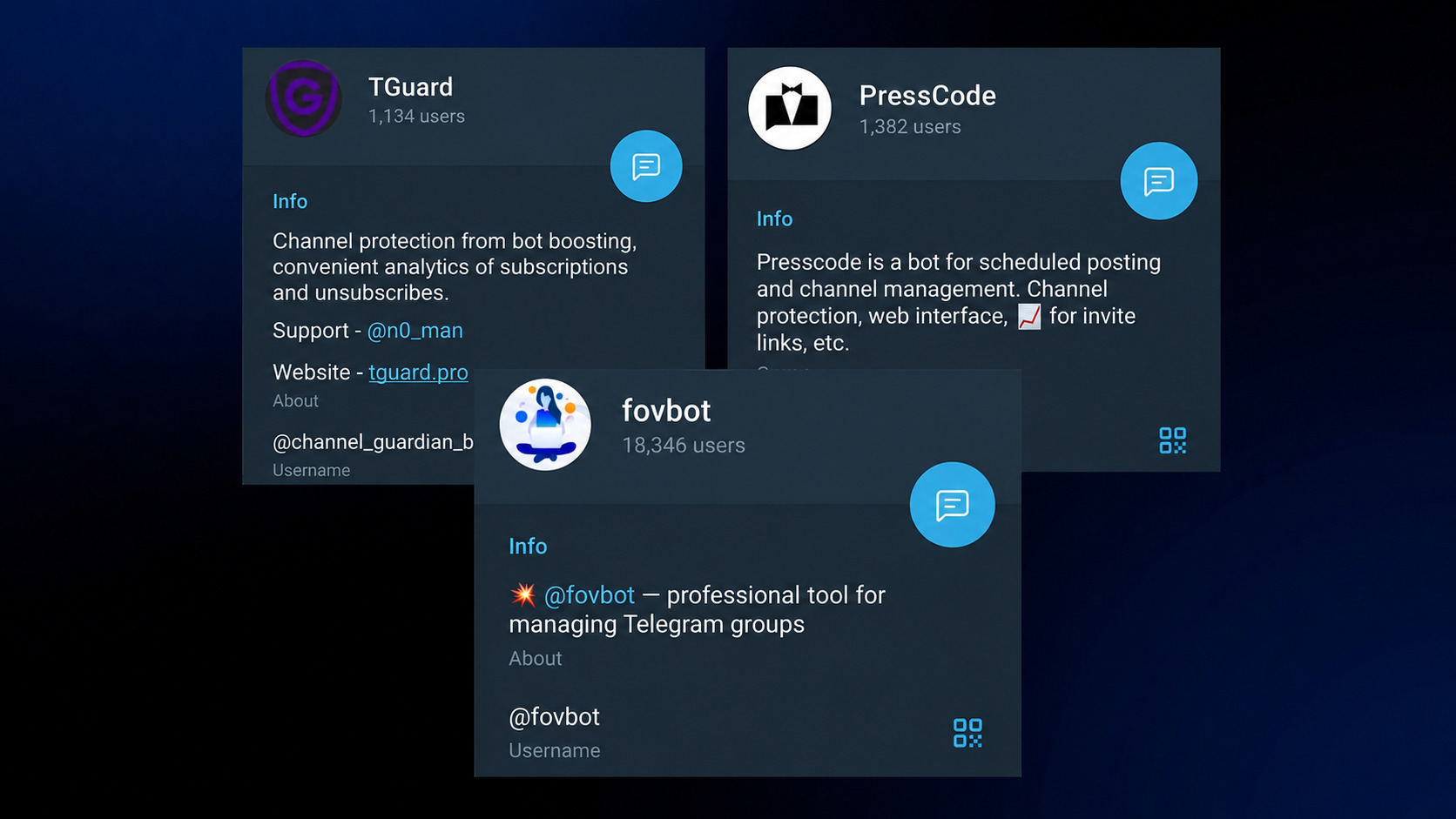
One of the simple signs by which a protective bot can detect automation is profile design. If there is text in the bio or a channel is pinned, a comment from such an account can be deleted almost instantly.
But there is an important clarification here. Many people get the impression that protectors are already installed everywhere. In reality, there are few such channels, less than 3-5%. The problem is different: everyone goes to the same channels. The reason is simple: when collecting a database, many use the same parsing in Telegram Combine, choose similar settings, and as a result end up in the very same channels where others are already going.
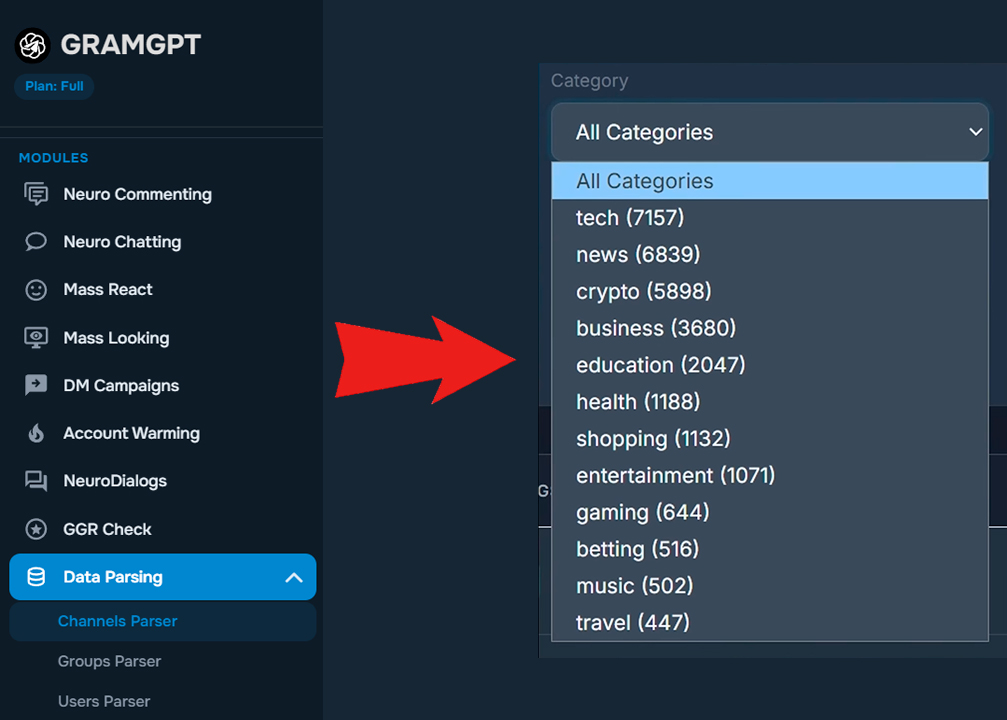
Usually the database is collected according to a template:
- news,
- crypto,
- business,
- other overused topics.
That is, we parse exactly what everyone else parses. As a result, we end up in those same channels that are already tired of spam and have installed protection.
The solution here consists of two parts.
1. Collect a unique database
This is basically half the success. If we want promotion in Telegram through comments to work for a long time, we need to stop thinking in templates.
Telegram has a huge number of underestimated clusters. What helps here is not just ordinary parsing of popular channels, but a full-fledged Telegram channel map or atlas of Telegram channels, where you can look for connections between topics, adjacent audiences, and less obvious entry points.
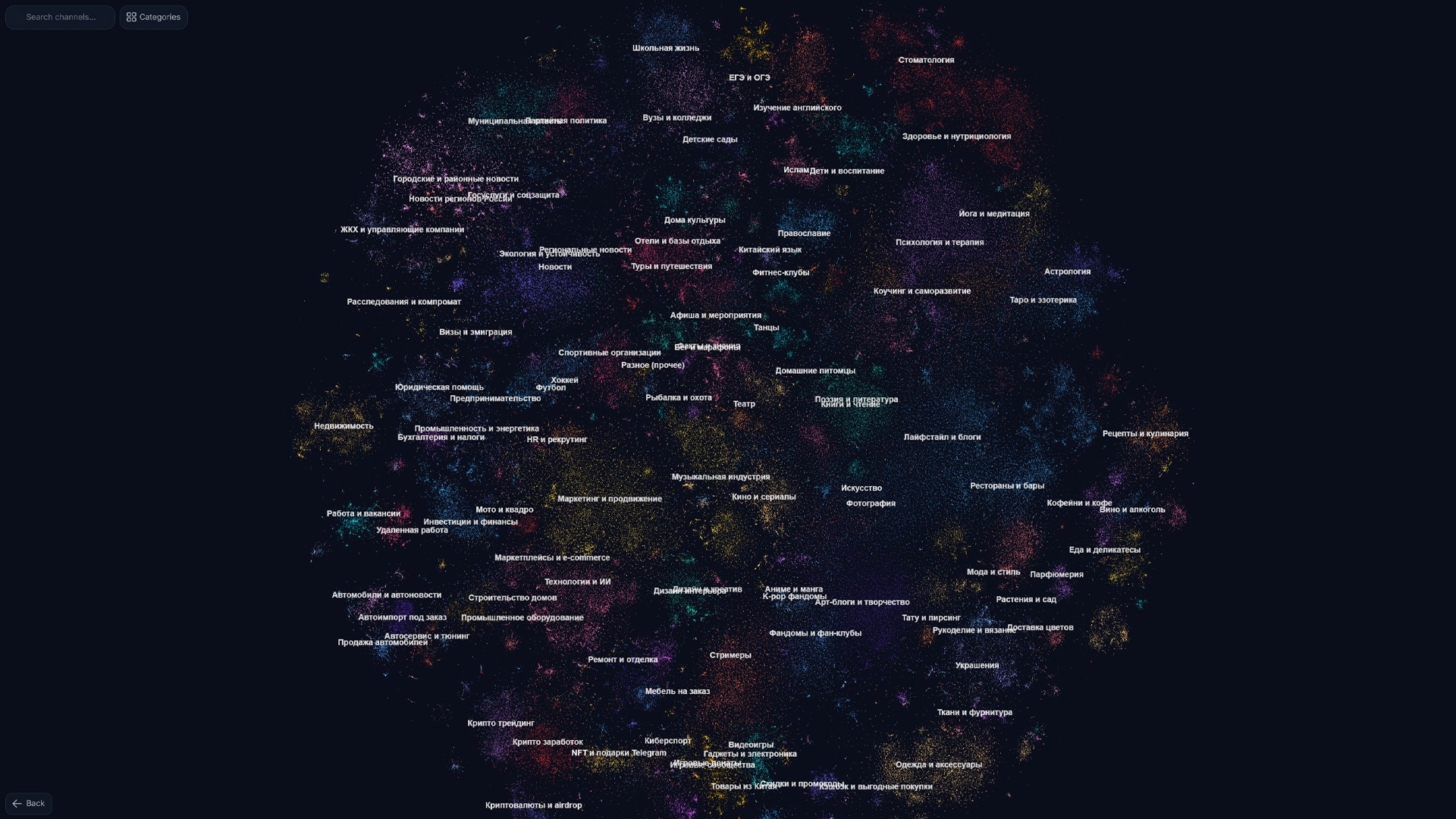
For example:
- theater,
- art blogs and creativity,
- other topics that almost nobody enters.
There are tens of thousands of channels and huge audience volumes there, but competitors often do not even look there. If we look not just for popular sections, but for places where our target audience exists and there are few automators, the share of saved comments grows sharply. This approach helps gain subscribers to a Telegram channel not only through quantity, but also through a more accurate hit on the audience.
2. Do not expose the account through the bio
If protection looks at the profile description, we should not leave there anything that can quickly be used to catch and identify us. A more workable option is to use stories. In the stories themselves, you can place a clickable sticker, while the profile remains clean.
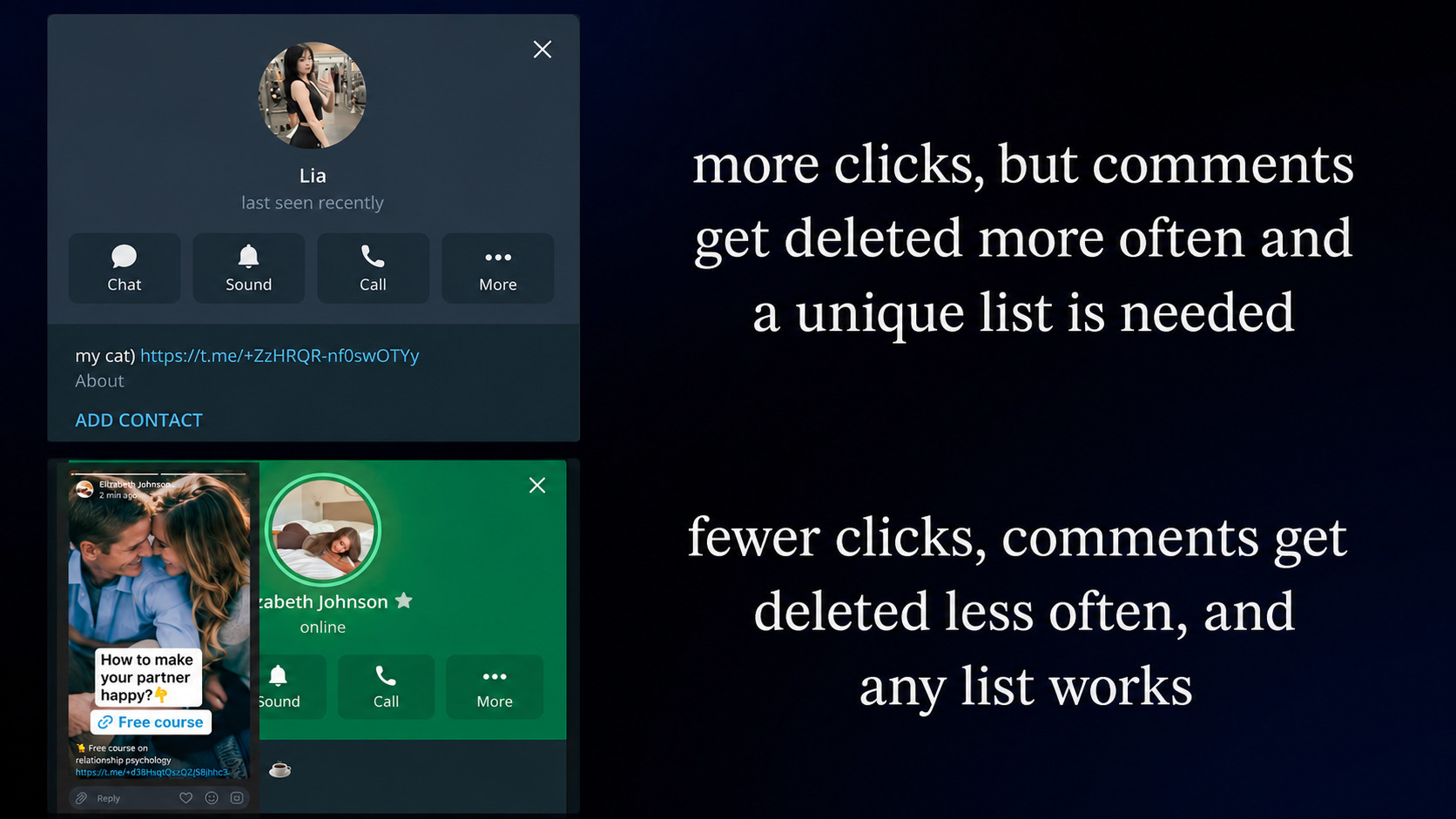
Due to this, accounts live longer even where protective bots are already installed in the channel. This does not remove the risks, but it helps run neurocommenting more carefully and avoid repeating one of the most common beginner mistakes.
Pitfall 2: Freezing a Telegram account
The second problem is freezing Telegram accounts, which we described in more detail and explained how to avoid in a previous topic. Formally, this is not yet a ban, and the account may be listed as valid, but in practice it is almost the same thing for work. Unfreezing happens rarely, so it should be treated as a serious loss.
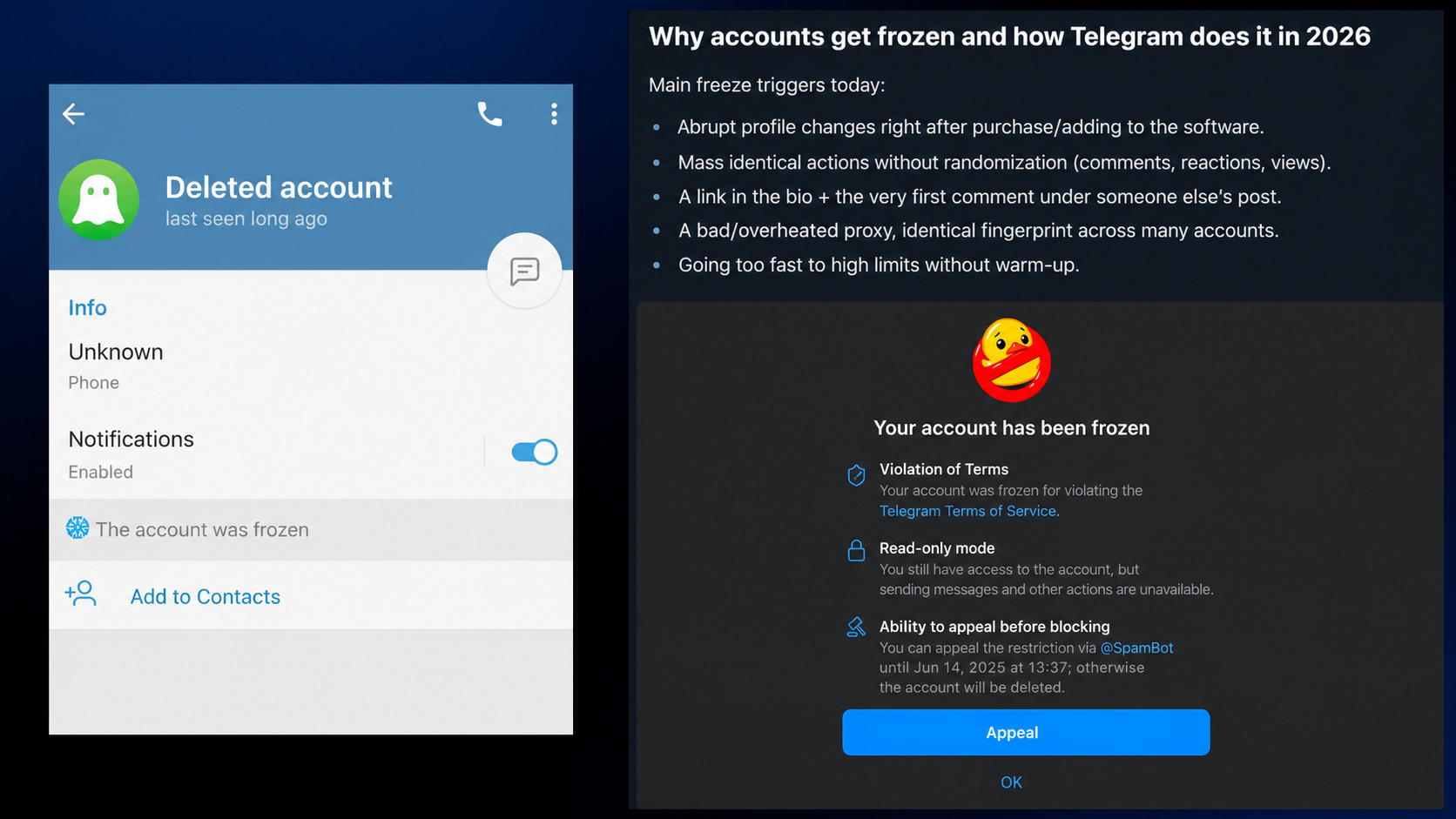
What usually causes a freeze? Repetitive behavior. When an account does the following in a row:
- joins many times,
- comments many times,
- likes many times,
- and does nothing alive between these actions.
Telegram easily reads such a sequence as unnatural.
That is why randomization of actions with the help of AI Telegram account protection is important.

Not just a delay between actions, but exactly behavior that looks like an ordinary user:
- scrolling channels,
- typos,
- viewing other people's profiles,
- additional pauses,
- secondary actions within the session.
But there is another common reason that many people forget about. An account can run into problems right at the start if it has only just been added to a new IP and immediately pushed into work. You cannot do that.
Minimum basic approach:
- added the account to a new IP in Telegram Combine,
- let it rest for 12-24 hours,
- sent it to warm-up for 30 minutes and, after 6-12 hours, for another 30 minutes,
- we can test-run the accounts through neurocommenting on our own channels,
- profile design,
- only then started the launch.