
Why Bot Promotion Has Become a Separate Task
Many people think that bot promotion works the same way as channel promotion: buy ads, get clicks, and wait for results. But a Telegram bot is not just a content page. It is a tool that should be launched, keep the user engaged, guide them through a funnel, and lead them to a target action: a lead request, payment, subscription, registration, or conversation.
That is why the question of how to grow a Telegram bot cannot be reduced only to buying ads. It is important to understand why a person should launch the bot, what value they will get in the first few seconds, and why they will come back again. If the bot is unclear, responds slowly, or does not provide a quick result, even good traffic may be wasted.
How to Promote a Telegram Bot
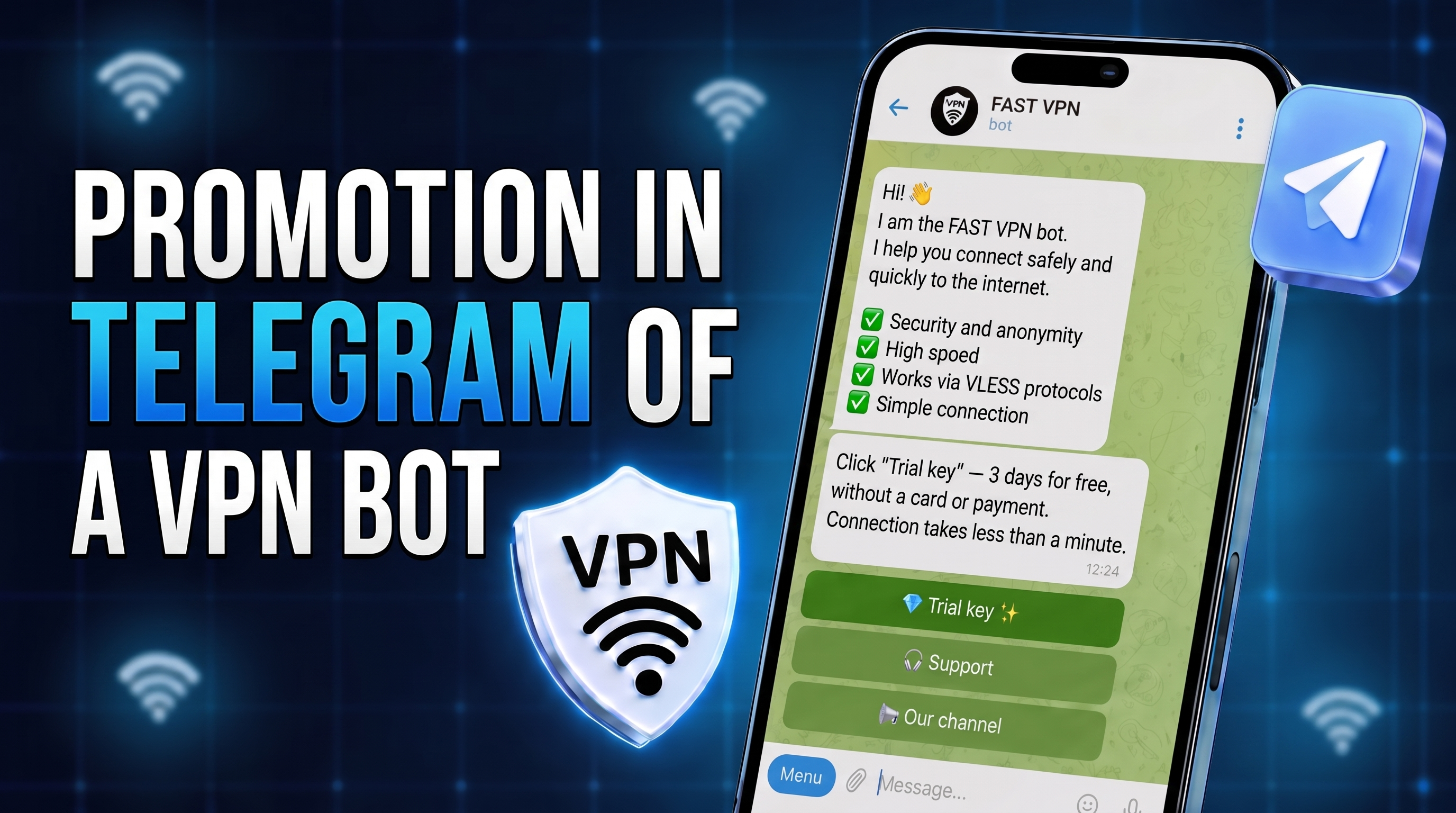
To understand how to promote a Telegram bot, you need to start with packaging. The bot should have a clear name, description, start message, buttons, scenario logic, and a clear offer. After launching it, the user should immediately understand what to do next.
For example, a bot can provide a lead magnet, calculate the cost of a service, accept applications, guide users through a mini-funnel, give access to materials, collect contacts, or transfer a person to a manager. The clearer the first step is, the higher the conversion from click to launch.
It is important not just to bring a person into the bot, but to make sure they complete the desired action. That is why bot promotion is always connected with analytics: how many people clicked, how many pressed Start, how many reached the lead stage, and where users drop off.
Where to Get Users for a Telegram Bot
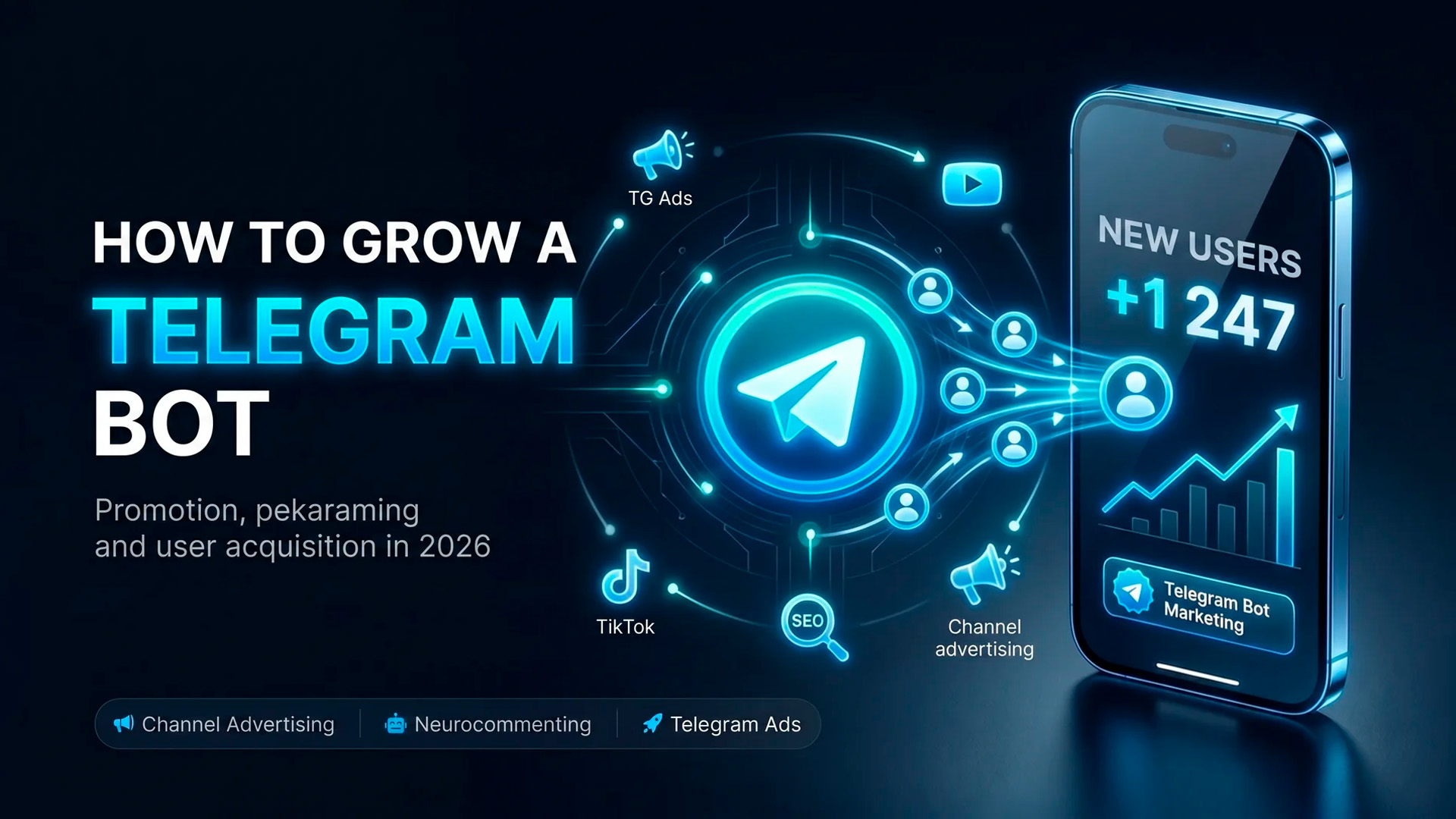
The main question for an owner is where to get users for a Telegram bot if there is no large audience at the start. There are several possible sources: Telegram channels, niche chats, comments, ads, short videos, YouTube, websites, broadcasts, partnerships, your own channels, and external social networks.
One of the strongest options is to send people to the bot from existing attention points. For example, from a channel post, ad placement, chat discussion, YouTube video, or website page. A bot works well as the next step after interest: a person sees the offer, clicks, presses Start, and enters an automated funnel.
Users should not come to the bot only for the sake of launch numbers. It is important to attract people who are genuinely interested in the topic. If the traffic is random, there may be launches, but there will be no leads, payments, or healthy conversion.
Telegram Bot Advertising
Telegram bot advertising can be launched through channels, chats, seeded posts, bloggers, ad posts, external social networks, and your own media. But the ad itself should not just say “launch the bot.” It should explain the specific benefit: what the user will receive after clicking.
Ads without a clear offer work poorly: “Here is our bot, check it out.” Specific offers work better: get a checklist, calculate a result, take a test, claim a bonus, get a consultation, check an account, launch a funnel, or learn a promotion method. The stronger the promise of the first action, the higher the chance that a person will press Start.
It is also important to test different formats: short post, native integration, case study, instruction, problem breakdown, or solution comparison. For a bot, the first touchpoint is especially important because the user will not spend much time figuring things out if the value is not clear immediately.
Bot Promotion Through Channels
Bot promotion through channels is one of the clearest ways to get the first launches. You can place ads in niche Telegram channels, create native posts, buy reviews, arrange partnerships, or use your own channels to warm up the audience.
The main point is to choose channels not only by the number of subscribers, but by audience quality. A small channel with a live target audience is better than a large channel with cheap subscribers and low engagement. Before placing an ad, check reach, reactions, comments, ad frequency, topic relevance, and offer fit.
If the bot is connected to sales, traffic, AI, crypto, education, or business, the ad post should not simply lead to “a bot,” but to a specific mini-funnel. For example: “launch the bot and get a calculation,” “take a test,” “get a list of channels,” “check your account,” or “get an instruction.”
Bot Promotion Through Chats
Bot promotion through chats works differently. Here it is important not to spam links, but to find discussions where people already have a problem that the bot can solve. If a user asks about traffic, automation, leads, sales, service selection, or checking something, you can carefully answer and offer the bot as a tool.
Chats are good for getting warm users because the person is already in the context of the topic. But this method requires caution: aggressive links, identical messages, and mass spam quickly lead to complaints and restrictions. It is better to work through value, expertise, and natural participation in the conversation.
For scaling, automation can be used: finding relevant chats, tracking discussions, working with accounts, launching careful activity, and processing incoming messages. But it is important to respect limits and not turn promotion into spam.
How to Increase Bot Launches
To understand how to increase bot launches, you need to look at the entire chain: traffic source, ad text, click button, start message, and first scenario. Sometimes the problem is not the traffic, but the fact that the user does not understand why they should press Start.
Several factors affect launches: a strong offer, clear benefit, short path, trust in the source, the right call to action, and a fast first result. If a person launches the bot and immediately receives value, the chance of continuing the dialogue is higher.
Segmentation also helps. Different entry scenarios can be created for different sources: one for channel ads, another for chats, a third for the website, and a fourth for YouTube. This way, the user enters a more relevant funnel, and conversion becomes higher.
Funnel Through a Telegram Bot
A funnel through a Telegram bot is a system of steps that takes the user from the first launch to the target action. It may include a welcome message, interest selection, delivery of useful material, a message sequence, qualification, lead collection, payment, or transfer to a manager.
A good funnel should not be too long. If the user came for a quick result, there is no need to overload them with dozens of messages. It is better to create a short path: explain the value, ask one or two questions, show the solution, and offer the next step.
For business, a bot can work like an automated manager: collect leads, answer frequent questions, segment the audience, and pass hot requests to a human. Combined with channels, chats, and ads, this turns the bot from a technical tool into a full sales element.
Telegram Bot Promotion Automation
Automation helps test sources faster, scale traffic, and avoid losing users after launch. When the bot starts receiving many clicks, it becomes important to quickly process incoming messages, track actions, segment the audience, and return those who did not reach the lead stage.
GramGPT helps build promotion more systematically: work with accounts, launch activities, use neural chatting, auto-replies, and automation tools. For Telegram bot promotion, this is especially useful if you attract users through chats, channels, direct messages, and different traffic sources.
Conclusion
To grow a Telegram bot in 2026, it is not enough to simply buy ads and wait for launches. You need to package the bot, create a clear offer, choose traffic sources, set up a funnel, test channels and chats, improve conversion, and use automation where manual work starts slowing growth.
If you understand how to promote a Telegram bot, where to get users, how advertising works, how the funnel is built, and how to increase launches, the bot can become not just an additional tool, but a full channel for leads, sales, and audience communication.