Subscribe to DeepL Pro to edit this document. Visit www.DeepL.com/pro for more information.
When figuring out how to promote a Telegram bot, the challenge almost always lies not in the development itself, but in driving traffic. These days, you can build a bot fairly quickly. It’s much harder to attract users to it in a way that generates sales, subscriptions, and consistent results.
That’s why in this article we’ll cover not only the creation but also the promotion of a Telegram bot, advertising, free traffic sources, and a systematic approach to getting your first leads.
The good news is that this method works in almost any niche: VPNs, neural networks, chatbot psychologists, business services, arbitrage tools, tour selection, auto-selection, and other formats. The essence is the same everywhere: we have useful functionality that people are willing to pay for, and then we need a stable way to showcase this product to our target audience.
That is exactly why the question of how to attract users to a Telegram bot should be viewed not as a one-off advertising campaign, but as a system. Below, we’ll break down how this business works, how to come up with a bot idea, how to set up accounts for promotion, how to build a channel network, and how to generate a steady stream of requests through automated commenting on relevant topics.
Why a Telegram bot can earn more than a channel
A Telegram bot is essentially very similar to a website. It has an interface, features, a personal account, interaction scenarios, payment options, subscriptions, bonuses, a referral program, and everything else that helps turn interest into money.
If you take a VPN bot, it usually includes:
- access credentials or installation instructions,
- device connection,
- subscription payment,
- plan management,
- additional bonuses and referral programs.
If we take a service bot, the logic is the same. A person visits, receives a clear offer, pays for the service with a single click, and immediately uses the features. That’s where the power lies. A channel typically builds momentum and attracts attention, while a bot is much closer to direct monetization.
Therefore, when we think about how to promote a Telegram bot, it’s important to remember: we’re not just promoting a Telegram account, but a full-fledged digital product, so the advertising campaign must be targeted as precisely as possible at those who are ready to interact with your product right now.
What should the product itself be like for promotion?
For promotion to work, the bot must solve a clear problem. Not an abstract one, but a very specific one. The easier it is to explain the benefit in a few seconds, the easier it will be to drive traffic and convert it into revenue.
One working example is a bot for video personalization. The inner workings are simple:
- a user visits and receives a brief description of the service,
- signs up for access,
- pastes a link to the video,
- selects the number of copies,
- and receives several unique versions of the video.
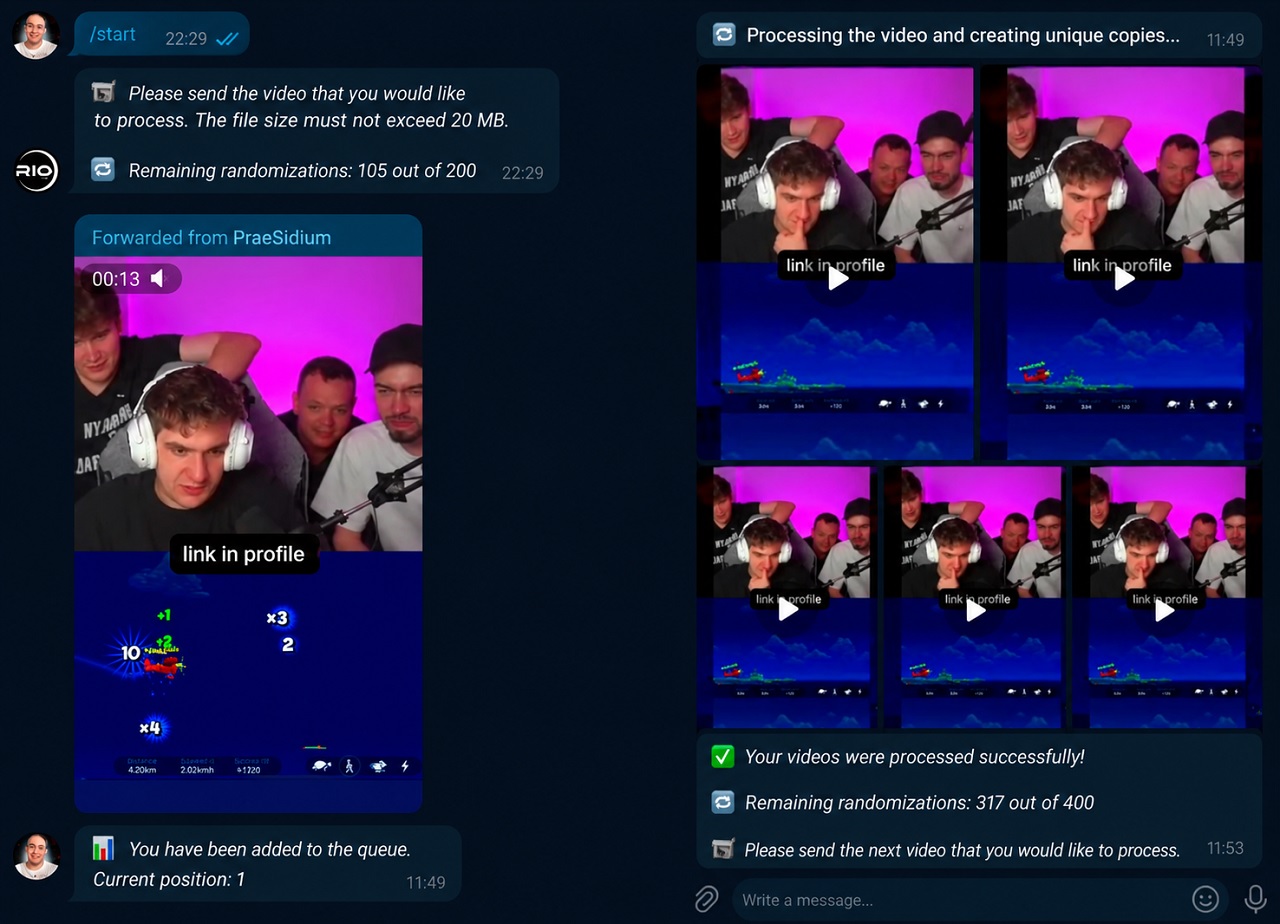
On the surface, it might look primitive. But if the technology actually solves the target audience’s problem, people will pay for it. It’s not the complexity of the code that matters, but the presence of a clear pain point and a useful result.
Remember the golden rule at the start: the simpler, the better! If a user lands on a bot with more than 10 different buttons or functions, they’ll get confused and leave immediately. It’s better to guide the user through the bot like a linear funnel so they can’t go wrong and can test your bot on the first try.
How to come up with an idea for a bot
Most often, strong ideas don’t come out of thin air, but from observing the market. The main task is to determine what there is potential demand for or what problem we can solve for the majority of people with our solution.
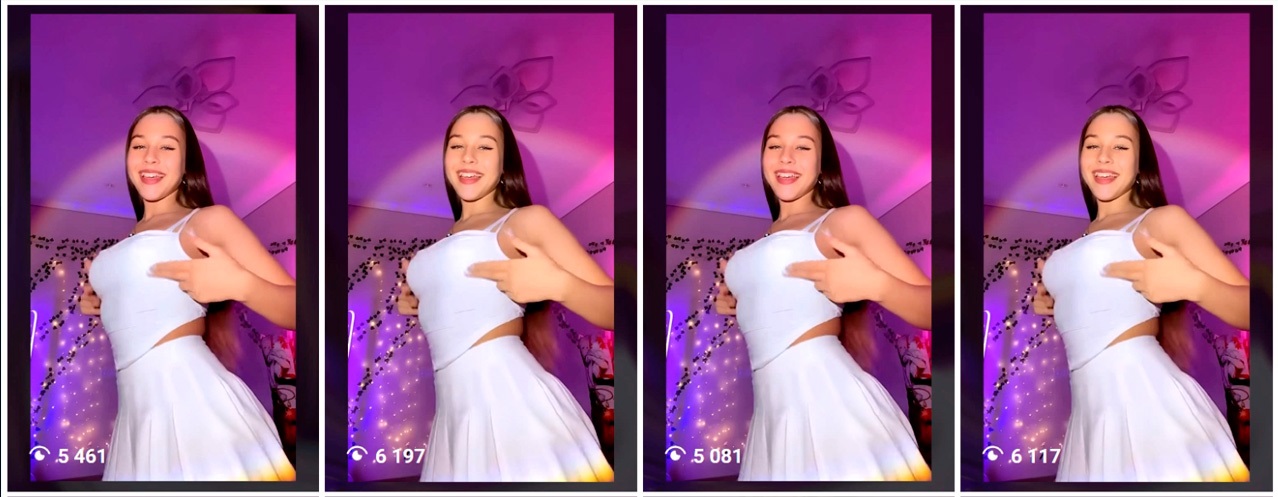
Before we developed our first video randomizer, we noticed that the same video was posted multiple times on Instagram, and some of these posts continued to rack up views. It later turned out that the successful posts were actually slightly different from one another: the background, contrast, speed, and minor effects varied. All that was left was to combine these differences into a single tool.
At first, you can build such a bot just for yourself. That’s actually better. If the solution really helps us personally, the likelihood that it will be useful to others increases.
And here, it’s important not to get bogged down in doubts. Many people think: if an idea is useful, why sell it when you can use it yourself? But the market usually works differently. If a problem exists, someone will come up with a solution anyway. So it’s smarter to be the first to enter the market or at least quickly enter the niche.
Suitable niches for launch
When people ask how to promote a Telegram bot, they often immediately add: "But there’s already a lot of competition in our niche." In practice, this isn’t a deal-breaker.
There is high competition almost everywhere:
- in VPN bots,
- in neural network services,
- in psychological bots,
- in marketing and Telegram tools,
- in free and paid utilities.
But new users are constantly entering any market. Plus, you can always:
- take a portion of the audience away from existing players,
- show the product from a different angle,
- create a slightly more user-friendly experience,
- package the solution in a way that’s clearer than the competition’s.
If we have a practical benefit, the question is no longer whether we can enter the niche, but how exactly we will reach the right people.
How to create a Telegram bot without breaking the bank
Today, development no longer seems out of reach. Even without a strong technical team, many features can be built using neural networks, ready-made libraries, and iterative refinement. This is especially relevant for an MVP, when we don’t need a perfect product, but rather a first working version.
The basic approach is as follows:
- define the bot’s main task,
- build the minimum functionality,
- integrate payment and basic navigation,
- verify that users understand the flow after clicking "Start,"
- and only then scale up promotion.
Many people make the mistake of spending too much time polishing their product without ever moving on to generating traffic. At this stage, the pitfall is that promoting a Telegram bot can be ten times harder than developing it, so it’s better to focus on launching a rough product to gauge initial reactions to its features and then improve it later.
Main Methods for Promoting a Telegram Bot
Before diving into a specific strategy, it’s important to understand that promoting a Telegram bot isn’t limited to a single tool. A standard strategy can combine several traffic sources: some generate quick leads, others take longer but are cheaper, and others help build trust in the product.
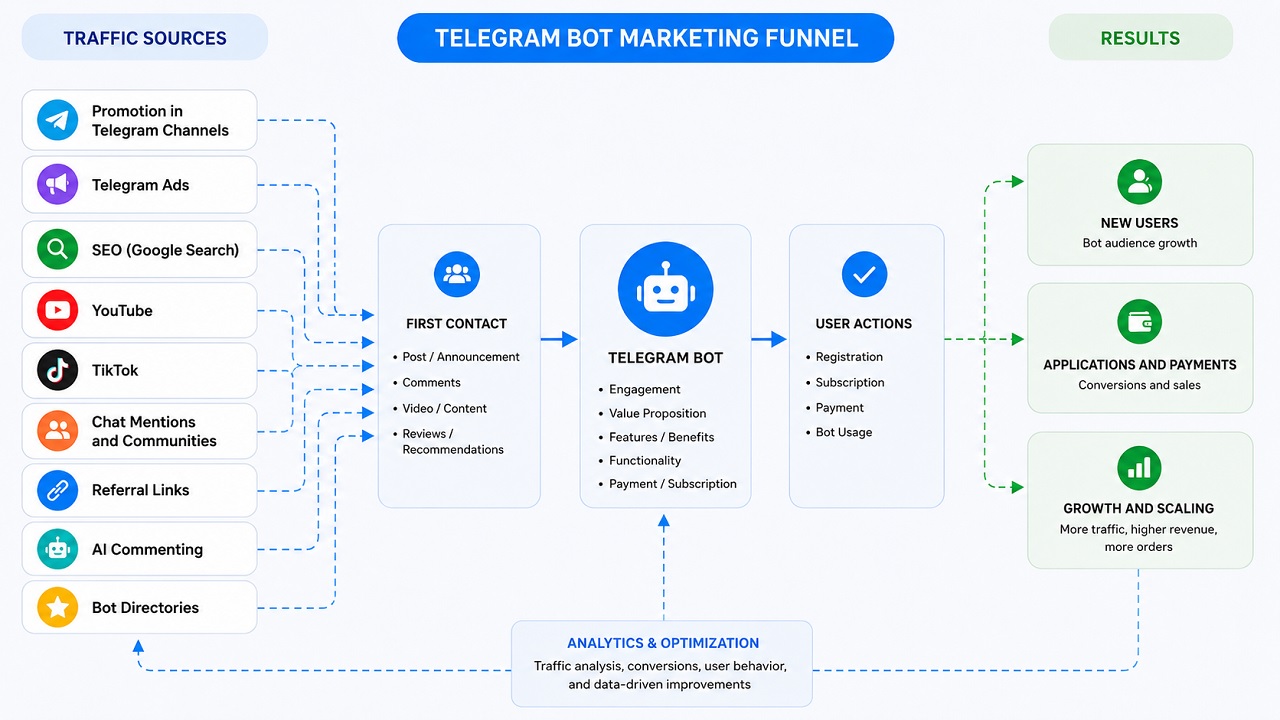
- Advertising on Telegram channels — a quick way to get your first clicks if you choose the right channels by topic, verify the active audience, and create a clear offer.
- Seeding — posting in multiple channels or chats, where the goal isn’t just to buy a single post, but to test different audiences and figure out where the cost per lead is lower.
- SEO websites — suitable if the bot has a separate page, landing page, or blog. Through SEO, you can attract people based on search queries like how to get users for a Telegram bot or how to attract users to a Telegram bot.
- YouTube — a good channel for complex products. Through videos, you can showcase a case study, explain the bot’s benefits, walk through the instructions, and then direct the viewer to Telegram.
- TikTok — works for simple, visual, and mass-market products. If the bot’s purpose can be demonstrated in 10–30 seconds, short videos can drive cost-effective traffic.
- Telegram Ads — Telegram’s official advertising tool. It’s suitable for scaling, but requires careful curation of the channel, bot, or landing page.
- Neurocommenting — a system where verified accounts leave relevant comments in niche channels and direct people to a profile, channel, bot, or autoresponder.
- Referral Program — a way to turn existing users into a source of new customers. Works especially well for VPNs, AI services, utilities, subscription bots, and B2B tools.
- Bot directories — an additional source of trust and traffic. While they typically don’t generate massive traffic on their own, they help address search queries and provide another entry point.
Looking at the bigger picture, Telegram bot promotion isn’t built around a single channel, but around a combination of elements: a clear product, a quick path to action, multiple traffic sources, and continuous analytics of user requests. From there, you can decide what to launch first: advertising, SEO, content, or neurocommenting.
Why conventional promotion methods aren’t always the best
You can buy ads on channels. You can partner with bloggers. You can create content. All of this works. But there is another way that allows you to consistently reach your target audience without constantly buying ad placements—it’s neurocommenting on Telegram.
The idea is that, using an AI bot for Telegram, we can have hundreds of accounts—designed to look like our bot—post comments under posts in targeted Telegram channels. Not spam, but relevant messages related to the post’s topic. Large companies use this strategy when leaving comments under various videos and posts on behalf of their brand.
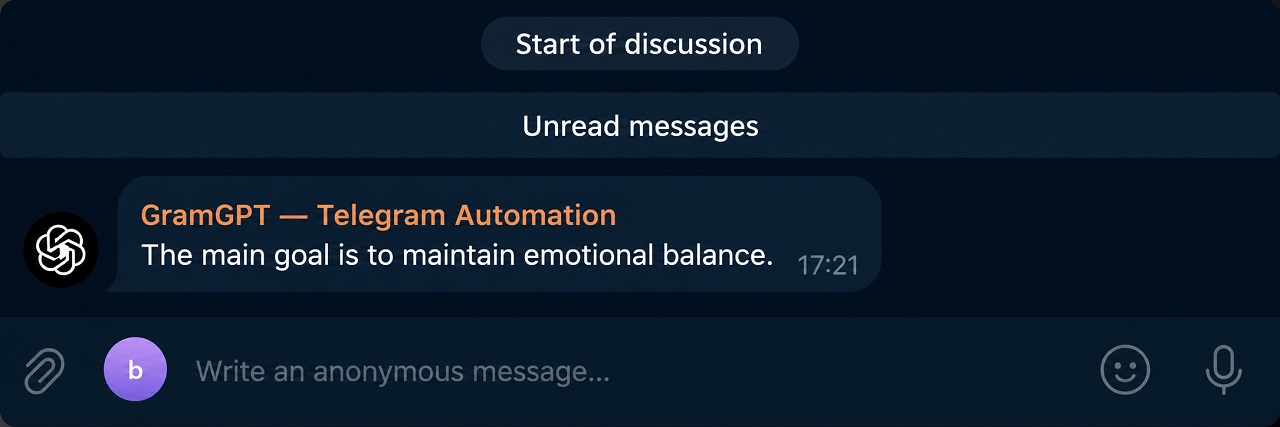
This isn’t just about bots. The same approach works for websites, channels, and services where Telegram is used as an entry point.
Case Study: Promoting a Telegram Bot Through Neurocommenting
Next, we’ll examine not abstract theory, but the specific mechanics of promotion through neurocommenting. This is one method that can be used as a standalone source of leads or as a supplement to advertising, SEO, YouTube, TikTok, and Telegram Ads.
The basis of the strategy: neuro-accounts that comment on relevant topics
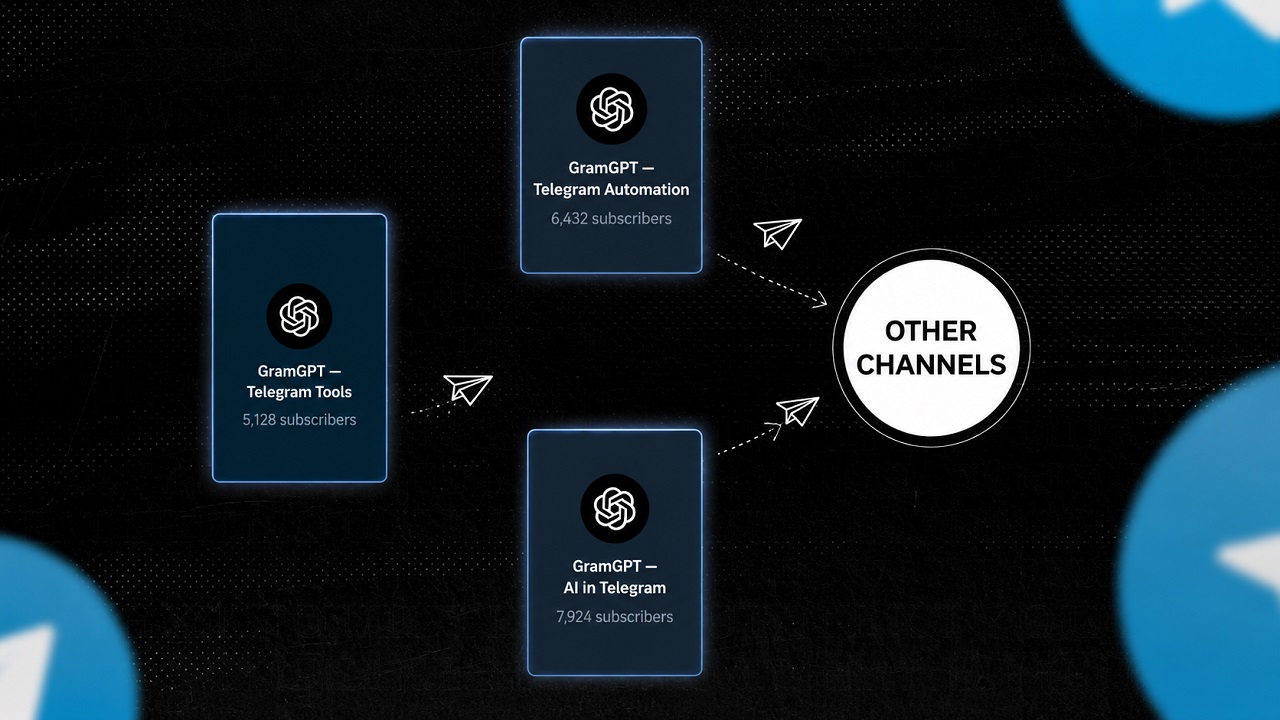
The main idea is simple. We create several Telegram accounts, brand them to match the promoted product, and launch automated commenting in third-party thematic channels.
The scheme looks like this:
- We create several accounts,
- brand them for a single niche,
- find channels with open comments,
- set up relevant replies based on the post content,
- get profile visits and then direct traffic to the bot.
The logic is very strong precisely because the interaction takes place within an already engaged audience. We don’t need to explain the market from scratch. People are already reading posts on the relevant topic. All that’s left is to carefully integrate into the discussion.
How to set up accounts for promotion
To promote a Telegram bot through neurocommenting, you need to carefully plan the branding of the accounts that will be leaving comments. If a profile is empty or looks random, the traffic will be much lower.
What you can use in the design:
- First name with a mention of the niche or product name.
- Last name as an additional descriptor, such as automation, VPN, psychology, and so on.
- Avatar in the form of a bot logo or a recognizable symbol.
- Bio with a brief description of the benefits and a link to the channel or bot.
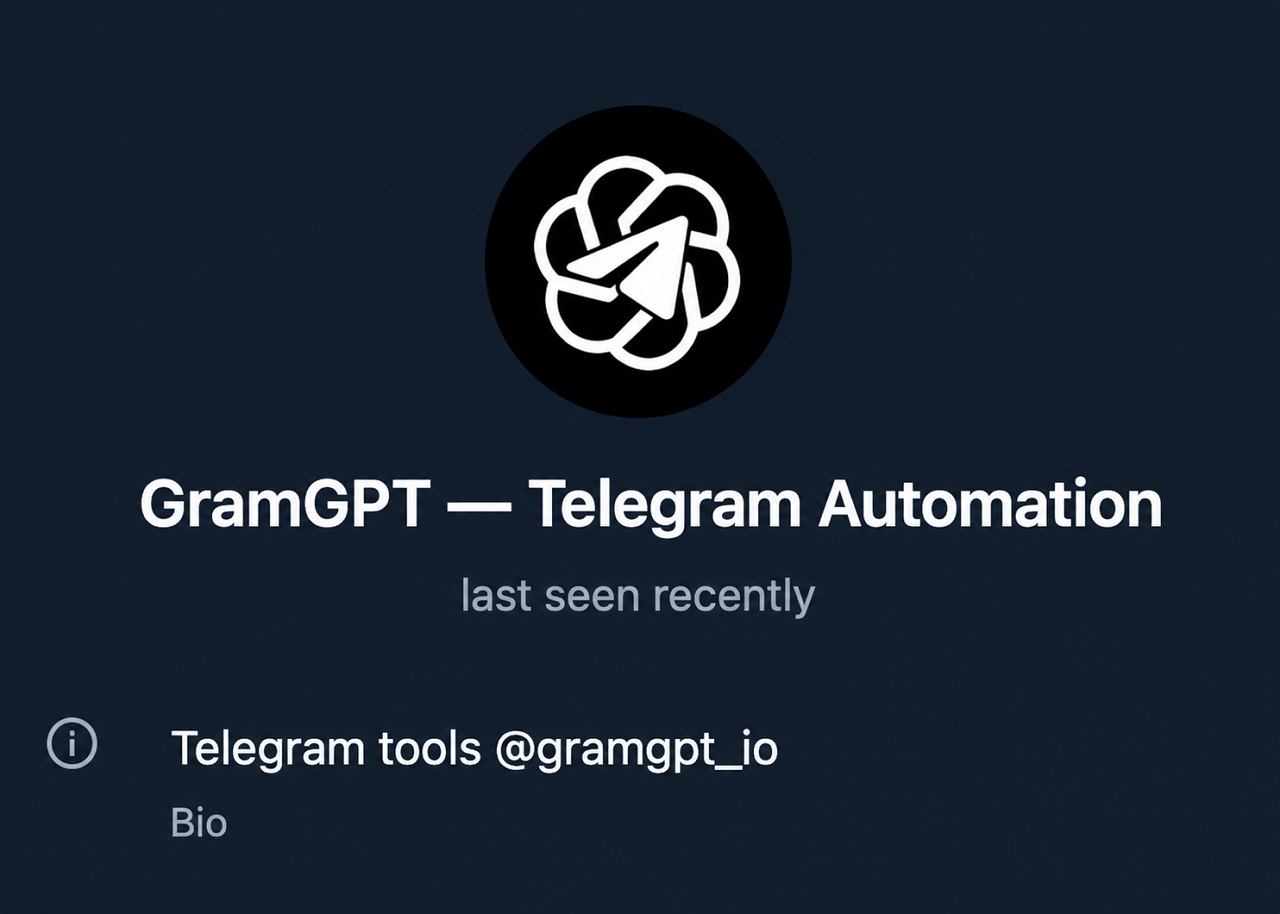
Here is an example of how we designed accounts to promote the GramGpt project:
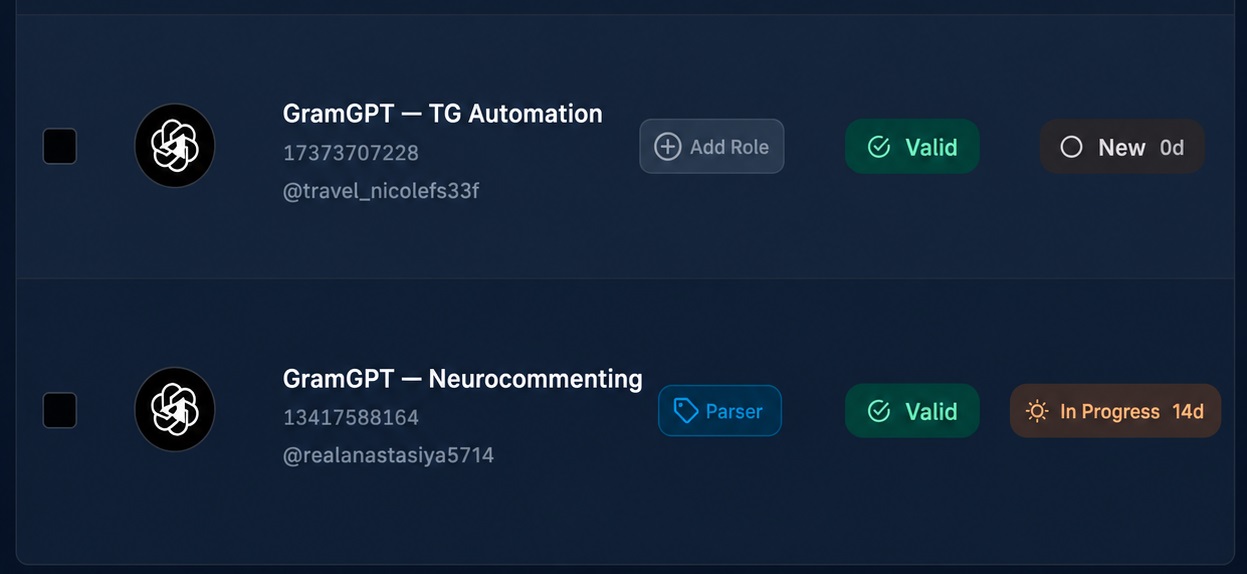
Now our accounts will be able to leave comments under posts using AI-powered commenting. But what’s far more important here is how exactly people will be able to navigate to the bot if the comments are left specifically by these accounts.
There are several main options:
1. Directly link to the bot
If the product is simple and its purpose is immediately clear, you can put a link to the bot right in the bio. This works well for VPNs, counseling bots, simple AI tools, and other straightforward services.
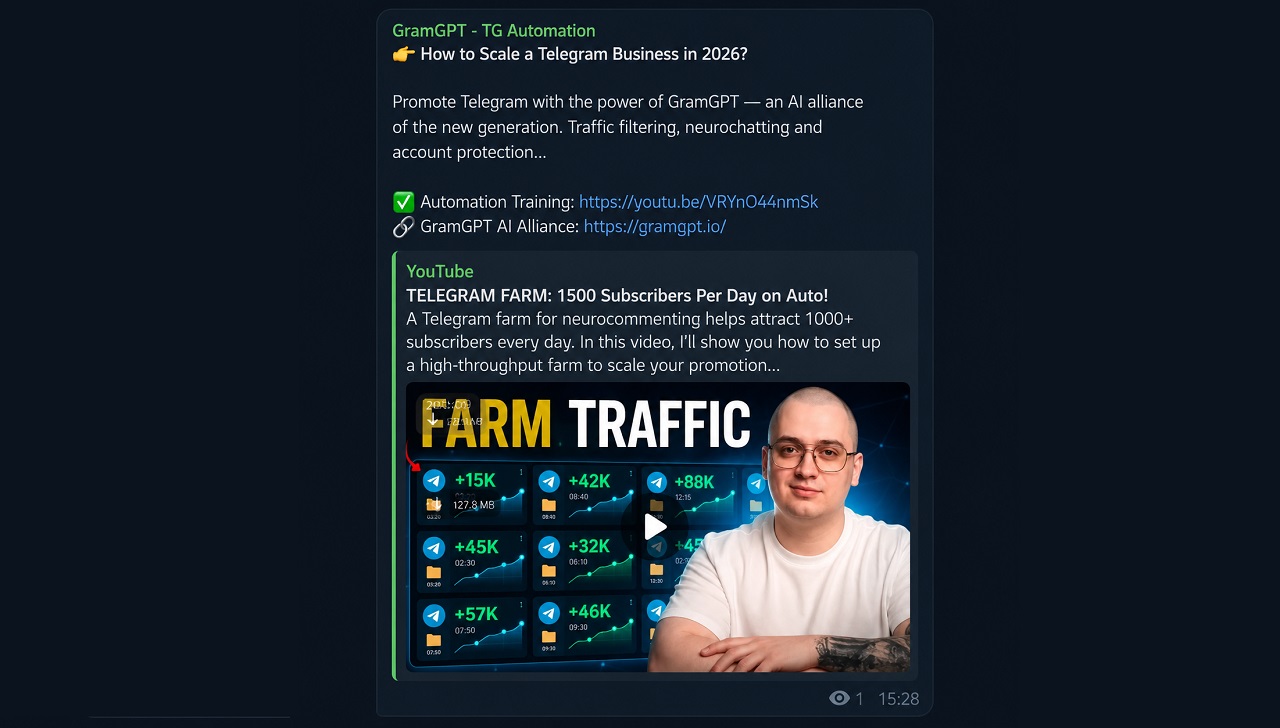
2. Direct them to the channel first
If the project is more complex and difficult to explain in a single line, it’s better to direct the person to a Telegram channel where an explanatory post, instructions, or video is already available. This helps avoid losing traffic due to unclear packaging.
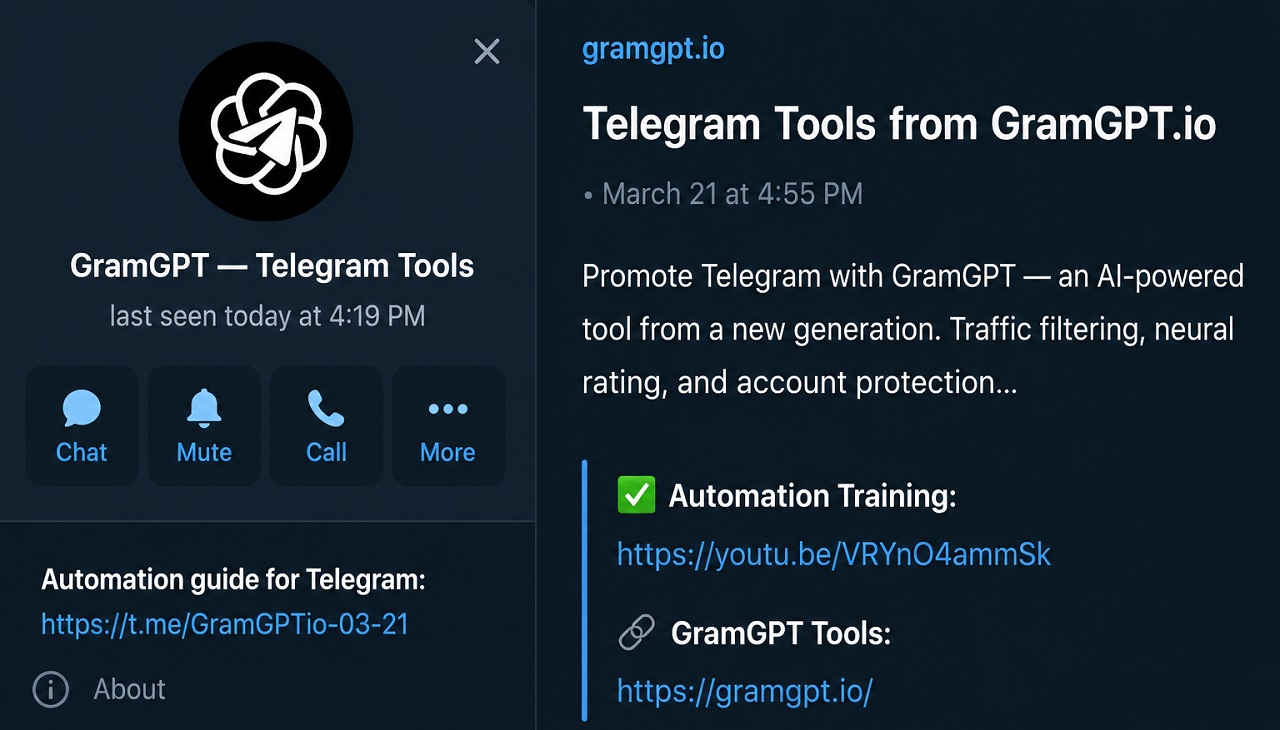
3. Use an intermediate link
If you’re promoting a website rather than a bot, you can include a link to a Telegram page and then redirect the user to the desired destination from there. Direct external links in a profile aren’t always convenient, so Telegram is often used as an intermediate step.
4. Don’t include a link at all
Sometimes, simply asking users to find the brand on Telegram or via search works. For neuro-commenting, this method can be a game-changer, as accounts with no links at all tend to last longer and raise fewer suspicions.
How to identify your target audience
Without this step, the whole scheme turns into noise. You can’t just comment on everything in a row. You need to understand exactly where the people who need our product are.
Examples by niche:
- Telegram-combine or automation services This is an audience interested in Telegram, automation, business, promotion, and channel growth.
- Video Unicizer is for arbitrageurs, people from Reels, Shorts, TikTok, and anyone who works with reposts.
- VPN is a broader audience that needs access to services and ways to bypass restrictions.
- Psychologist Bot covers channels on psychology, relationships, self-esteem, anxiety, and mental health.
- Travel, car selection, and other services are relevant thematic communities and blogs.
The more precisely we define the audience, the easier it will be to build a channel database.
Compiling a database of Telegram channels for promotion
The next step in promoting a Telegram bot is to collect platforms via a Telegram channel parser, where our accounts will operate. And here, the quality of the database is more important than its size.
When searching for channels, you should focus on the following criteria:
- only our niche,
- open comments,
- lively discussions,
- active audience,
- preferably 1,000 subscribers or more.
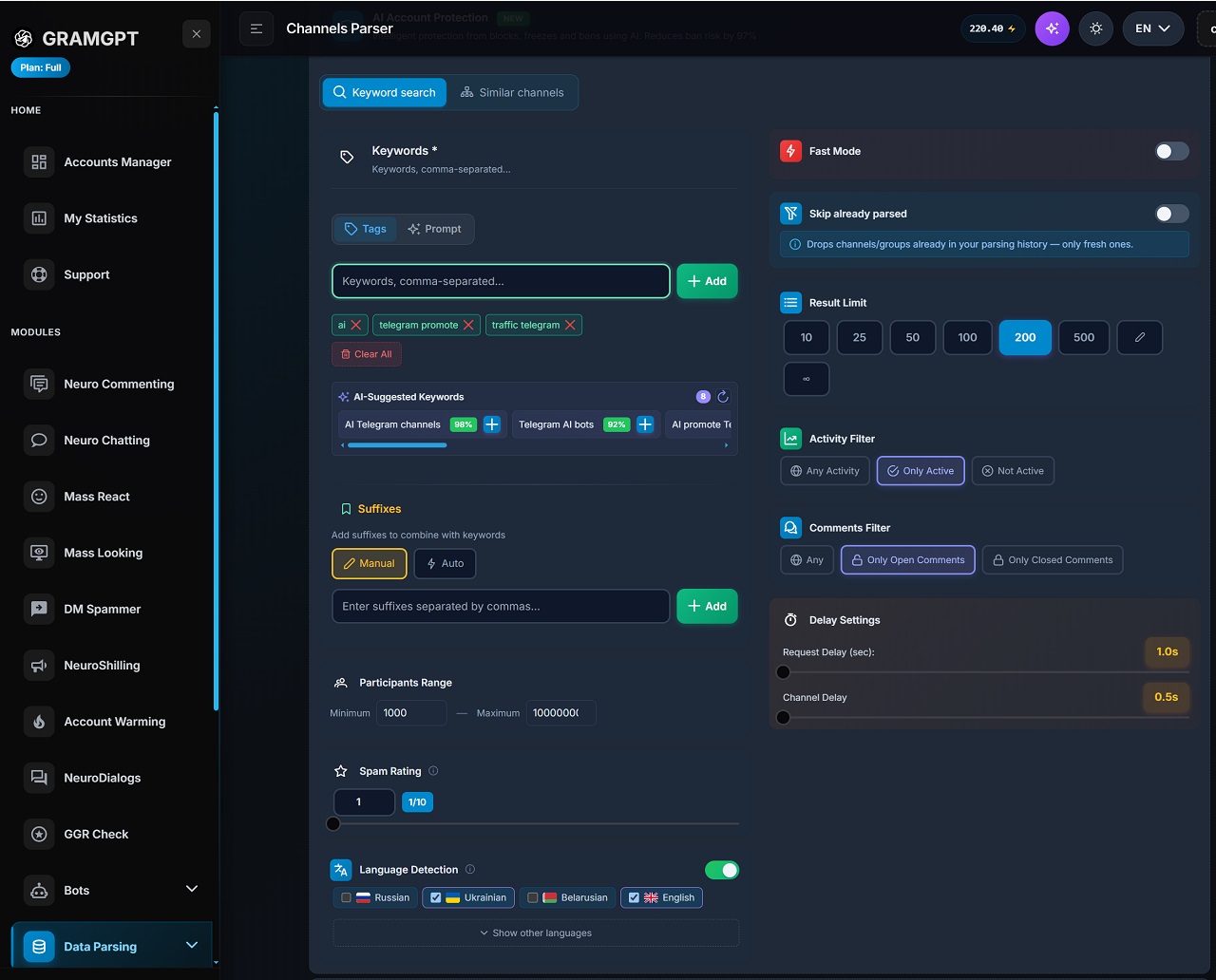
It’s best to choose keywords manually. Auto-generation can help, but it often breaks the logic and leads to irrelevant channels.
For example, if you're working with the topic of Telegram business, it's worth using combinations like:
- Telegram,
- automation,
- Telegram business,
- launches,
- Telegram promotion,
- Telegram marketing.
And be sure to clean up the clutter. If a keyword pulls up news channels, city-based public groups, or anything far removed from our niche, it’s best to remove it. Simply copying all the links found and commenting on them is a weak approach. Manual selection is required.
Why a unique database is more important than an obvious one
If a channel is easy to find using the most basic search terms, others are likely already using it. This doesn’t mean you shouldn’t work with it. You should. But you can’t rely solely on the most obvious platforms.
We also need the second part of the database: more unique channels that aren’t immediately obvious. To do this, it’s helpful to:
- search via the channel map,
- explore macro- and micro-topics,
- manually browse through similar channels,
- checking directories by country and niche,
- build your own clusters, not just rely on popular search results.
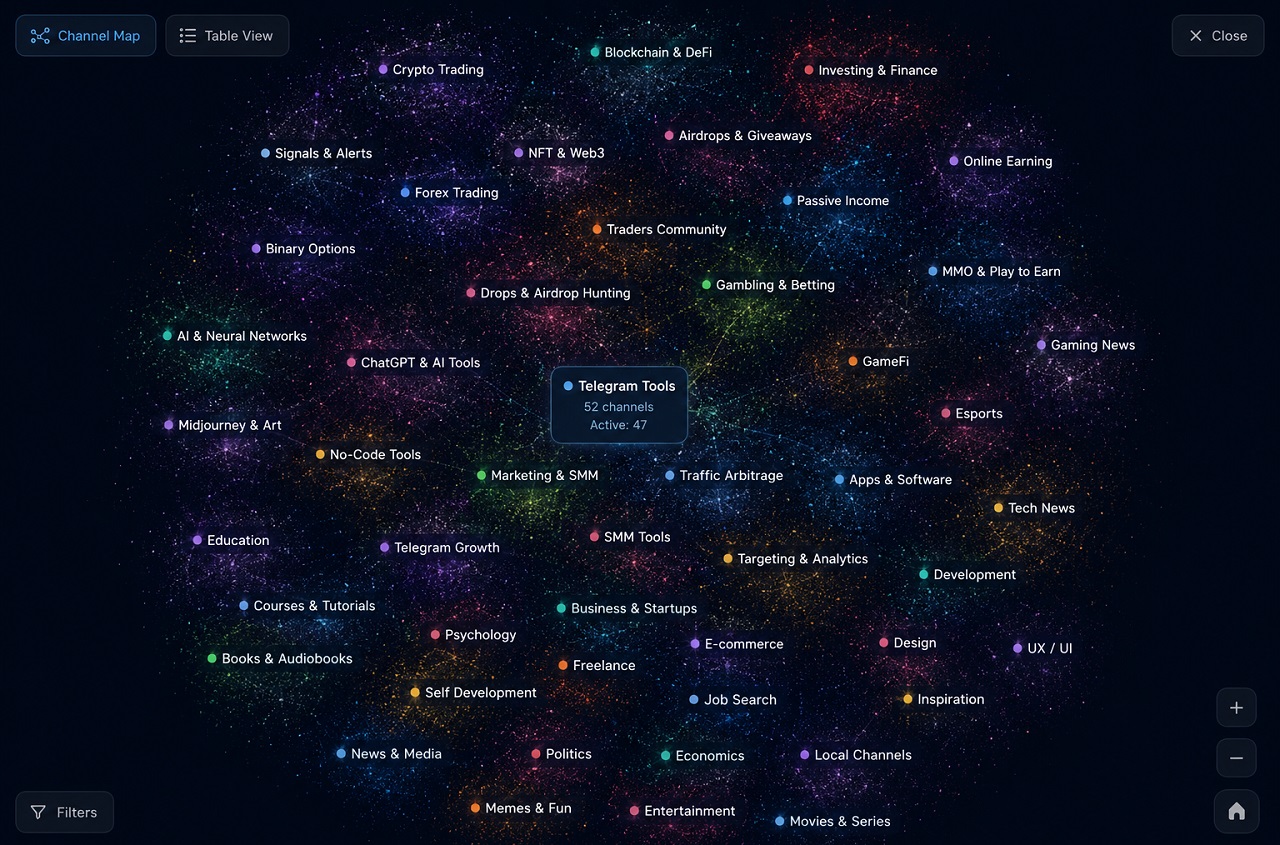
This is exactly where the hidden gem usually lies—a niche that not everyone is tapping into yet. That means the chances of getting cheap traffic and more noticeable results are higher.
How to set up a commenting system
Once the database is ready and the accounts are set up, all that’s left is to bring everything together into a single working system. We’ve already covered how to perform a full neuro-commenting setup in a separate article.
The basic logic of the setup is as follows:
- Open the NeuroCommenting module
- select the accounts that will be commenting,
- enable protection modes and precise delays,
- add the collected channel database,
- distribute channels among accounts,
- if necessary, strictly assign specific accounts to specific niches.
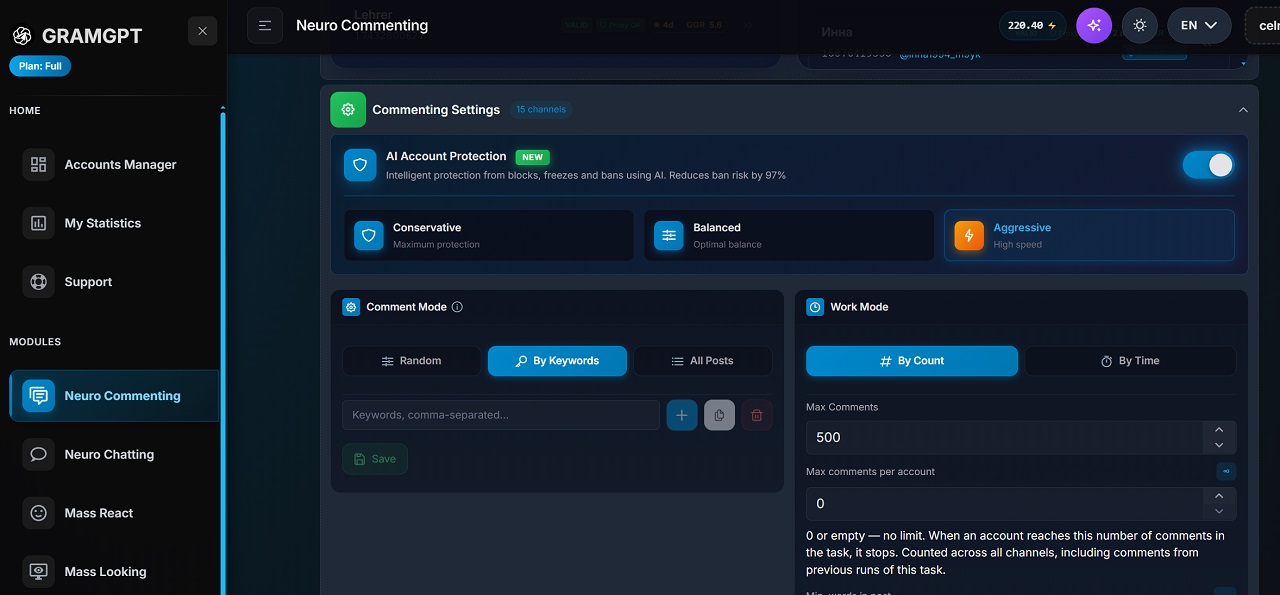
If you’re promoting multiple niches at once, it’s important not to mix them. Each account should operate within its own niche, with a clear name, link, and comment logic. This ensures the user’s journey remains consistent.
It’s also helpful to save preset settings so you don’t have to reconfigure everything after refreshing the page or restarting the bot.
How to write a good prompt for AI comments
The prompt makes all the difference. It determines what the messages will look like, how natural they will sound, and whether they will even be interesting.
The basic rules are good:
- don’t make your comments too long,
- don’t use hashtags,
- write in the same language as the post itself,
- keep comments strictly on topic,
- do not turn your message into direct, intrusive advertising.
In many niches, a short, human comment of 3–5 words is sufficient, or slightly longer if the post requires it.
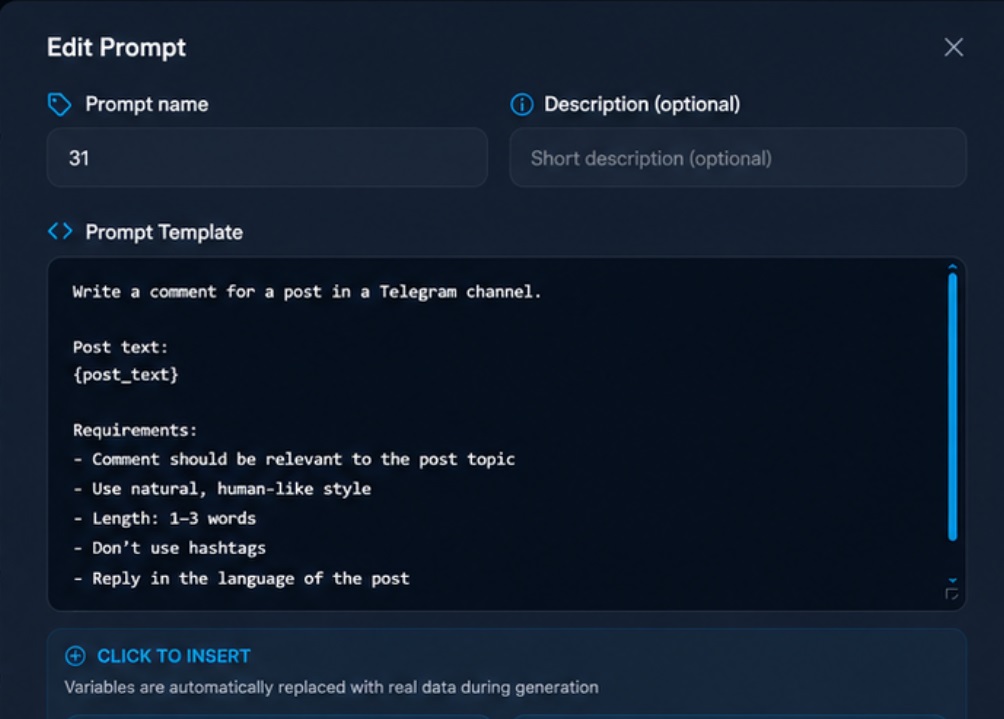
But what’s more interesting is that in some verticals, you can assign a more in-depth role. For example:
- for a psychologist bot, assign the role of an experienced psychologist who responds to posts on the topic,
- for an expert tool, ask the model to supplement the post with facts,
- for a controversial niche, use gentle criticism with reasoning so that the comment stands out and adds credibility to the account.
The point is for the comment not just to exist, but to create the image of a useful profile that people want to visit.
Why do you need an AI auto-responder?
Once a person has become interested and visited the profile, the next step should be as short as possible. If they message the account, it should automatically send the necessary information.
This could be:
- a link to a bot,
- a link to a channel with an analysis,
- a link to a website,
- a brief instruction,
- welcome message with an offer.
We can enable a standard auto-reply with a pre-written message or connect the AI auto-responder, which our user bot will use to automatically chat with people, redirect them to the AI bot’s target channel, close sales, or provide consultations.
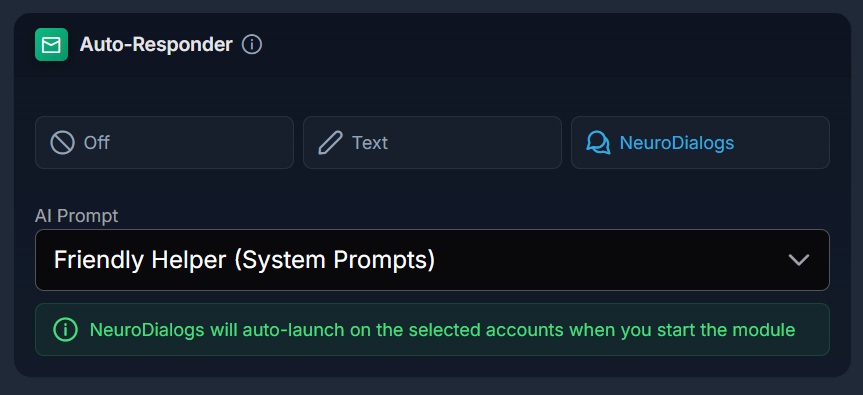
This is exactly where part of the traffic is converted into genuine interest. Without an auto-responder, we lose people who aren’t willing to spend a long time figuring out where to click next.
How to launch everything without unnecessary risk
Before a full launch, it’s worth testing the setup on a test channel first. This helps verify:
- how the account introduction works,
- how natural the comments look,
- whether the delays are set correctly,
- whether the prompt is suitable for the niche,
- how the auto-responder behaves.
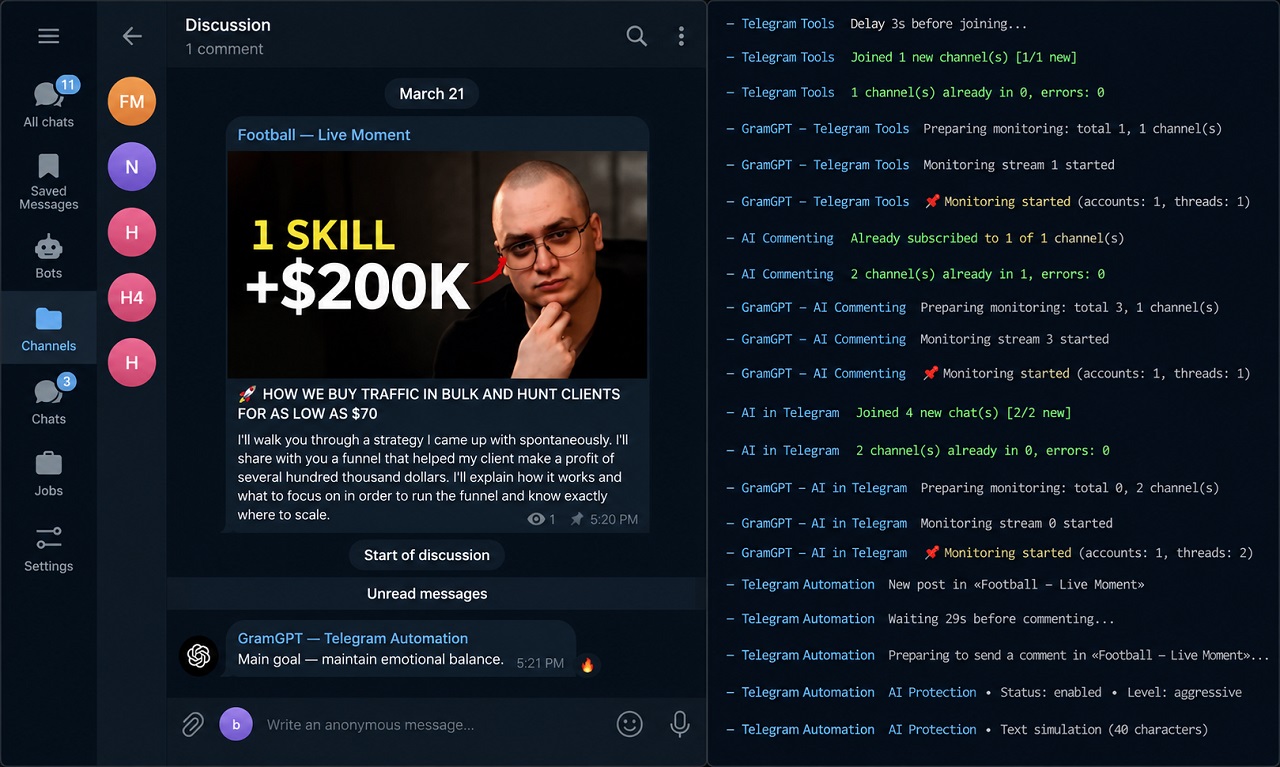
Only after this does it make sense to migrate the system to a live environment. Such a test saves accounts, time, and stress.
Why do people even click on such comments?
The mechanics here are very simple. When a comment is relevant to the post, it isn’t perceived as random noise. It looks like participation in the discussion. And if the account also has a normal name, a recognizable logo, and a clear bio, clicking through to the profile becomes a natural next step—since people become curious about what kind of bot is commenting on all the posts. Similarly, in other niches, an eye-catching profile picture plays a major role; most often, it’s a sexy girl.
Next, the packaging comes into play:
- the user sees that the profile isn’t empty,
- gets the gist of the theme in a couple of seconds,
- clicks on the link,
- and ends up in our bot or funnel.
Ultimately, promoting a Telegram bot isn’t solved by a magic button, but by a chain of small yet precise steps: the right niche, effective packaging, a targeted channel base, smart comments, and a short path to the product.
What’s especially important not to mess up
There are several mistakes that most often ruin the result:
- commenting on channels outside your niche,
- leaving messages that are too promotional,
- using empty profiles without a profile picture,
- not filtering your audience and targeting everyone indiscriminately,
- mixing different niches on a single account,
- failing to test the prompt before a mass launch.
If you put everything together carefully, the system starts working like a clear funnel. A comment leads to a profile, the profile leads to a channel or bot, and from there on, it’s all down to the strength of the product.
How to promote a Telegram bot for free
Free promotion doesn’t mean it’s completely cost-free. Usually, we don’t pay money to buy ads on Telegram channels, but we pay with time or minimal investments in alternative traffic sources.
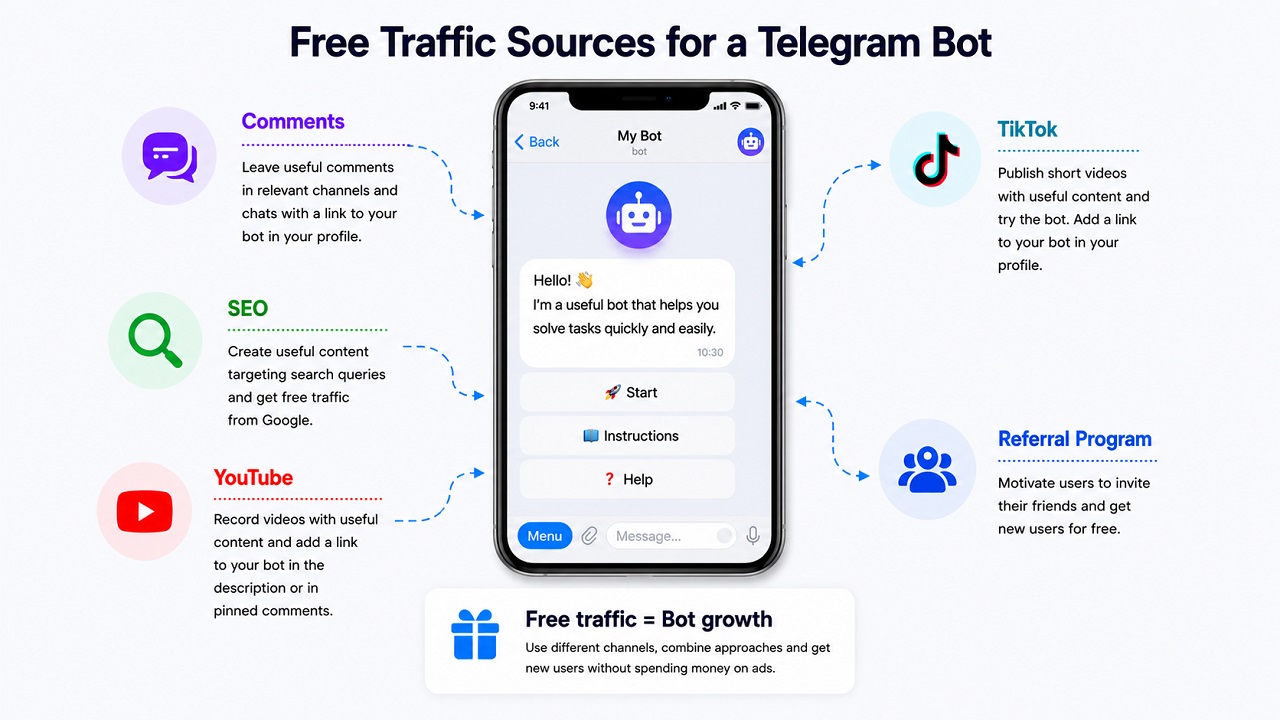
The most straightforward free methods are video content, auto-comments, SEO, and referral programs. You can run a channel centered around the bot’s theme, publish short analyses, shoot videos, participate in discussions, drive organic traffic through articles, and offer users a bonus for inviting friends.
One of the best ways to promote your bot is through word of mouth, where people will voluntarily recommend your bot in various chat rooms, add it to their article collections, or suggest it to their friends. For this strategy to work, some of your bot’s features must be completely free or have limited functionality. Then all that’s left is to give it an initial boost in the form of traffic, for example, by buying ads on a relevant Telegram channel, emphasizing the free features.
How to Promote a Telegram Bot via Telegram Ads
Telegram Ads is suitable for projects that need more controllable advertising within Telegram. But here it is very important not to blow your entire budget on MVP launches, so we recommend building a basic funnel right away: advertising → free features → trial period → paid features.
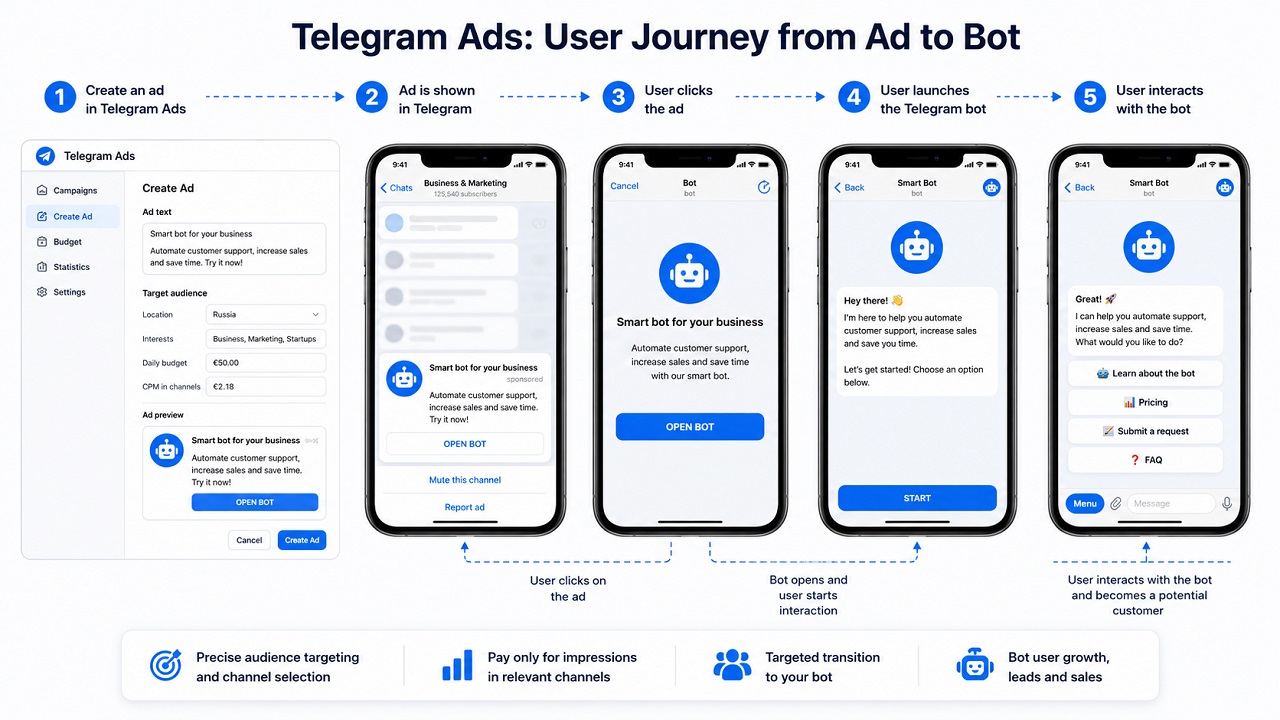
For Telegram Ads, it’s best to use a short offer. People need to quickly understand what the bot does, who needs it, and why they should click. If the product is complex, it’s not always a good idea to direct users straight to the bot. Sometimes it’s better to first send them to a channel or a pinned post that includes an overview, examples, instructions, reviews, and a call-to-action button.
It’s worth testing different audiences and copy separately. The same bot can perform differently in channels about business, marketing, neural networks, crypto, education, or entertainment. Therefore, it’s better to start promoting a Telegram bot via Telegram Ads with small tests rather than jumping straight into a large budget.
A good approach is as follows: first, test the offer organically or with small test campaigns; then launch Telegram Ads across several segments, calculating the cost per click, bot launch, registration, and payment. Only then should you scale up the most effective combinations.
How to promote a Telegram bot through ads in channels
Advertising in Telegram channels remains one of the fastest ways to test demand for a bot. Unlike time-consuming SEO or organic content, placing an ad in the right channel can generate clicks as early as the day of publication. But the result depends not on the mere fact of advertising, but on three things: the choice of platform, the offer, and the entry point.
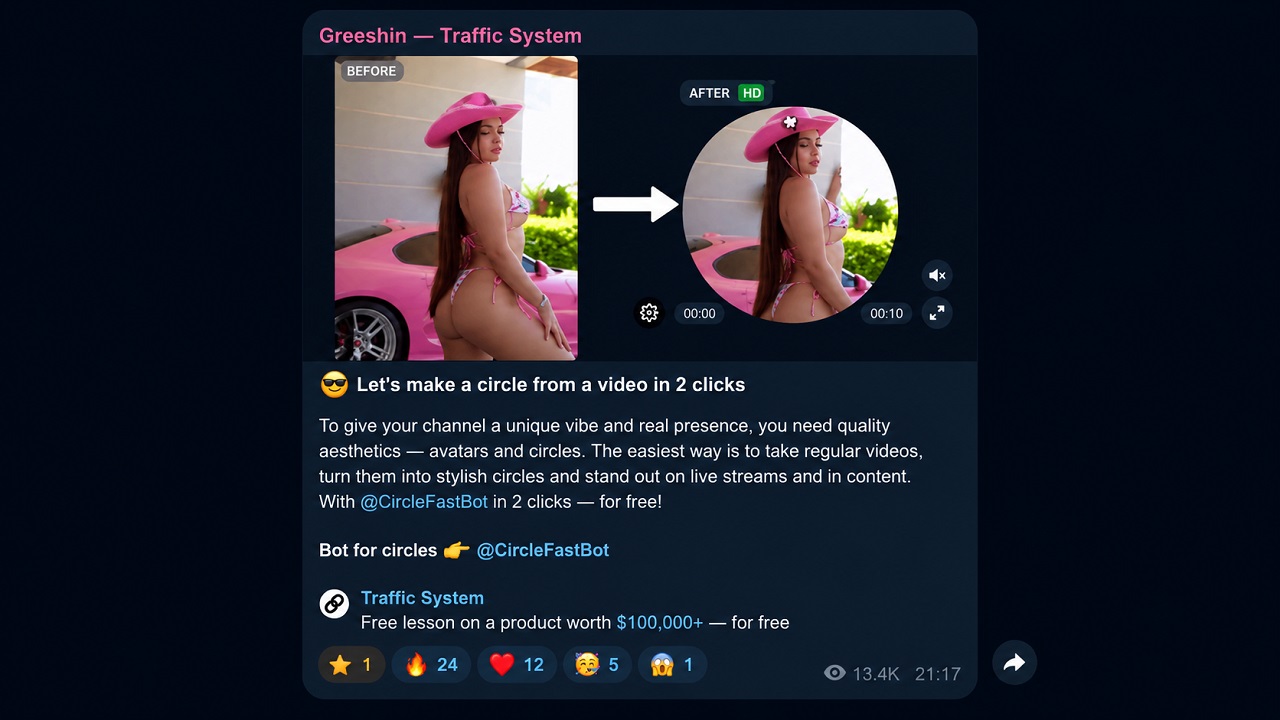
To start with, it’s better to choose channels that are highly relevant to your topic rather than the largest ones. If the bot helps businesses, it makes more sense to test channels about Telegram, marketing, sales, automation, and entrepreneurship. If it’s a VPN, an AI service, a psychological bot, or a utility, you need to find an audience where the problem is already understood without a long explanation.
The post itself should sell the result, not the "bot." Not just “we have a new service,” but what the user will get after clicking through: access, time savings, automation, a ready-made tool, consultation, selection, generation, analytics, or another specific result. If the concept is complex, it’s better to direct users not straight to the bot, but to a channel with an explanatory post, reviews, and instructions.
Here’s a little life hack: if your bot’s name contains a popular search query that people typically use to find such bots in Telegram search—for example: "mugs from videos," then when you purchase ads and acquire your first real subscribers, the bot is more likely to appear in the top 10 search results for that query, which will drive organic traffic from search.
You can also redirect traffic from your own channel, and we covered how to quickly gain subscribers for a Telegram channel in a separate article!
How to attract your first users to a Telegram bot
Early users aren’t just needed for sales. They help you understand how well the bot actually solves the problem, where the flow breaks down, what questions arise before payment, and which offer people respond to best. That’s why, at the start, you shouldn’t immediately chase a large volume of traffic. It’s much more important to get those first informed actions and feedback.
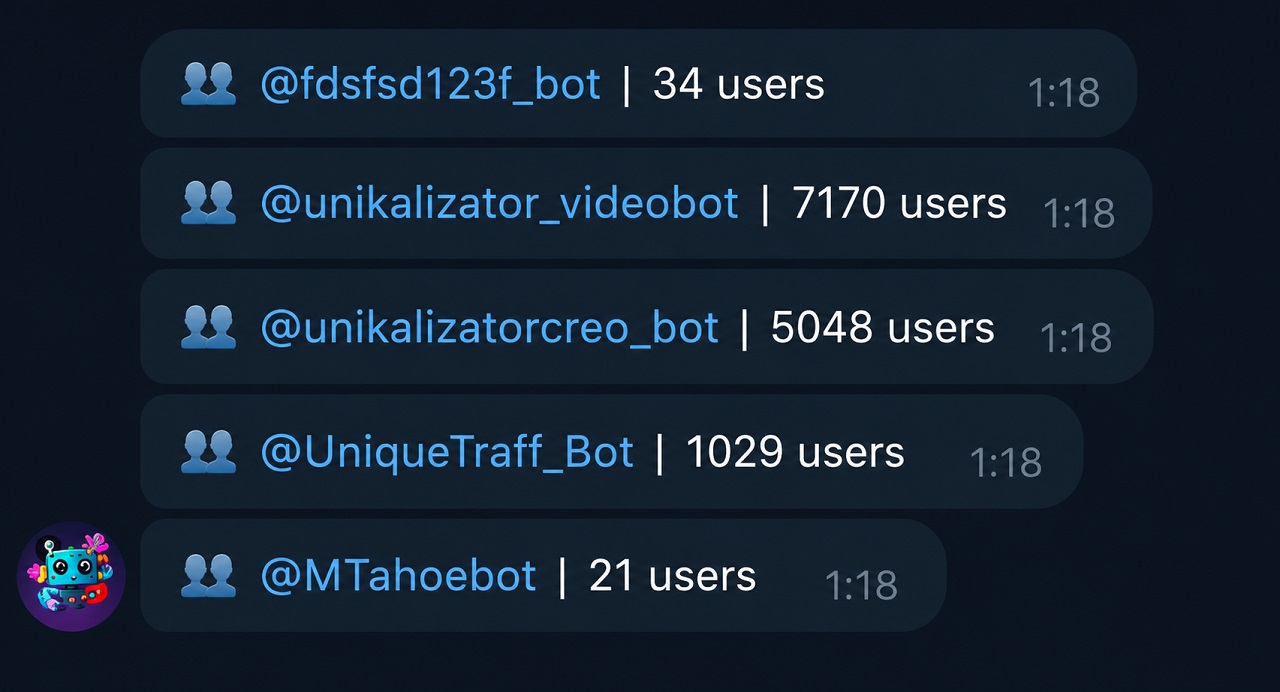
The easiest way is to gather 3–5 small sources. For example, post on your channel, arrange for a few seeding campaigns, start comments in relevant channels, add a referral bonus, and prepare an SEO-optimized bot name to potentially rank at the top of search results for a specific keyword.
At this stage, it’s important to simplify the onboarding process. After clicking Start, the user should immediately understand what the bot does, what buttons are available, what result they’ll get, and what to do next. If the bot is complex, you need a short welcome script, instructions, or a link to a walkthrough. If a user enters and doesn’t grasp the value within the first few seconds, traffic will drop off even with good advertising.
Early users serve as a test not only for the promotion channel but also for the product itself. If people launch the bot but don’t take action, it means you need to improve the packaging, onboarding, offer, or payment process.
Mistakes in Telegram bot promotion
The main mistake is to start promotion before the product’s value is clear. If the bot is hard to explain in a single sentence, the ads will perform worse. The user isn’t obligated to figure out why they need the service. They need to quickly see a clear benefit: what the bot does, what problem it solves, and why they should click right now.
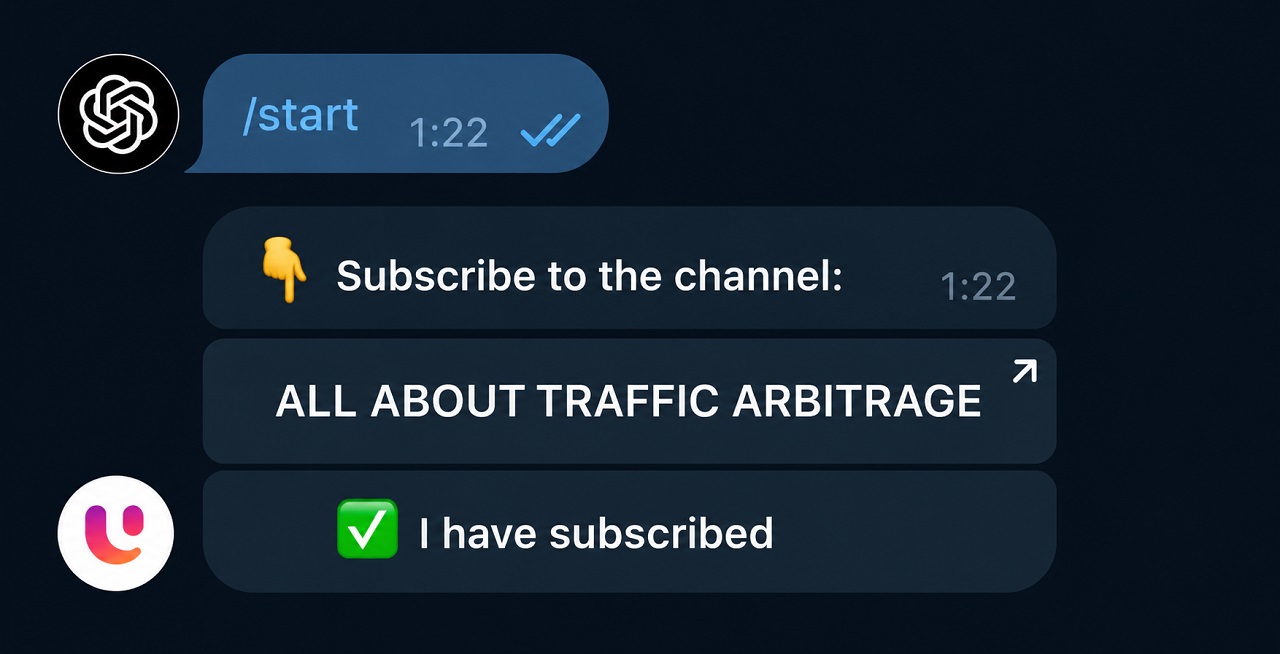
The second mistake is directing all traffic straight to the bot, even if the product requires an explanation. For a simple VPN or utility, this might be fine. But if the service is more complex, it’s better to use an intermediate channel, a post, a video, or a landing page. This gives people time to understand the product before making a decision. A mandatory channel subscription works great for this.
The third mistake is buying ads on channels based solely on the number of subscribers. A large channel does not necessarily mean a good channel. More important factors include audience alignment, activity, comments, post quality, reputation, and the history of ad placements.
The fourth mistake is not tracking the funnel. Without analytics, it’s unclear where the problem lies: in the ad, the click, the bot launch, the first message, the payment, or the product itself. Therefore, Telegram bot promotion must be based on metrics: impressions, clicks, launches, requests, payments, and the cost per action.
Final promotion flowchart
If we put everything together in a single sequence, Telegram bot promotion looks like this:
- We create or refine the bot for a single, clear task,
- define the exact target audience,
- create several themed accounts,
- set up their name, avatar, bio, and link,
- compile a list of channels with open comments,
- we filter the database and keep only relevant platforms,
- set up automated commenting,
- write a prompt tailored to the niche,
- add an auto-responder,
- test on a test channel,
- launch on the live database and scale.
- use alternative traffic sources
This is a practical answer to the question of how to attract users to a Telegram bot without relying solely on paid advertising. It’s not the only solution, but it’s a very powerful and systematic one.