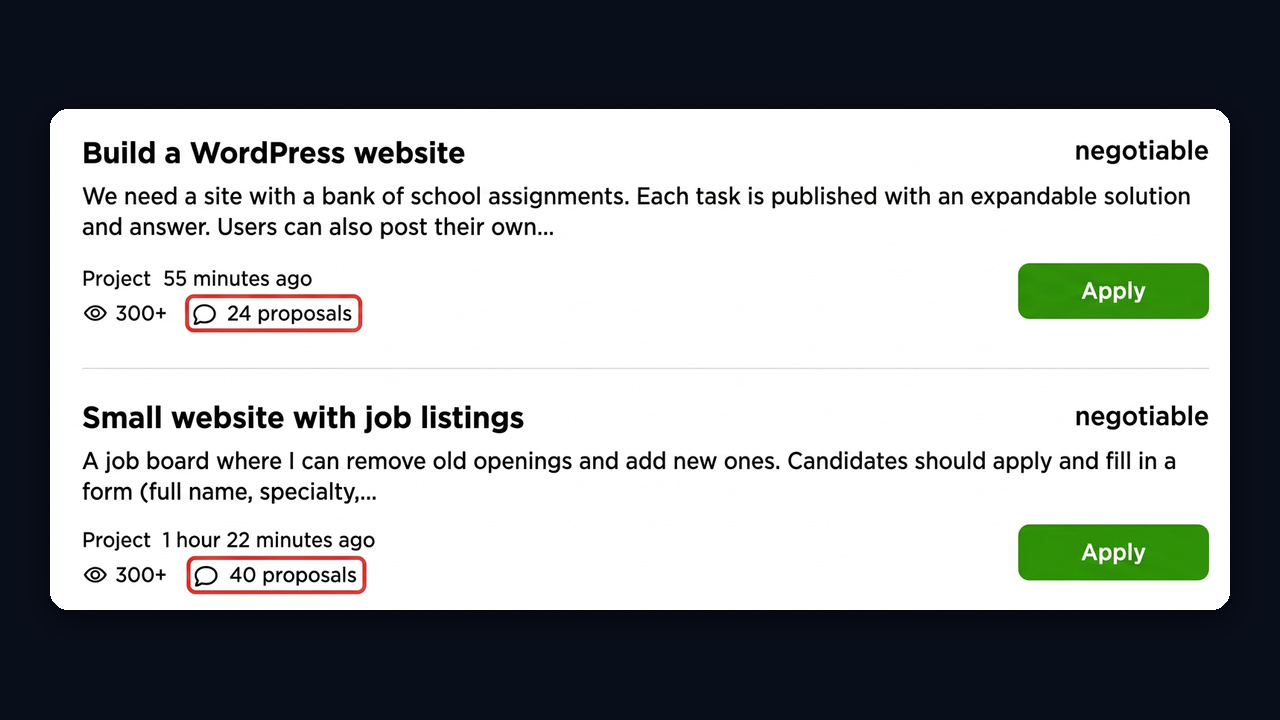
You have five solid projects in your portfolio, yet new web design clients show up once a month at best. A landing page brief on a marketplace collects forty proposals within an hour, and half of them undercut what such a site actually costs. So the contract rarely goes to the best designer. Instead, it goes to the fastest and cheapest one.
The root issue, however, is waiting. Most developers sit and wait for a buyer to post a brief, while real buyers behave differently. A café owner asks a neighborhood forum "who makes websites around here?", a coach asks a marketer friend for a contact, and many owners have no idea their old pages are quietly losing them inquiries.
This guide shows how to find web design clients in 2026: 10 ways, moving from hot demand to cold outreach. They suit a freelance programmer, a web designer and an agency alike. You will see where the messenger brings projects without bidding wars, how to close a deal once the opening message arrives, what each channel costs and which mistakes lose deals.
Before You Hunt for Website Projects: What You Sell and to Whom
"I build any kind of website" sounds like "nothing in particular." So pick a format and a buyer type first. That choice, in turn, decides where you look, how you price and which case studies you show.
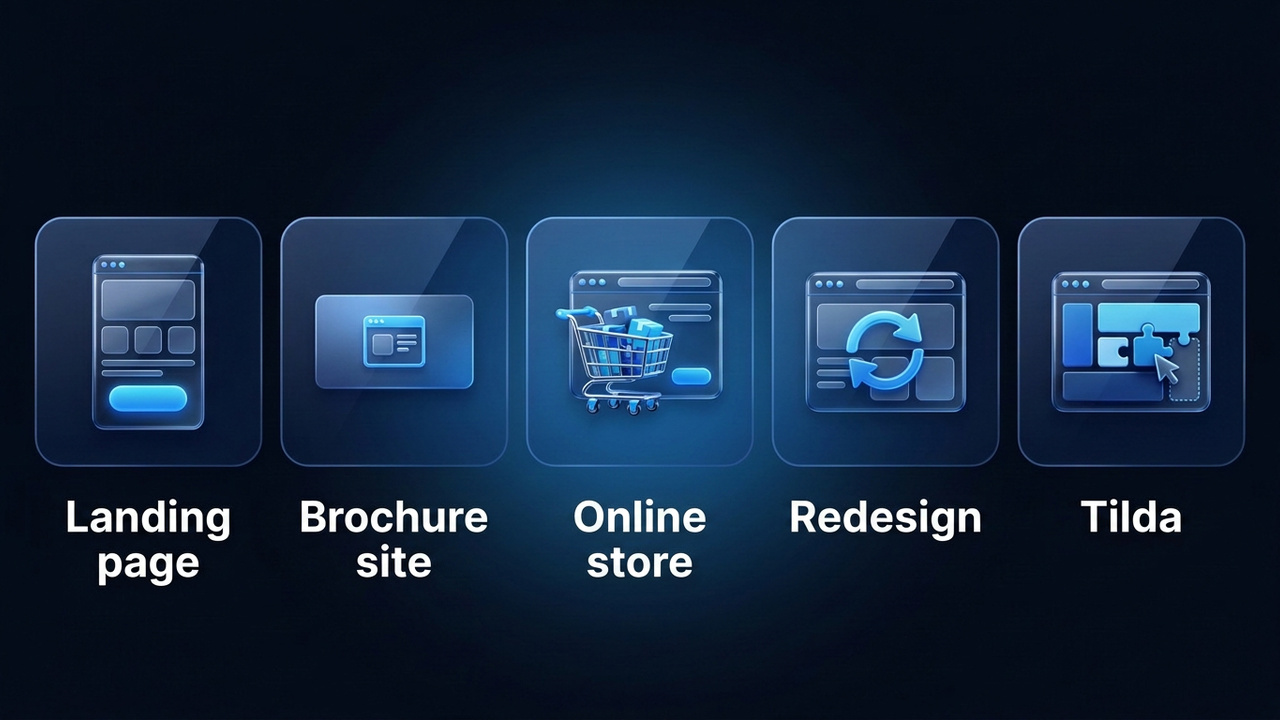
| Format | Typical buyer | Typical budget | Where to look |
|---|
| Landing page | coaches, course creators, product launches | $800–2,500 | expert and marketer groups, marketplaces |
| Brochure site | local businesses: salons, clinics, auto repair | $1,000–4,000 | local owner forums, map listings |
| Online store | manufacturers, marketplace sellers | from $5,000 | seller clubs, marketing referrals |
| Redesign | companies with a 5+ year old online presence | $2,500–10,000 | cold audits, previous customers |
| Tilda or no-code build | small businesses, experts, startups | $500–2,000 | platform expert directories, forums |
For example, no-code projects come fastest from experts and small shops who care about speed and price. An online store, on the other hand, sells on trust and proof, so referrals and partners perform far better there.
Hot Demand: Where Web Design Clients Already Look for Help
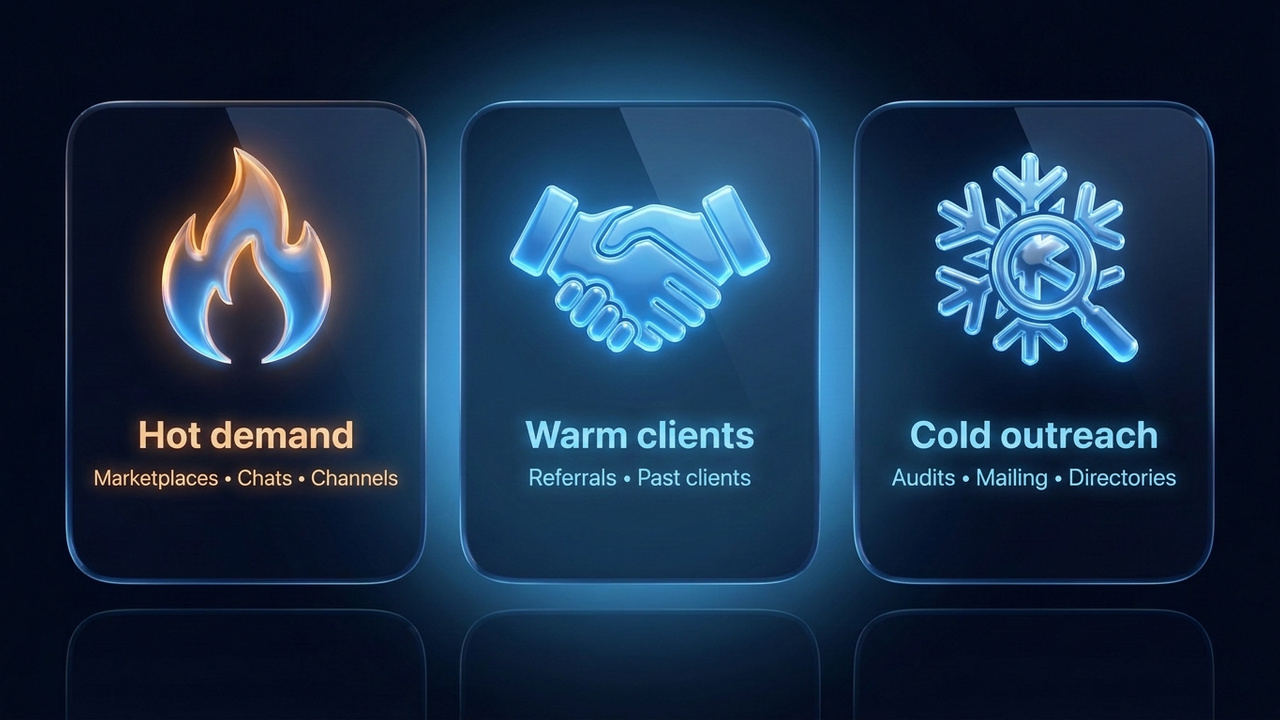
The opening 3 methods reach people who need a site right now. That is why speed and a precise answer win the job here.
1. Freelance Platforms: How to Get Web Design Clients Among Forty Proposals
Upwork, Fiverr and similar platforms remain the most straightforward source, since the buyer has already described the task and the budget. But such briefs get picked over in minutes, and a template reply like "Hi, I will do it with high quality" simply disappears.
However, a proposal that gets read looks different. First, open with a question about the project instead of a price. Then add a similar job with a link and a delivery time. Finally, finish with a clear next step: "send me an example you like and I will quote within an hour." Also, reply within 10–15 minutes by turning on alerts for your category.
2. NeuroChatting: Web Design Clients From Founder Chats
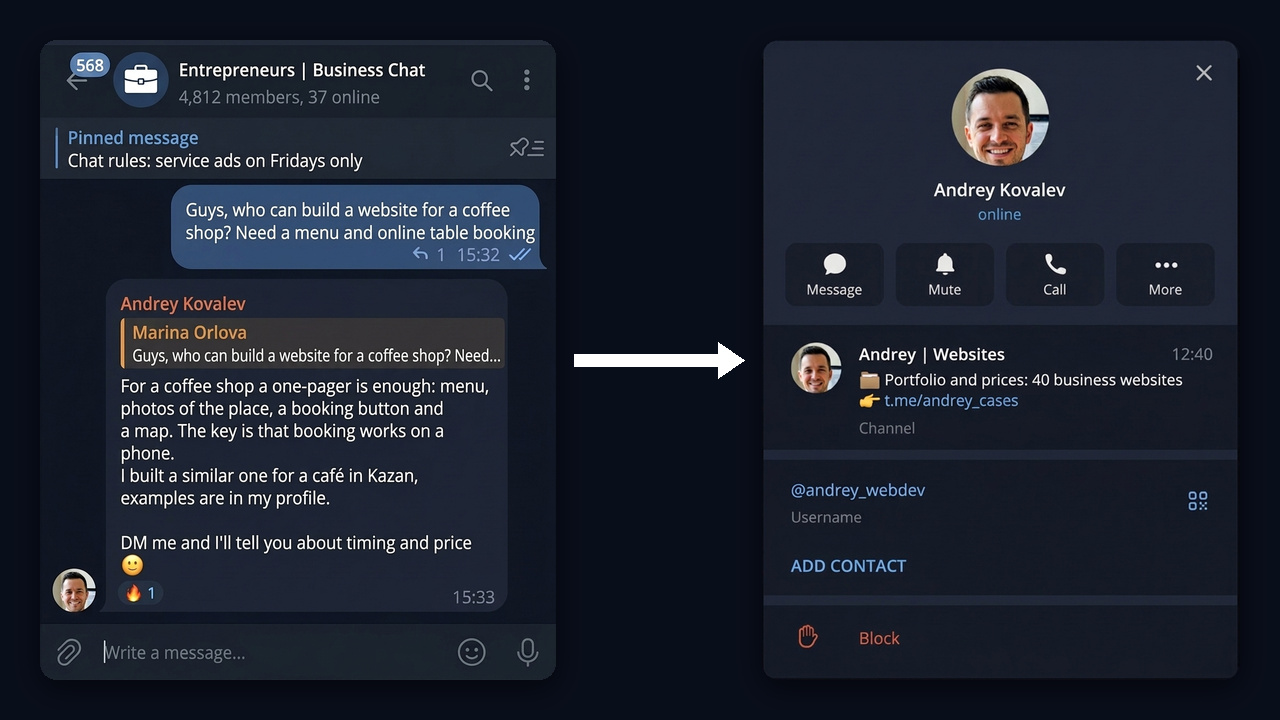
Chats for founders, marketers and online sellers see the same questions daily: "who can build a landing page for our launch?", "any Tilda developer to recommend?", "our website stopped bringing leads, any ideas?" Then, in minutes, a dozen replies pile up, and the order goes to whoever answered earliest with something useful.
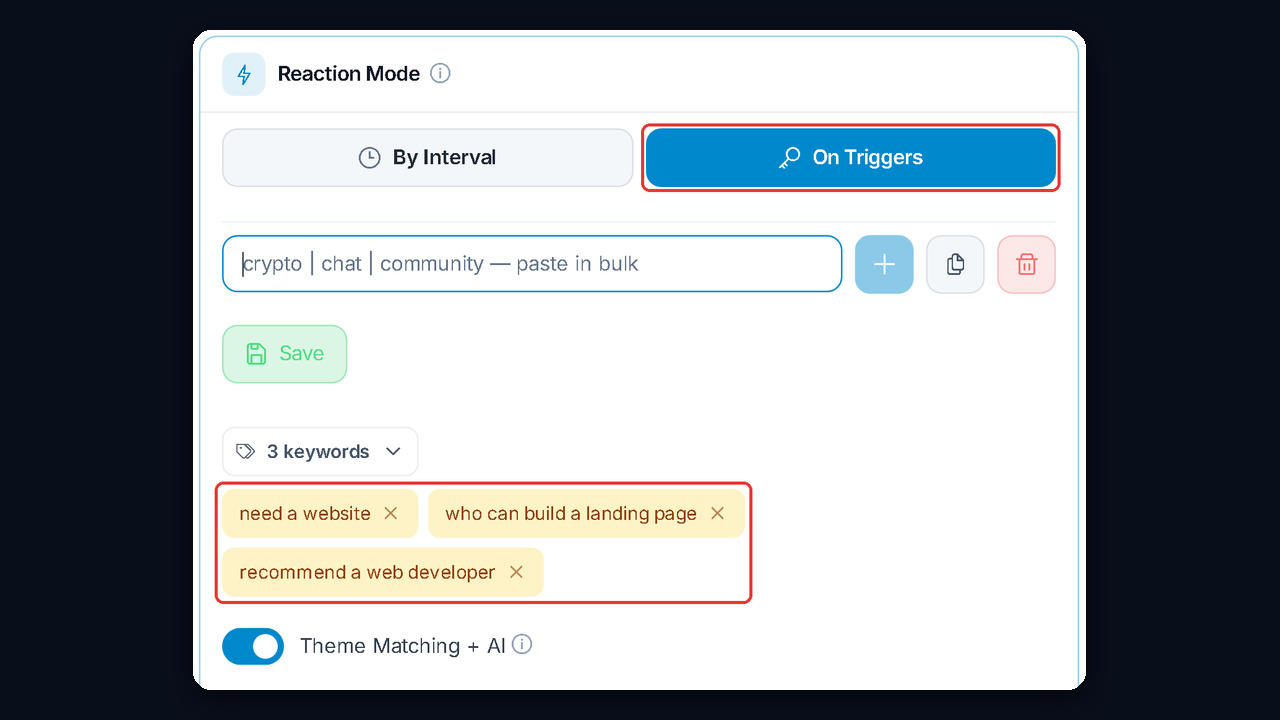
Nobody can watch dozens of threads by hand, so in GramGPT.io that job belongs to NeuroChatting in Trigger mode. Meanwhile, your studio accounts sit in the right chats and speak up only when a phrase from your list appears.
- Pick the venues. Local business clubs, franchise owners, marketplace sellers, coaches and course creators: they ask for developers there more often than on Upwork.
- Set the triggers. Go beyond "need a website" and add problems such as "inquiries dropped" or "page broken on mobile". Turn on topic matching with AI so differently worded questions still get noticed.
- Write the prompt. You are a developer who replies briefly and helpfully, never pitches in public and suggests moving details to DMs.
- Connect NeuroDialogs. In private messages, the auto responder clarifies the scope and budget, leaving you only the call.
Sample public reply: "If inquiries dropped right after an update, test the contact form on a phone before anything else. That is the part that breaks most often. Happy to look at it for free and send three fixes, just DM me."
For example, in practice it looks like this: the account answers usefully and invites a DM, while a pinned bait channel in the profile leads to the main channel with a portfolio and prices.
Also, fresh accounts are worth running through auto warm-up beforehand, with AI protection switched on. Besides, it adds pauses, so account behavior looks natural.
3. Project Channels and the Message Parser
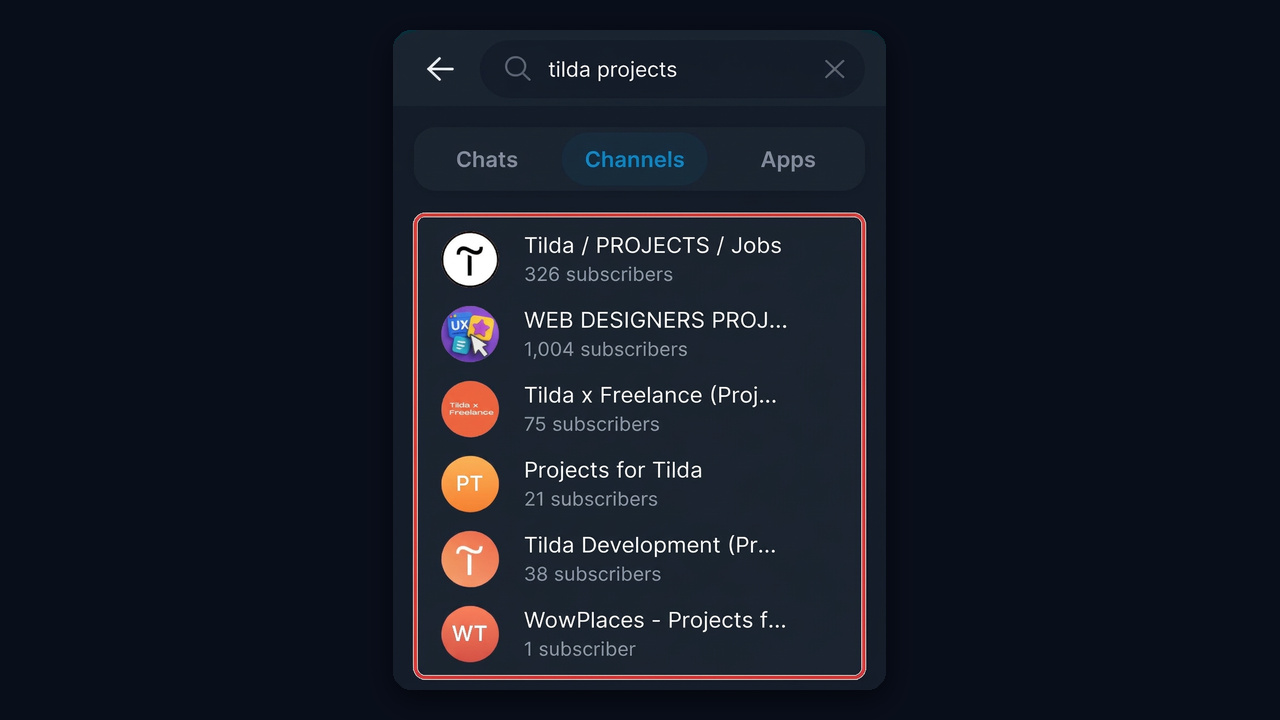
Telegram channels that repost briefs from marketplaces and forums are handy, though every post draws dozens of developers. So where to find website clients on Telegram? Where nobody has collected the requests yet: the history of active discussions.
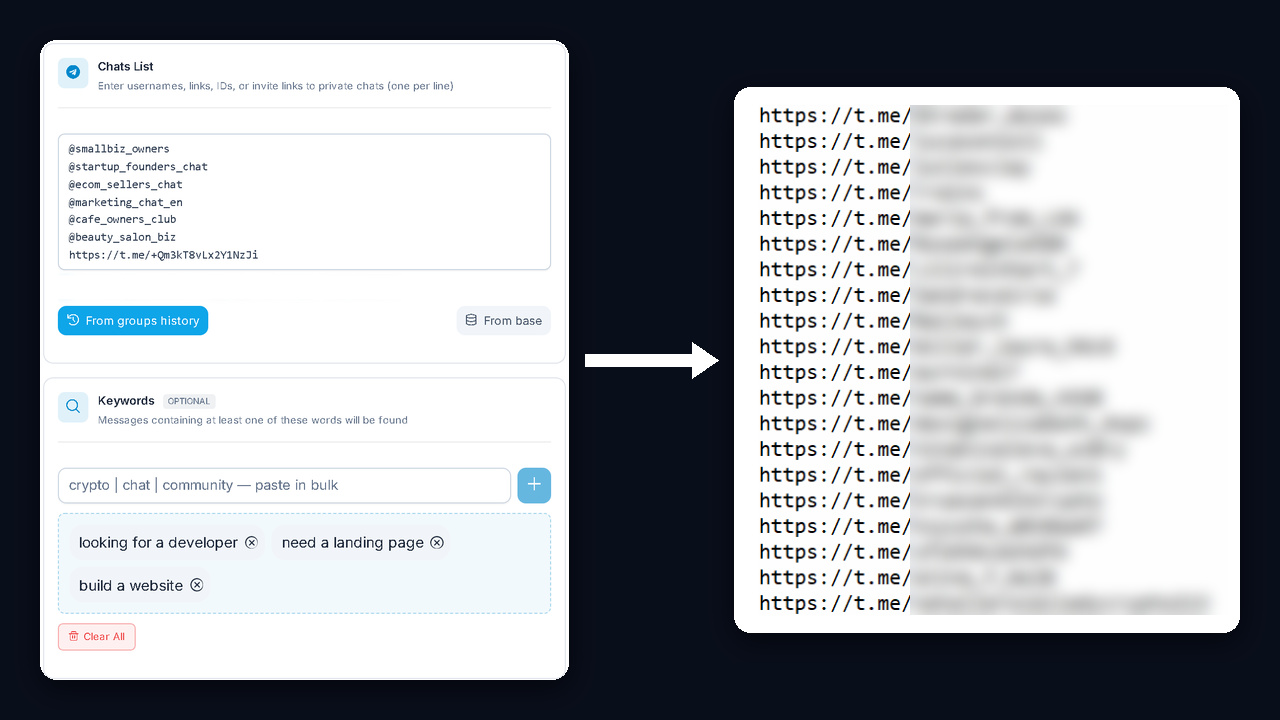
The message tab of the User Parser handles that. You list the sources, add keywords such as "looking for a developer" or "need a landing page" and set a period, for instance the last 30 days. As a result, you get a list of people who wrote those messages, with message counts and activity dates. These people already need a developer, so they respond far better than any purchased list. However, note that the parser reads chats only, since in channels members are visible to admins alone. You can type the list or pull it with the "From groups history" button.
Warm Leads: Repeat Projects and Partners
Hot demand gives you a quick start, yet the steadiest flow comes from people who already trust you.
4. Partnerships With Marketers, SEO Specialists and Designers
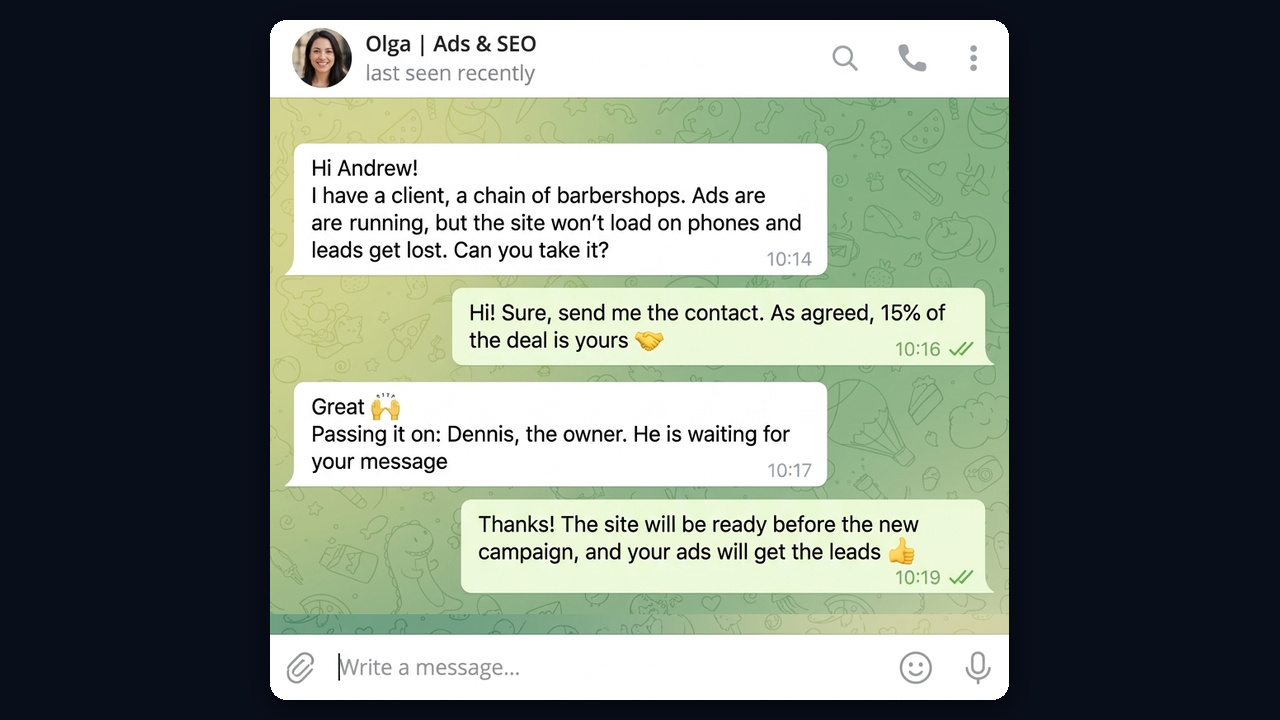
For instance, marketers, ad specialists and SEO consultants hear "our website does not sell" every week. They rarely code anything themselves, so they gladly hand web design clients to a dependable contractor. Therefore, offer them 10–15% of the deal or a swap: you send them marketing tasks, they send you development.
In addition, accountants and company formation services are good partners, because a new company needs an online presence almost immediately. We covered how marketers land such accounts in our guide on winning business for a marketing agency.
5. Past Customers: Support, Updates and Redesigns
Someone you launched a project for two years ago is your cheapest source of new orders. For example, they need extra pages, a CRM integration or a fresh look. So offer a monthly care plan and send a short report every six months with load speed, inquiries and what is worth updating.
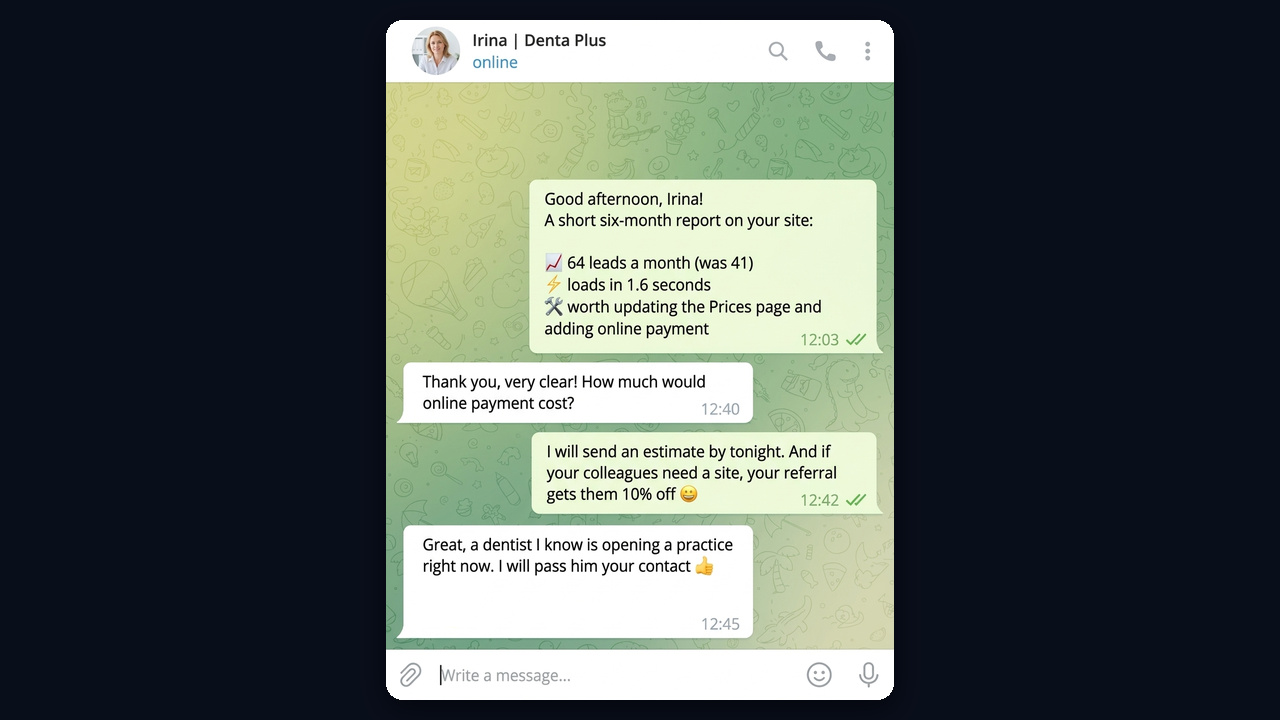
Also, ask for a referral right after launch, while the customer is happy. A line such as "if a colleague needs one too, I will give them 10% off" can turn a single buyer into two.
Cold Outreach: Getting Web Design Clients Who Are Not Looking Yet
Cold prospects are not shopping for a vendor, but they do have a problem, because their pages leak inquiries. So your job is to show it clearly and calmly.
6. A Quick Audit Instead of "We Build Websites"
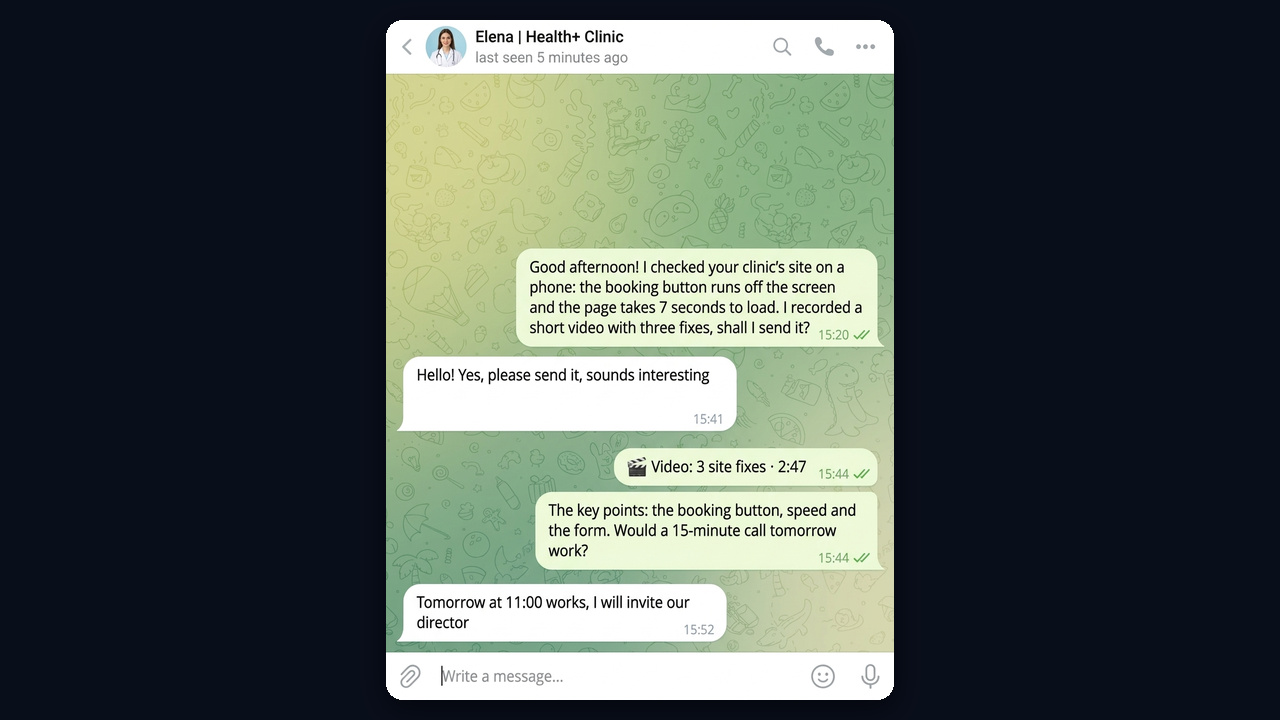
First, open the map in your city and note 30–50 businesses in one niche: dental clinics, auto repair shops, furniture stores. Many of their pages fail on mobile, have broken forms or still say 2017 in the footer. That, in other words, gives you a reason to write.
Sample message: "Hi! I opened your clinic's homepage on my phone: the booking button runs off the screen and the page takes 7 seconds to load. I recorded a short video with three fixes, want me to send it? If you ever plan a refresh, I will quote it for free."
This turns cold outreach into something useful rather than spam, because you give value before asking for anything. Also, write to the person who decides, not to a generic support inbox.
7. Chat Mailing in Niche Groups
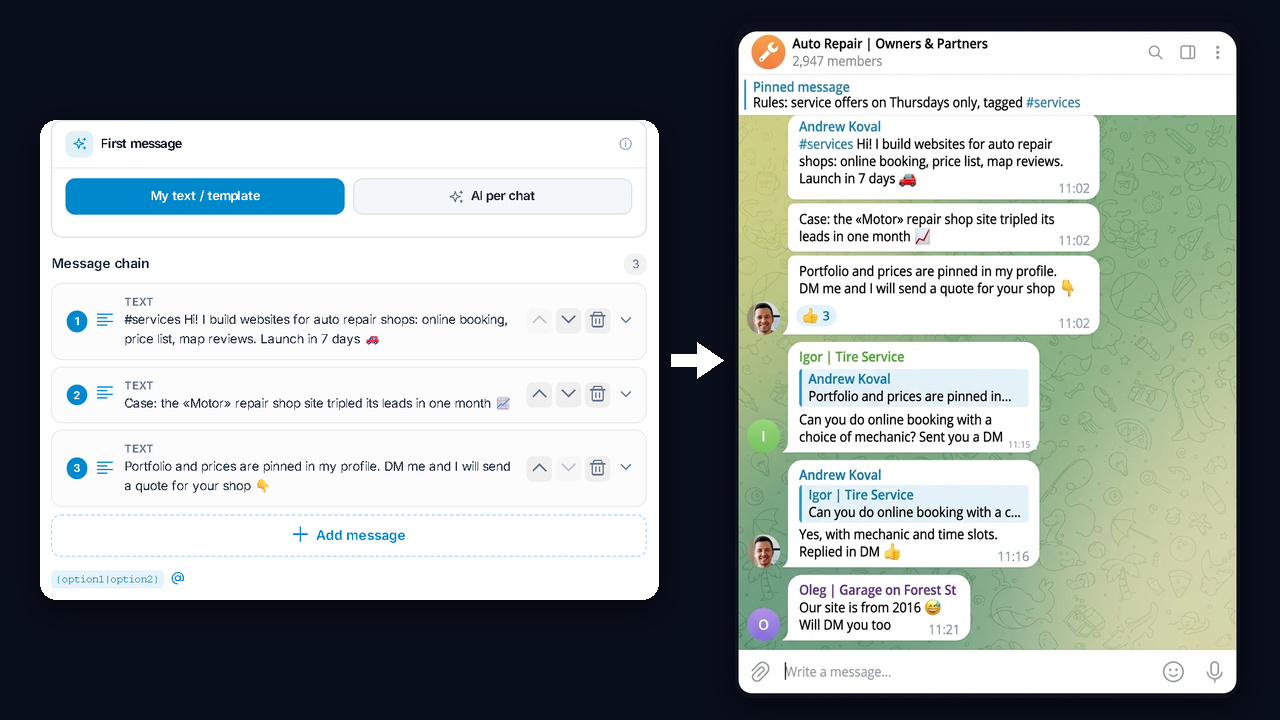
For instance, many clubs for founders, sellers and coaches have days or threads where service offers are allowed. But when there are dozens of them, nobody can post by hand. Chat Mailing takes care of it: accounts post your pitch across a list of groups with pauses, while the "AI for each chat" mode rewrites the text for each community.
Therefore, a chain of 3 messages works best: a niche pitch, a short success story with a number and a request to DM for a quote. Everyone in the chat sees a complete offer, while the price talk moves to private messages.
At the same time, only niche-specific offers succeed. Skip "we make websites" and write "a booking site for auto repair shops in 7 days, examples inside." NeuroDialogs picks up the replies in DMs, and forums that ban promotion go into the blacklist.
8. Directories, Maps and Studio Ratings
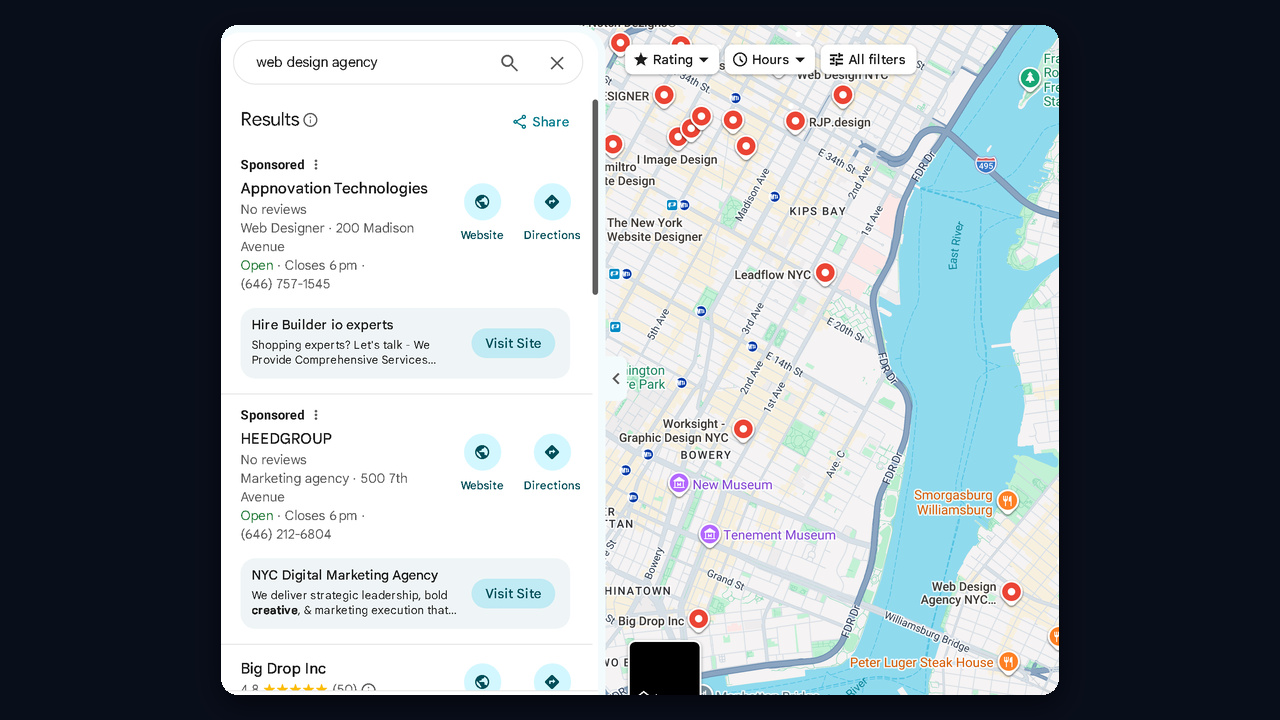
Meanwhile, local companies look for vendors nearby, so a Google Business Profile with a portfolio, starting prices and reviews brings leads without daily effort. Studios benefit from rating sites such as Clutch, while Tilda developers can join the platform's official expert directory.
Content That Brings Web Design Clients on Its Own
Outreach, however, takes time every single day. Content, however, lasts longer: a strong success story keeps selling for months.
9. Case Studies With Numbers: Blogs, LinkedIn and a Telegram Channel
Owners are convinced by numbers, not by pretty screenshots: "12 leads a month before, 41 after." So present every launch as a story with the task, the solution and the result a month later. A post on LinkedIn or Medium brings buyers from search, and a studio channel keeps those who are still deciding.
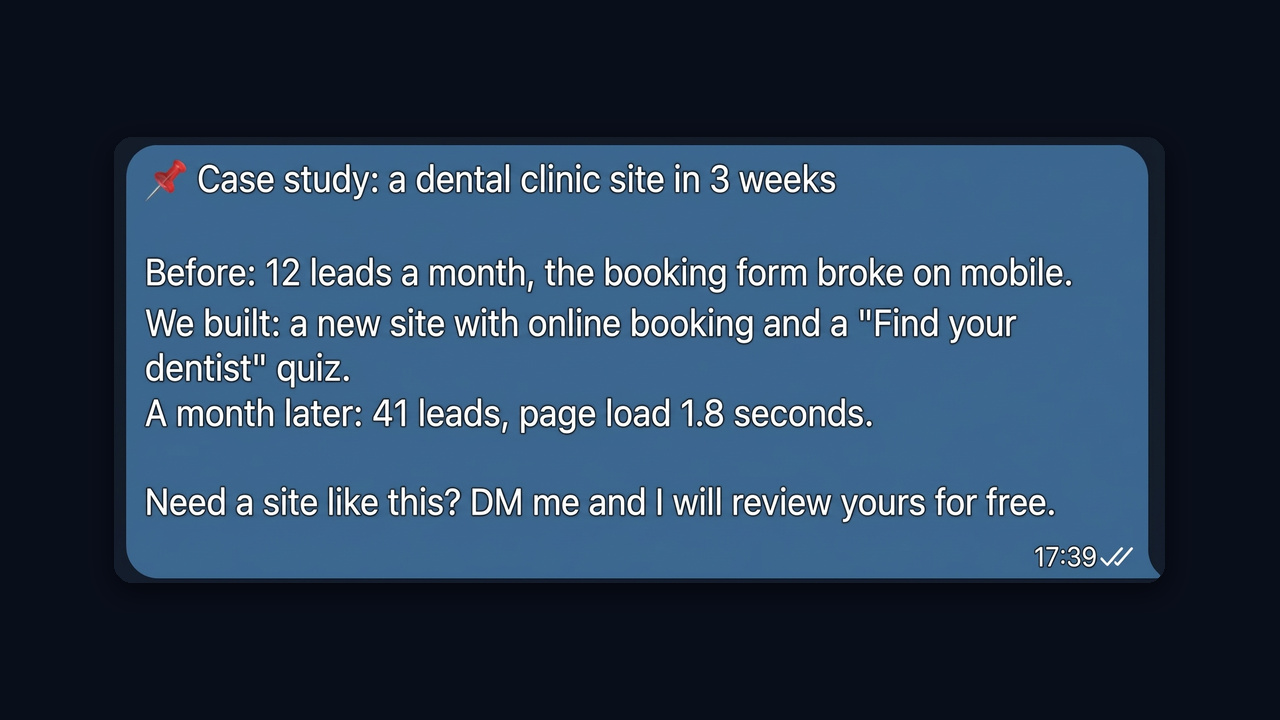
Then treat it as a build diary: a case study, a teardown of someone's homepage, an answer to a common question. We explained how to get early readers in our guide on promoting a business Telegram channel.
10. A Free Site Review as the Door to a Sale
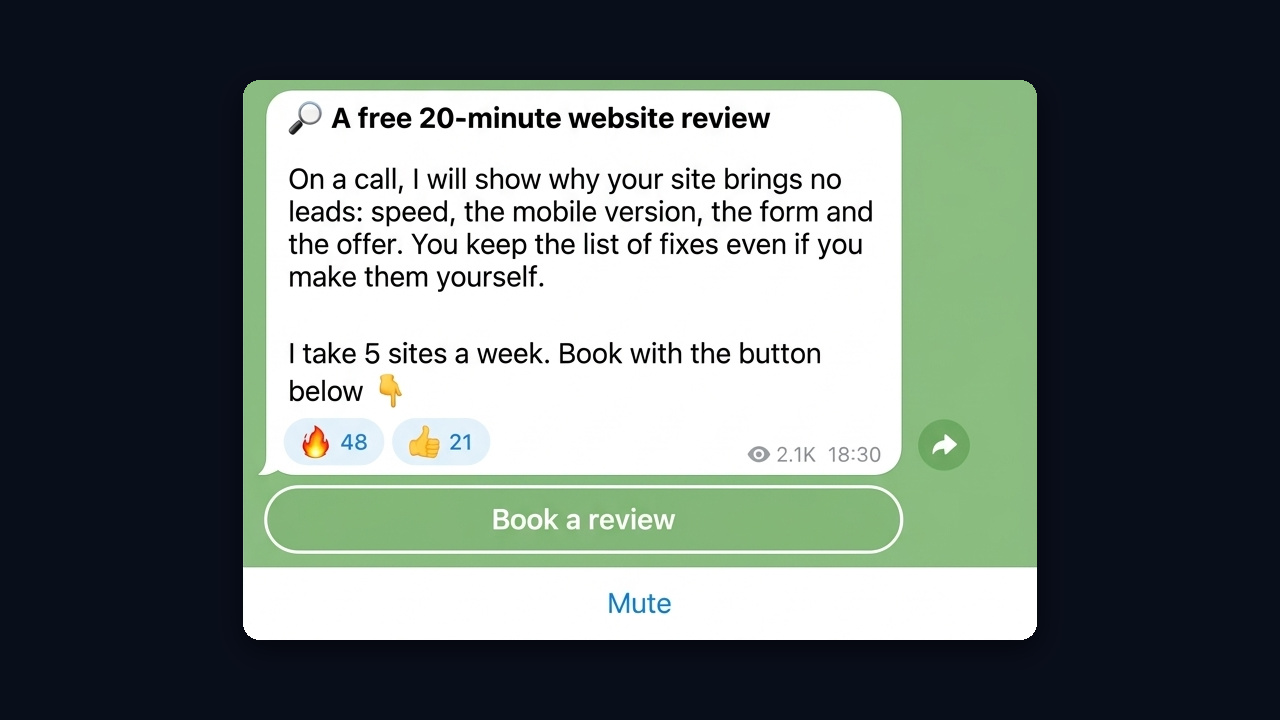
An offer like "I will review your site on a 20-minute call" removes the fear of a big project. The owner sees your expertise and gets real value, so they ask about pricing on their own. In the end, 2–3 out of 10 reviews usually become a fix-up job or a new build.
Where to Find Web Design Clients: Comparing the Methods
Here is how the channels that bring web design clients compare on 3 questions: how fast a project arrives, what it costs you and what kind of buyer it brings.
| Method | Lead time | Cost | Best for |
|---|
| Freelance platforms | 1–2 weeks | fees and hours on proposals | beginners building a portfolio |
| NeuroChatting in groups | 1–3 weeks | subscription and accounts | studios and freelancers with case studies |
| Message parser | 2–3 weeks | subscription and outreach time | people comfortable reaching out |
| Partnerships | 1–2 months | 10–15% of each deal | studios with larger budgets |
| Cold audits | 2–4 weeks | hours spent on reviews | redesigns and local businesses |
| Chat mailing | 1–2 weeks | subscription and accounts | packaged offers for a single vertical |
| Case studies and a channel | 2–3 months | effort spent on content | anyone building a brand |
The best plan combines them: platforms and chats bring projects now, while case studies and partners pay off in a couple of months.
How to Find Web Development Clients as a Programmer, Designer or Agency
At the same time, the sources are the same, but the starting point differs. So here is where each role should begin when looking for website orders.
| Who is looking | Best sources | First step |
|---|
| Freelance programmer | agencies needing subcontractors, seller communities | offer studios fixes and integrations |
| Developer with no portfolio | marketplaces, owners you know | a couple of samples for a single industry at cost |
| UI/UX designer | Behance, Dribbble, pairing with developers | a homepage mockup for a real business |
| Tilda or no-code builder | the platform directory, course creator groups | a fixed-price "landing page in 5 days" package |
| Agency | referrals, messenger communities, quick audits | NeuroChatting and a few proven results |
For example, how can a programmer get work without selling? Through studios, since they always have a queue of small tasks. Meanwhile, how does an agency land development clients? Through industry circles and partners, where a project arrives with a budget already set.
How to Get Your First Web Development Clients Without a Portfolio
The first deal is the hardest because there is nothing to show yet. So do two or three jobs for people you know at cost, and agree on a review and real numbers a month later. Then pick up small tasks on freelance platforms: fixes, migrations, layout tweaks. Within a month or two you will have a story that opens doors with partners.
A simple rule of thumb: a freelancer should spend about an hour daily on outreach and answer every inquiry within sixty minutes. A studio, by contrast, gains more from steady referral partners and quarterly check-ins with former customers.
How to Close the Deal After the Opening Message
Finding the lead is only half the battle, though. The other half is often lost in the chat: a slow reply, a vague estimate, no next step.
- Three questions, not a 40-item brief. Why they need the site, what the budget is and when it should go live.
- A proposal within 24 hours. Several packages with prices and timelines, plus links to comparable examples.
- A short call. Fifteen minutes to clear doubts and agree on milestones.
- A contract and a 30–50% deposit. Otherwise, projects tend to stall at the mockup stage.
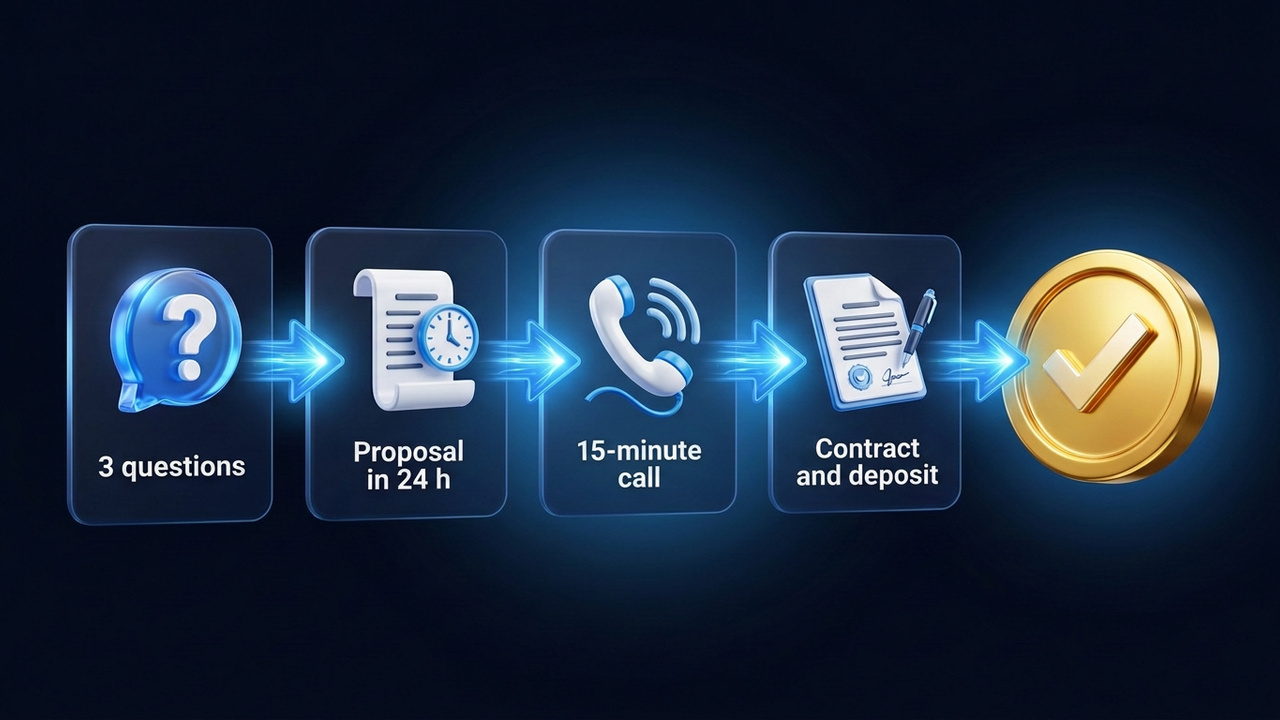
Moreover, the first replies in DMs can go to an auto responder: NeuroDialogs asks about scope, budget and deadline, then passes you someone ready to talk.
So if the conversation started in a messenger chat, move it to a call quickly but gently. We shared more on turning chats into paid orders in our guide on lead generation on Telegram.
Mistakes That Send Buyers to Competitors
| Mistake | Better approach |
|---|
| The proposal opens with a price | start with a question and a similar job |
| A portfolio without results | numbers: inquiries, conversion, load speed |
| The same post everywhere | an offer tailored to each audience and its rules |
| Replying to a lead a day later | an answer within an hour, even a short one |
| Starting without a deposit | a contract and 30–50% before work begins |
| "I build any website" | a couple of niches and clear packages with prices |
Also, never promise "top of Google in a month." Experienced buyers distrust it because it sounds too good, and newcomers end up expecting results a redesign alone cannot deliver.
Bottom Line: Finding Web Design Clients in 2026
In 2026, web design clients go to developers who show up where the need appears, not only to those waiting on Upwork. First, start with a single niche, fast replies and a few active forums, and meanwhile line up partners and package a few success stories with real numbers. That is how to get web design clients without an endless price race.
Spotting requests in messenger communities, replying to leads and posting offers across specialized clubs can all be automated with GramGPT.io, leaving your hours for delivery.