You passed the bar, you know your practice area, and yet the phone stays quiet. The first cases came from friends and family, then the flow dried up. Figuring out how to get clients as a lawyer in 2026 is a problem for new attorneys and seasoned ones alike, especially after leaving a firm to go solo.
However, the usual moves rarely help. A generic "affordable attorney" ad disappears among hundreds of identical ones, paid search burns through the budget in a week, and word of mouth is slow and unpredictable. Besides, legal work is sold on trust, and buyers hire someone they have already seen at work.
This guide covers 10 ways to get clients as a lawyer: where people look for help right now, how to win requests from Telegram chats, who can become your referral partners and how to advertise without breaking the rules.
Where People Look for an Attorney in 2026
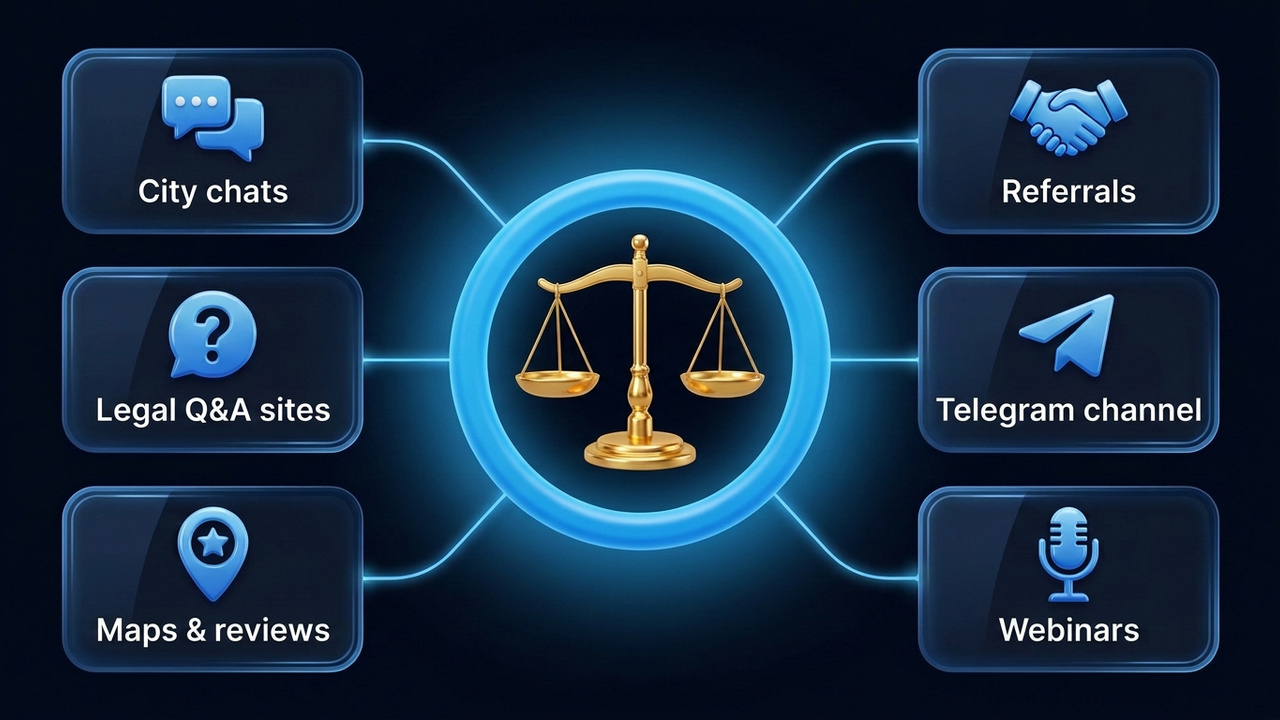
First, split your audience. For example, an individual starts looking once trouble has already happened: a divorce, a car accident, a debt, a layoff. A company, in contrast, needs counsel all the time, yet it chooses slowly and by recommendation. So the channels differ.
| Who |
When |
Where |
What wins the choice |
| Individual, urgent issue |
Today or tomorrow |
Search, maps, neighborhood chats, legal Q&A sites |
Fast reply and ratings |
| Individual, planned matter |
Within weeks |
Friends' advice, service marketplaces |
Price and a clear plan |
| Small business owner |
Ongoing |
Business communities, referrals, niche channels |
Expertise and recommendations |
| Company |
Per project or tender |
Procurement portals, industry events |
Case results and reputation |
In other words, family practice lives on maps and neighborhood channels, while corporate counsel relies on referrals and expert content. The methods below follow that order, from urgent demand to long-term reputation.
Urgent Demand: Get Clients as a Lawyer This Week
The first three methods catch those whose question appeared just now. Here the winner is whoever answers first and answers well.
1. Legal Q&A Websites
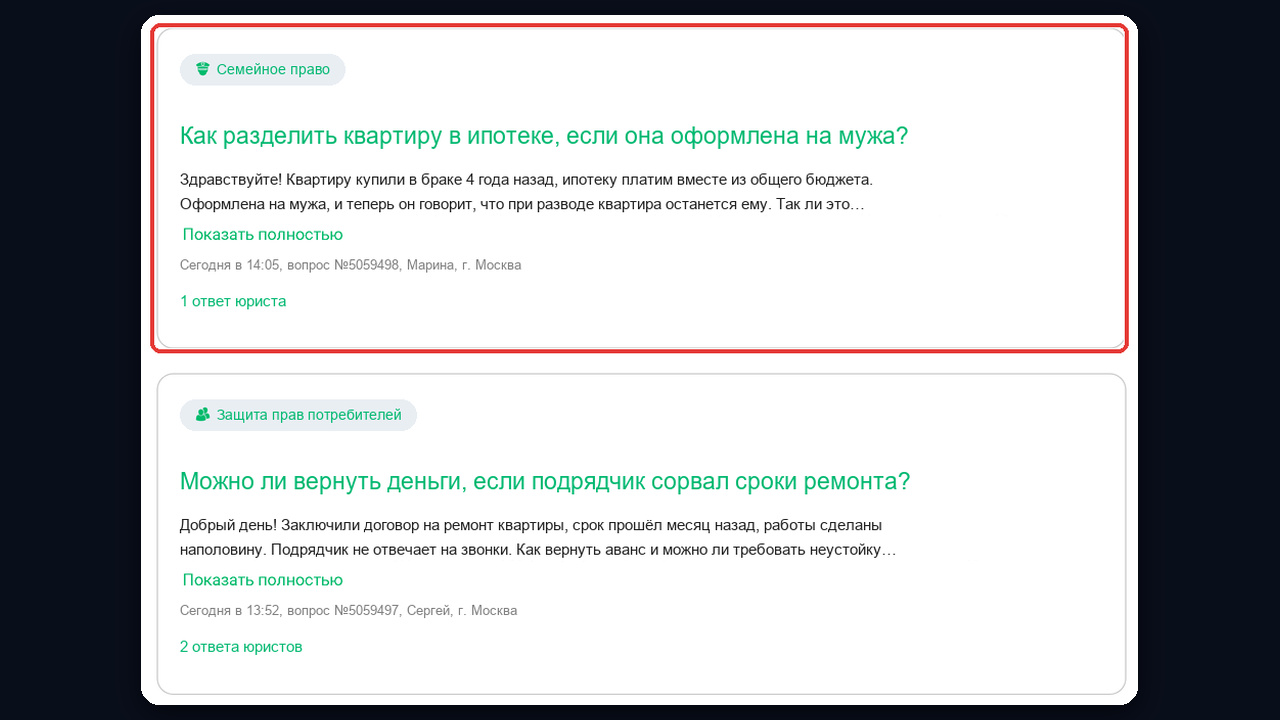
On large free legal Q&A platforms, people post thousands of questions every day. Here attorneys answer, build a profile score and receive paid inquiries, because some askers want a professional to take over. For instance, a thorough answer about splitting a mortgaged home often turns into a representation agreement.
However, it only works with consistency: five to ten detailed answers a day in your field. So cite the actual law instead of writing "call me, I'll explain", since such replies earn little trust and violate the terms of many platforms.
2. Get Clients as a Lawyer From Telegram Chats With NeuroChatting
City, neighborhood and founder chats on Telegram see questions like these daily: "Can anyone recommend a family attorney?", "How do I recover my money from a contractor?", "Who knows employment law?". Within minutes a dozen tips appear, and the job goes to the fastest responder.
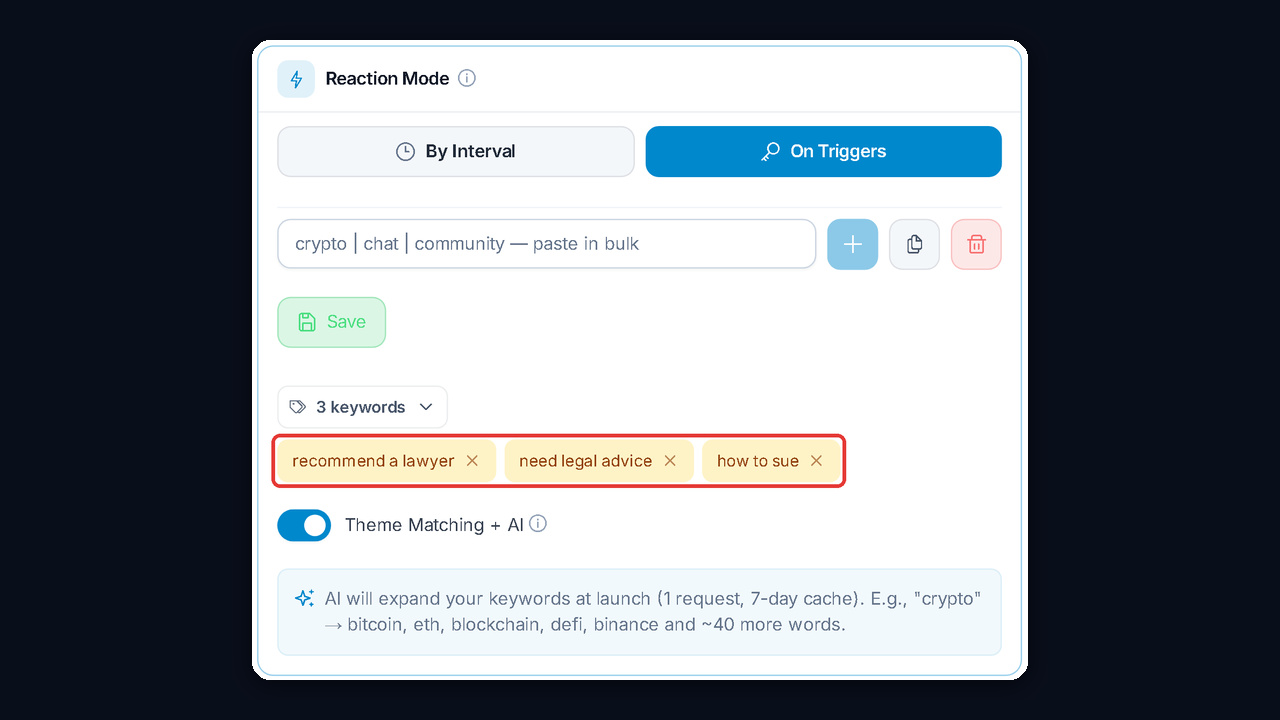
Still, watching dozens of chats by hand is impossible. That's why GramGPT.io offers NeuroChatting in On Triggers mode. Your accounts sit in the chosen chats and respond only when a key phrase shows up: "recommend a lawyer", "need legal advice", "how to sue".
- Collect groups. City, neighborhood, condo and founder communities. Then the Search Parser does it fastest: type a topic and a city, receive a list of active chats.
- Set intent phrases and turn on Theme Matching + AI, so the account notices questions phrased differently.
- Write a prompt: you handle these matters, answer briefly with substance and offer to review the situation in DMs.
- Connect the auto responder: NeuroDialogs continue the conversation privately and book a consultation.
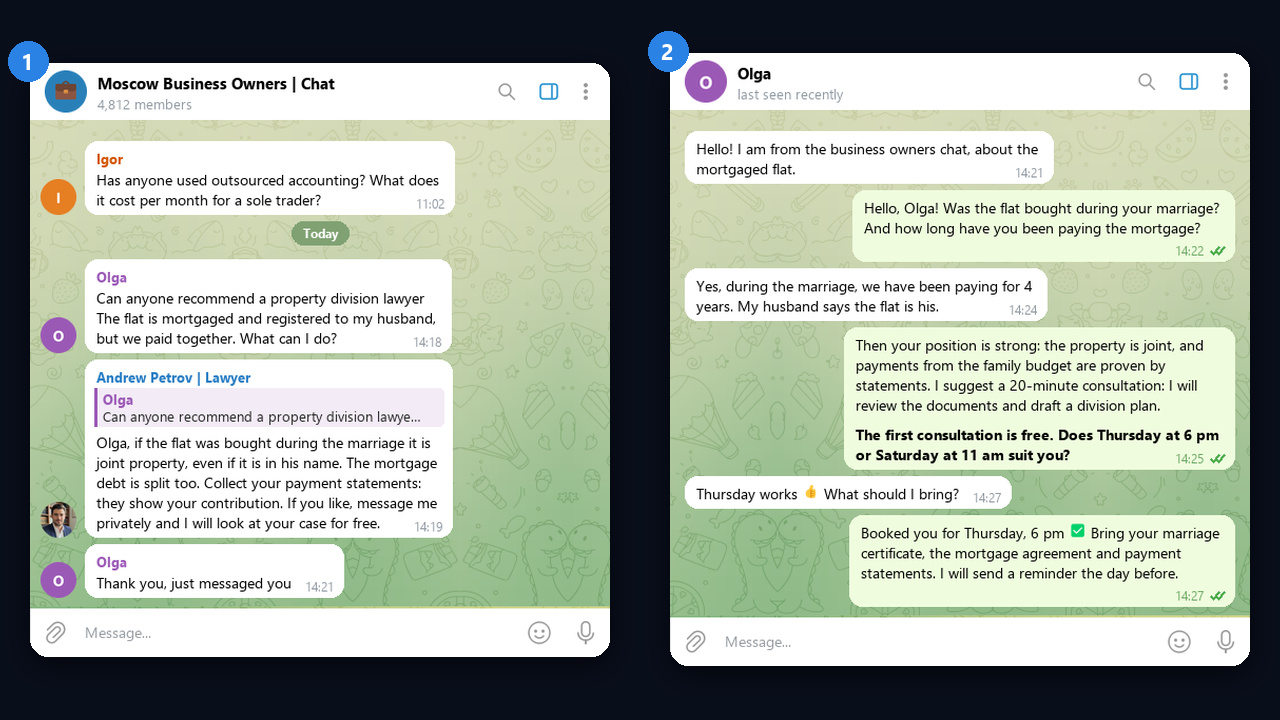
A good public reply is a short piece of help, not an ad: "Start with a written demand to the contractor: list the defects and set a deadline to fix them. Courts like to see that step. Happy to show you how to draft it, just DM me." That earns trust, while the sale happens in private messages.
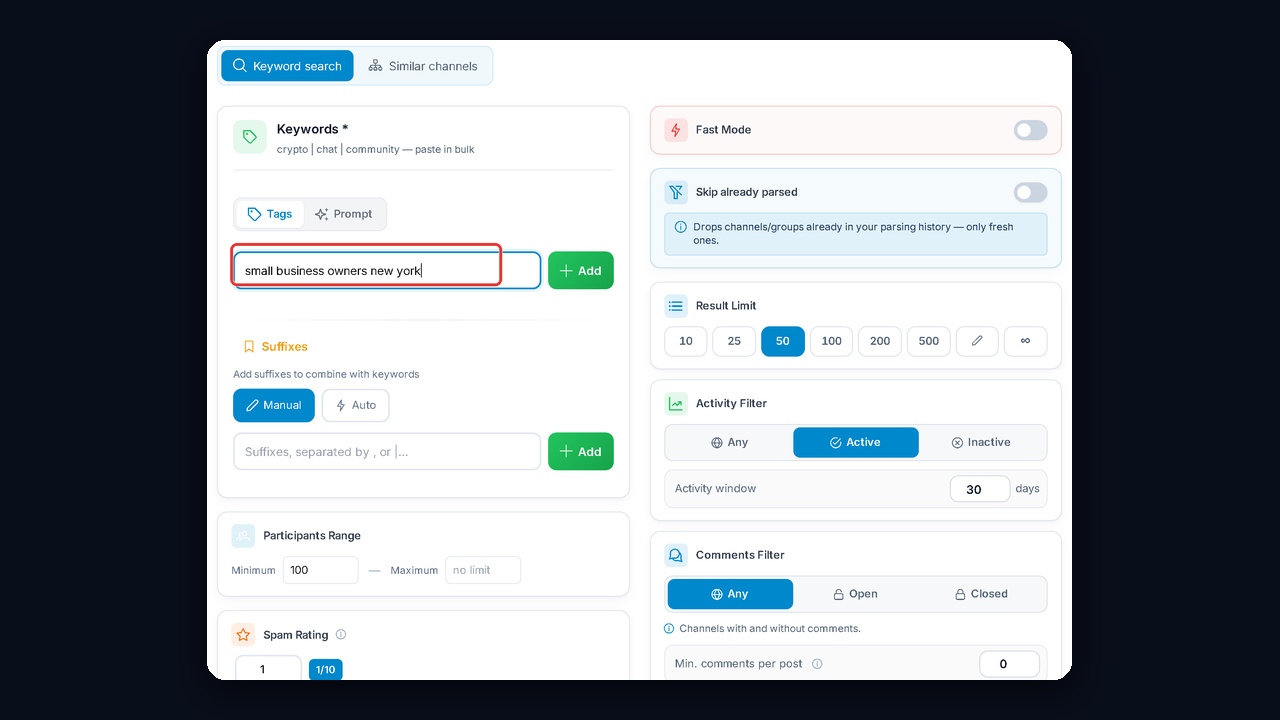
The Search Parser collects starter groups: a query like "small business owners new york" returns active communities with member counts and open discussions. See our review of parsing Telegram chats and groups. Before heavy use, run fresh accounts through auto warm-up and keep AI protection on: it adds pauses and makes behavior look human.
3. A Map Listing and a Simple Website
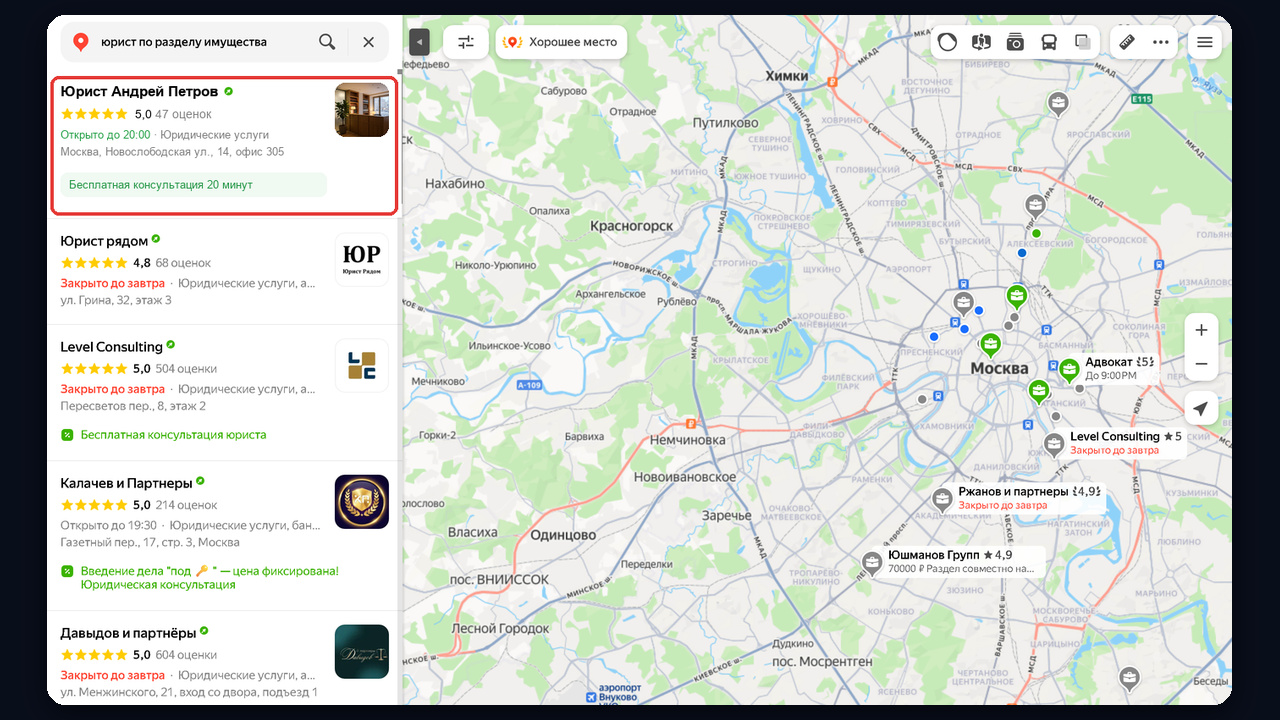
In addition, someone in trouble often types "legal help near me" straight into a map app. A listing with an address, hours, office photos and two dozen reviews beats a website with none. Ranking depends heavily on fresh feedback, so after every closed matter politely ask for a rating.
Besides the listing, you need a simple one-page site for a single specialty: services, starting prices, case results and a booking form. A page like "property division attorney + city" gradually starts pulling requests from search, and the listing and the site reinforce each other.
Important: never buy ratings. Platforms detect them and bury the listing, and for an attorney fake feedback is a direct hit to reputation.
Referral Partners: More Clients as a Lawyer Through Others
The next methods don't deliver overnight, but they produce a steady stream. Here a person arrives through someone they already trust.
4. Service Marketplaces
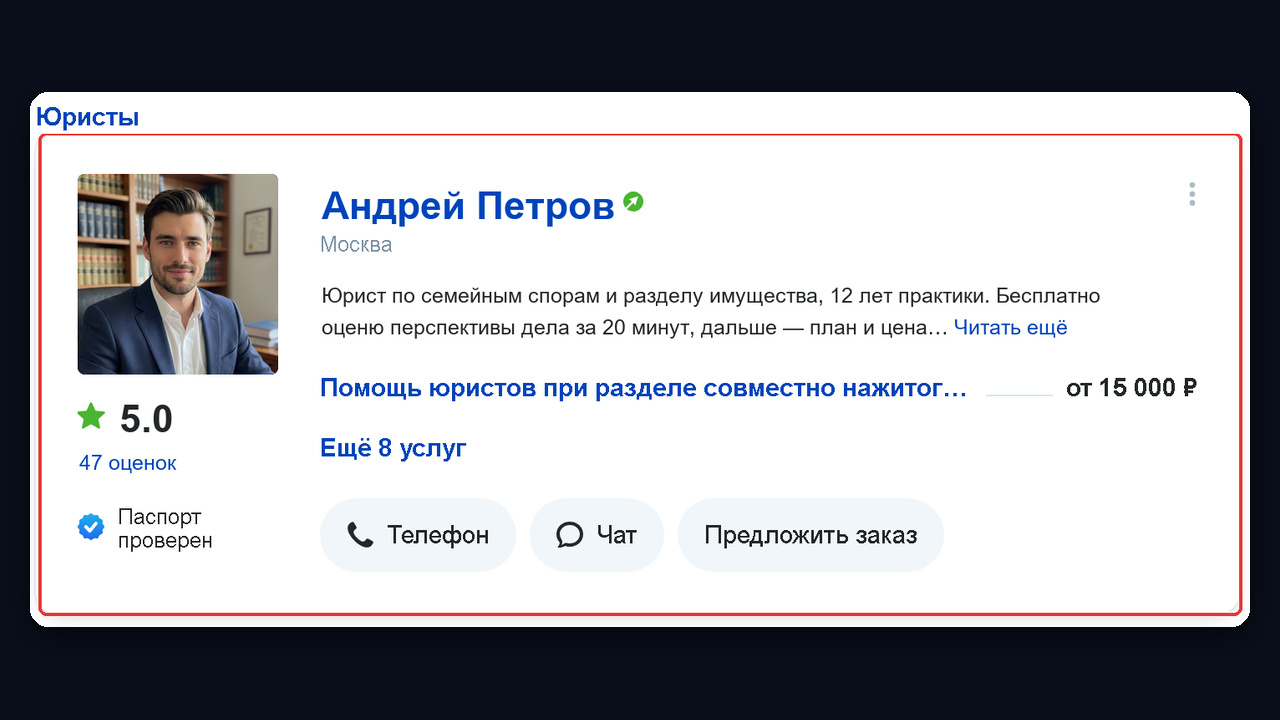
On platforms that match users with professionals, users post a request and attorneys respond. Note that you usually pay per response, so pick matters in your niche and tailor every reply. For example, "I'll draft a small claims complaint for an unpaid loan and represent you in court within two months" beats "Any legal services available".
5. Partnerships With Realtors, Accountants and Notaries
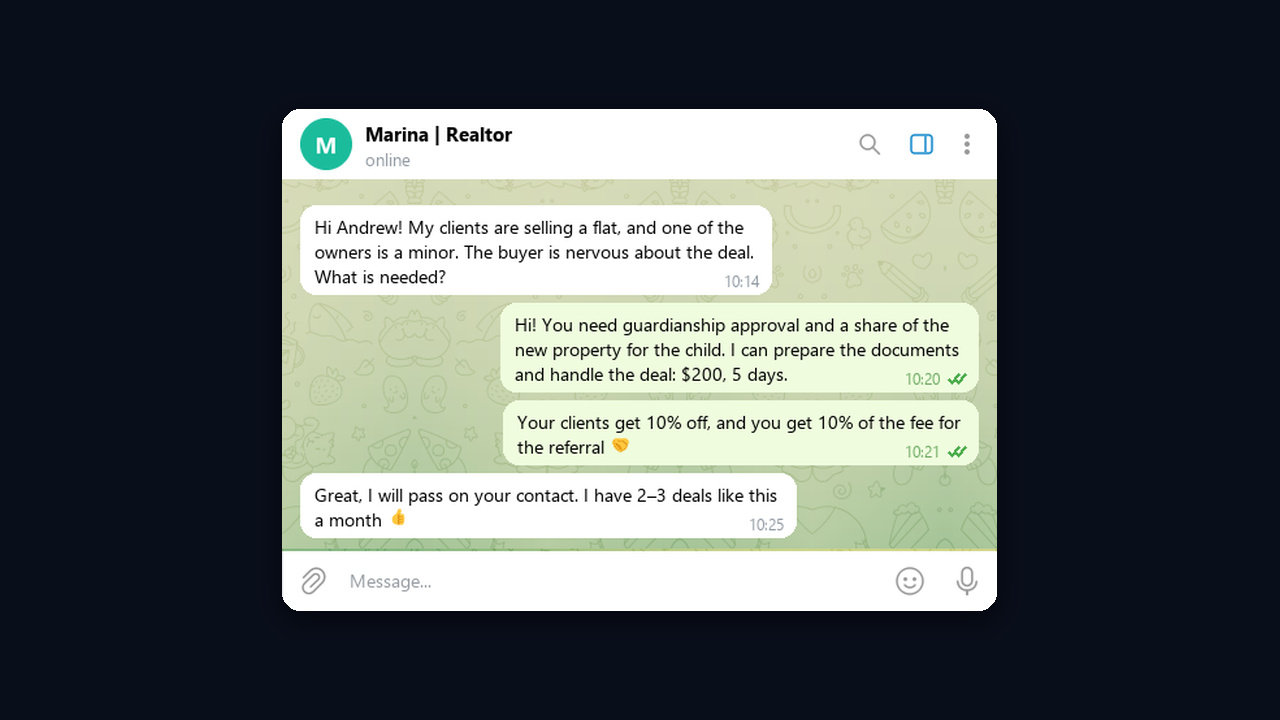
A realtor sees disputed deals daily, an accountant spots tax notices, a notary handles inheritance conflicts. In other words, these are ready-made referral sources, and the exchange works both ways. Therefore, agree on a simple deal: you review their clients' documents for free, they recommend you when a dispute arises.
Also consider adjacent pros: appraisers, insurance agents, staffing agencies. As a result, three to five reliable partners bring more leads than a dozen banners.
6. Systematic Word of Mouth
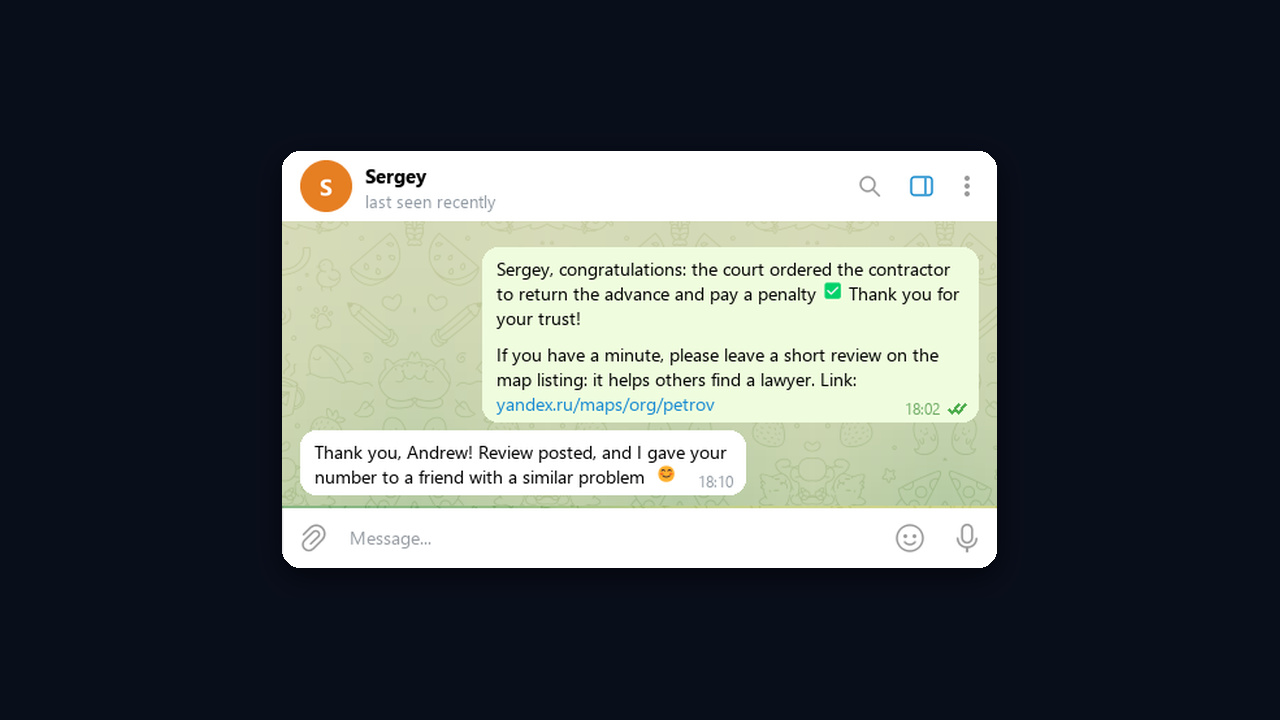
Referrals convert best of all, yet they need a nudge. After a successful matter, send a short thank-you note asking them to mention you to anyone who needs help. Then keep in touch: every six months share a useful update, for example a change in estate or bankruptcy law.
Expert Content: Win Clients as a Lawyer Without Ads
Content won't bring leads by tomorrow, but it settles the trust question. A reader who followed your breakdowns for a month arrives ready to sign.
7. An Attorney's Telegram Channel With Case Breakdowns
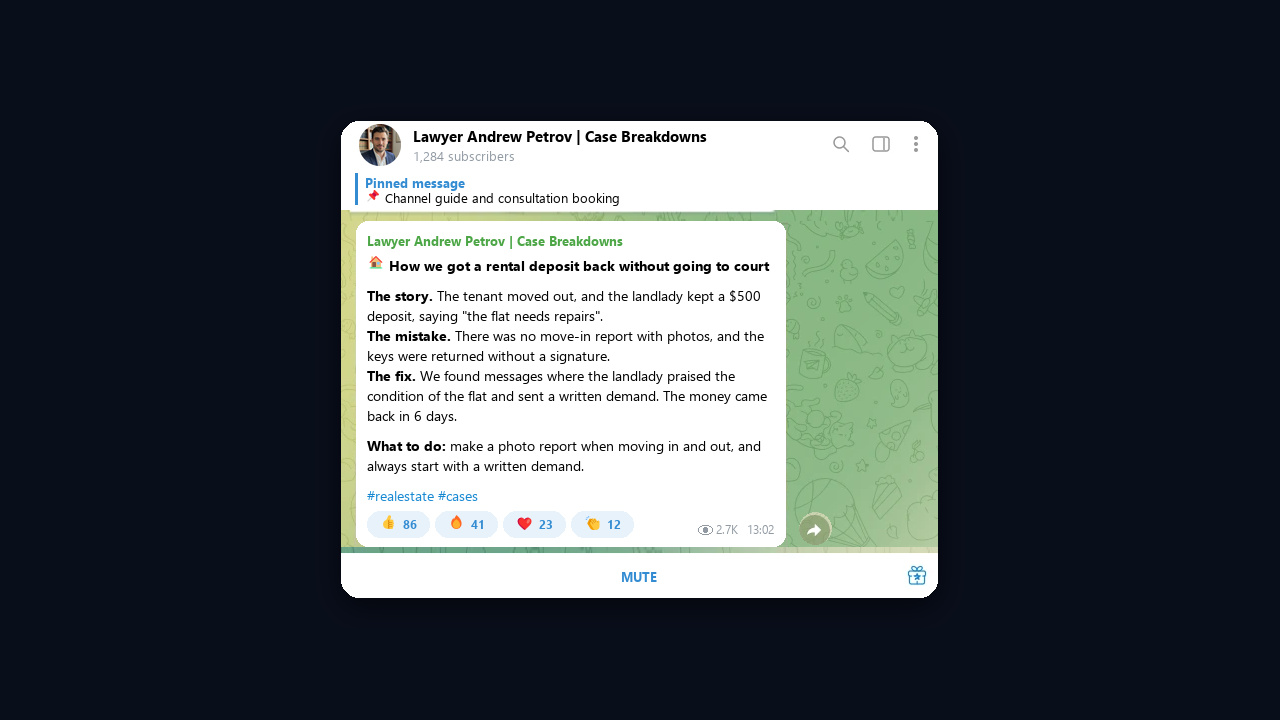
Your own channel shows how you solve problems. A format that performs well: "client story → mistake → how we fixed it → what you should do". For instance, a post on getting a rental deposit back without going to court spreads across neighborhood chats and brings readers with the same issue.
Here is how a breakdown post looks in a channel like "Lawyer Andrew Peters | Case Breakdowns": story, mistake, fix and advice, with the link and posting schedule in the profile.
Put the channel link in the profiles of the accounts that respond publicly: a reply becomes a subscriber, and a subscriber becomes a paying customer. Our guide on how to create a Telegram channel covers the setup.
8. Webinars for Business Owners
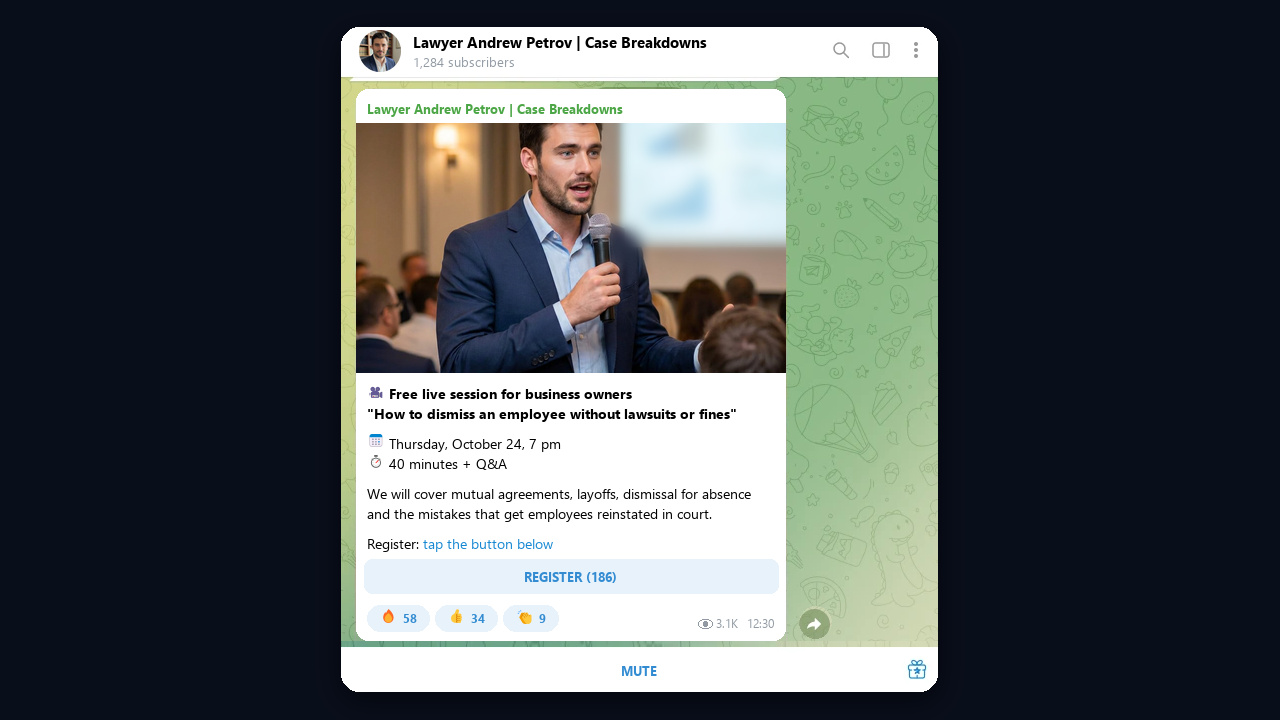
Similarly, entrepreneurs gladly join short practical sessions: "Five contract clauses that protect your money", "How to let an employee go safely", "What changes in inspections this year". At the end, offer a free contract review. Even a small session brings several consultation requests, and some turn into retainers.
9. Articles and Expert Quotes
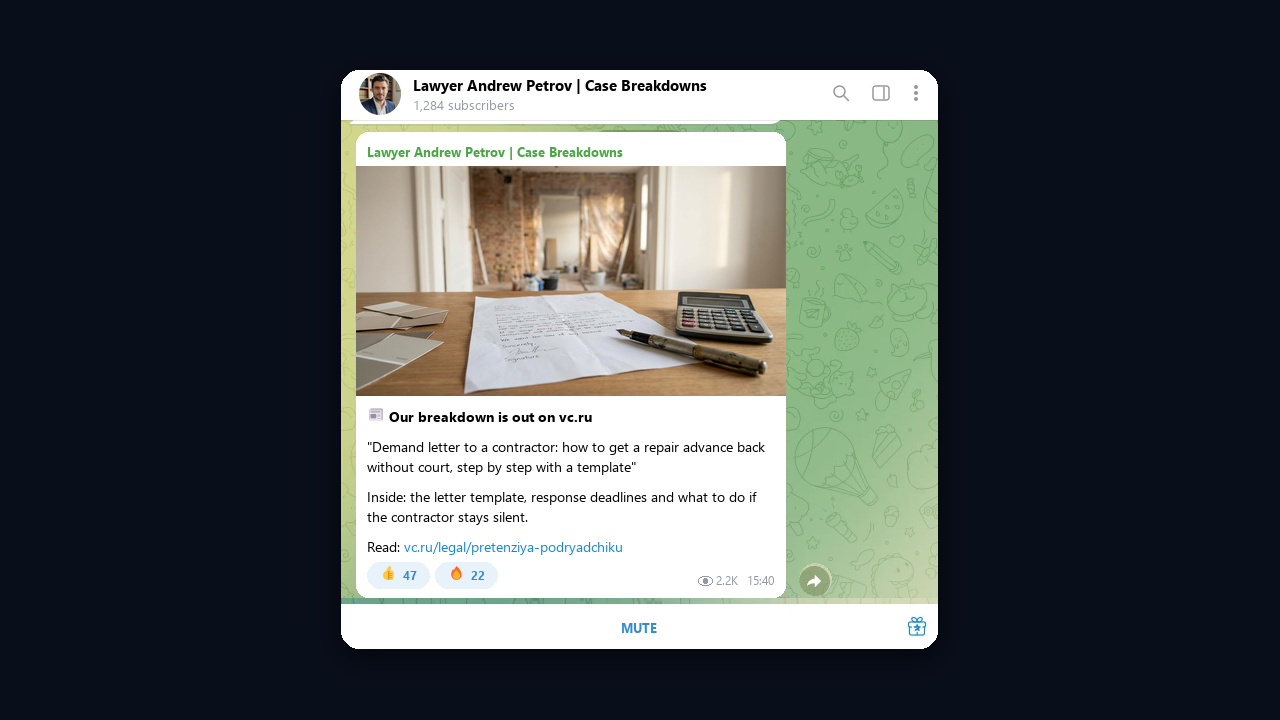
Moreover, posts on large platforms for entrepreneurs rank well and keep bringing readers from Google. Write about what readers actually ask: "What to do when a supplier keeps your prepayment". At the same time, services where journalists find expert sources earn media mentions, which strongly support credibility.
Law Firm Ads: What's Allowed and How to Write Them
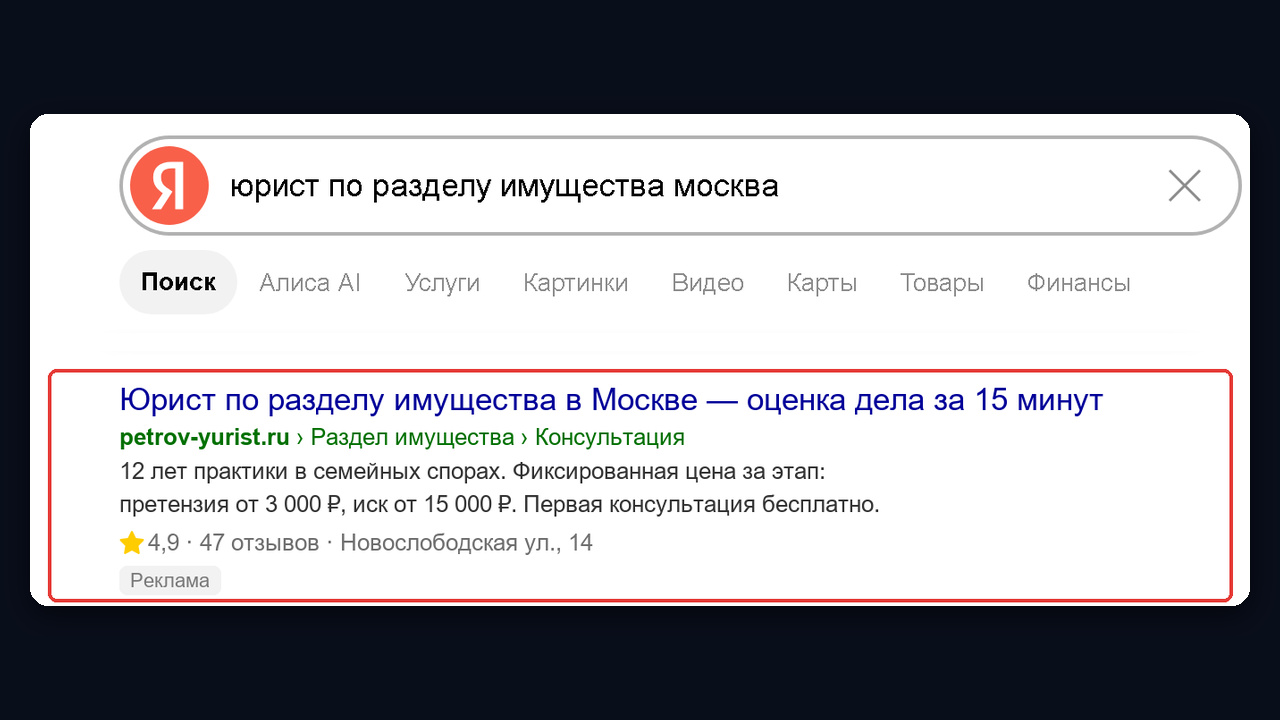
Paid ads bring quick volume, but in this field they are expensive and require care. Bar rules generally ban misleading claims, guarantees of results and unverifiable superlatives, and some states also restrict comparisons and testimonials. So read your state's advertising rules before launching.
10. Search Ads for Urgent Queries
As a rule, narrow, urgent queries pay off best: "car accident counsel", "divorce attorney", "traffic ticket appeal". Broad terms cost a lot and attract the wrong audience. Therefore run ads for one or two specialties within your service radius.
Here are ad examples that stay compliant:
| ❌ Bad |
✅ Good |
| "We win every case, guaranteed!" |
"Divorce and property division attorney. Free 15-minute case assessment" |
| "Best advocate in town" |
"12 years in family law. Read reviews on our map listing" |
| "Cheapest in the city" |
"Flat fee for a demand letter: from $150, ready in two days" |
Free Consultation: Turn a Request Into a Signed Client
Winning a lead is half the job; the other half is not losing people on the first call. Many attorneys run a free consultation so well that the person gets the answer and solves the problem alone. Hence the consultation needs a structure.
- First five minutes: listen. Ask three or four clarifying questions and request documents.
- Then assess the odds. Name the strong and weak points honestly, without promising an outcome.
- Next, a three-step plan. For example: demand letter, negotiation, lawsuit.
- Finally, price and timeline. A flat fee per stage answers "how much will this cost".
Also cap the free part at 15–20 minutes. Otherwise the consultation becomes unpaid work, and people get used to free help.
Example. "Your position is strong: the completion certificate isn't signed, so the contractor can't demand full payment. Let's start with a demand letter; if they don't reply in 10 days, we file. The letter is a flat $150 and takes two days."
Finding Clients as a Lawyer in Your Practice Area
You don't need all ten at once. Start with three or four that fit your niche and check after a month where signed deals came from.
| Practice area |
Best methods |
| Family law, estates |
Map listing and ratings, Q&A sites, local groups, notary partners |
| Personal injury, insurance |
Ads for urgent queries, car owner communities, auto shop partners |
| Consumer protection |
Local groups, Telegram channel with breakdowns, marketplaces |
| Business law |
Business communities, webinars, accountant partners, articles |
| Personal bankruptcy |
Paid search, Q&A sites, channel with success stories |
For more general tactics, read how to find clients on Telegram.
Why You Struggle to Find Clients as a Lawyer: Common Mistakes
| Mistake |
Better approach |
| "Every type of law work" |
One or two clear specialties |
| Replying to a request the next day |
Reply within an hour or use an auto responder |
| Posting ads straight into chats |
Helpful answer in public, sale in DMs |
| Promising to win |
Honest assessment and a plan |
| No ratings or success stories |
Ask for feedback after every matter |
| All effort in one channel |
Three or four methods and tracking of lead sources |
Bottom Line: How to Get Clients as a Lawyer in 2026
To sum up, getting clients as a lawyer rests on three layers: urgent demand (Q&A sites, local groups, maps), partners and referrals, and expert content with careful advertising. Start where help is sought today and add slower channels step by step.
Part of the process can be automated with GramGPT.io, from finding communities to the first reply and booking a consultation in DMs.