Open the in-app search, type "vacancies", and you will see hundreds of lookalike results: ten updates a day, a link to a form, and not a single real conversation. As a result, candidates follow whichever result they find first, while the employers pay where readers already exist. That is why a Telegram job channel without an audience earns nothing, neither applications nor money.
The usual plan, "buy a couple of shout-outs and wait," rarely succeeds here. However, followers from the generic career feeds arrive by chance, then leave within a week. Then promotion in the large career outlets costs a lot; mostly the owners profit from them.
Below you will learn how Telegram job channel promotion works: how to pick a niche people actually search for, how to set it up before promotion, and ten ways to gain readers, two of them native methods powered by GramGPT.io. We will also look at how such a project makes money from businesses in 2026, map out the first month, and list the mistakes that keep it stuck.
Choosing a Telegram Job Channel Niche: City, Profession or Remote
A general "Hiring for Everyone" feed loses on day one. After all, big career sites have more openings, and you have nothing to stand out with. However, a narrow feed quickly becomes "the one" for its audience, and recruiters know exactly who they are trying to reach.
So start from what people already look for. Besides broad queries about careers on the platform, there is steady demand for local offers and remote roles. For example, searches for remote roles and for vacancies in particular towns show up every month.
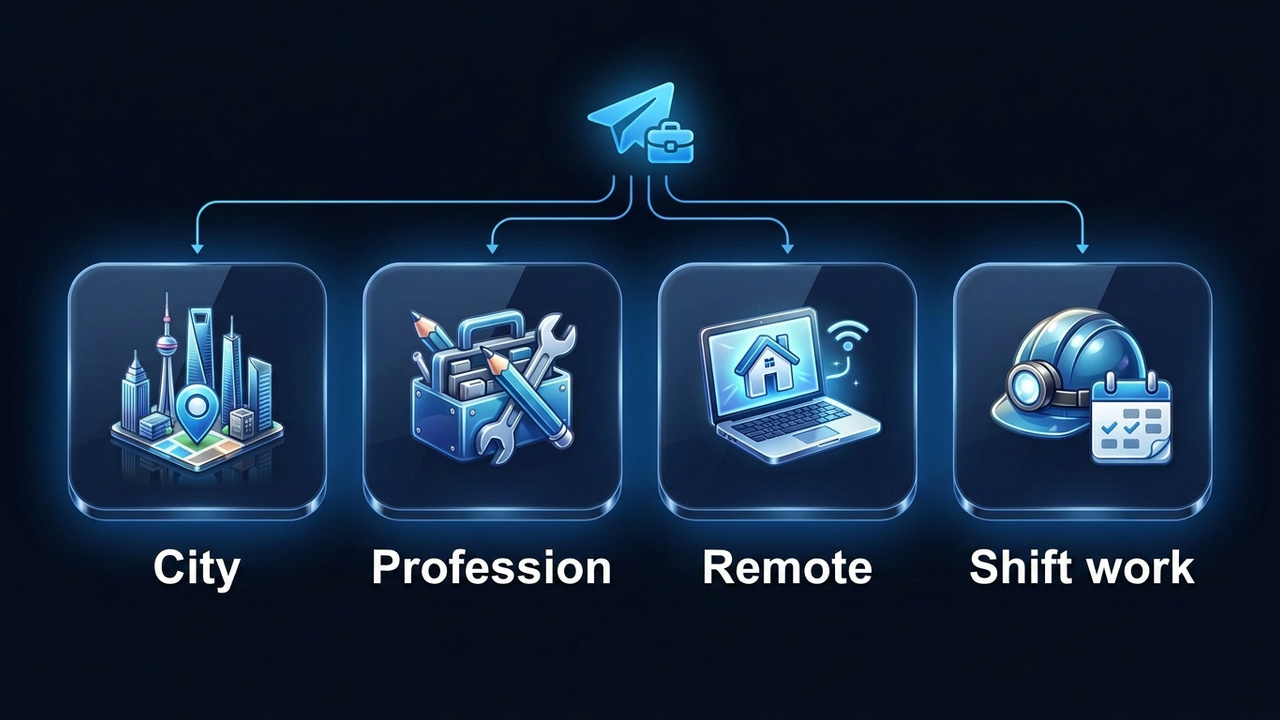
| Niche |
Where readers hang out |
Who pays for postings |
| City: "Hiring in Kazan" |
local and neighborhood chats |
shops, cafes, warehouses, local services |
| Profession: designers, accountants, drivers |
professional communities |
studios, agencies, in-house teams |
| Remote work |
freelancer communities |
online schools, digital agencies, startups |
| Seasonal and shift roles |
regional communities |
contractors, staffing agencies |
The sweet spot is an intersection: "Remote gigs for designers" or "Entry-level roles in Kazan." Such a project fits into a single line, and that makes it far easier to promote.
Before launch, size up the competition. Search the app for "vacancies" plus your town or trade, then open the top five results. Check the follower counts, the update frequency, the reactions. If every competitor looks abandoned, that's your chance. But if a lively 50K community already owns it, narrow your focus further.
Traffic sent to an empty or messy profile simply burns. So prepare the five things a visitor notices at a glance.
Name and Description of Your Feed
Put the niche and the location into the name: "Kazan Jobs | No Experience." That way, in-app search surfaces it for words like "vacancies" and "work." The description then answers "what will I get here": how many updates per day, for whom, and how employers can submit theirs.
One Listing Template
Candidates skim, so each post should be readable in five seconds. In other words, always use the same order: role, salary, schedule, location or "remote," requirements and how to apply.
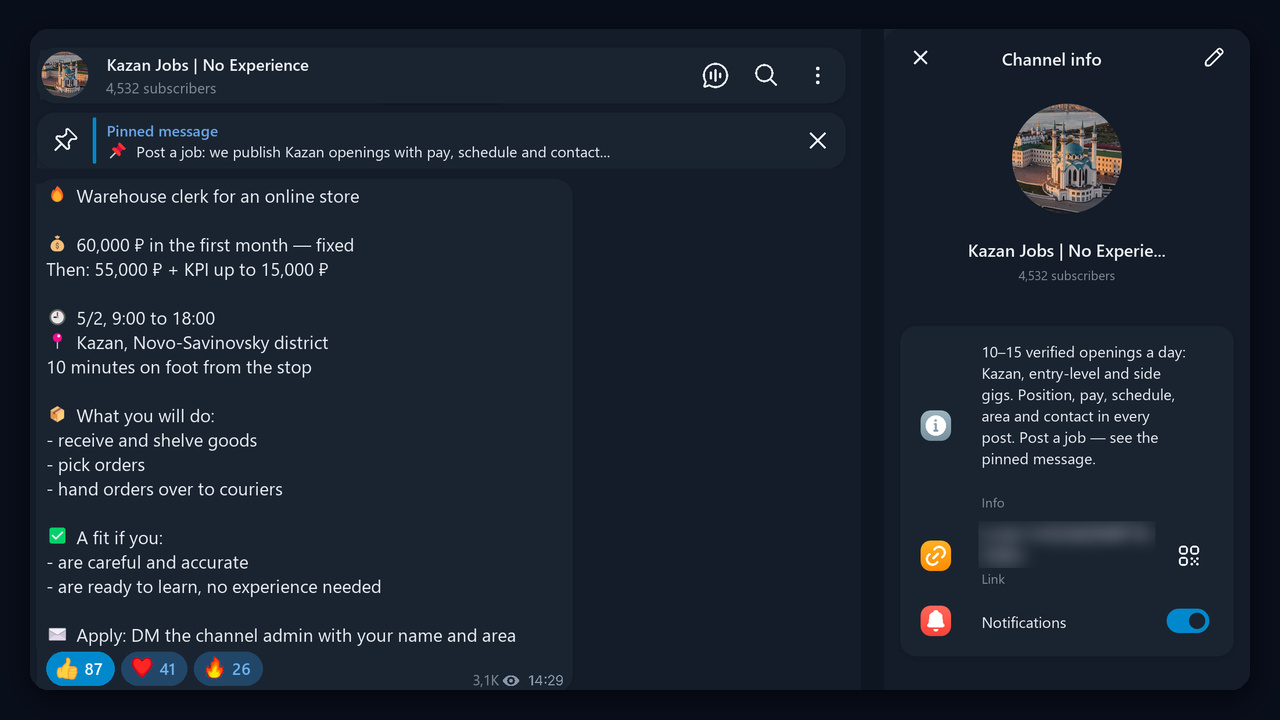
A Pinned "Hire With Us" Message
Next, pin a note for businesses with price, format and contact. Monetization, which we cover below, starts right there.
Fair Wording Rules
Many countries ban discriminatory requirements in postings, such as gender or age without a genuine reason. So check every text before publishing, because a complaint about a single ad can damage your whole reputation.
A Scam Filter
"Work from home, $300 a day, no experience" is almost always a scheme. So turn such offers down even when they are paid: a fraudulent offer costs you more than it brings in.
10 Ways to Grow a Telegram Job Channel
The methods below are ordered by how useful they are for a young project. In short, they answer how to promote such a feed and how to get subscribers for it without a big budget. The top three bring followers fastest, while the rest keep growth steady.
1. AI Chat Mailing: Short Offers in Profession and City Groups
Candidates don't just read feeds; they also sit in communities like "Kazan Hiring," "Freelance Designers" or "Night Shifts." People there already look for side gigs. A short offer of three or four lines ending with "DM me for details" brings them to your DMs, and from there to your page.
Still, nobody can publish in a hundred communities by hand every day. GramGPT.io automates this with Chat Mailing: accounts take turns sending the offer across your group list, while delays and limits keep the pace natural. Build the message as a chain: start with a randomized greeting like {Hi|Hello|Good afternoon}, then a short catchy offer: easy remote work and one-day side gigs, with details in DMs. Each community gets its own wording, and the «AI for each chat» mode writes the first message to fit the topic of every chat.
- Gather the groups. Find them by words like "vacancies," "hiring," "side gig" plus your town or profession, either by hand, as the guide on finding groups shows, or with the parser of chats and feeds.
- Prepare the accounts. A recruiter-style profile with your project pinned.
- Write the offer. Three or four lines with emoji: what the gig is, the schedule, "no experience" and "DM me". No link.
- Turn on variations and limits. This way messages never repeat and accounts don't rush.
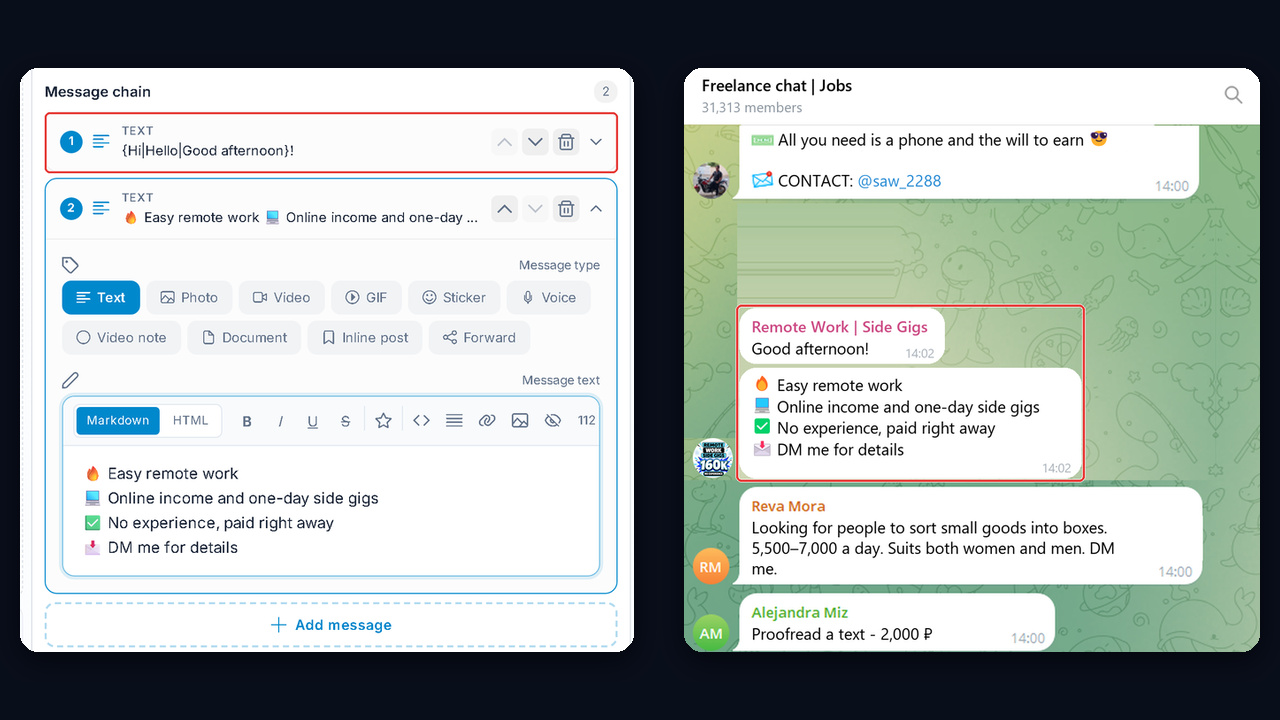
Refresh the offer every two or three days. New wording gets noticed, whereas the same text soon gets scrolled past. In DMs, answer in detail and share the link.
2. Cross-Promotion with Feeds in Other Cities: Free Promotion
"Kazan Hiring" doesn't compete with "Samara Hiring": the audiences barely overlap, yet the interest is the same. Agree on swap mentions about "openings in nearby towns" or build a shared folder. Such a swap costs nothing and brings exactly the people looking for a position.
Sample message to an admin: Hi! I run "Kazan Hiring," 2,400 followers, about 15 updates a day. How about a swap? I'll present yours as "roles in Samara," and you mention mine as "roles in Kazan." Happy to go first.
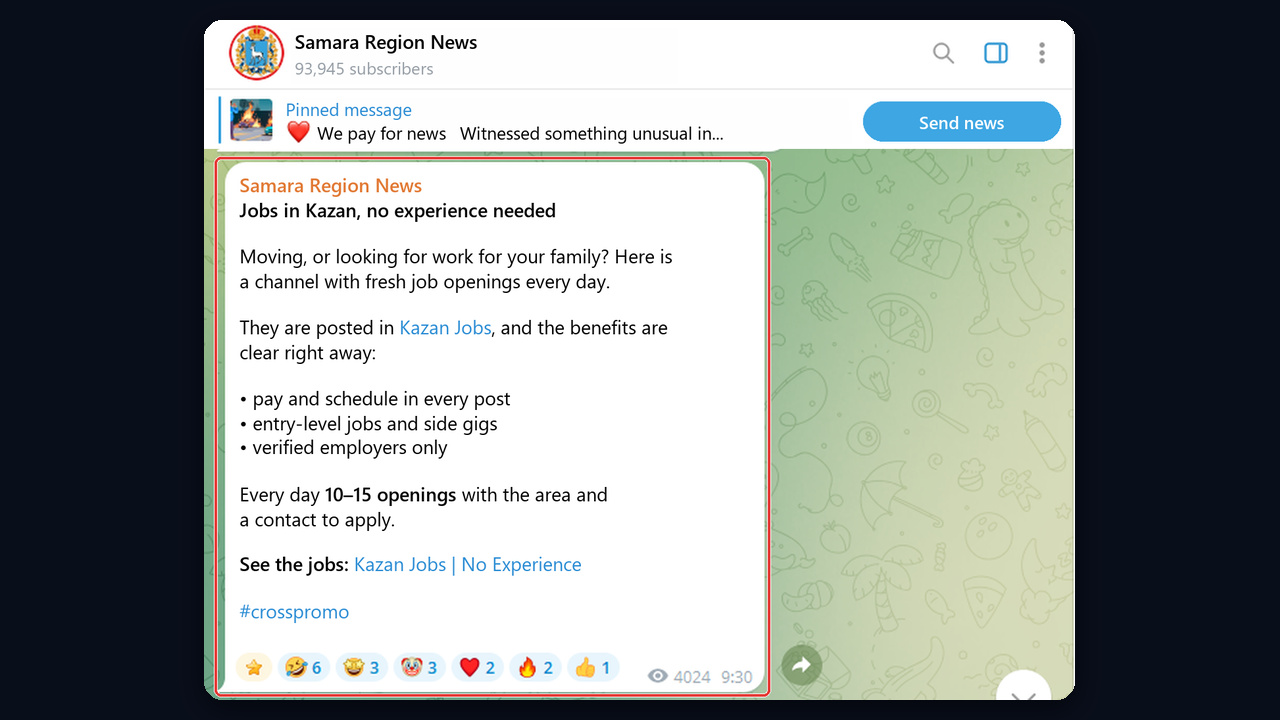
So write the swap note as advice for readers rather than an ad: what it is, why it helps and where to tap. Here is how a note about «Kazan Jobs» looks in a Samara local outlet:
3. Mass Reactions in Local News Comments
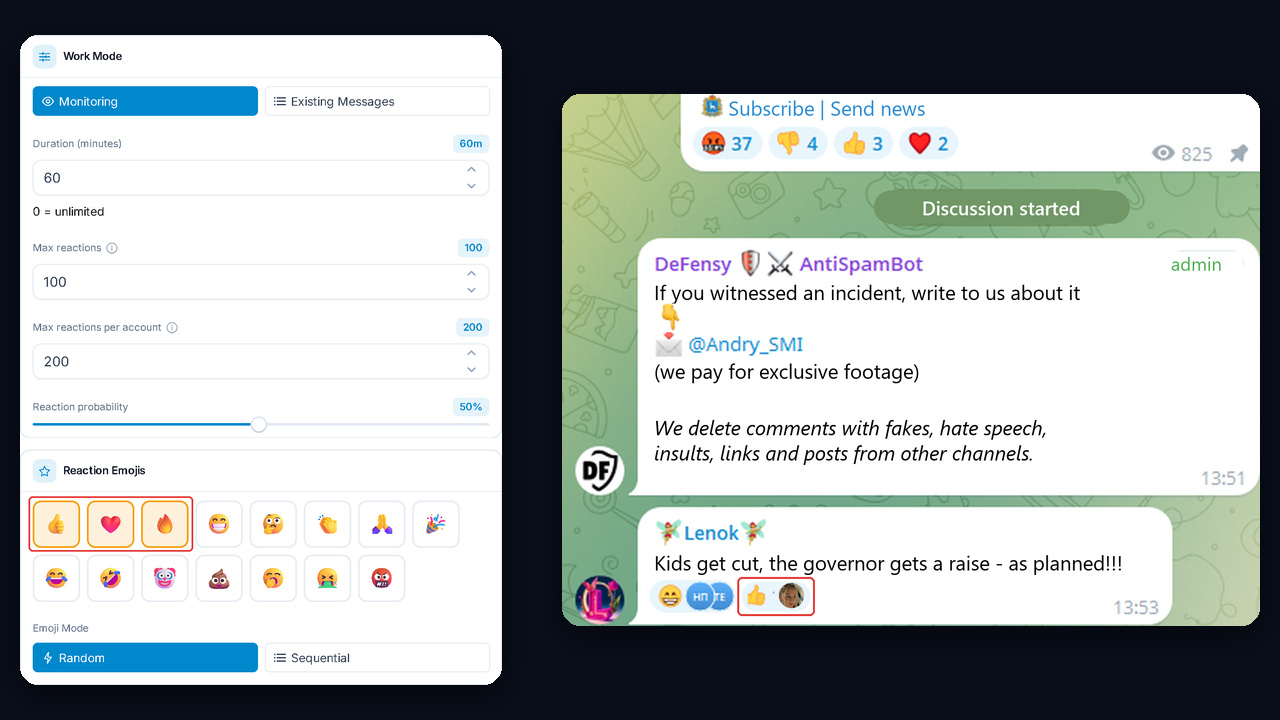
Moreover, this is the most native method on the list. Candidates argue a lot under local news updates, and every reaction to their message arrives as a notification. Curious, they open the profile and find your pinned Telegram job channel.
In GramGPT.io, the Mass Reactions module handles this. With Monitoring mode on, accounts watch the discussions of chosen communities and react to fresh comments, while emoji, limits and reaction probability are set in the settings.
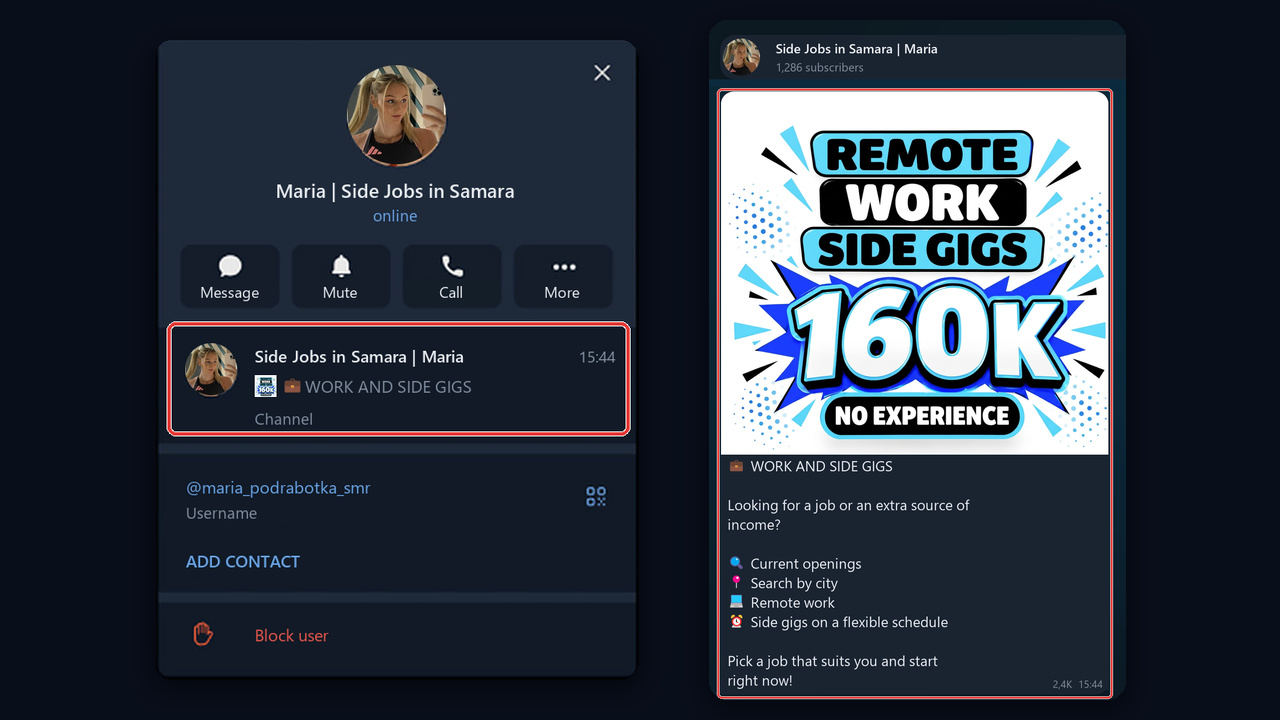
Style each account for the local audience, for example «Maria | Side Jobs in Samara»: each town gets its own job channel, and here the account promotes «Samara Jobs». Her profile shows a pinned bridge: a short personal page whose first message leads to the main project.
Unlike digests, there isn't a single promotional message here. The candidate comes on their own, so these followers unsubscribe less often.
4. Employers Share Their Own Listings
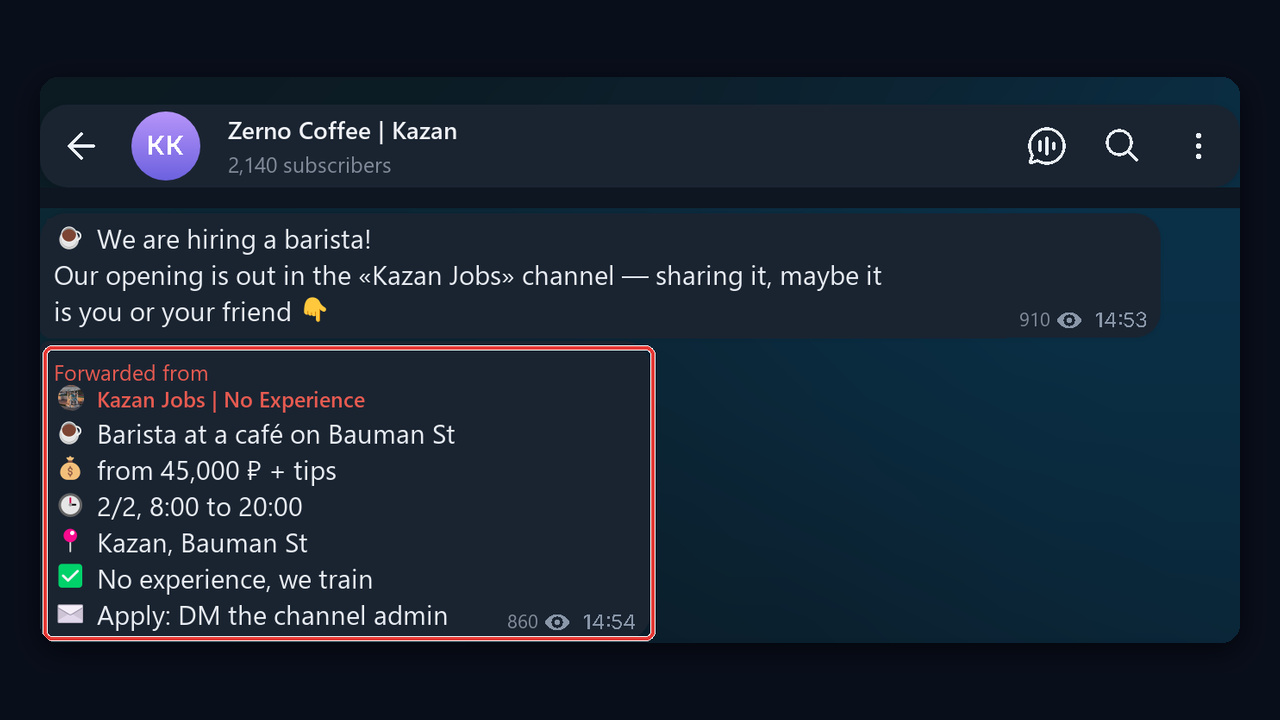
After publishing, send the employer a link to the post, for instance: "Your ad is live, here's the link. Share it with your team and you'll get more applicants." Many happily repost it to their own feed or staff group, so it gets more responses and you gain new readers. For regular partners, also create a short "Our openings are posted at …" card.
For instance, this is how a repost looks at a café: the owner adds a few words; below sits the message marked «Forwarded from» with your name.
5. An Application Bot as a Hook
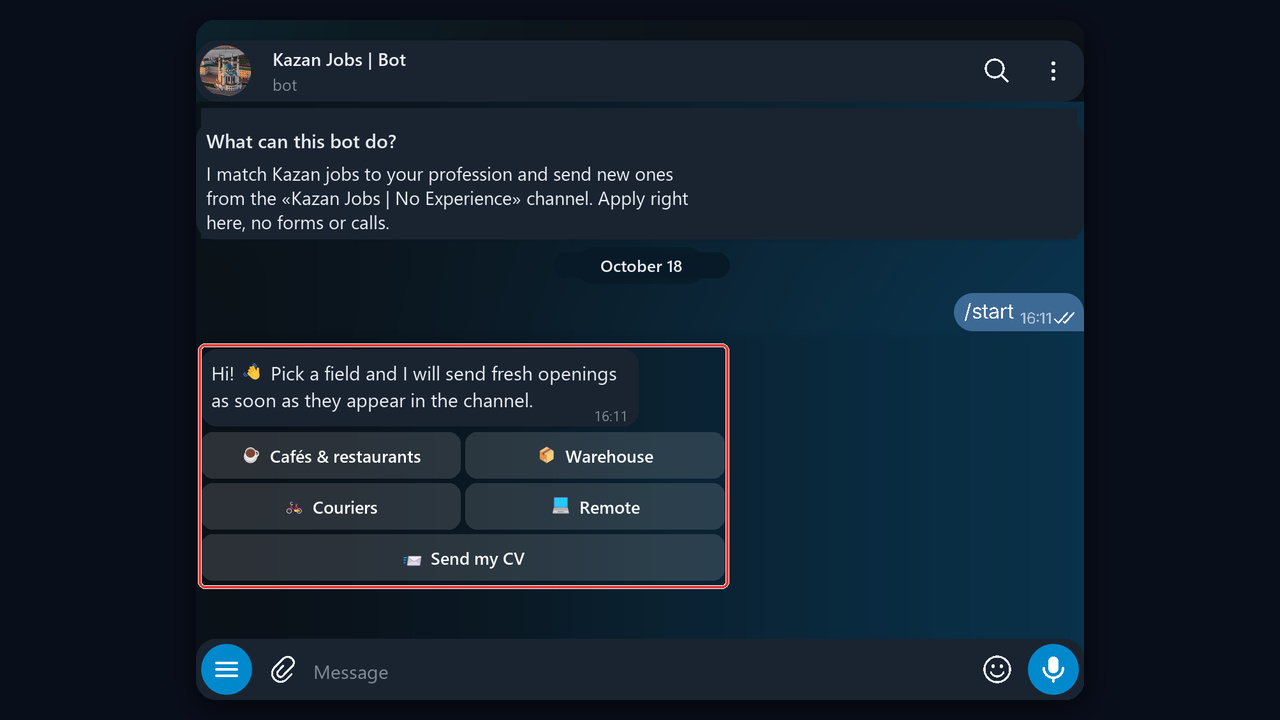
A bot that accepts résumés and filters openings is useful on its own. More importantly, it gives people a reason to subscribe, because it sends new offers for their chosen profession. We covered how to bring people into a bot in our guide on promoting a bot.
So the bot is simple: the description explains what it does, and after /start it offers fields as buttons, then sends fresh offers for the chosen one.
6. Telegraph Roundups for Search
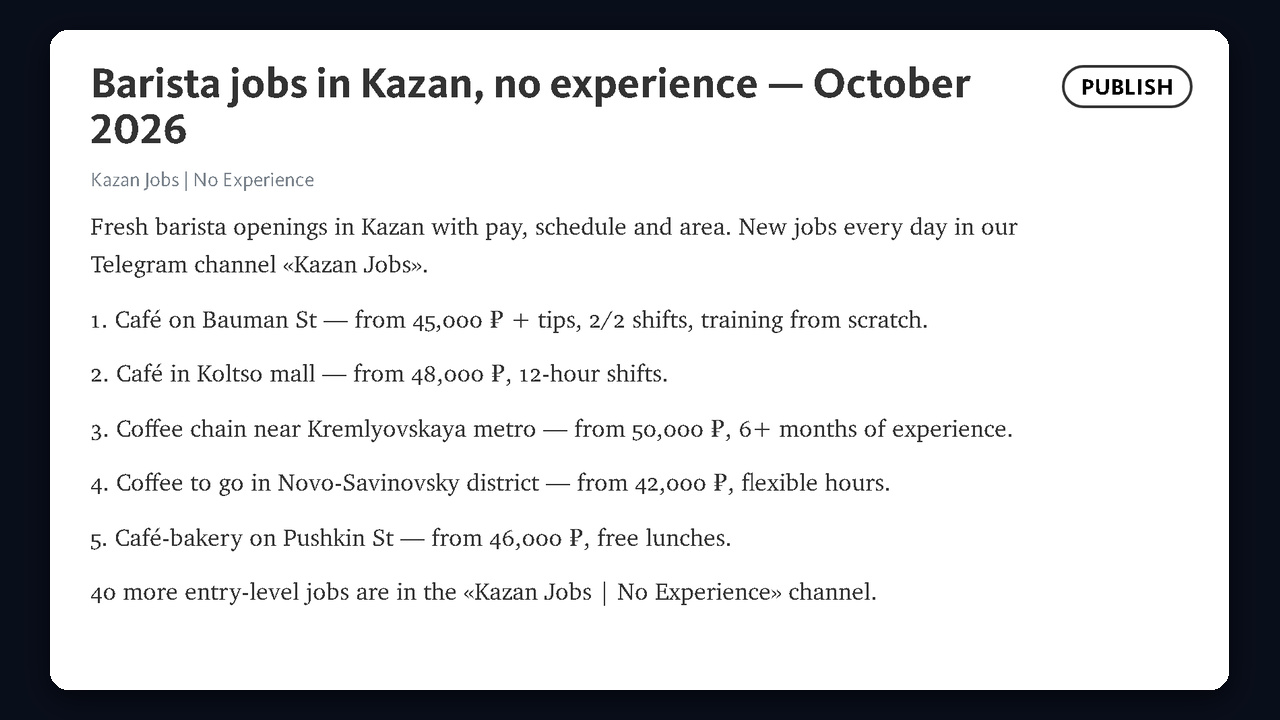
Telegraph pages get indexed by search engines. So once a week publish a roundup such as "Barista vacancies in Kazan" or "Remote design roles for beginners," linking back to you. Five to seven picks, a short intro and a link back at the top and bottom are enough. As a result, within a few months these pages start sending visitors from Google.
Also, you can write the roundup straight from the telegra.ph editor: a title with the town and trade, your name as the author, five picks, then a link at the end.
7. Partnerships with Career Courses
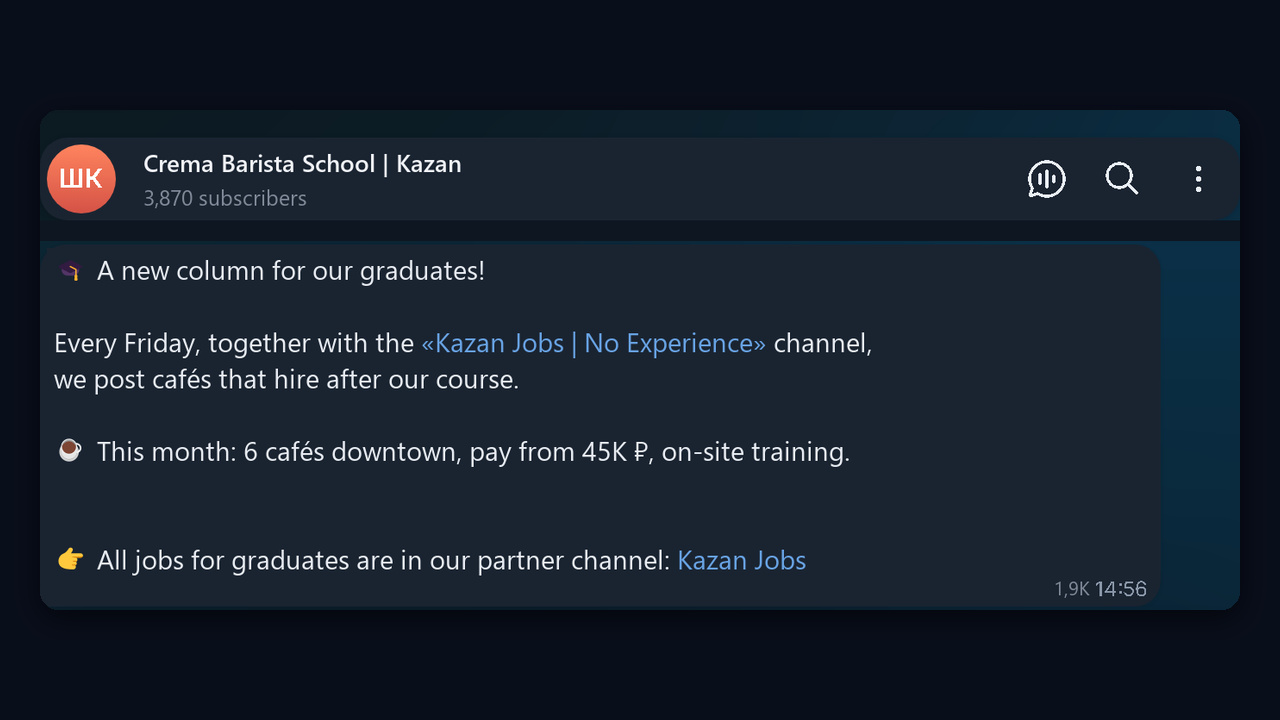
For example, graduates of online courses need an entry position, and schools want employed alumni. Offer them a "Jobs for graduates" column. In the end, they mention you to the cohort, and you gain motivated followers. For instance, a barista school runs such a column and sends its graduates your way:
8. Columns That Make People Stay
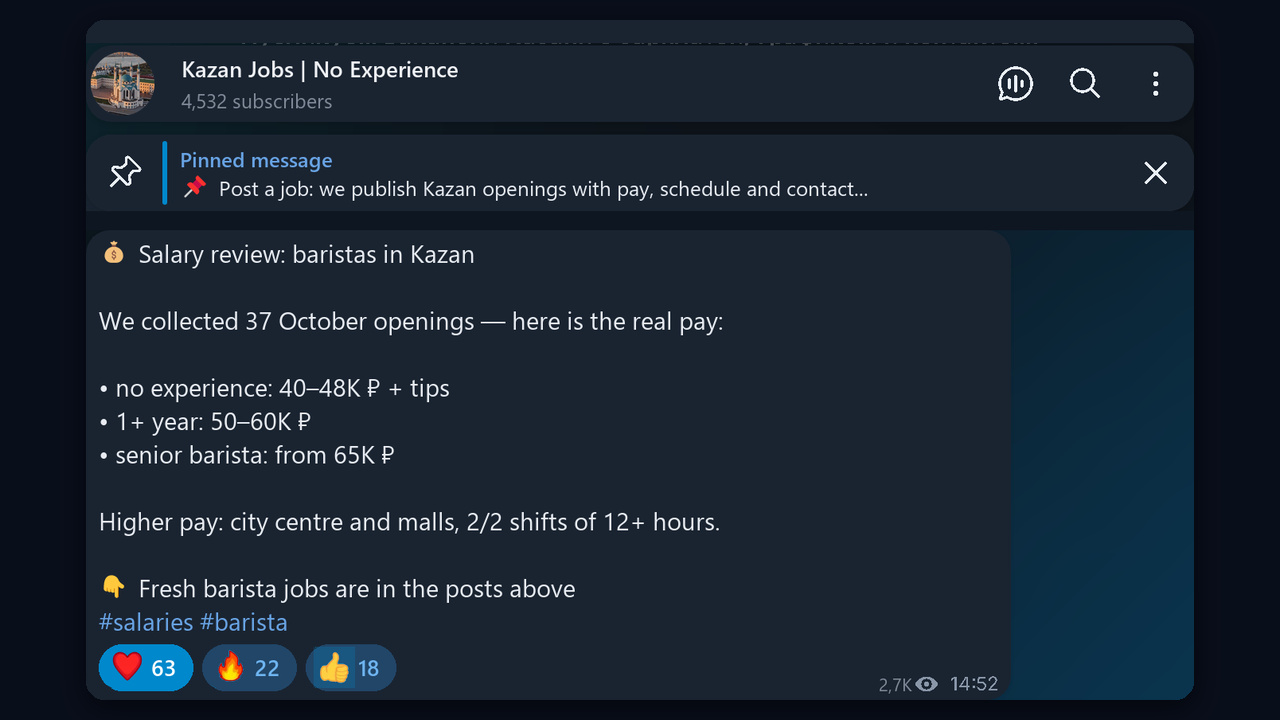
Openings alone aren't enough: once someone lands a role, they unsubscribe. Therefore add columns such as "opening of the day" with a breakdown, salary overviews by profession, and résumé or interview tips. Besides, people forward these columns to friends far more often.
For example, here is a «Salary review» column: figures for one profession, where pay is higher and a pointer to fresh ones. Such columns collect more reactions than plain announcements.
9. Telegram Ads by Interest
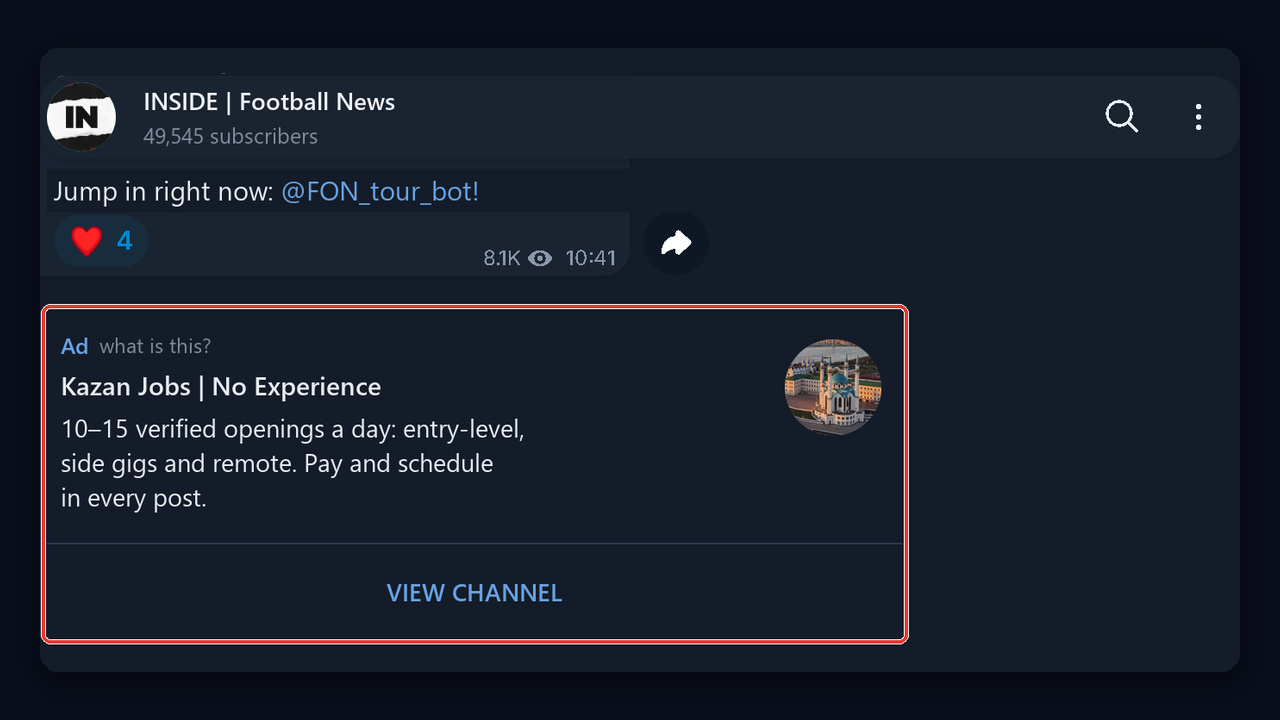
Official ads for your openings appear in outlets on your topic. For narrow professional audiences, a follower from here often costs less than through shout-outs. However, the entry budget is high, so switch this on once the project already covers its costs.
For example, a Telegram Ads message looks like this: an «Ad» label, your name, a couple of lines, plus a button.
10. Paid Shout-Outs in Niche Communities
Buy ads not in career outlets but where your profession hangs out: outlets for designers, drivers or accountants. Before buying, check the reach and the comments, just as the guide on buying a ready-made project suggests.
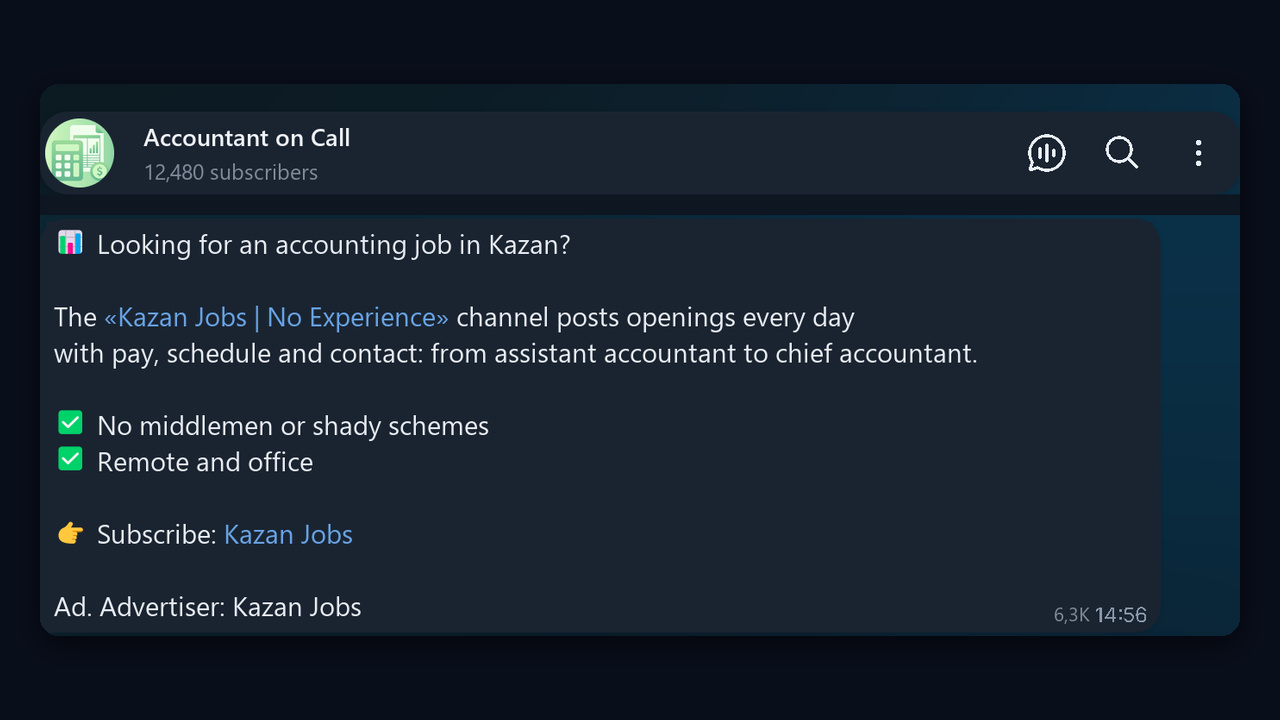
Besides, a good shout-out speaks the audience's language: accountants hear about accounting roles, with an «Ad» note at the end.
If you are deciding how to promote a Telegram job channel with limited time and budget, first compare the options by speed and cost:
| Method |
First followers |
Budget |
Best for |
| AI chat mailing |
within days |
module and accounts |
city, gigs, remote roles |
| Mass reactions in comments |
within a week |
module and accounts |
local hiring outlets |
| Cross-promotion |
1–2 weeks |
free |
neighbors in nearby towns |
| Employer shares |
from the very start |
free |
any segment |
| Telegraph and a bot |
1–3 months |
time |
traffic from Google |
| Telegram Ads and shout-outs |
right after launch |
from about $50 |
professional niches |
In other words, growth starts with free and native methods, while paid promotion comes in once the first employers already buy postings.
Your First 30 Days: A Telegram Job Channel Launch Plan
- Week 1. Niche, name, description, listing template, pinned note for businesses and 15–20 starter vacancies.
- Week 2. A list of relevant chats, digests there and Mass Reactions in local news comments.
- Week 3. Swaps with two or three neighbors from nearby towns and the earliest columns.
- Week 4. Early clients: free postings in exchange for feedback and a share, then a price list.
Keep a simple spreadsheet showing where followers came from and how many applications each one received. These numbers become your sales pitch to businesses.
How a Telegram Job Channel Makes Money: Monetization
Monetization rests on paid postings. Readers join for free, and the employer who needs applicants pays. That is why pricing depends on results rather than follower count: how many responses an average ad collects.
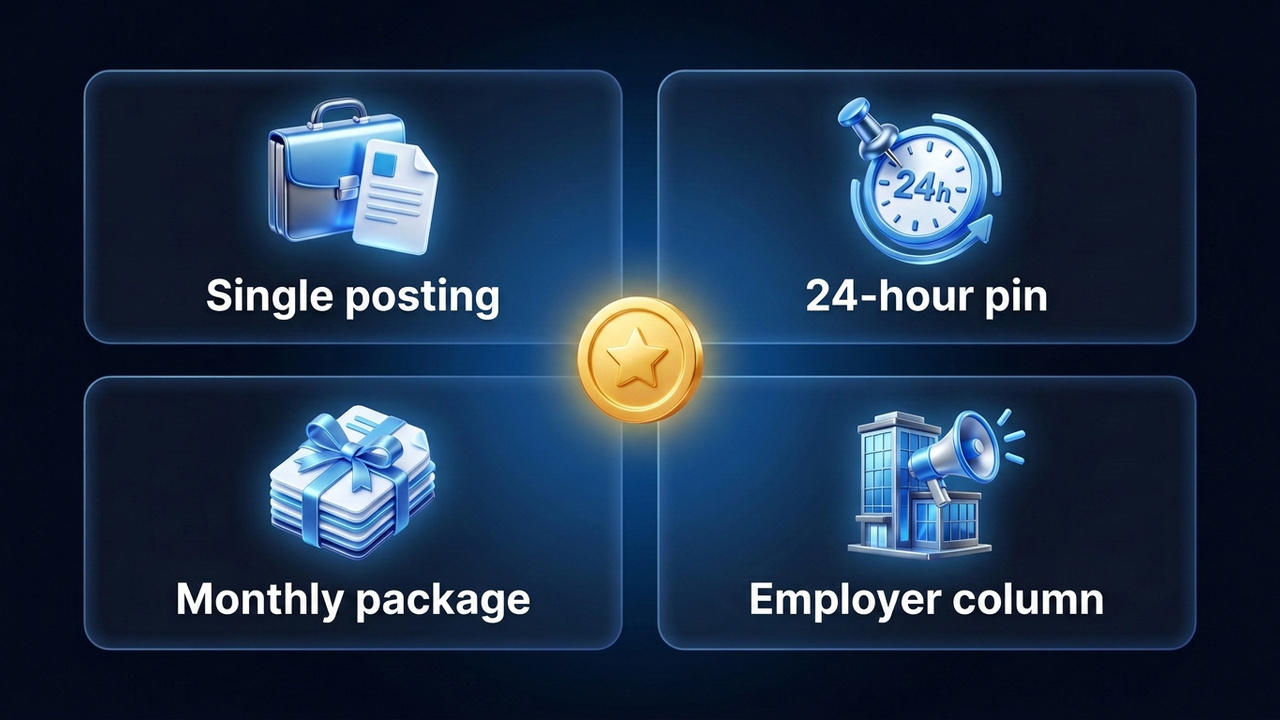
- Single posting. One templated post; the price grows as applications grow.
- 24-hour pin. For urgent roles, usually two to three times the regular price.
- Package. Five to ten postings a month for companies that hire constantly.
- Employer column. Regular stories about the company, its office and team.
For example, a project with 3,000 followers runs ten paid postings a week at $10. That is about $400 a month before pins and packages. Also, numbers vary by region and segment, so test your starting price on three to five clients.
Look for clients in HR communities and among companies already sharing openings in local communities. Early postings can be free in exchange for a testimonial and a share.
Mistakes That Keep a Telegram Job Channel Small
| Mistake |
Better approach |
| A "hiring for everyone" feed |
town, trade or remote in the name |
| Copy-pasting from career sites without curation |
curated items in a single template |
| Fake or shady offers for money |
a filter and saying no to dubious companies |
| A link in every message |
value first, the link in the profile |
| Vacancies only, no columns |
salary overviews, tips, "opening of the day" |
| No pinned note for companies |
price list and contact in the pin |
Also, don't chase volume. Five curated openings a day get read more carefully than twenty copies from career sites, and advertisers pay precisely for that attention.
Conclusion: Growing a Telegram Job Channel in 2026
A Telegram job channel grows when it has a clear niche, tidy packaging and several traffic sources at once. Chat outreach and reactions in comments bring early readers, swaps and partnerships create a steady flow, and columns keep people around after they get hired.
So start with a narrow niche and a listing template, then add the methods above. Group digests and Mass Reactions can be automated with GramGPT.io, so growth needs no manual routine, so you spend your time on clients instead.