How to Get Nutrition Clients: Where to Find and Attract Them, a 550-Request Case
Many nutritionists hit the same wall after certification: plenty of knowledge, yet nutrition clients do not show up. Posts get read by classmates, consultations get bought by friends, and strangers are in no hurry to pay for coaching.
Content alone rarely closes that gap: a stranger from the feed needs a path first: notice the expert, follow, try a small product and only then buy the main program.
Below we cover how to find clients as a nutritionist or dietitian: where to look, why they do not show up and how to attract them. Each method is shown on our own experiment: for our YouTube channel "Grishin Traffic", we built a weight loss business from scratch in 14 days and got about 550 requests.
Where Nutritionists and Dietitians Can Find Clients
Nutrition clients gather wherever weight loss and food are discussed: themed groups, short videos and health channels. So the answer is a combination of sources, and our case study counted what each one delivered.
Source
How it works
Result in the case
Telegram weight loss groups
Replies in discussions and DMs via NeuroChatting
177 channel joins
Reels, TikTok, Shorts
Recipes and myth-busting clips with a call to follow
288 joins, one clip hit 150K views
Recommendations in groups and channels
Scripted conversations via NeuroShilling
83 joins and the first payments
Revenue-share partnership
You bring people, an expert runs the program
2 programs at $300
Ads: paid posts, Telegram Ads
Sponsored posts in health and fitness channels
not tested, see below
Word of mouth and reviews
Client results and a referral bonus
kicks in after the first clients
Next we break down each method: first why nutrition clients do not come, then how to attract them.
Why Nutrition Clients Do Not Show Up
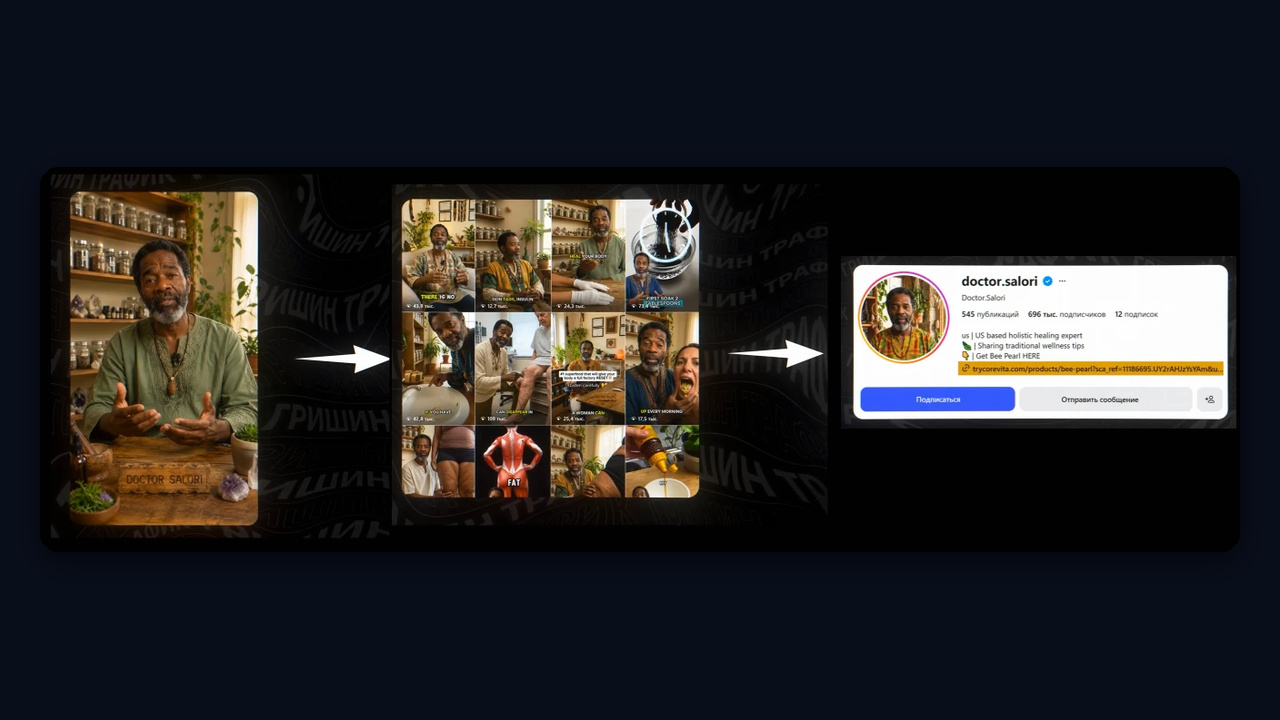
First, we studied how others make money in this space. Almost everyone pushes the same recipe: create an AI persona, rack up views and drop a product link in the profile. It sounds neat; however, a stranger who sees one video from an unknown dietitian is unlikely to buy anything.
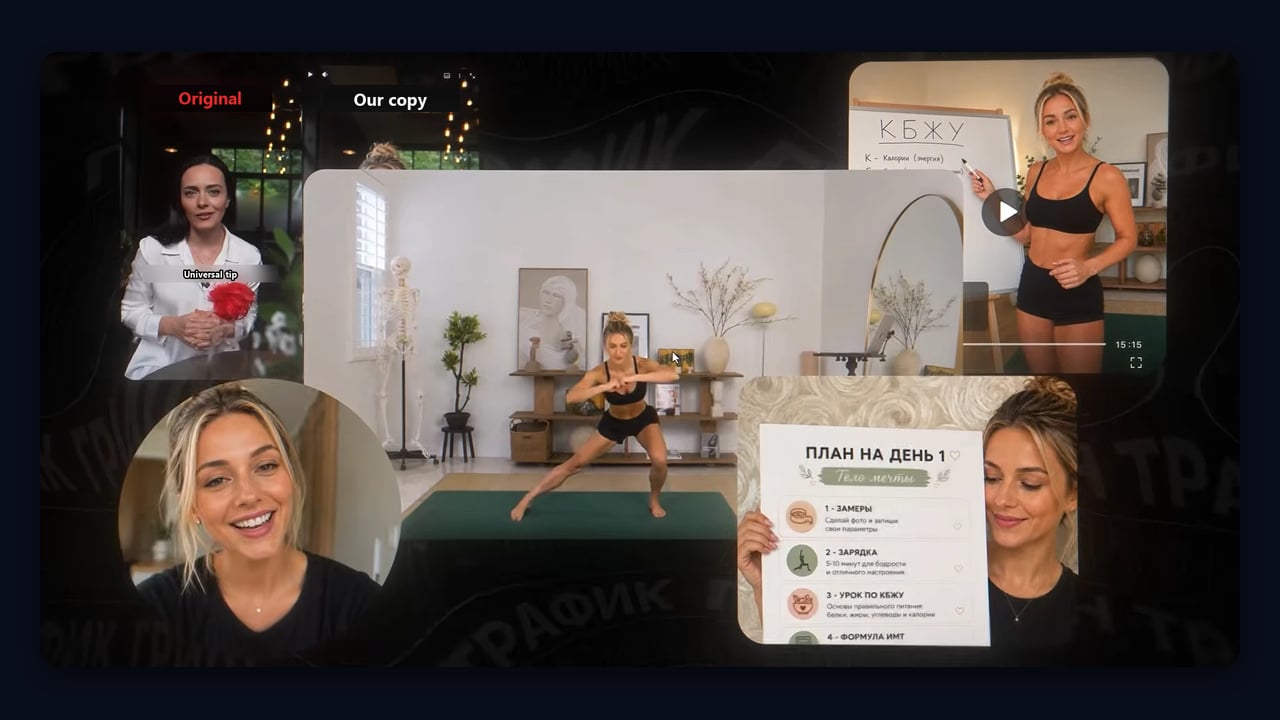
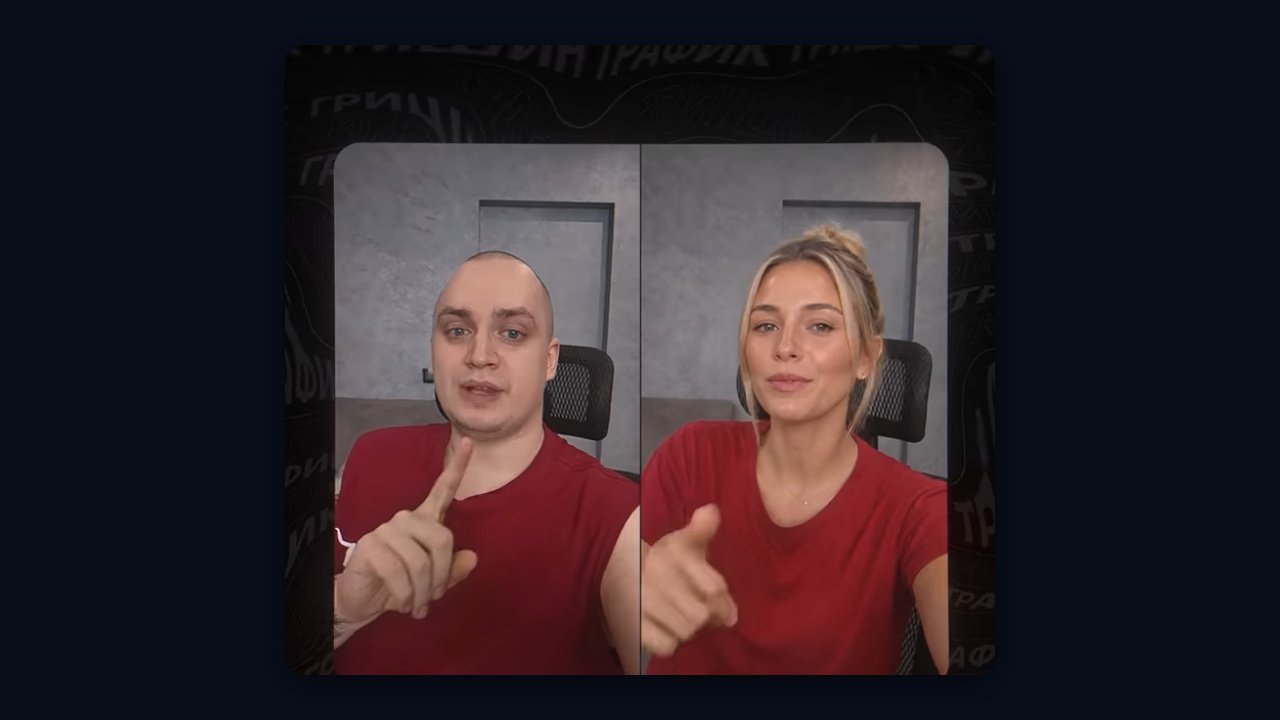
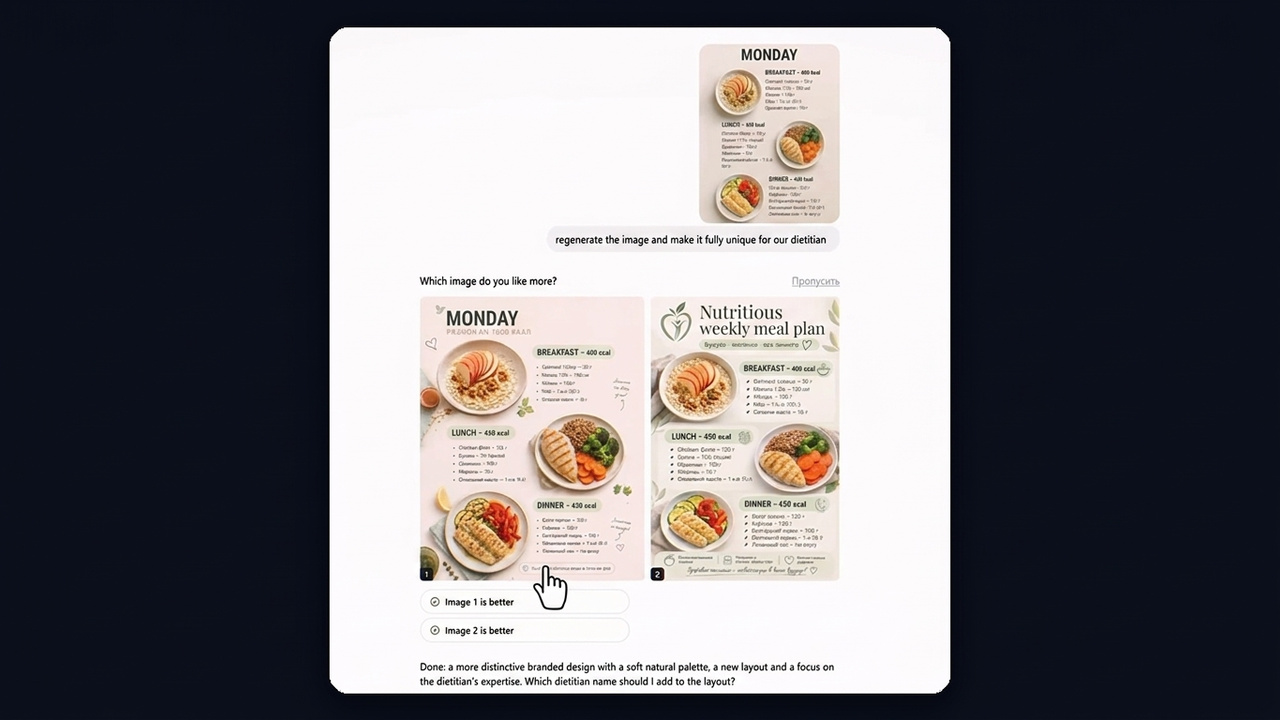
Such content is usually a real expert's video rebuilt with an AI face. We tested that too: the original on the left, our AI copy on the right.
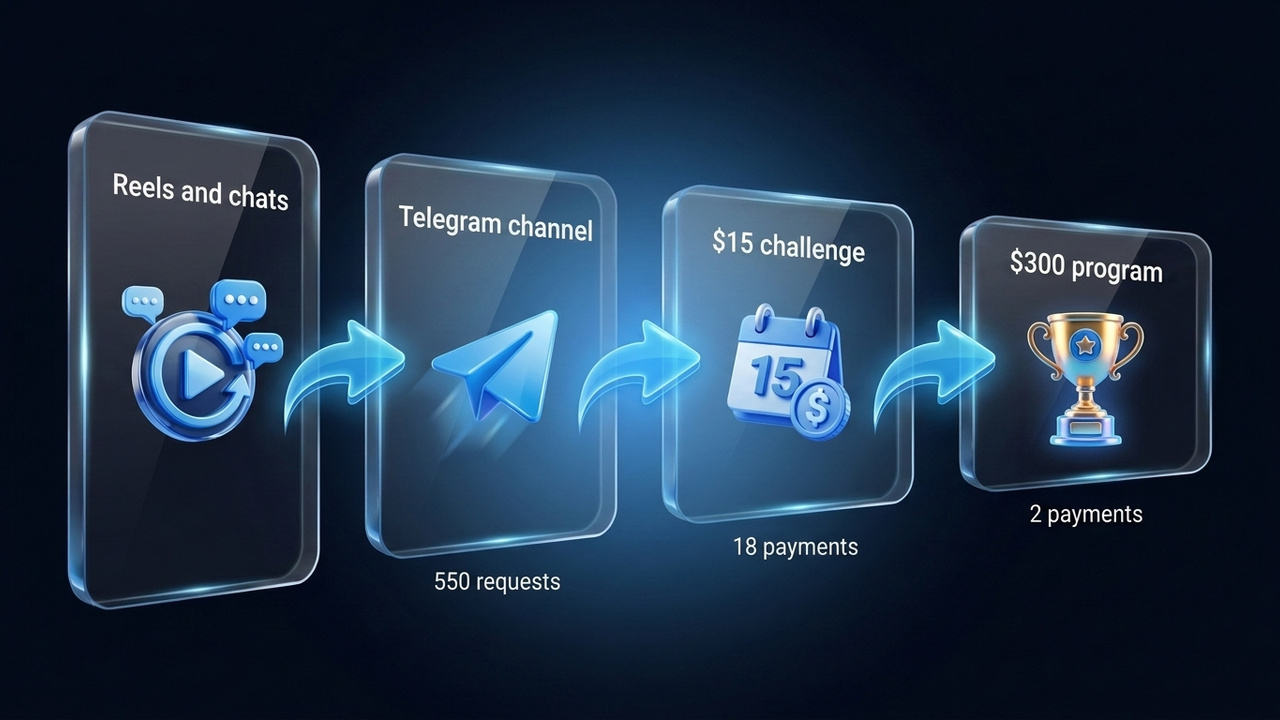
So we built the funnel more carefully. Traffic from Reels and Telegram leads to a feed where readers follow the specialist and warm up over time. Then they buy a cheap $10–15 product, get a week of value plus other participants' results, and at the end they are offered a $300 program.
In other words, the funnel moves a viewer up step by step: a follow, a small purchase, the main offer. That is how cold strangers become paying nutrition clients.
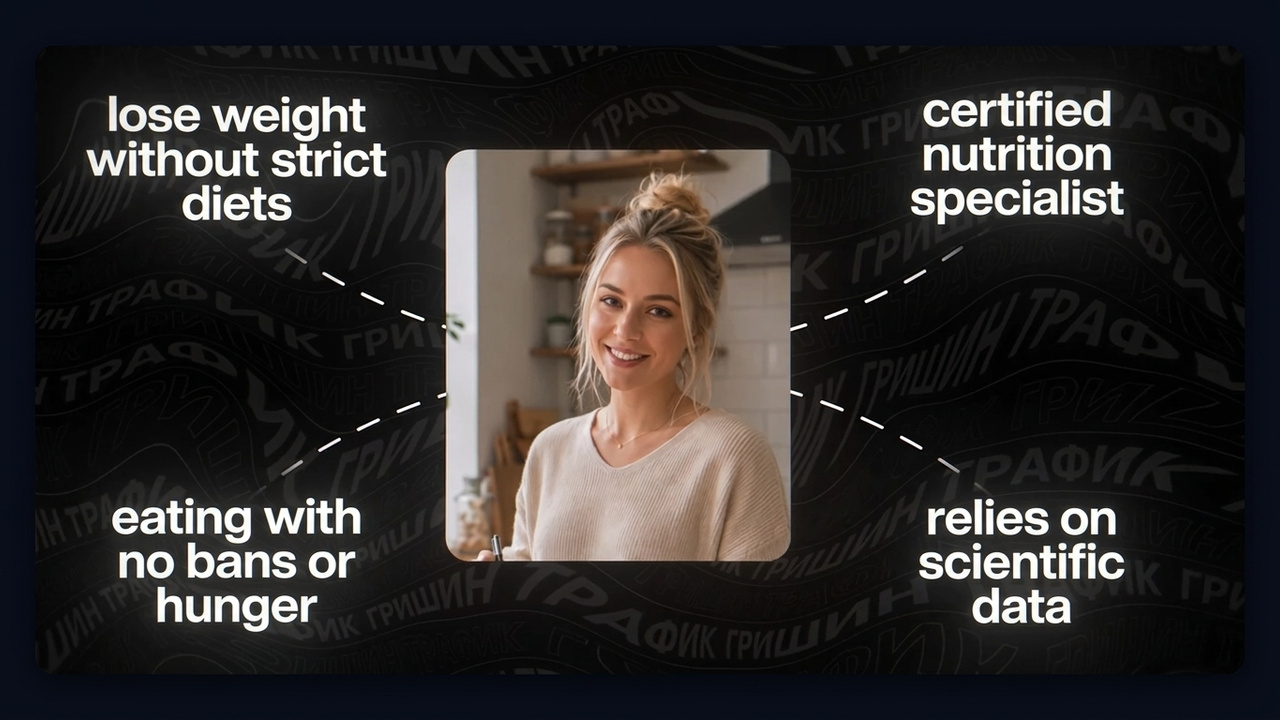
The persona also got a clear positioning from the start: losing weight without strict diets, a certified specialist, eating with no bans and an approach backed by science.
Our Case: 550 Requests in 14 Days From Scratch
The goal was simple: within two weeks, bring in buyers. Weight loss fit because folks gladly pay for a clear answer: a diet, a challenge or one-on-one support.
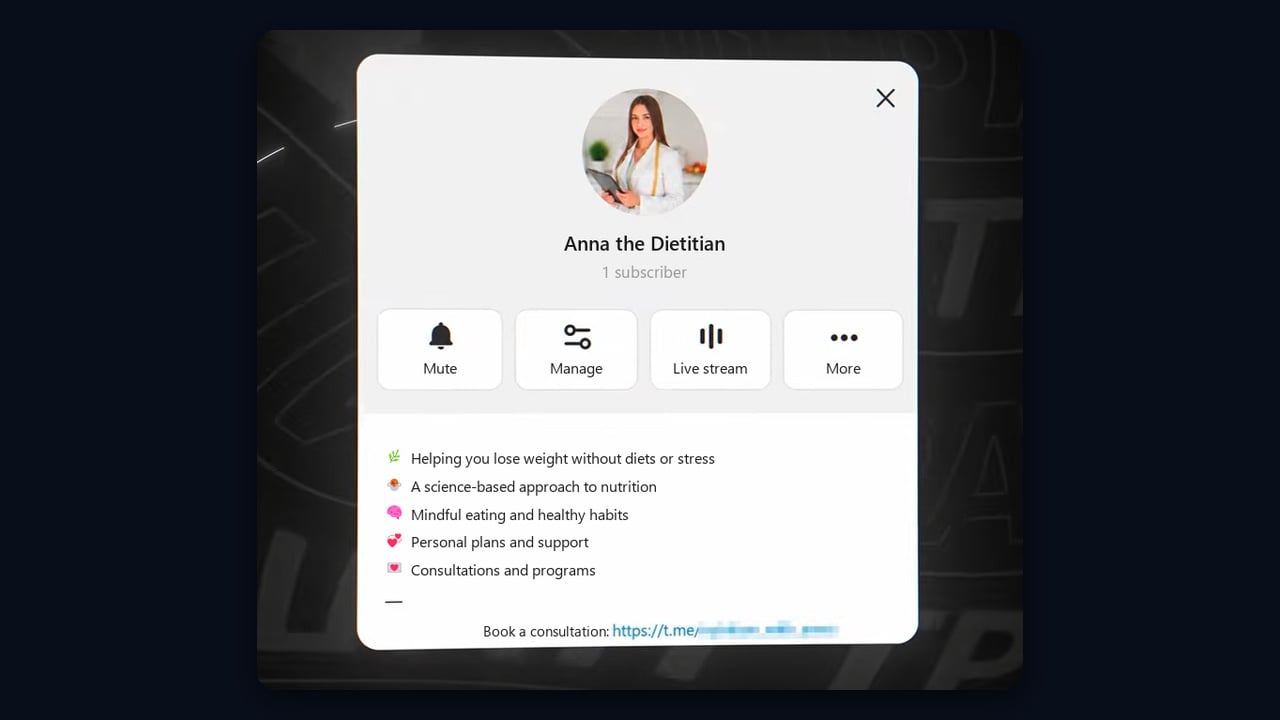
This is the dietitian's channel on day one: a neat bio and exactly one subscriber. With no audience, no buyers and no product, every step was checked against numbers: views, clicks to Telegram, requests and payments.
The Expert and the Content: An AI Dietitian in Two Days
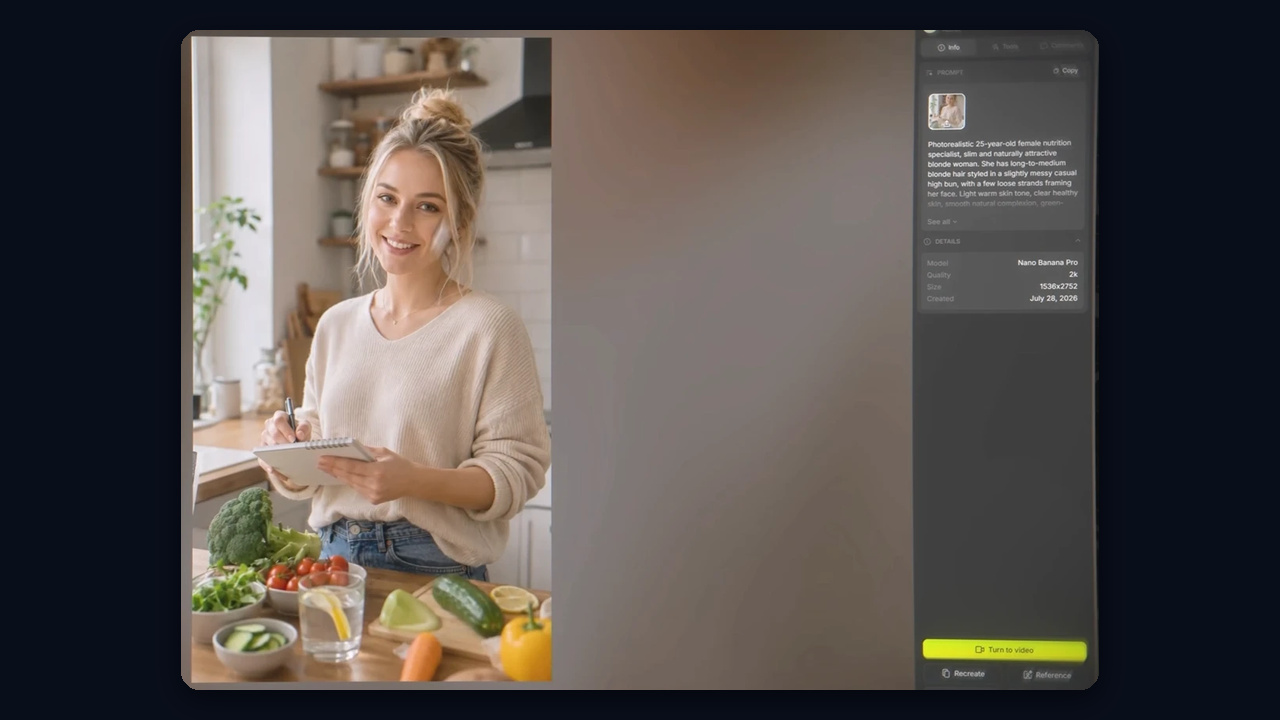
Hiring a real dietitian for a test made little sense, so Nano Banana Pro generated an AI persona from a detailed prompt: an ordinary modern specialist, not an ad model. Then came a backstory: who she is, her approach to weight loss and why people should listen.
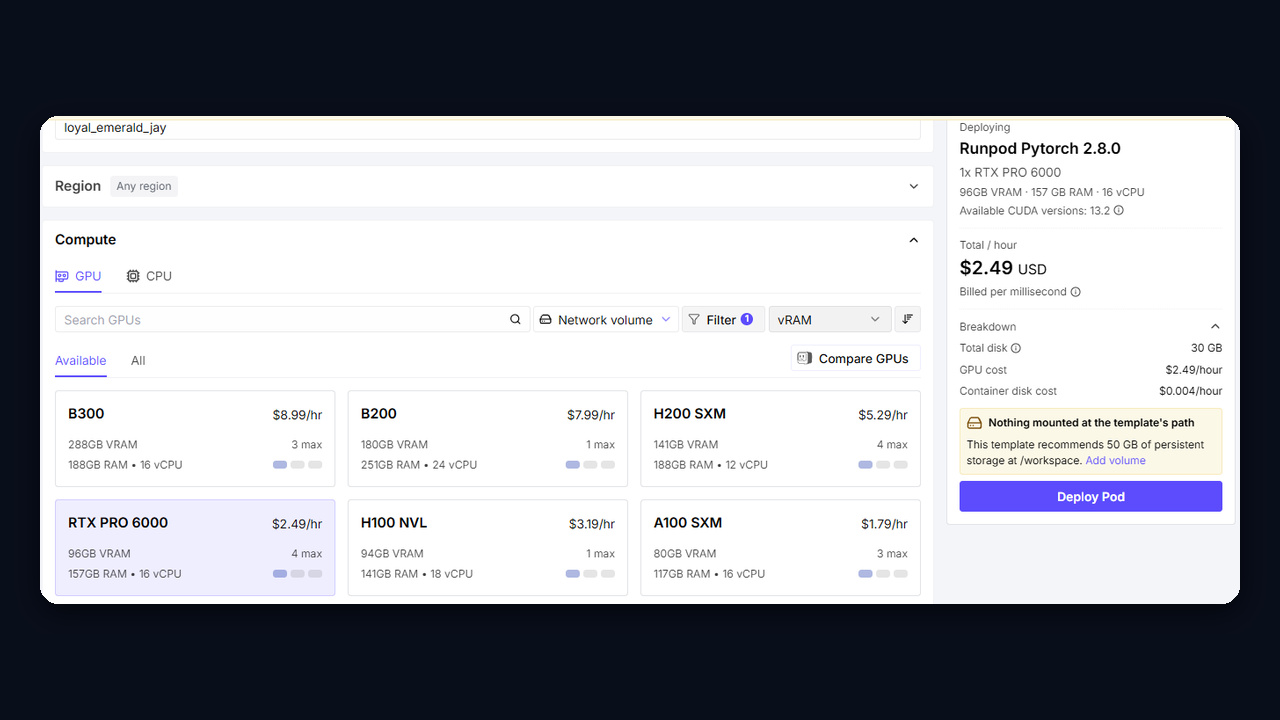
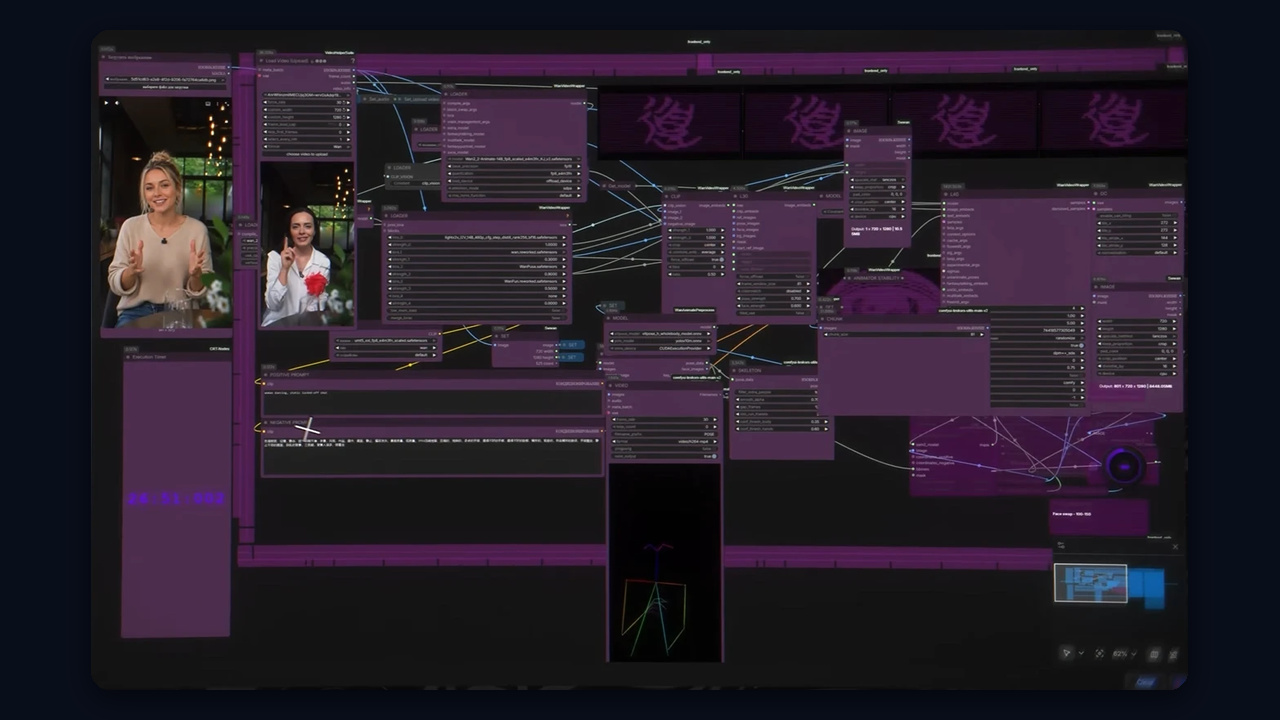
Video was the real challenge, since a virtual person cannot be filmed. So we rented a GPU on Runpod, where reference-based clips render fast and in good quality, much like when we built an AI girl farm.
From there, content came two ways:
Reference clips. We pick a strong video from another dietitian and generate the main clip from it with our persona's face.
Own footage. We film the source ourselves, our moves and facial expressions transfer to the persona, and a voice-over is added.
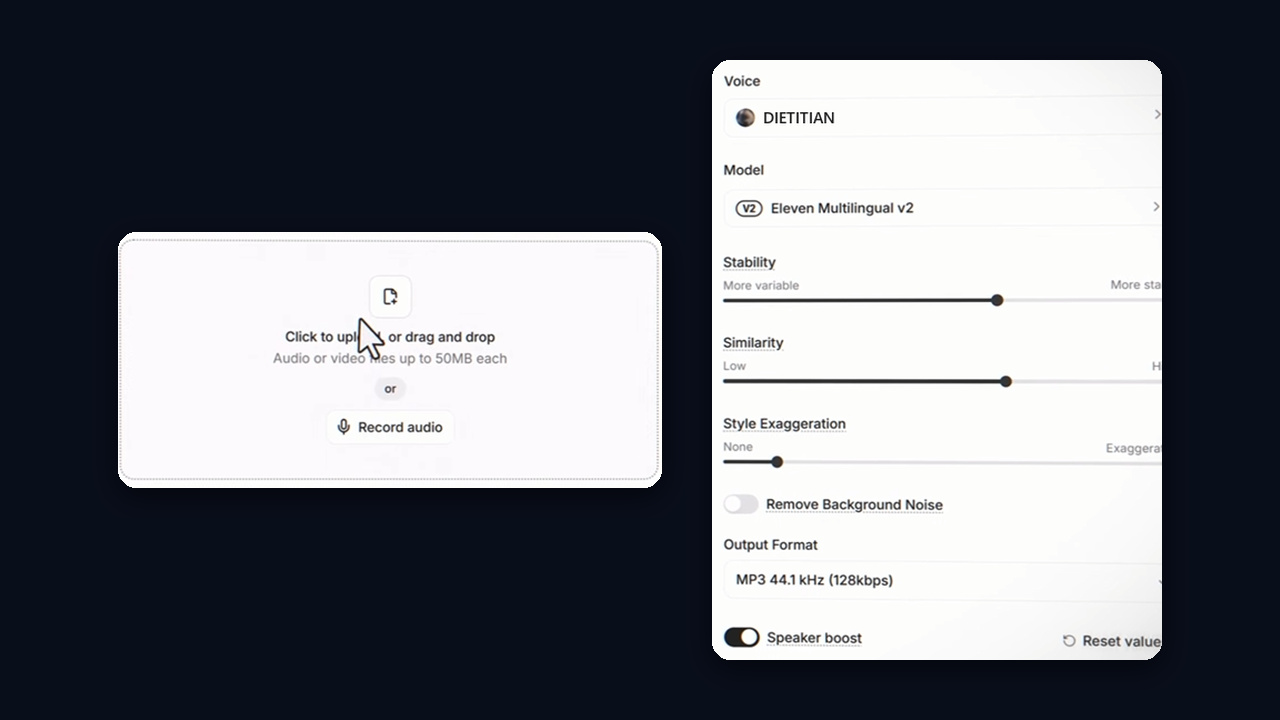
Next, Voice Changer ran each track through the dietitian's cloned voice, so every clip sounds the same.
With our own footage, the moves and expressions transfer straight to the persona.
As a result, we had high-volume Reels plus controllable videos for sales. The persona was ready by day two, but would anyone trust her?
The First Product: A $15 Challenge
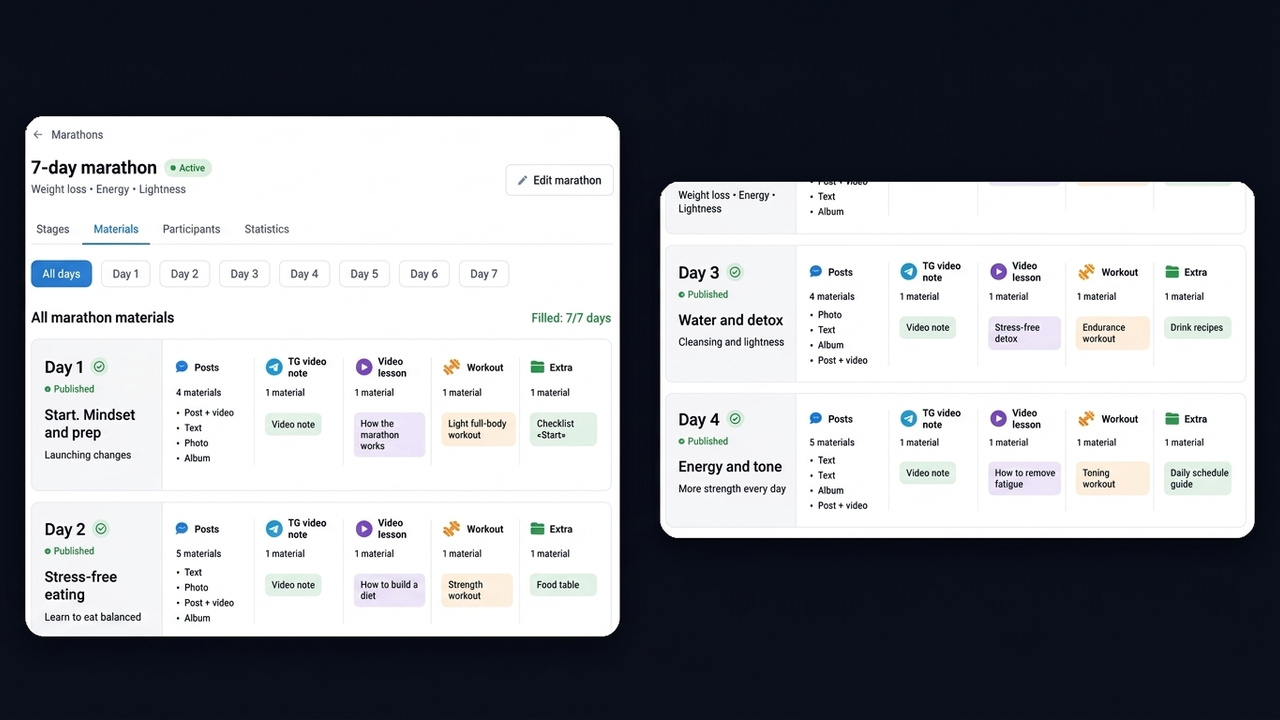
Selling a $300 course from an unknown name would go nowhere, so the first product became a 7-day challenge for $15. We took the structure from forum challenges (meals, calories, activity, weight tracking, daily tasks) and rebuilt it with AI, down to the menus and infographics.
The video lessons were made the same way as in the first days: a reference, generation with the persona's face and a voice-over.
Instead of one file, the challenge lives in a Telegram bot: every day it sends a video lesson, a plan and other participants' results. For example, on day two people send their measurements and get more personal tips.
By the end of day three, payments were connected and the whole chain was tested. The product was ready; now it needed people.
How to Attract Clients as a Nutritionist in Telegram Groups
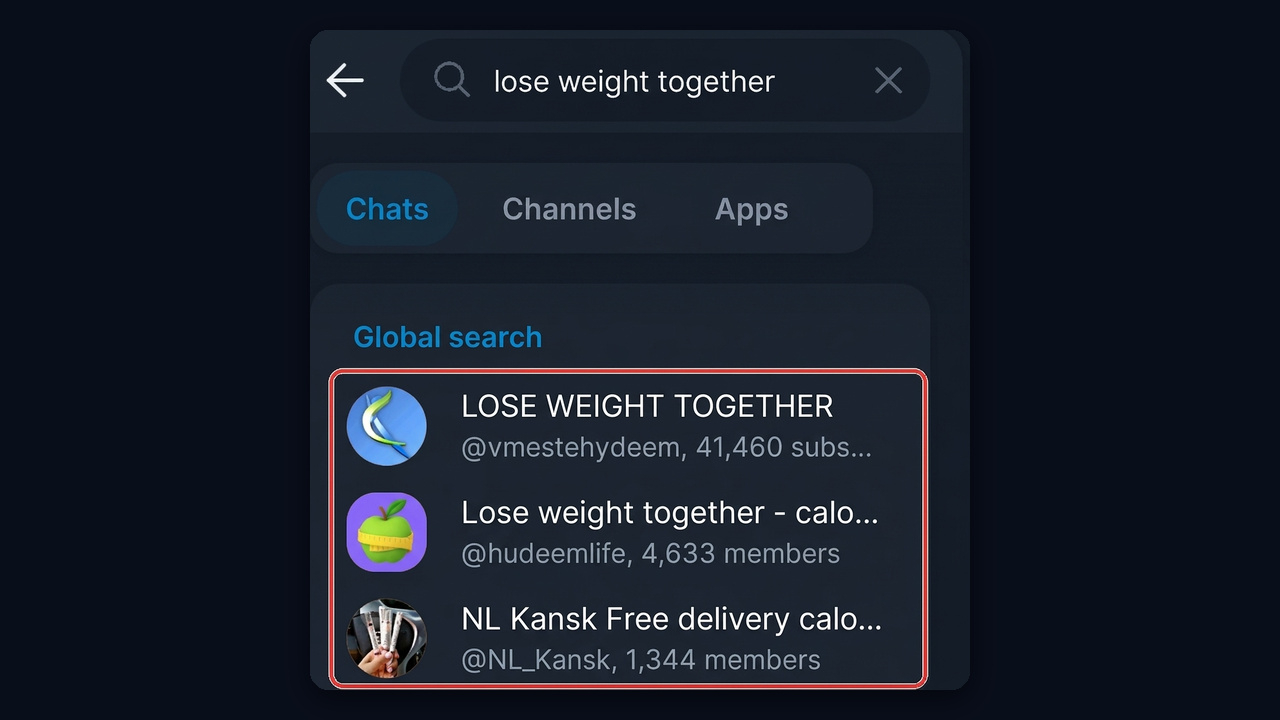
From day five we started driving traffic, and the most controllable source was NeuroChatting in GramGPT.io. The same service collected a base of 320 groups where the target audience already gathers: slimming, healthy eating, recipes, women's communities, beauty and fitness.
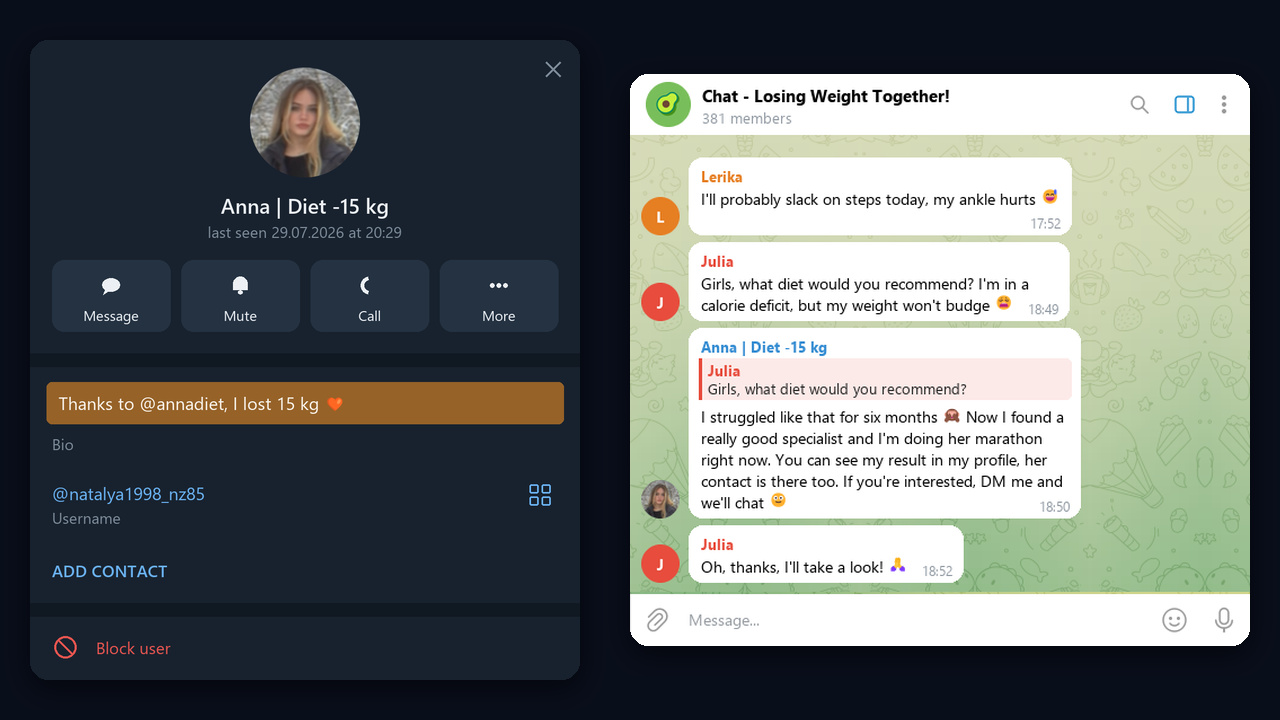
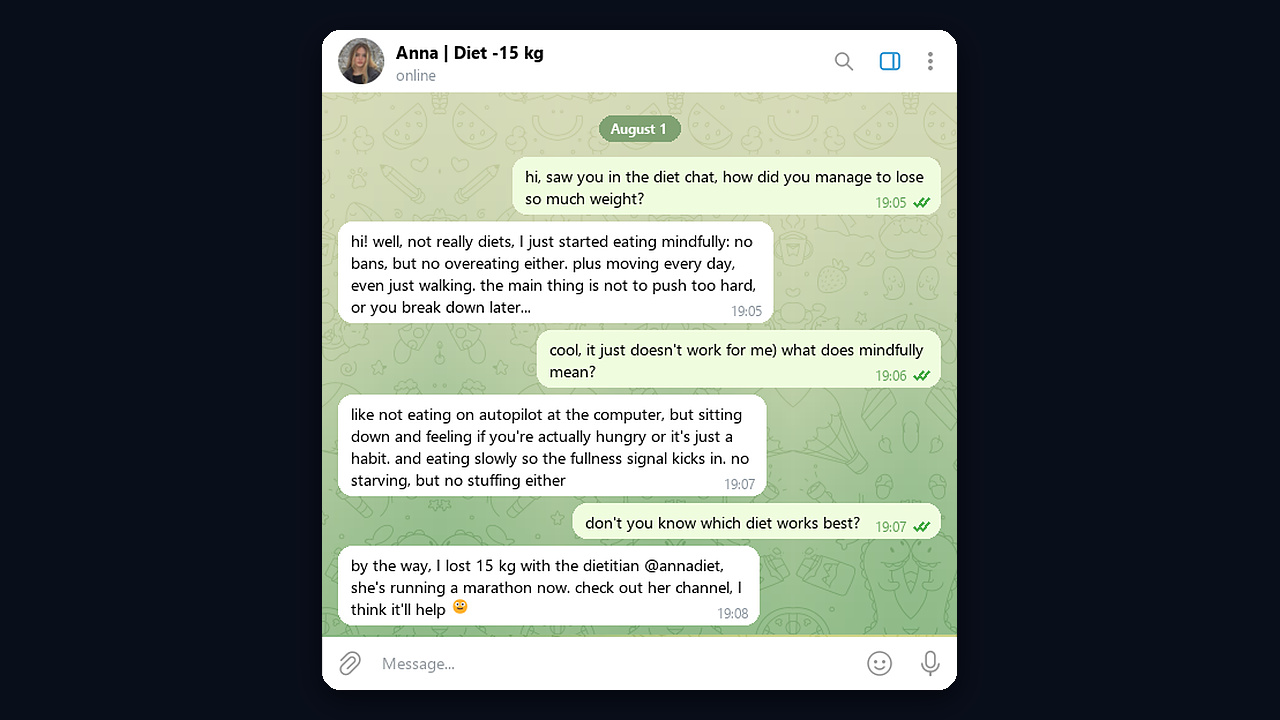
The accounts looked like ordinary topic profiles, not ads: "Irina, lost 22 lbs", "Anna | Diet −15 kg", each with a thank-you to the dietitian in the bio. Most of their messages were normal conversation, and the dietitian came up only when it fit, as in this reply.
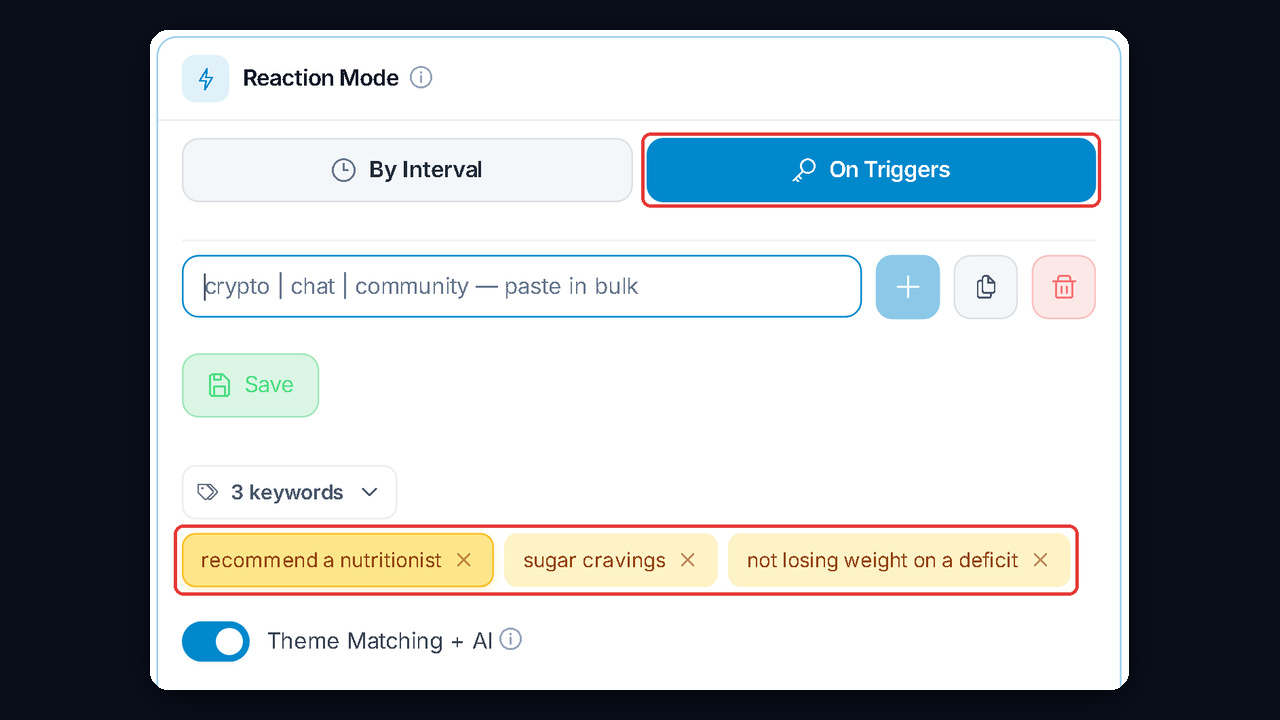
On top of that, NeuroChatting can react to triggers: an account replies when someone writes "recommend a nutritionist" or "not losing weight on a deficit".
The real value began when someone wrote to an account directly: AI answered questions, kept the context and invited the person to the channel at the right moment. Here is such a dialog with future nutrition clients:
As a result, instead of one Instagram algorithm, a whole network of Telegram accounts was working in dozens of groups. By day eight, the first nutrition clients from cold traffic had arrived as 62 join requests: 39 from NeuroChatting and 23 from Reels.
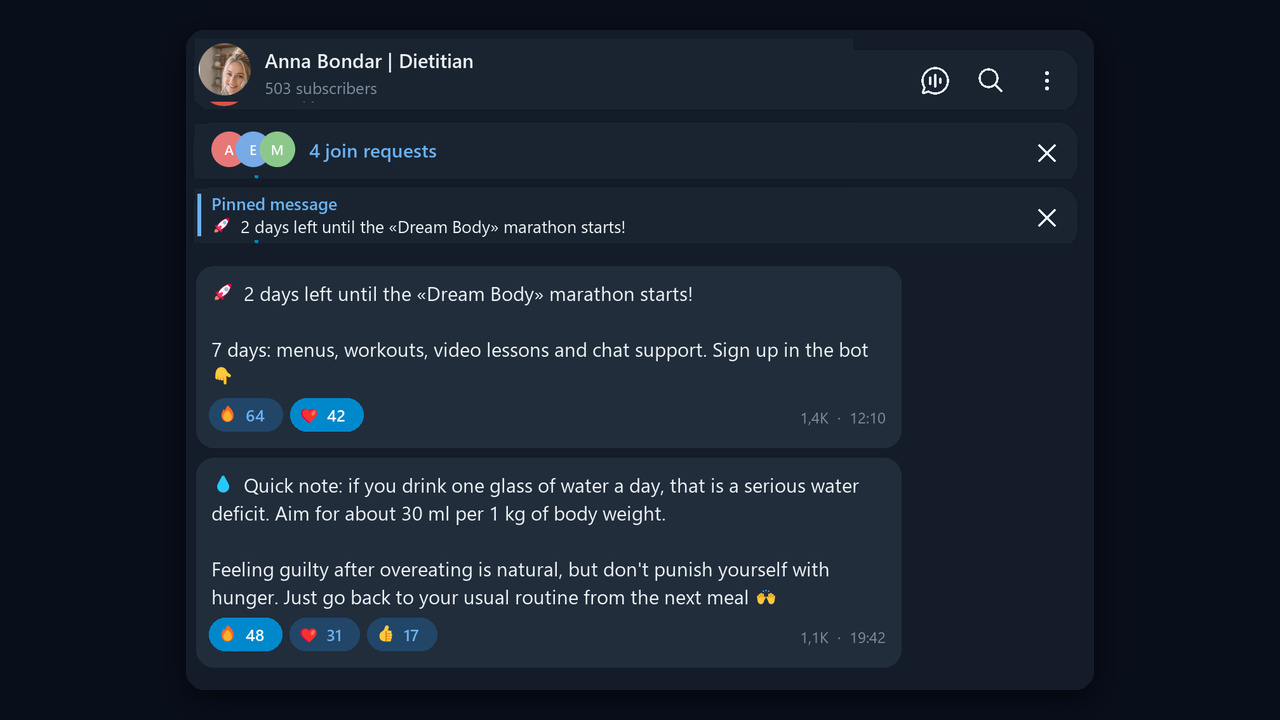
From then on the channel got daily posts: recipes, polls, video notes and program results, so newcomers saw a living expert rather than an empty storefront. Here it is by the end of week two.
Recommendations in Groups and Channels: NeuroShilling and the First Payments
With six days left, one more source came in: NeuroShilling. These are scripted conversations: one account asks a question, another answers, a third keeps the talk going, and the dietitian's name comes up naturally. Then the accounts move to the next channel and repeat the script.
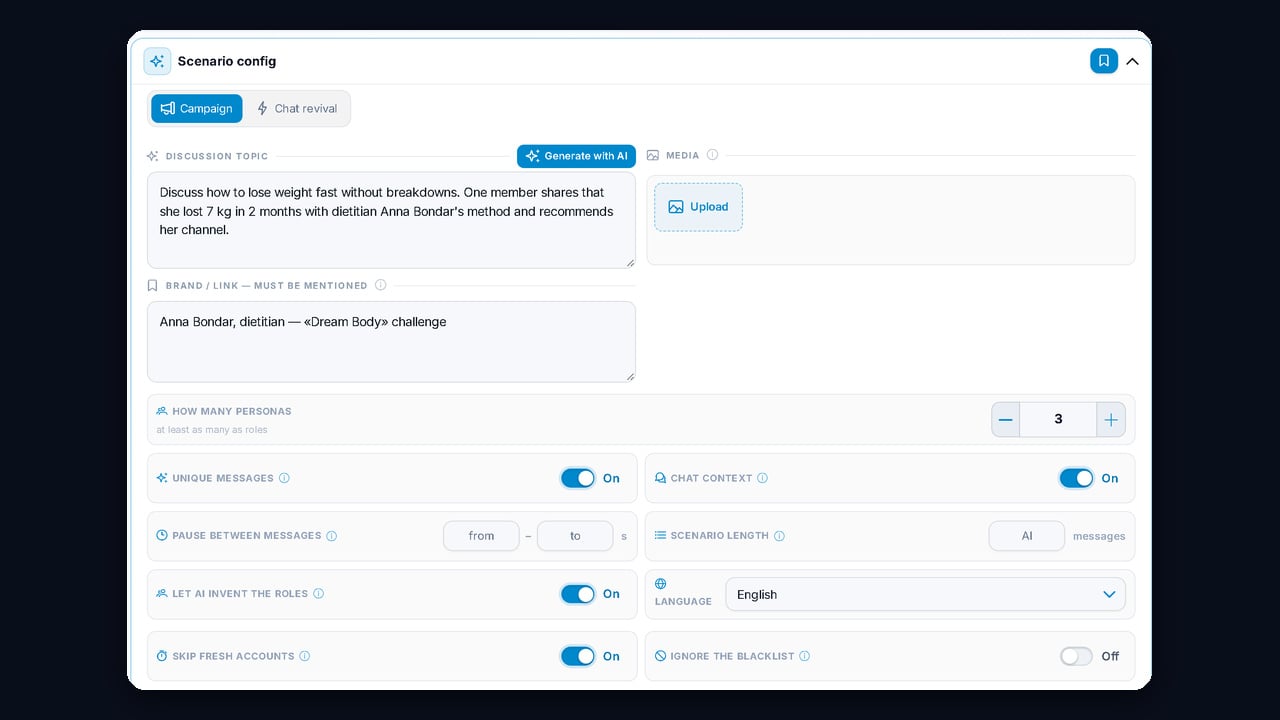
In the GramGPT dashboard the scenario takes two minutes: a topic, the brand to mention, the number of personas and the language, while AI writes the roles and lines.
Unlike NeuroChatting, here the accounts talk to each other, and the scripts also run in channel comments, which far outnumber slimming groups.
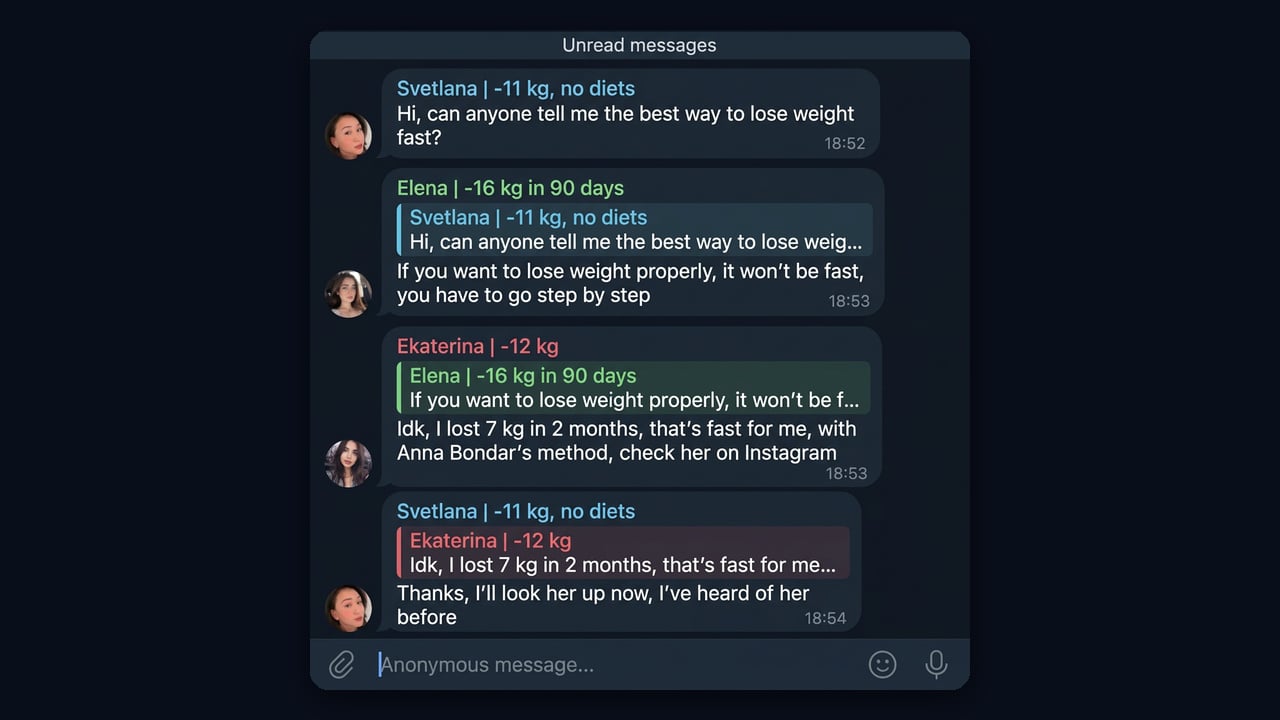
Here is how it looked in a real group: Svetlana asks how to lose weight fast, Elena advises taking it slow, and Ekaterina shares her result with Anna Bondar's method. For members it is an ordinary chat, while for the dietitian it is a warm recommendation.
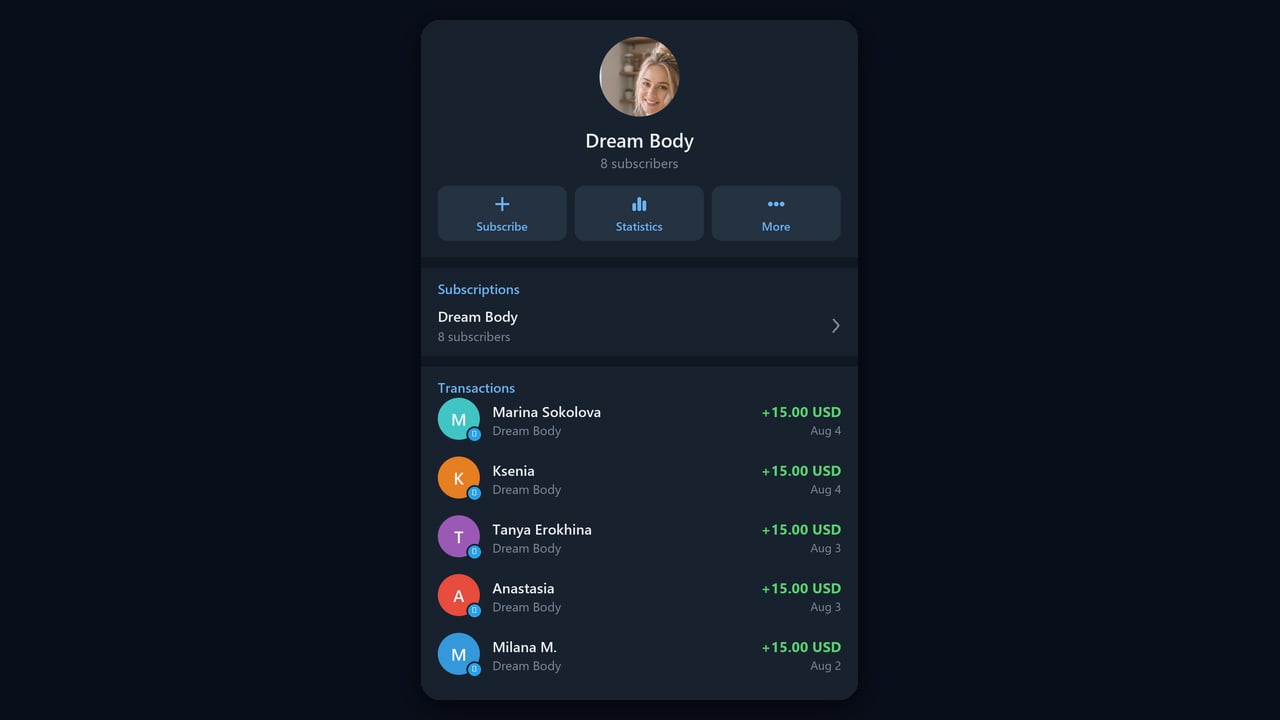
The first payment arrived on day nine: someone found the dietitian, watched the content and paid $15. One sale proves nothing, so we left the system alone for four days. The channel gained 270 subscribers, and seven more nutrition clients bought the challenge, mostly persuaded by video notes.
Short Videos: Reels, TikTok and Shorts
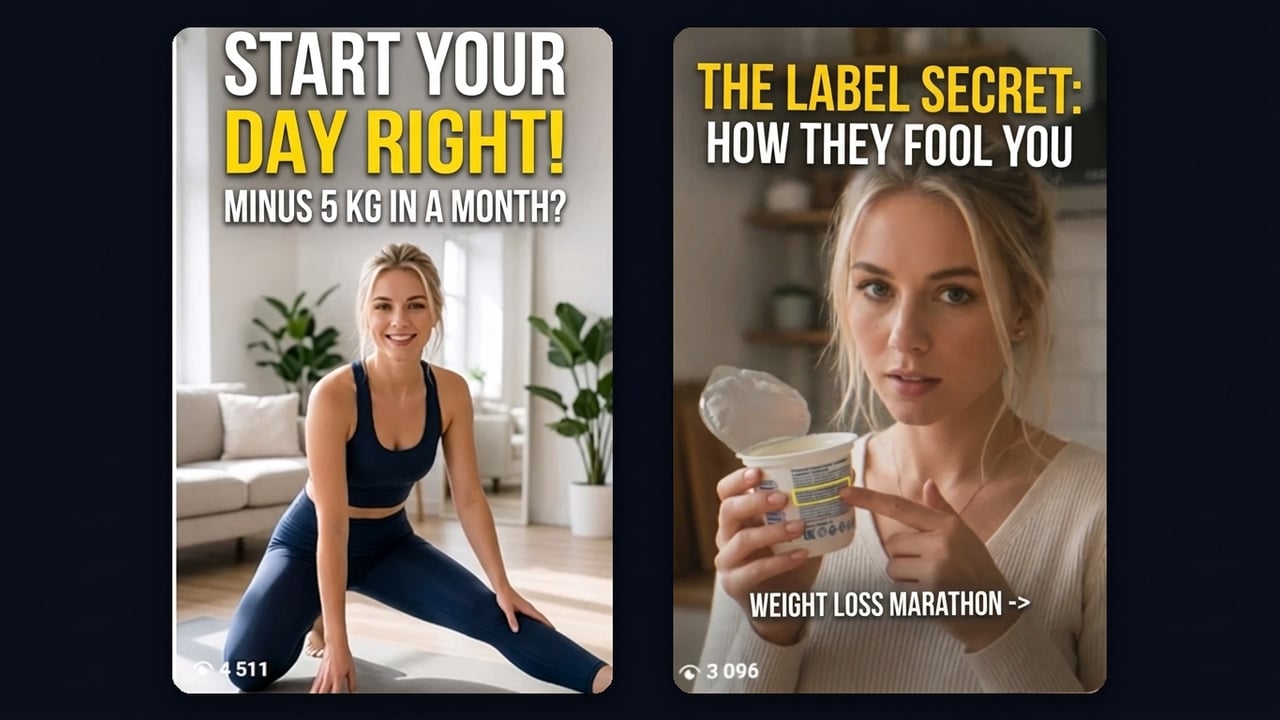
Alongside the groups, a second source was running: short videos. Videos went out on four warmed-up accounts, each on its own phone. At first things looked grim, as the early clips barely got any reach. Then one video passed 3,000 views, so we kept repeating the format that worked.
The best performers were a healthy breakfast recipe with gram amounts and "5 myths about losing weight" with a call to follow: 7,000 and 4,000 views. The first join requests arrived, but an empty channel inspires no trust, so we bought 200 starter subscribers first.
On the final day, one Reel finally took off: 10,000 views, then 50,000, and over 150,000 by the end. That single video brought about 120 new join requests.
Nutritionist Marketing: Which Ads Work
We skipped paid ads in the case, so here is the short version. Dietitian marketing with ads pays off only when a funnel stands behind it: a useful channel, a cheap entry product and a clear offer. Otherwise a cold visitor sees the post, clicks and leaves.
Sponsored posts in health, fitness and parenting channels. A useful post such as "a week of meals without cravings" plus a link to your channel. Check views and real comments before you pay.
Telegram Ads. Official ads targeted by topic. They fit once your feed already pays for itself, because the entry threshold is high.
We covered prices and how to vet placements in our article on Telegram ads.
Clients Without Your Own Course: A Revenue-Share Partnership
Early participants reached the end of the challenge, where they were offered full coaching for $300. And someone bought it: Ira, 42, did not even wait for the week to end. However, the $300 course did not exist yet, because nobody expected a sale that early.
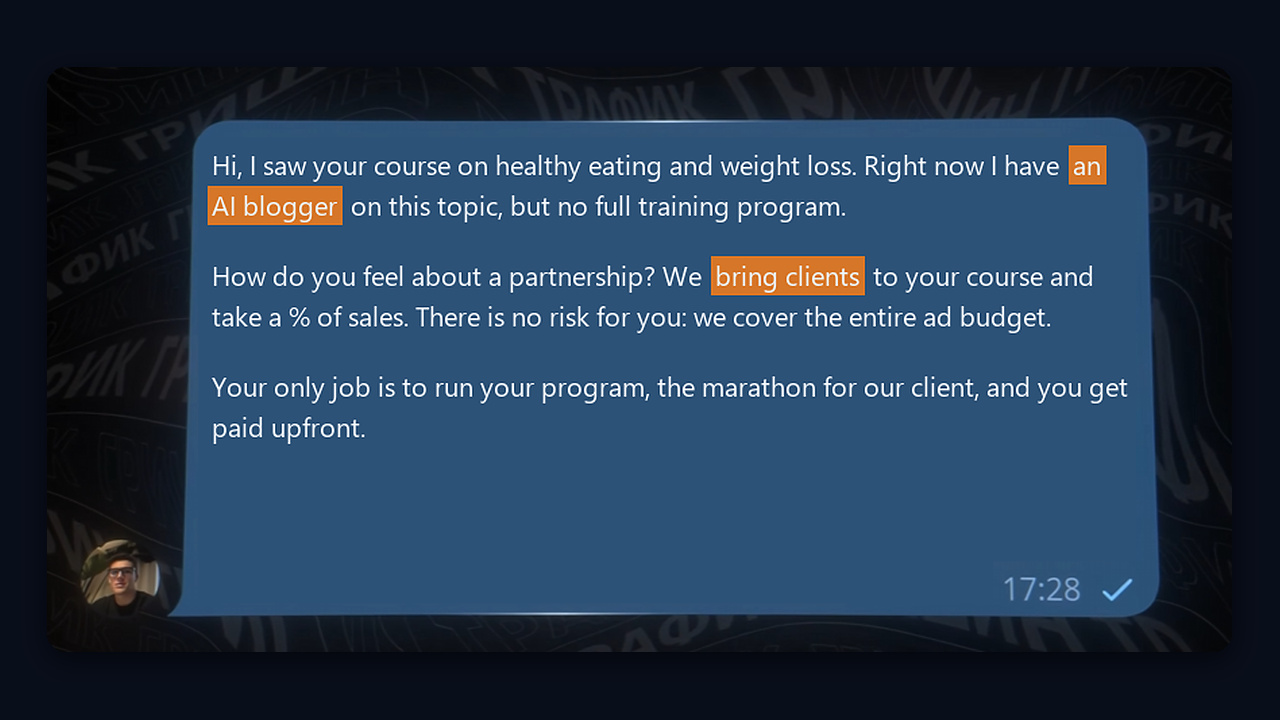
Rather than build a course ourselves, we pitched specialists a simple model: we bring buyers, the expert owns the product and the results. The message looked roughly like this:
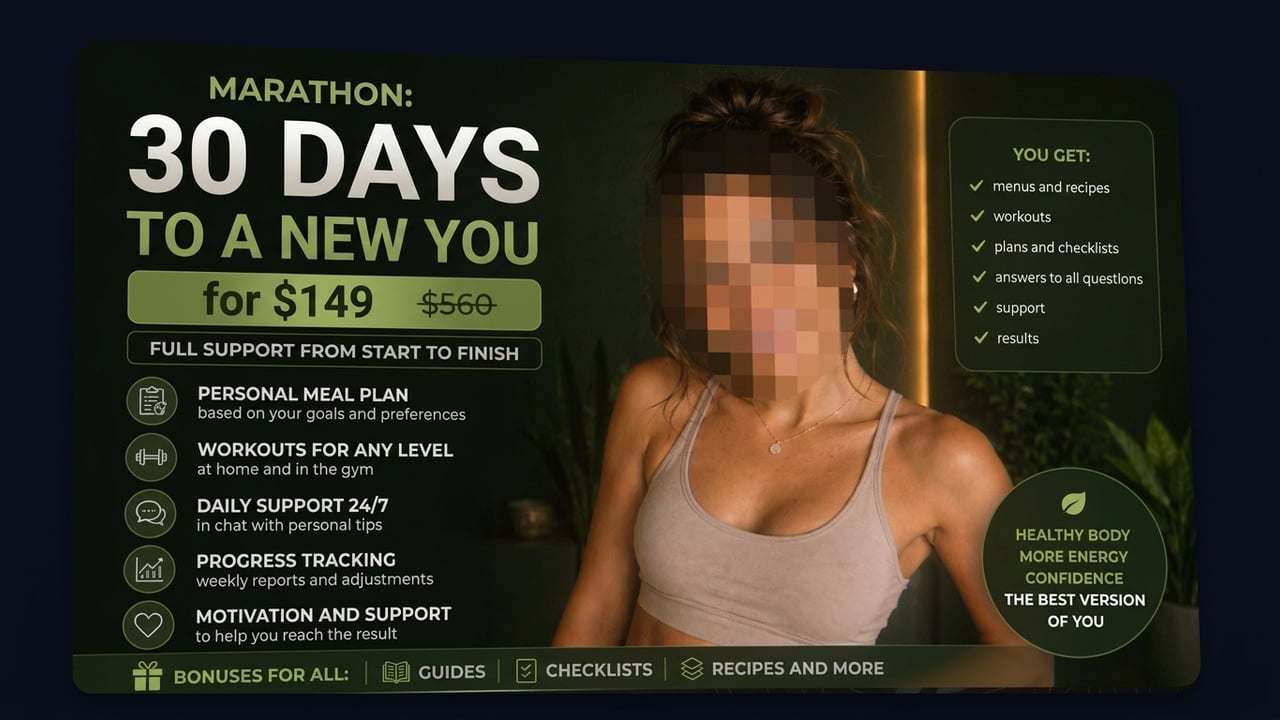
In the end we partnered with a dietitian who already ran a 30-day coaching program, for $150 per person.
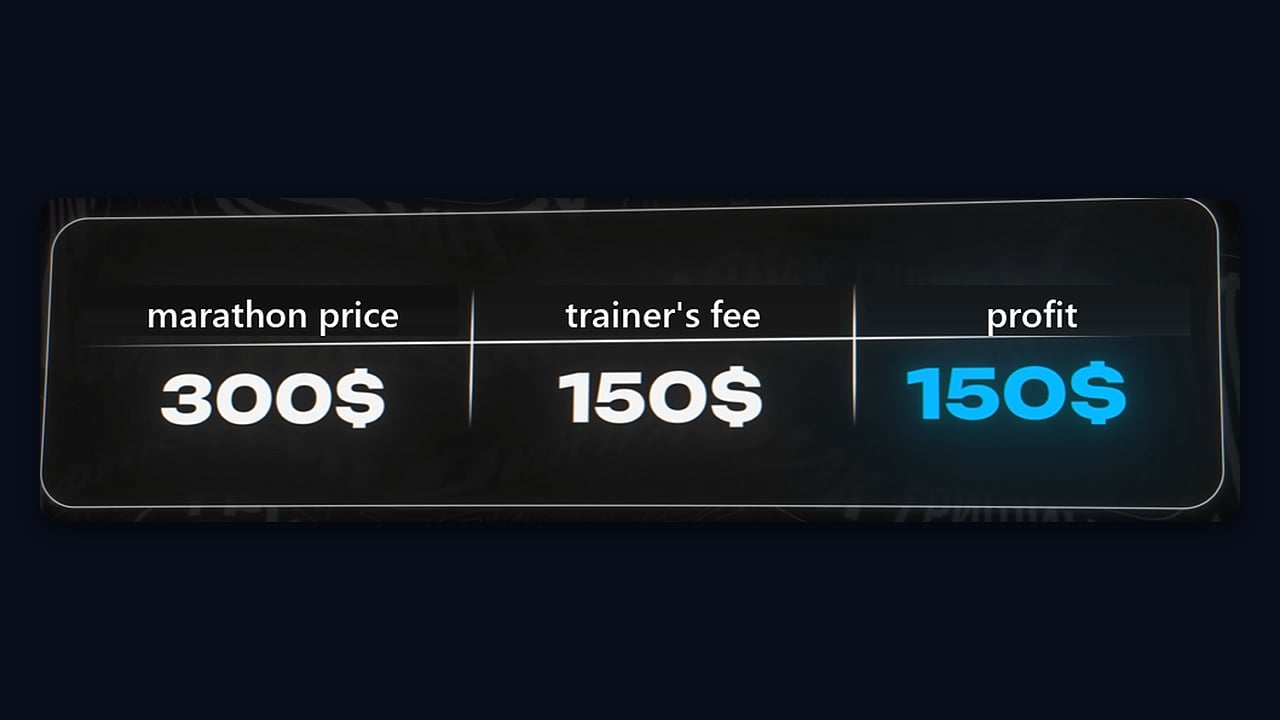
So the program sells for $300, the specialist gets $150, and the rest stays in the model.
Takeaway for nutritionists: this model works the other way too. If you have a program but no traffic, team up with people who know how to bring buyers and pay them a share.
Case Results: Nutrition Clients in Numbers
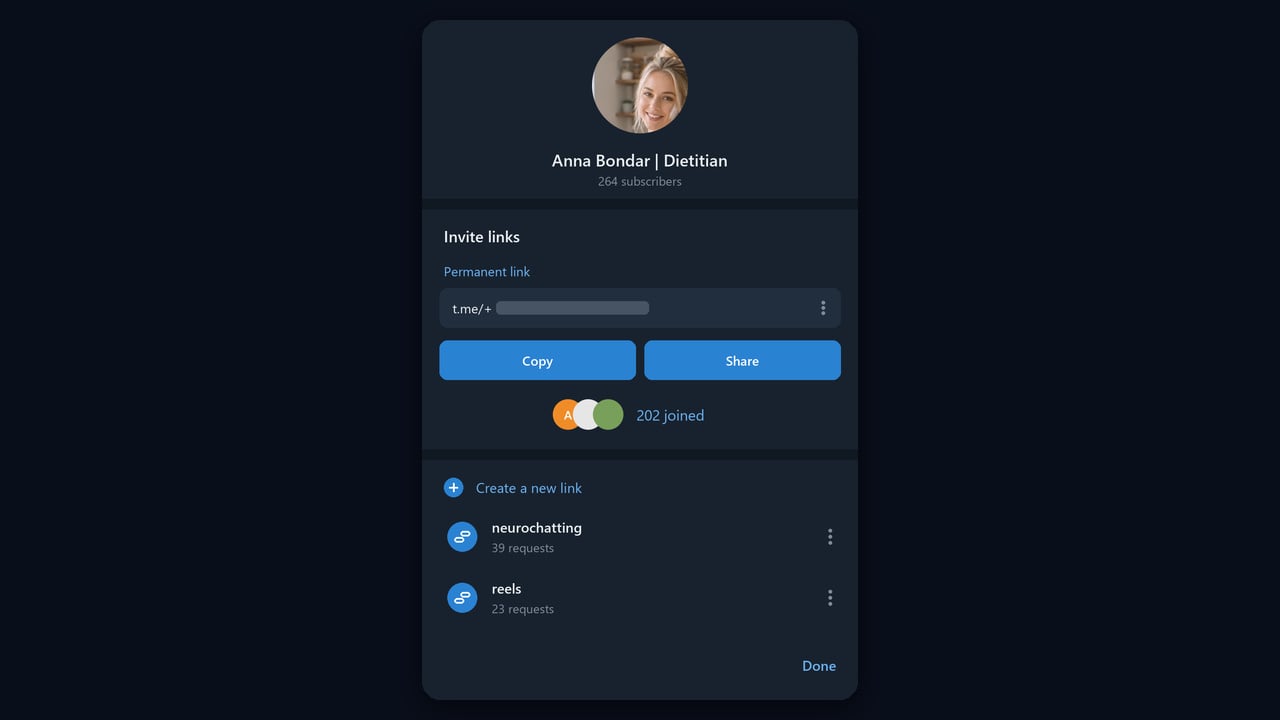
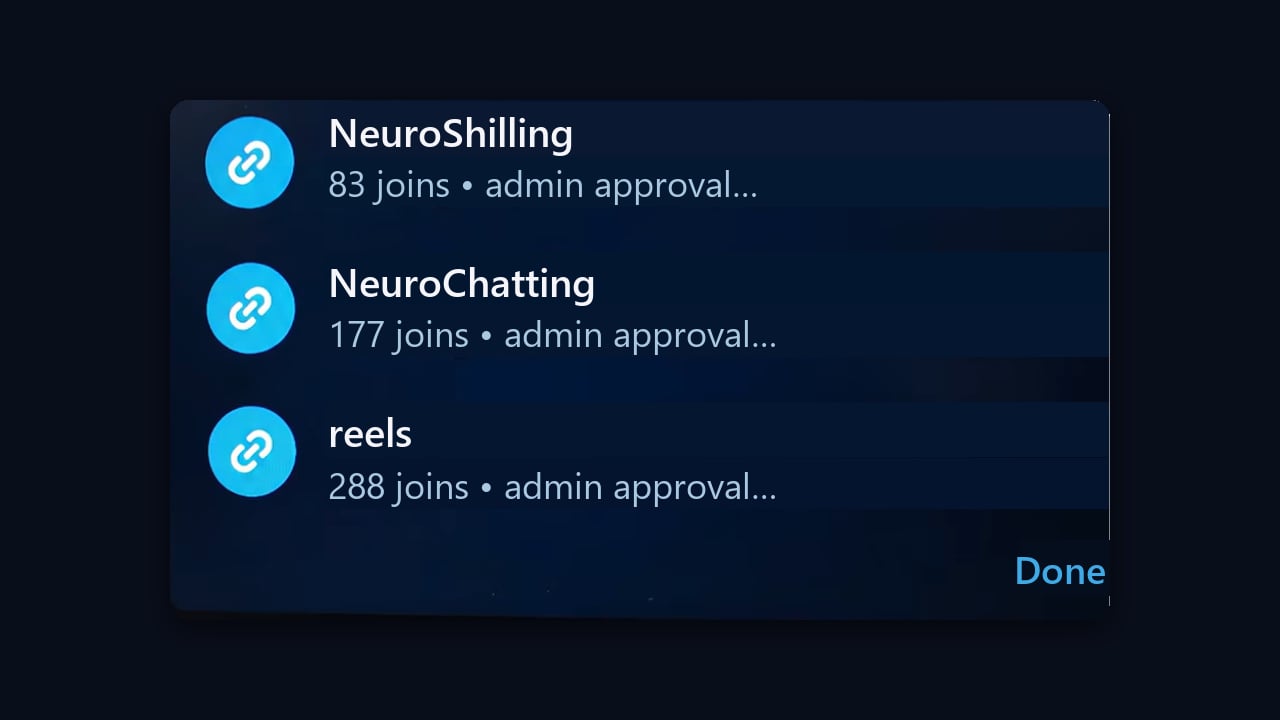
Invite links show what each source delivered: Reels 288 joins, NeuroChatting 177, NeuroShilling 83.
Metric
Result
Requests to the Telegram channel
about 550
$15 challenges
18 payments, $270
$300 programs
2 payments, $600
Revenue
$870
Costs
$300 specialist, $120 content, accounts and proxies, $130 GramGPT subscription
Net profit
about $320 in 14 days
The point was never the $320 but testing the system: now we know which sources and videos bring requests cheaper and how Telegram turns a cold audience into buyers.
Is It Worth Doing? Our Verdict
Our answer may surprise you: for us personally, no. The topic is not ours, guiding people with obesity without a real expert risks their health, and the same mechanics earn more elsewhere.
But if you are a dietitian, nutritionist or fitness coach, this setup is one of the best you can use. You grow a personal brand with AI clones, cross-post to Reels, TikTok, Shorts and Telegram, and build a subscriber base. Moreover, you already hold the main advantage the virtual persona lacked: real expertise.
How to Get Clients as a Nutritionist or Dietitian: A 6-Step Plan
This is also a practical answer to the classic nutritionist marketing question of how to get clients as a nutritionist and keep nutrition clients coming when you work online.
Package yourself. A photo, a clear specialty and a Telegram channel with recipes, video notes and client results shared with consent.
Offer a cheap entry. A 7-day challenge in a Telegram bot with a coaching offer at the end.
Collect audience groups. Slimming, healthy eating, moms and fitness communities via a chat parser.
Turn on NeuroChatting. Accounts reply in groups while AI handles DMs and sends readers your way.
Add short videos. Recipes and myth-busting clips with a call to follow the channel.
Track every source. A separate invite link per traffic channel shows what actually works.
How do you find clients as a dietitian? The same way: clients come from the same groups and videos, and only the emphasis shifts toward credentials and lab work. So start with a low-priced consultation or challenge, not a monthly program.
Our experiment showed that nutrition clients in 2026 come from a combination of sources, not a single one. Telegram groups provide a controllable flow of requests, short videos bring reach, the channel warms people up, and a cheap challenge turns followers into buyers.
Client search in groups, replies and DMs can be automated with GramGPT.io, leaving your time for the clients themselves.
FAQ
In Telegram groups about weight loss, healthy eating and fitness, where people ask for advice and an expert reply leads to the channel.