Imagine you promote a VPN bot and pay for a sponsored post (a shoutout) in an entertainment channel with 100K followers. As a result, 2,000 clicks and only 11 people started a free trial. However, it later turns out the channel is read by teenagers without their own cards, while people who actually pay for a VPN travel a lot and work with tools abroad. The budget burned because nobody had mapped the Telegram target audience first.
Yet most advice stops at "pick a popular channel" or "post great content". Telegram, however, has no interest targeting like social networks do, and random reach rarely converts.
This guide shows how to build an audience portrait in 2026, where your buyers actually hang out on Telegram, how to check that a community is alive, and how to collect a list of relevant users with a parser so you can reach them precisely.
What a Telegram Target Audience Really Is
Your target audience is the group of people whose problem your product solves and who are willing to pay for it. Put simply, they buy rather than just read. On Telegram, however, they are not gathered in one place; they are scattered across thousands of niche chats, channels and comment threads.
That is why relevant followers and random ones are different things. For example, someone who joined for a giveaway may never purchase anything. A real prospect, by contrast, asks questions in chats, argues under rival posts and belongs to professional communities. So those traces are exactly how you find them.
Therefore, a Telegram target audience is searched for by behaviour, not by age or gender. What does the person discuss, which chats are they in, what do they follow, what do they ask?
Audience Analysis: Portrait and Segments
Before searching, describe who you are looking for. So first gather facts, then turn them into a portrait: it takes about thirty minutes but saves weeks of blind tests.
Audience Analysis Methods
Market and audience research does not require an expensive agency. First, study competitors: who comments on their posts and what they ask. Second, analyze needs through questions in chats and DMs. Third, ask five or six questions to real customers or run a poll. For example, "my work apps won't open abroad" and "need a VPN for my trip" reveal two different needs and two offers.
Audience Portrait: Six Questions
Next, answer six questions and put the answers on one card. That is enough to define your target audience.
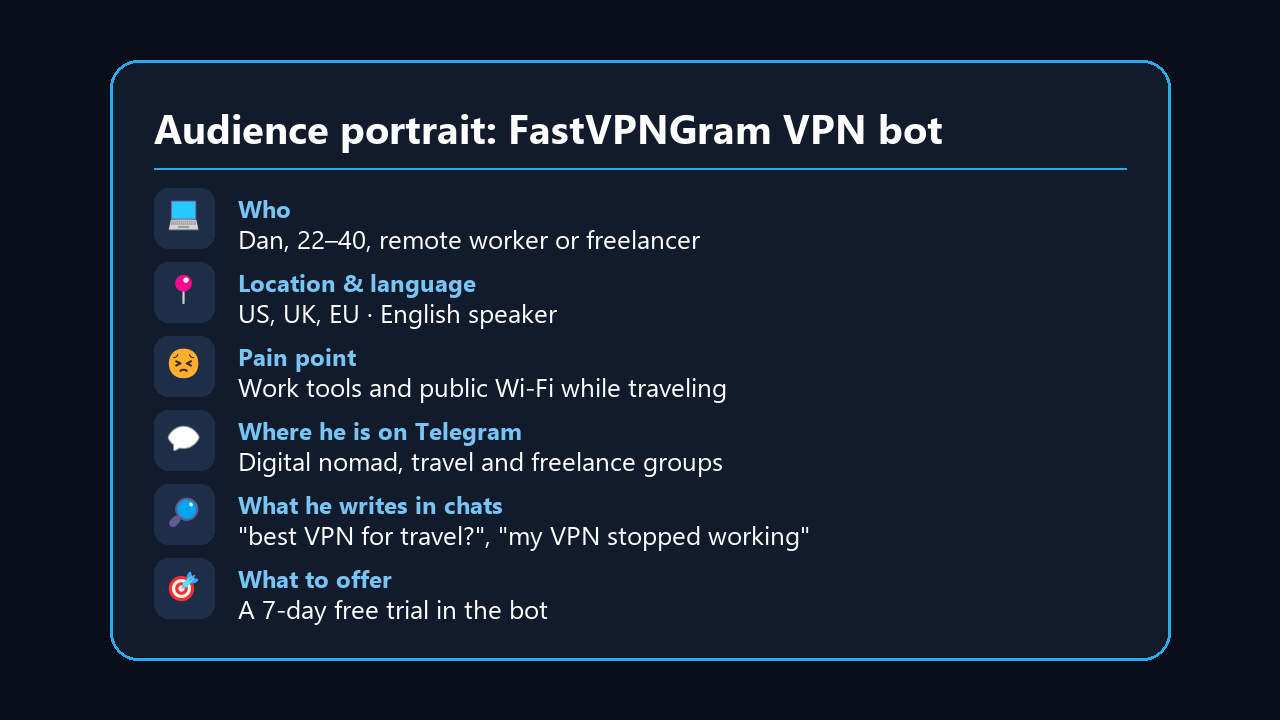
The card above is a filled-in example for the FastVPNGram VPN bot. Note the line about what he writes in chats: real phrases from customers later become your search keywords and reply triggers, that is, words an auto-reply reacts to.
| Question | Why it matters | Sample answer |
|---|---|---|
| Who buys | Income level and role | Remote worker or freelancer aged 22–40, pays personally |
| What hurts | Shapes the offer (your pitch) | Work tools and public Wi-Fi feel unsafe while traveling |
| Location and language | Filters out irrelevant venues | US, UK, EU, English speakers |
| Where the topic is discussed | Your list of venues | Digital nomad, travel and freelance groups |
| Which words they use | Search keys and triggers | "best VPN for travel?", "my VPN stopped working" |
| What to offer first | A soft entry point | A 7-day free trial in the bot |
If the answers split, break your audience into segments, that is, clusters with different needs. For instance, the same VPN bot serves travelers and freelancers with clients abroad. Those are different users in different chats, so treat them separately.
You do not have to hunt for each segment by hand. The easiest way to collect them is the GramGPT.io user parser: in minutes it gathers members and commenters from niche chats. We will show how it works below with a real example.
How to Analyse the Audience of Your Own Channel
If you already run a channel, for example one linked to your bot, part of the answer is right in front of you. So before hunting for newcomers, study your current followers.
- Channel statistics. First, built-in stats show follower sources, language and hourly activity. For example, if most arrive from search, your name and description are doing their job.
- Polls. A quick "what do you do?" or "what matters most now?" poll gives real segments within a day instead of guesses.
- Comments and reactions. In other words, posts that spark the most discussion reveal what hurts.
- Direct messages. Also, questions you receive in DMs are ready-made wording for future offers.
Finally, compare the real followers with your buyer card. If they differ, your content or ads attract the wrong crowd, and the search needs adjusting.
Where to Find Your Telegram Target Audience
With the buyer card ready, move on to venues. Next come four types of places where buyers reveal themselves, from the warmest to the coldest.
Niche Groups and Communities
This is the main source. In groups users ask for advice and describe their problems, which means they announce their own interest. So use Telegram search with customer phrases, such as "VPN", "digital nomad" or "remote work".
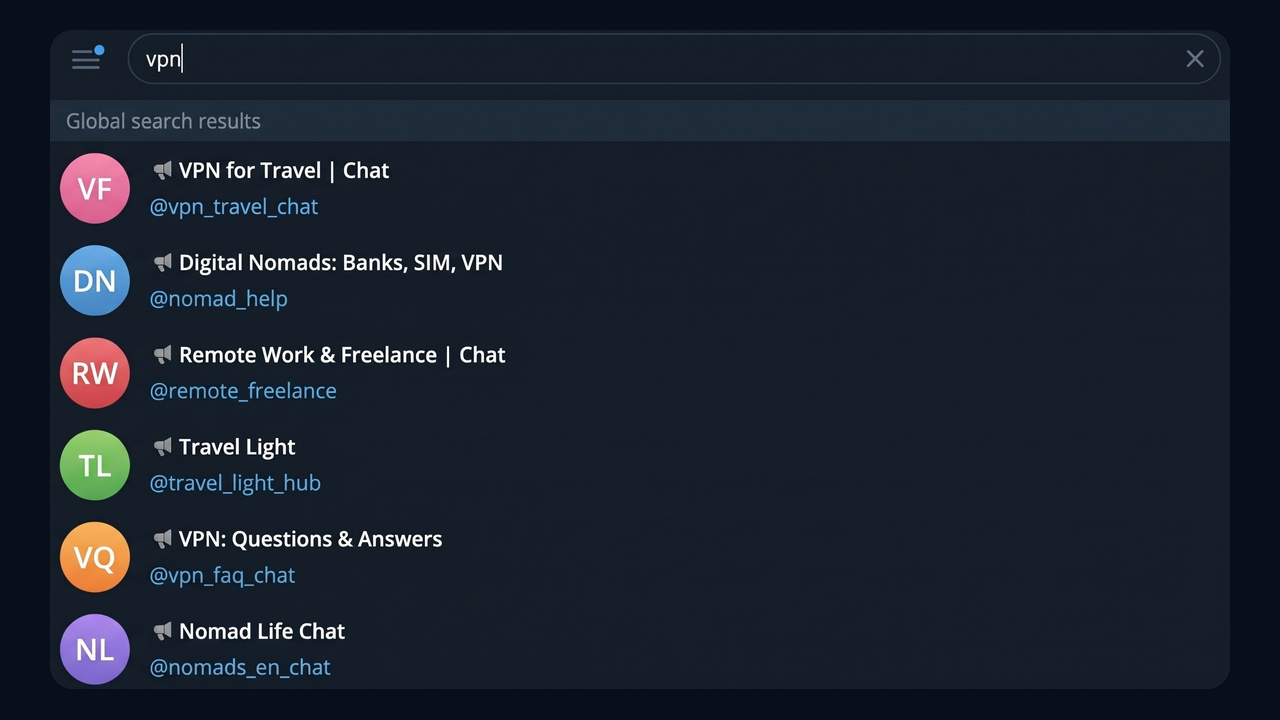
For example, a query like "vpn" instantly surfaces channels and groups where users discuss services and setup. Then prefer discussion groups over broadcast channels, since you can see who writes what. Our guide on how to find Telegram groups covers joining and filtering them.
Comments Under Competitor Posts
The hottest prospects gather in discussions below rival content: they already care about the topic and compare offers. Then open threads under popular posts and see who asks questions or pushes back.
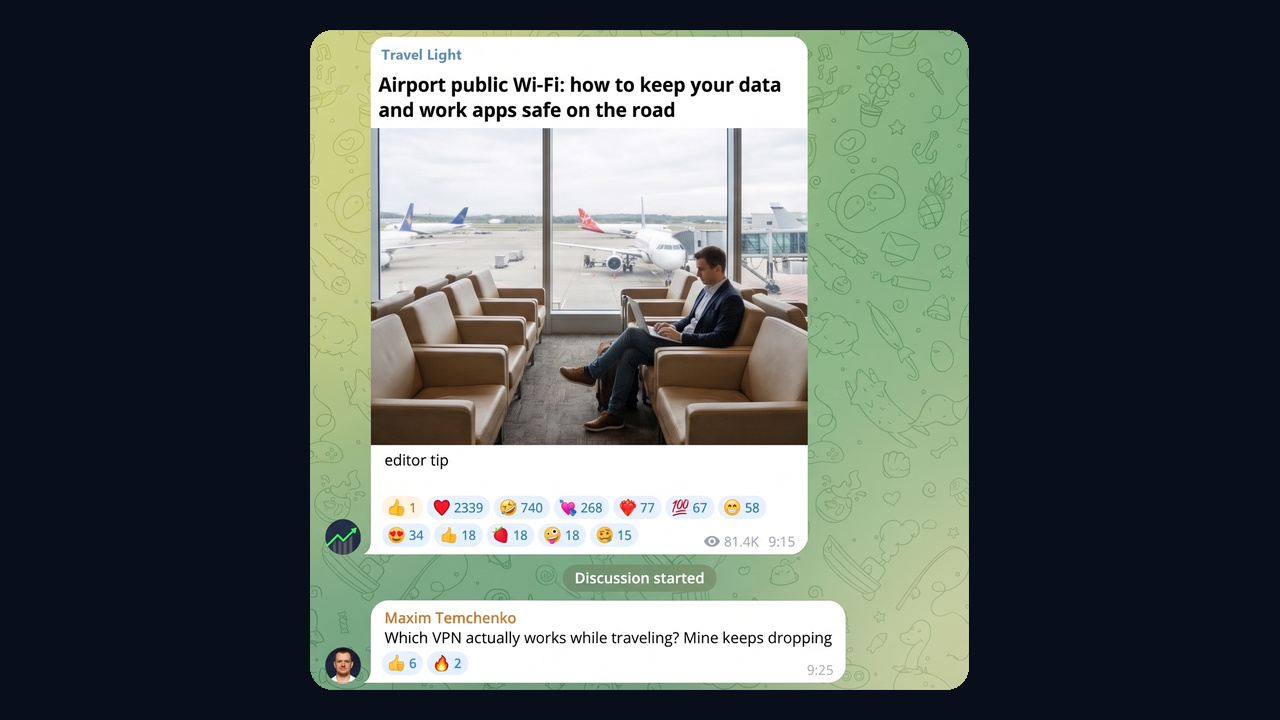
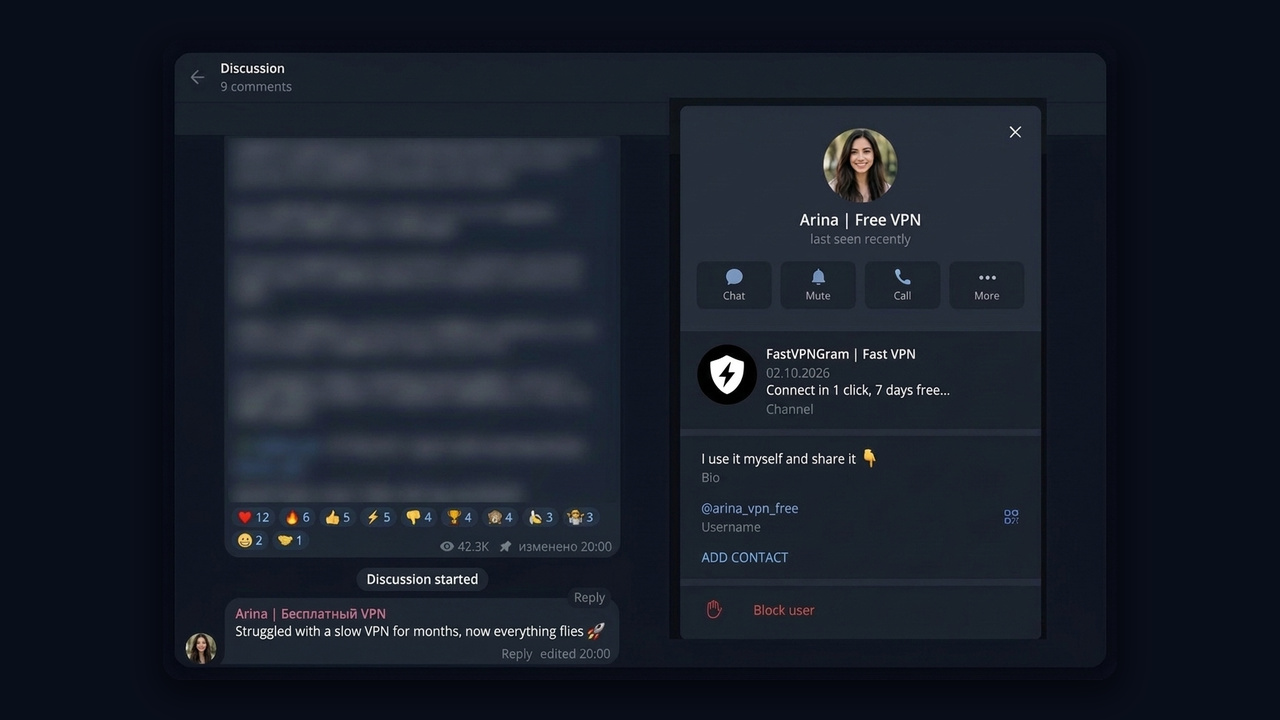
Here you see a post about data safety on the road and a reader asking which VPN actually works. Such readers are already looking for a fix and often ready to buy, and they are easy to collect, as you will see below.
Similar Channels
Besides, Telegram suggests neighbouring venues itself. A channel profile has a Similar Channels tab; open it on a big competitor and you get a ready list of channels sharing the same readers.
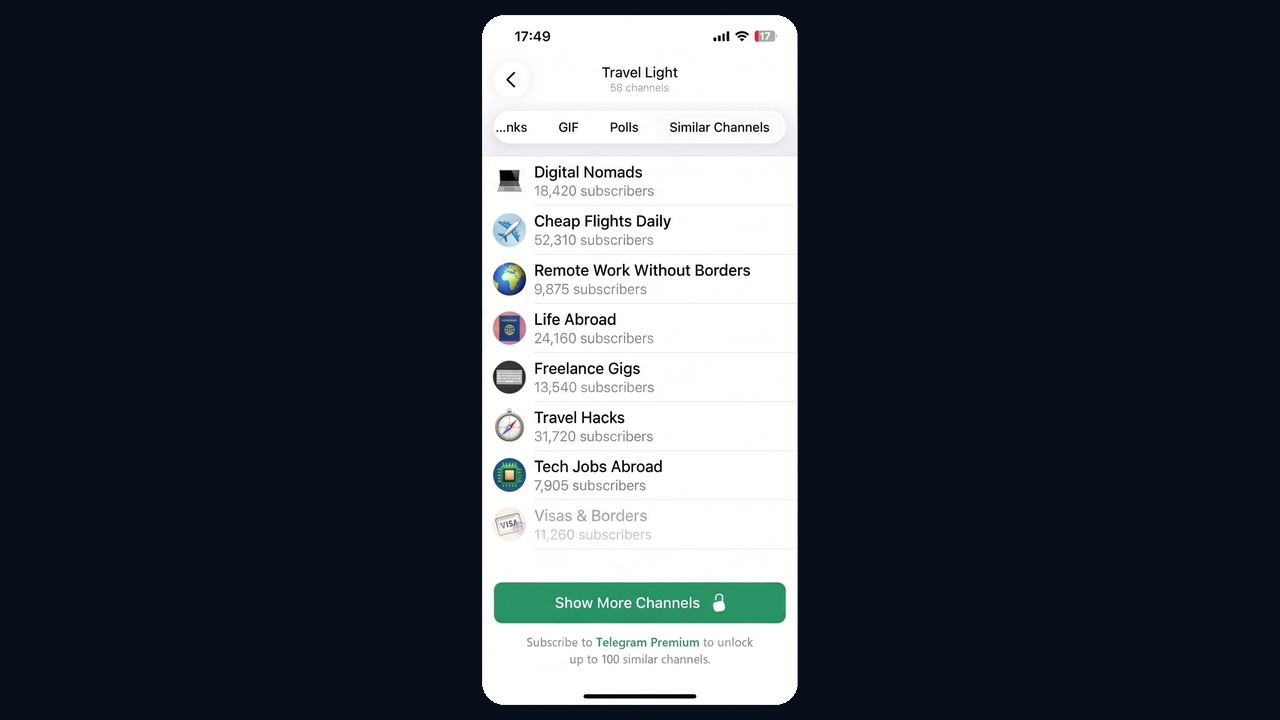
Then follow the chain, and in fifteen minutes you have a map of the niche. The screenshot shows the Similar Channels tab of a travel channel. For larger volumes, the free channel parser collects venues by keywords. To get into that block yourself, read our piece on Telegram similar channels.
Country, City and Professional Groups
A separate layer is communities tied to a country, city or profession. For a VPN bot, these are expat chats in popular relocation countries and IT communities; for a local business, district chats; for B2B, entrepreneur communities. Therefore, search by country, city or job title: smaller numbers, but a sharper fit.
Where Your Telegram Target Audience Lives: Examples by Niche
To start faster, use the table below. It also lists typical venues and phrases through which a Telegram target audience reveals itself.
| Niche | Where buyers hang out | Phrases to search |
|---|---|---|
| VPN bot | Digital nomad, travel and freelance groups | "best VPN for travel?", "VPN not working" |
| Online school | Student, parent and IT job chats | "any course tips?", "need a tutor" |
| Renovation and interior design | Residential complex and new-build groups | "who did your renovation?", "recommend a crew" |
| Beauty master | Neighbourhood and women's chats | "where to get nails done", "master nearby" |
| B2B services | Entrepreneur and seller communities | "looking for an accountant", "need a contractor" |
| Info product | Comments in expert channels | questions under topical posts |
Going through these venues by hand takes ages, so the venues you found will feed the parser later. But first, let us make sure a venue is alive.
How to Check That Your Telegram Target Audience Is Alive
Still, a group with 20,000 members is not proof of anything: some left long ago and some are bots. So check every venue before investing time.
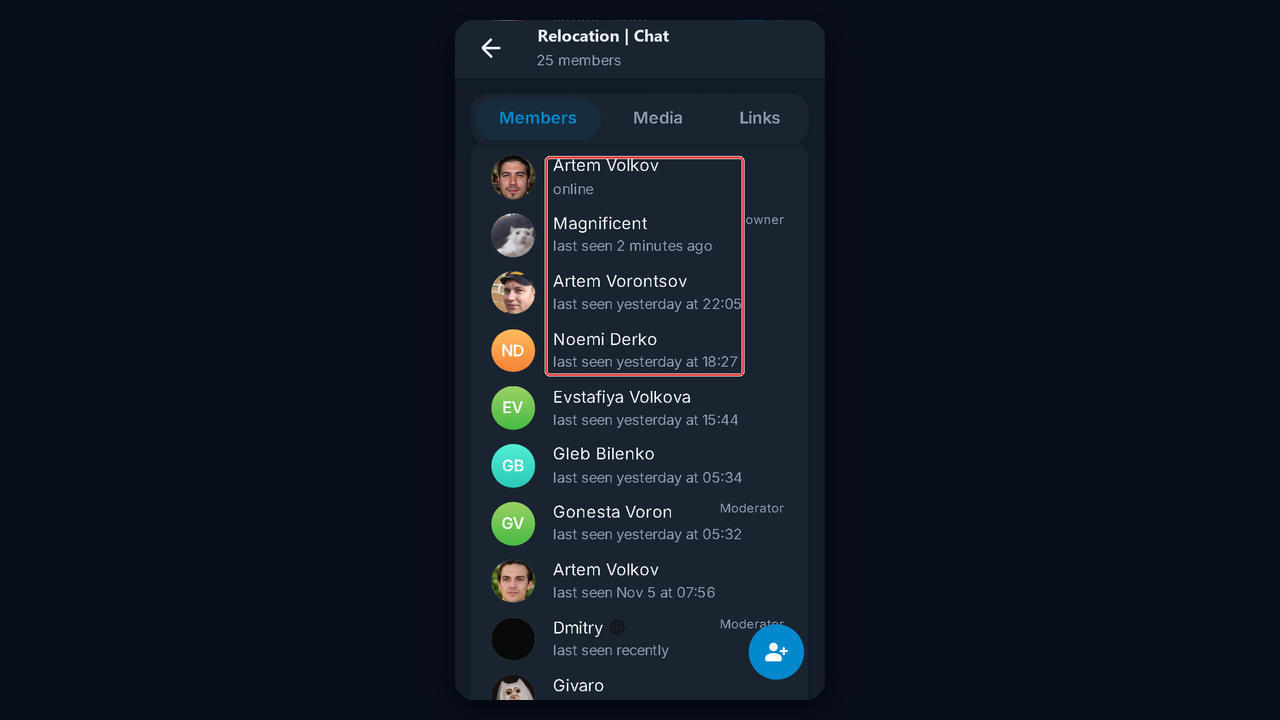
First, the quickest test is the member list with last-seen statuses. So if most show "online" or "last seen yesterday", the crowd is active. However, a wall of "last seen a long time ago" means the group is dead.
| Signal | Meaning | Verdict |
|---|---|---|
| Fresh messages every day | People talk, not just lurk | Worth working with |
| Many "a long time ago" statuses | The crowd has moved on | Skip |
| Blank profiles without photo or name | Possible bots or inflated numbers | Dig deeper |
| Questions about your topic | Real demand exists | Top priority |
| Different language or region | Mismatch with the portrait | Skip |
Separately, read the group rules. If promotion is banned and admins moderate strictly, only genuinely useful replies will work there, never links thrown in cold.
Then, once the venues pass the check, move on to collecting contacts. Next, we will show how to quickly build a target audience list from channels and chats.
Collecting a Telegram Target Audience With the GramGPT.io Parser
Copying hundreds of names by hand takes days, but there is a faster route. The GramGPT.io user parser builds a base from chosen groups and channels in minutes.
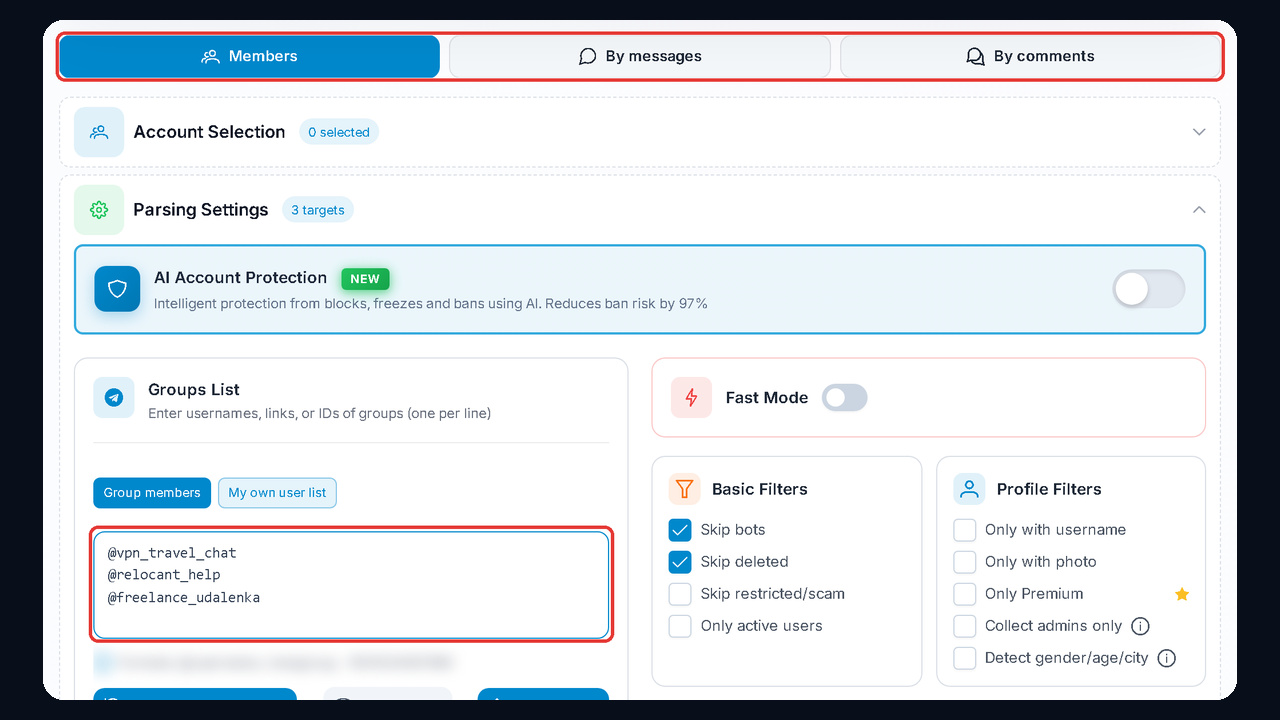
Three modes are available, each tied to one source:
- Members. The full roster of open groups when membership is visible.
- By messages. Only people who post, including groups that hide their member list. This is also the most active slice.
- By comments. Authors of comments under channel posts, i.e. engaged readers of your rivals.
Filters drop bots and deleted accounts and, if needed, keep only users with a username, a photo or Premium, so the base comes out clean.
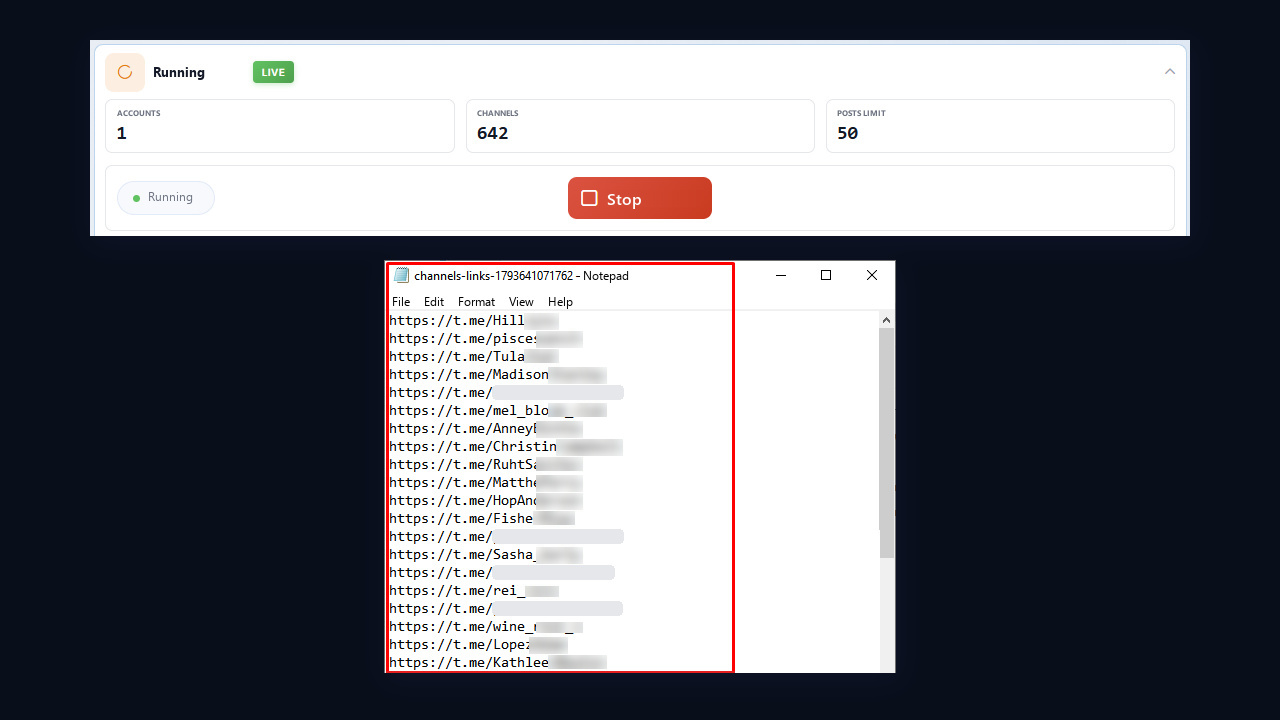
Meanwhile, while it runs you see how many channels are done. In this example the parser scanned posts in 642 channels, collected the comment authors and exported links to their profiles into a text file. Besides, the finished result can be saved as IDs or a spreadsheet.
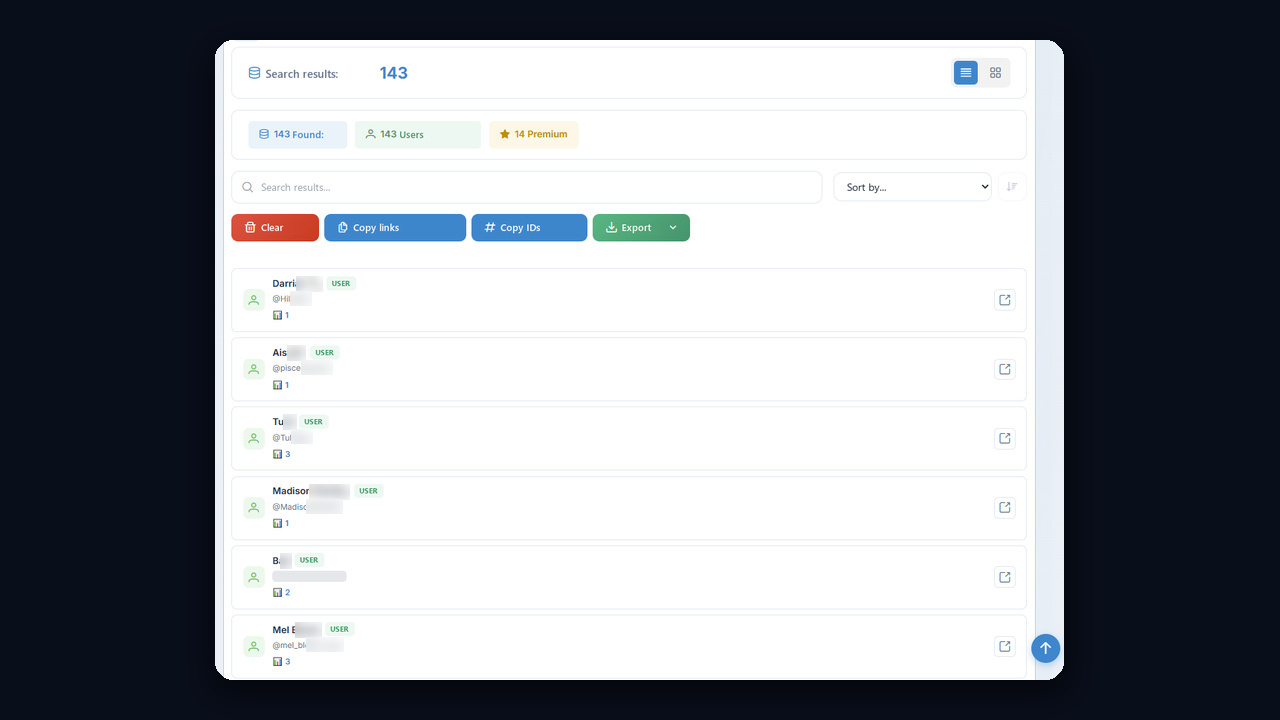
As a result, this sample from comments yielded 143 users, 14 of them with Premium. A small but very warm base: each person wrote under a post on the topic themselves.